7 Best Beef Cuts for Beef Jerky
Many people love making their own beef jerky but struggle to find the right cuts. You’re not alone—getting that perfect, chewy texture can be tricky. The key is choosing the right beef cuts that are lean, firm, and easy to slice.
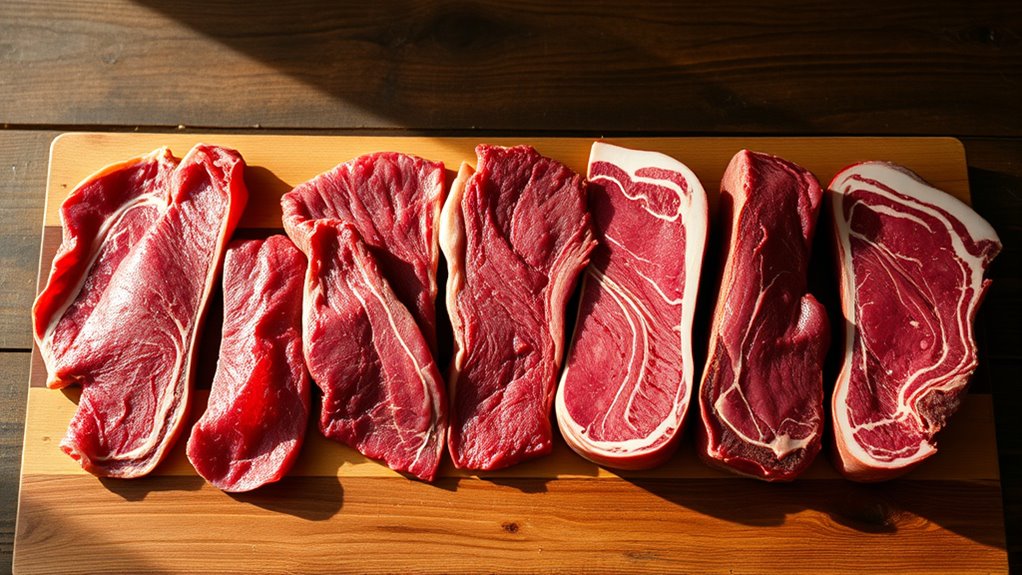
The 7 best beef cuts for jerky are lean, firm, and easy to slice. Look for sirloin, round, flank steak, top round, eye of round, bottom round, and beef chuck eye.
These cuts have minimal fat and connective tissue, making them ideal for even drying and good texture.
Choosing high-quality, store-fresh meat with a bright red color helps improve flavor. Keep these tips in mind, and you’ll be on your way to perfect homemade beef jerky.
Key Takeaways
- Lean cuts like sirloin, round, and flank steak are perfect for drying evenly and getting the right texture.
- Look for firm, bright red meat with minimal marbling and connective tissue. This makes slicing easier and boosts flavor.
- Stay away from fatty or heavily marbled cuts because they can spoil faster and cause uneven drying during the jerky-making process.
- Choose cuts with uniform muscle fibers. That way, your jerky will dry consistently and have a nice chew.
- Finally, pick fresh meat that’s moisture-free and smells clean. This helps ensure you get high-quality jerky every time.
Why Choosing the Right Beef Cuts Matters for Jerky Quality
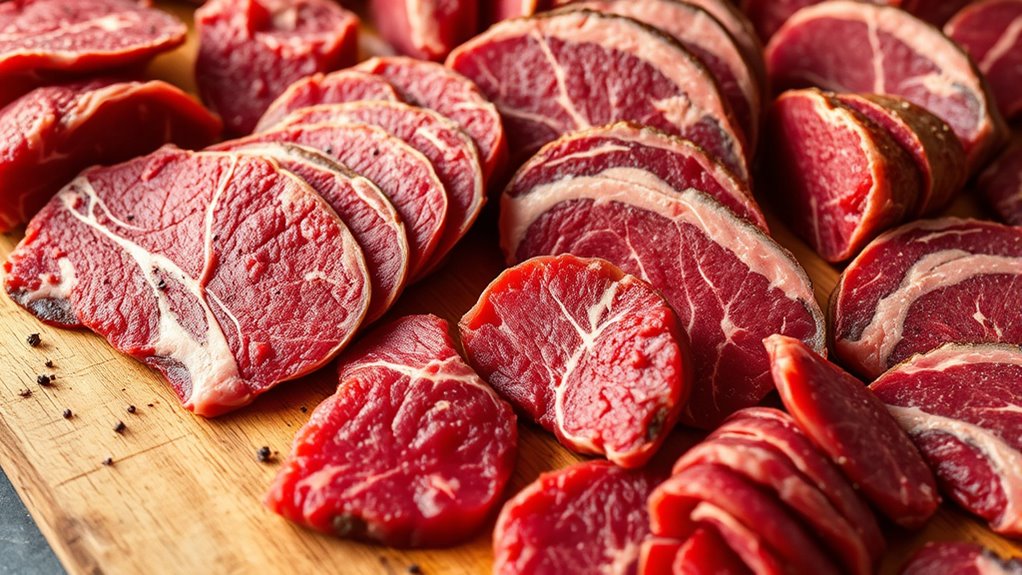
Choosing the right beef cuts is key to making high-quality jerky because it affects the texture, flavor, and chewiness.
Opting for lean cuts helps prevent excess fat from spoiling during drying. Lean meat results in a firm, satisfying chew without being greasy.
Choosing lean cuts ensures your jerky stays firm, flavorful, and free of greasy excess.
Cuts with minimal connective tissue are easier to slice thin and evenly, which makes drying and the texture more consistent.
The flavor of the beef also matters; high-quality cuts provide a richer, more robust taste that enhances your jerky.
Using the right cuts means your jerky will have a good balance of chew, flavor, and freshness that lasts.
In short, choosing the proper beef is the foundation for making delicious, high-quality jerky.
How to Select the Best Beef for Jerky
Selecting the best beef for jerky starts with understanding which cuts offer the right balance of lean meat and minimal connective tissue. You want cuts that are naturally lean, easy to slice thin, and have little fat that can spoil or cause spoilage.
Look for muscles that are tender yet firm, with a consistent texture. When choosing beef, consider these tips:
- Choose lean cuts like sirloin, round, or flank steak.
- Avoid heavily marbled or fatty cuts.
- Opt for uniform muscle fibers for even drying.
- Check for firm, bright red meat with minimal discoloration.
- Select cuts with minimal connective tissue for easier slicing and chewability.
Focusing on these qualities helps guarantee your jerky turns out flavorful, tender, and long-lasting.
How to Spot Quality Beef Cuts at the Store
When you’re at the store, look for beef with visible marbling—small streaks of fat throughout the meat—that shows good quality.
Check the freshness indicators, like a bright color and firm texture, to make sure the meat is fresh.
These signs help you pick cuts that will make your jerky flavorful and tender.
Look for Marbling
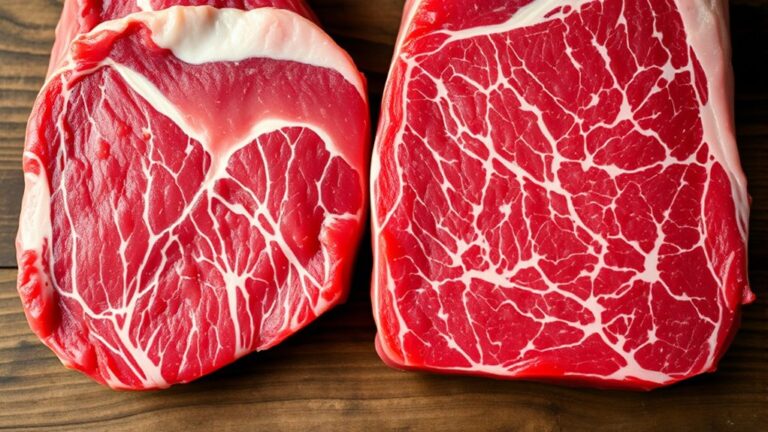
Marbling, the streaks of fat embedded within the muscle, is a key indicator of beef quality. When shopping, look for cuts with fine, evenly distributed marbling. This fat boosts flavor, tenderness, and juiciness, making your jerky more enjoyable.
Avoid cuts with large, isolated fat pockets, which can make the meat tough or greasy. Well-marbled beef usually has a bright red color, a sign of freshness. Check the fat’s appearance—should be creamy white and firm.
Keep an eye on these key signs: fine, evenly spread marbling, bright vibrant red meat, creamy white, firm fat, no large fat pockets, and consistent fat distribution throughout the cut. Choosing well-marbled beef sets the foundation for flavorful, tender jerky.
Check Freshness Indicators
Spotting fresh, high-quality beef at the store starts with a keen eye for visual cues. Check the color—fresh beef should be bright red or cherry-colored, not brown or dull. Look for a moist, but not slimy, surface; excess moisture or a sticky feel indicates spoilage.
Smell the beef—fresh cuts have a clean, meaty aroma, while sour or off odors mean it’s past its prime. Examine the packaging for leaks, tears, or excessive liquid, which can suggest deterioration.
Also, note the sell-by or use-by date. Choose cuts with the latest date for maximum freshness. By paying attention to these indicators, you guarantee you’re selecting quality beef that’s safe and flavorful for your jerky.
Common Mistakes When Buying Beef for Jerky and How to Avoid Them
One common mistake is choosing the wrong cut of beef, which can make your jerky tough or chewy.
You might also overlook meat quality, ending up with tough, flavorless results.
To avoid these errors, pick lean, tender cuts and focus on fresh, high-quality meat.
Choosing Wrong Cut
Choosing the wrong cut of beef can turn your jerky into a tough, chewy mess instead of a flavorful snack. Some cuts are too fatty or sinewy, making it hard to get that tender, evenly dried texture you want.
To avoid this, steer clear of cuts like brisket, shank, or short rib, which tend to be greasy or tough. Instead, go for leaner options that are easier to slice and dry properly.
Be mindful of these factors: high-fat cuts that won’t dehydrate evenly, sinewy or connective tissue-heavy meats, cuts with uneven muscle fiber, large, bulky roasts that are hard to slice thinly, and anything labeled as stew meat or braising cuts.
Choosing the right cut guarantees your jerky will be tender, flavorful, and easy to chew.
Ignoring Meat Quality
Even if you pick the perfect cut, ignoring meat quality can still ruin your jerky. Low-quality meat often has too much fat, connective tissue, or moisture, which can cause spoilage, uneven drying, and bad texture. When buying meat, focus on freshness, color, and marbling.
Avoid meat with discoloration or an off smell — these are signs of lower quality. Look for bright red or pink color, no dullness, and a firm texture. Check for thin, white streaks of marbling that are evenly distributed.
Choosing high-quality meat makes your jerky flavorful, tender, and shelf-stable. Don’t cut corners on quality — your taste buds will thank you.
Preparing and Slicing Beef for Jerky
To guarantee your jerky turns out perfectly, start by trimming excess fat from the beef. Fat doesn’t dehydrate well and can cause spoilage. Next, freeze the meat for 1-2 hours to firm it up, making slicing easier.
Use a sharp knife or meat slicer to cut the beef into thin, uniform strips about 1/8 to 1/4 inch thick. Slice against the grain for a tender chew or with the grain for a chewier texture. Keep the slices even to ensure consistent drying.
Consider marinating the slices beforehand to boost flavor and tenderness. Finally, pat the meat dry with paper towels to remove excess marinade or moisture before drying. Proper slicing and preparation help your jerky dry evenly and taste great.
Using Different Beef Cuts to Vary Flavor and Texture
Different beef cuts can really change the flavor and texture of your jerky. Picking different cuts lets you customize the taste and mouthfeel to your liking.
For example, leaner cuts like eye of round or sirloin give you a firm, chewy texture with a clean beef flavor. On the other hand, cuts like flank or brisket add more richness and a slightly softer bite.
Here’s a quick look at some popular options:
| Beef Cut | Flavor & Texture |
|---|---|
| Eye of Round | Lean, firm, chewy |
| Sirloin | Lean, slightly tender |
| Flank | Richer flavor, tender |
| Brisket | Juicier, softer texture |
Mixing different cuts can create a unique jerky experience, balancing flavor intensity with the desired chewiness.
Tips for Perfecting Your Homemade Beef Jerky
Selecting the right cuts is just the first step; mastering the techniques and process guarantees your jerky turns out perfect every time. To get the best results, focus on consistency and proper preparation.
Slice the meat thin and uniform for even drying. Marinate for at least 4 hours or overnight to boost flavor. Pat the meat dry before drying to prevent excess moisture.
Maintain a steady drying temperature, around 160°F (71°C). Store finished jerky in airtight containers to keep it fresh.
Pay attention to these details, and you’ll improve your homemade jerky’s texture and flavor. Practice makes perfect, so don’t get discouraged if it takes a few tries to get it just right. With each batch, you’ll refine your technique.
Frequently Asked Questions
What Are the Best Beef Cuts for Making Beef Jerky at Home?
You should choose lean cuts like top round, bottom round, eye of round, or sirloin tip for making beef jerky at home. These cuts have minimal fat, which helps prevent spoilage and improves flavor.
Trim off any excess fat before slicing. Use a sharp knife to cut the meat into thin strips, then marinate and dry them. These cuts guarantee tender, flavorful jerky with a good texture.
How Does Marbling Affect the Quality of Beef Jerky?
Marbling, the streaks of fat within the meat, affects beef jerky quality much like a painter’s brushstrokes add depth to a canvas. Too much fat, and your jerky can become greasy and less shelf-stable. Too little, and it might turn out dry and tough.
Ideally, moderate marbling gives your jerky flavor and tenderness while balancing moisture and texture. This way, your jerky stays flavorful without losing its firmness or shelf life.
Can You Use Frozen Beef for Jerky Preparation?
Yes, you can use frozen beef for making jerky. Just make sure to thaw it completely in the fridge before slicing.
Thawing helps you cut the meat evenly and safely. Partially frozen beef is actually easier to slice thinly, which is perfect for jerky.
Once it’s thawed, just follow your usual seasoning and drying process. Using frozen beef won’t really change the taste or texture if you handle it properly.
What Is the Ideal Thickness for Slicing Beef Jerky?
You should slice your beef for jerky to about 1/8 to 1/4 inch thick. Thinner slices dry out faster and become more tender, while thicker ones need more time and might be chewier.
Use a sharp knife or a meat slicer for even cuts, which helps ensure uniform drying. Keep in mind that the thickness affects both the texture and drying time.
Adjust your slices accordingly to get the jerky style you prefer.
Are There Specific Beef Cuts Better for Spicy or Flavored Jerky?
Yes, certain beef cuts work better for spicy or flavored jerky. Lean cuts like top round, eye of round, and sirloin tip are great because they absorb marinades well and stay tender without a lot of fat.
These cuts also make it easier to slice evenly, which helps flavors penetrate better. Using these cuts results in a more flavorful, consistently textured jerky, especially when adding bold spices and flavors.
Conclusion
Choosing the right beef cuts is like picking the perfect brush for a masterpiece—you’re laying the foundation for flavor and texture.
When you select wisely, your homemade jerky becomes a symbol of patience and craftsmanship, transforming simple meat into something hearty and memorable.
Handle each cut with care, and pay attention to detail. This will turn your beef jerky into a true work of art—something you’ll be proud to share and savor.
Focusing on the best beef cuts for beef jerky ensures your final product is flavorful and tender, making your jerky stand out.