7 Best Cuts of Beef for Grilling
Are you tired of grilling steaks that turn out tough or lack flavor? You’re not alone—many people struggle with choosing the right cuts for perfect results.
Luckily, knowing which beef cuts are best for grilling can make all the difference.
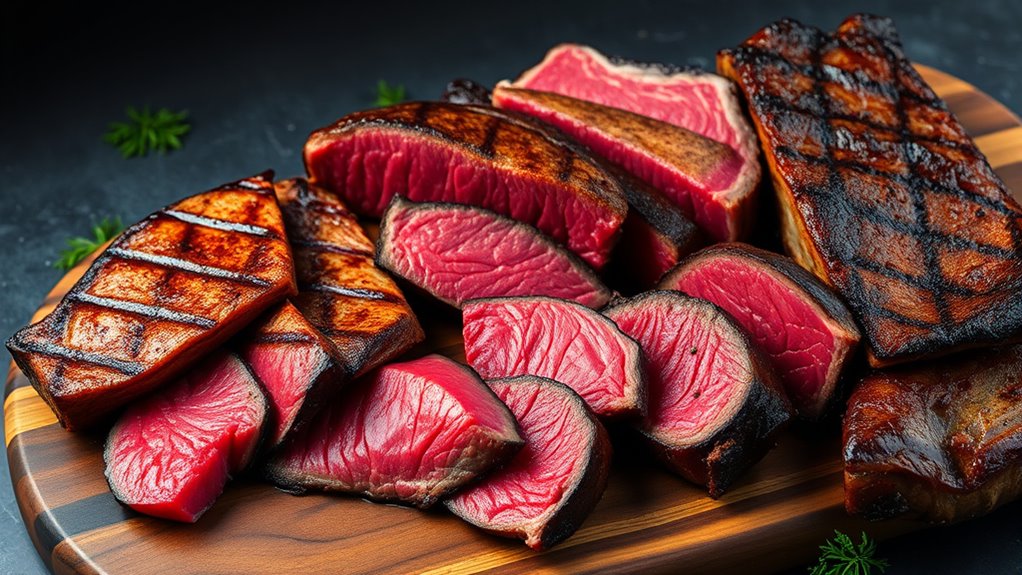
If you want great grilling results, choose cuts like ribeye for its rich marbling, tender filet mignon for quick cooking, and T-bone or Porterhouse that give you the best of both tenderloin and strip.
Sirloin offers flavor without breaking the bank, while flank and skirt steaks are perfect for marinating and quick searing.
For extra tips on preparing and serving these cuts, keep exploring what makes each one shine on the grill.
Key Takeaways
- Focus on tender, well-marbled cuts like ribeye, sirloin, and T-bone for the best grilling experience.
- Look for cuts with visible fat streaks, as they add flavor and keep the meat juicy while grilling.
- Don’t forget versatile options like filet mignon for tenderness, and porterhouse if you want a mix of textures on your plate.
- If you’re into tougher cuts like flank or brisket, marinate them or cook them slowly to develop more flavor.
- Make sure to choose cuts that are suitable for high-heat grilling, so your meat turns out quick, juicy, and full of flavor.
What Are the Best Beef Cuts for Grilling?
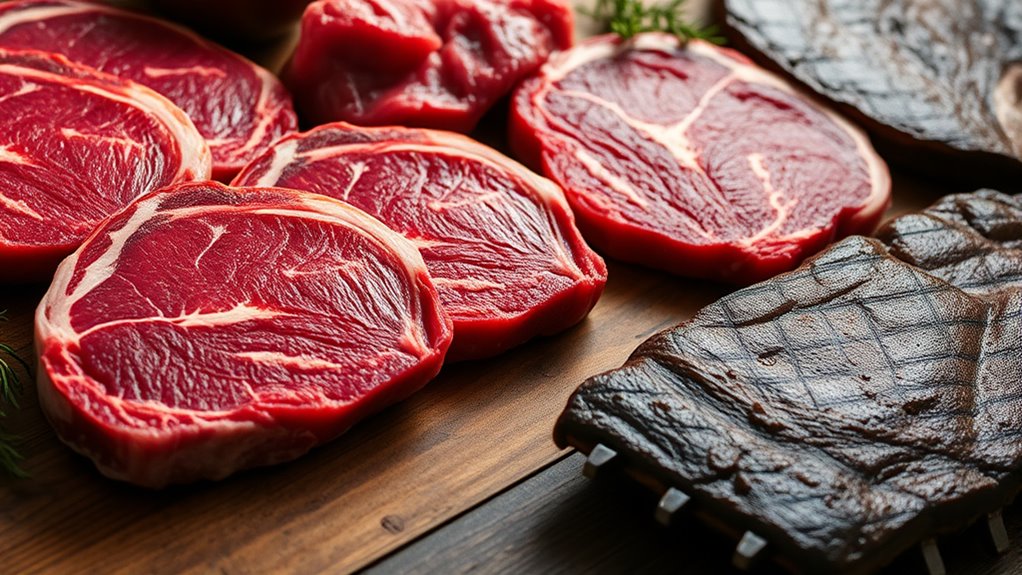
Are you wondering which beef cuts are best suited for grilling? The top choices are usually tender, well-marbled cuts that can handle high heat.
Sirloin steaks are a popular pick because they’re flavorful and fairly affordable. Ribeye is another great option thanks to its rich marbling, which keeps the meat juicy.
Filet mignon offers tenderness, though it’s leaner and cooks quickly. T-bone and Porterhouse steaks give you both tenderloin and strip, so you get tenderness and flavor in one.
Flank steak and skirt steak are perfect for marinating and quick grilling, offering bold flavors. These cuts respond well to high heat, ensuring a tasty, juicy, and satisfying grilled beef every time.
How to Choose the Right Cut for Your Grill
Choosing the right cut for your grill depends on what you like and the kind of grilling experience you want.
If you want quick, flavorful results, go for tender cuts like ribeye or sirloin. These cook fast and stay juicy.
For a more interactive, slow-cooked experience, consider tougher cuts like flank or brisket. They need marinating or longer cooking times but offer rich, beefy flavors.
Think about the fat content too. Marbling improves tenderness and flavor, so look for cuts with visible streaks of fat.
Your grilling method matters as well. High heat is perfect for tender steaks, while lower heat suits tougher cuts.
Matching the cut with your preferred cooking style guarantees a delicious, satisfying meal.
Top Ribeye Steaks for Juicy, Flavorful Grilling
In the world of grilling juicy, flavorful steaks, ribeye is a top pick thanks to its rich marbling and tender texture. The marbling melts as it cooks, adding beefy flavor and juiciness to every bite.
Look for ribeye steaks with an even spread of fat for the best flavor. Bone-in cuts can give extra richness, but boneless ones are easier to handle.
Thicker steaks, around 1.5 to 2 inches, give you more control over how cooked they are and help prevent overcooking.
Season them generously with salt and pepper, then grill over high heat to get that tasty crust.
After grilling, let the steak rest a few minutes so the juices can settle. This makes each bite tender, juicy, and full of flavor.
Quick-Cooking Flank and Skirt Steaks
After mastering the art of grilling thicker cuts like ribeye, you might want to switch things up with quick-cooking options such as flank and skirt steaks. These cuts cook fast and deliver bold, beefy flavor.
To get the best results, marinate them briefly to tenderize and enhance the taste. Grill over high heat for 3-4 minutes per side, aiming for medium-rare. Slice against the grain for maximum tenderness.
These steaks are perfect for tacos, salads, or sandwiches. Just keep an eye on the heat to avoid overcooking since they thin out quickly.
Use the table below for quick tips:
| Cut | Recommended Cook Time | Best Serving Style |
|---|---|---|
| Flank | 3-4 minutes per side | Thin slices, salads |
| Skirt | 3-4 minutes per side | Marinated, tacos |
| Marinate | 30 minutes max | Improves tenderness |
| Grill Temp | High heat (~450°F) | Quick searing |
| Rest | 5 minutes | Juicier, easier to slice |
Affordable and Tender: Sirloin and Round Cuts
Sirloin and round cuts are great choices if you’re looking for affordable, tender options that won’t break the bank. Their tenderness makes them perfect for quick grilling sessions, saving you time and effort.
Plus, they offer excellent flavor without sacrificing quality. These cuts are reliable and easy to prepare, making them a go-to for everyday meals.
Cost-Effective Options
For those looking for budget-friendly yet tender beef options for grilling, sirloin and round cuts are great choices. They usually cost less than premium cuts but still offer good flavor and texture when cooked right.
Sirloin, especially top sirloin, strikes a nice balance of tenderness and flavor without costing a fortune. Round cuts like eye of round or sirloin tip are leaner and more affordable, making them perfect for saving money.
To get the most tenderness and flavor, marinate these cuts or cook them to medium-rare or medium. Thin slicing after resting also helps improve tenderness. With the right prep, you can enjoy flavorful, cost-effective beef for grilling without sacrificing quality.
Tenderness Factors
Since these cuts tend to be leaner, their tenderness largely depends on proper preparation and cooking techniques. Sirloin and round cuts have less fat marbling, which means they can become tough if overcooked.
To keep them tender, consider marinating to break down muscle fibers and boost moisture. Use moderate heat and aim for medium-rare to medium doneness, as cooking them too long causes fibers to tighten, resulting in chewiness.
Resting the meat after grilling allows juices to redistribute, keeping it moist and tender. Thin slicing against the grain also helps improve the bite.
While these cuts are budget-friendly, proper handling is key to making them enjoyable. Focus on controlled cooking and tenderization methods to get the best results from sirloin and round steaks.
Ideal for Quick Grilling
Cuts like sirloin and round are not only budget-friendly but also perfect for quick grilling sessions. These cuts cook rapidly, making them great when you want a fast, flavorful meal.
Sirloin offers a good balance of tenderness and beefy flavor, so it stays juicy even with a short cook time. Round cuts are leaner, so they cook quickly and benefit from a brief rest to keep in moisture.
To keep them tender, avoid overcooking by grilling at high heat for just a few minutes per side. Slice against the grain after grilling to maximize tenderness.
Whether you’re making a weeknight dinner or a last-minute barbecue, these cuts deliver great flavor without long wait times.
Preparing and Cooking Each Beef Cut Perfectly
To get the best results, focus on proper seasoning techniques and cooking to the right temperatures. Knowing when to rest your beef helps keep it juicy and flavorful.
Serving it at the right moment completes the process. Master these steps, and you’ll always enjoy perfectly cooked grilled beef.
Proper Seasoning Techniques
Proper seasoning can make or break your grilled beef, so it’s crucial to prepare each cut with the right technique. Start by patting the meat dry to ensure the seasoning sticks and the surface crisps nicely.
Use a generous amount of salt to enhance the natural flavors. You can also add pepper, garlic powder, or herbs for extra depth, but keep it balanced.
Let the seasoned beef rest for at least 15 minutes so the flavors can penetrate. For thicker cuts, apply a rub or marinade beforehand for more flavor.
Avoid over-seasoning, which can mask the beef’s natural taste. Remember, simple seasoning often works best and highlights the quality of your meat.
- Pat dry before seasoning
- Use salt liberally
- Rest meat after applying seasoning
- Keep seasoning simple for best flavor
Ideal Cooking Temperatures
Achieving the perfect level of doneness depends on knowing the ideal cooking temperatures for each beef cut. For tender cuts like ribeye and sirloin, aim for 130°F (medium-rare) to 140°F (medium). These temperatures keep the meat juicy and flavorful.
Flank and skirt steaks are best cooked to around 125°F (rare) to 135°F (medium-rare) to prevent toughness. Brisket and chuck, which are tougher cuts, benefit from slow cooking or grilling to 190°F-205°F to break down connective tissues.
Use a reliable meat thermometer to monitor internal temperatures accurately. Remember, removing the beef from the grill slightly before reaching your target temperature allows residual heat to finish the cooking process.
Properly cooked beef guarantees peak flavor, tenderness, and safety.
Resting and Serving Tips
After removing beef from the grill, let it rest to ensure maximum flavor and juiciness. Resting helps the juices redistribute evenly throughout the meat, so they don’t spill out when you cut into it.
For steaks, rest for 5-10 minutes, loosely tented with foil. Thinner cuts need less time, while thicker cuts benefit from longer rests.
When serving, slice against the grain for tenderness. Use a sharp knife for clean cuts and serve on warm plates to keep the meat hot.
Resting also helps maintain the meat’s shape and presentation. Follow these tips to enjoy a juicy, flavorful, and perfectly cooked beef dish every time.
- Rest beef on a cutting board or plate
- Cover loosely with foil to retain heat
- Slice against the grain for tenderness
- Serve promptly to enjoy the ideal temperature
Resting and Serving Your Grilled Beef for the Best Flavor
Once you finish grilling, let your beef rest for a few minutes before slicing or serving. This helps the juices redistribute, making your steak juicier and more flavorful.
If you want to keep it warm, cover it loosely with foil. Just avoid wrapping it tightly, as this can trap moisture and affect the texture.
During resting, the beef’s temperature will rise slightly, which helps with tenderness. When ready, slice against the grain for the best tenderness.
Serve your beef on a warm plate to keep it hot longer. Resting not only enhances flavor but also ensures a moist, satisfying bite.
Take these moments to enjoy the aroma and anticipation of your perfectly grilled beef.
Frequently Asked Questions
What Are Common Seasoning Tips for Different Beef Cuts?
For different beef cuts, you should tailor your seasoning to enhance their natural flavors.
For tougher cuts like brisket or flank steak, use a bold rub with salt, pepper, garlic, and paprika, and let it sit to absorb the flavors.
Tender cuts like ribeye or sirloin do well with simple salt and pepper, which highlights their richness.
Always season generously and consider marinating tougher cuts for extra flavor and tenderness.
How Do I Tell if a Grilled Beef Cut Is Cooked Perfectly?
You can tell your grilled beef is perfectly cooked by using a meat thermometer. Aim for 130°F for medium-rare, 140°F for medium, and 150°F for medium-well.
Don’t rely solely on touch or color because they can be misleading. Rest the meat for a few minutes after grilling so the juices can redistribute.
This helps enhance flavor and tenderness. By doing this, you can guarantee each cut hits the perfect doneness every time.
Can I Grill Beef Cuts That Are Less Tender?
Yes, you can grill less tender beef cuts. Marinating them beforehand helps tenderize the meat and adds flavor.
Use indirect heat or lower temperatures to prevent overcooking and drying out the meat. Patience is key—cook them slowly until they reach your desired doneness.
Rest the meat after grilling to let the juices redistribute. This ensures a juicy, flavorful result even if the cut is naturally tough.
What Are the Best Marinades for Beef Grilling?
Think of marinades as the secret potion to transform tough cuts into mouthwatering delights. For beef grilling, you can’t go wrong with classic options like soy sauce, garlic, and a splash of olive oil.
Add a touch of honey or brown sugar for sweetness, and a dash of vinegar or citrus for tang. These ingredients penetrate deeply, tenderizing and infusing flavor, ensuring every bite is juicy and flavorful.
How Should I Store Leftover Grilled Beef Safely?
You should store leftover grilled beef in an airtight container or wrap it tightly with aluminum foil or plastic wrap.
Put it in the fridge within two hours of cooking to keep bacteria from growing.
For longer storage, freeze the beef in a freezer-safe bag or container.
Make sure to label it with the date so you remember when you stored it.
Eat it within three to four days if refrigerated, or up to three months if frozen, to keep it safe and fresh.
Conclusion
Choosing the right beef cut can make all the difference in your grilling success. For example, ribeye has about 40% more fat than sirloin, which makes it especially flavorful and juicy.
Whether you prefer quick-cooking flank or tender sirloin, mastering each cut guarantees delicious results. Remember, letting your beef rest for a few minutes after grilling boosts flavor and juiciness.
With the right cut and technique, you’ll impress every time. If you want to elevate your grilling game, focusing on the best cuts of beef for grilling is key.