Is Pickling Lime the Same as Pickling Salt?
Are you passionate about homemade pickles but feeling overwhelmed by the different ingredients involved? You’re not alone—many people struggle to understand the roles of various pickling supplies.
Sorting through confusing labels and unfamiliar terms can make the process seem more complicated than it really is.
Pickling lime and pickling salt are not the same; they serve different purposes in the preservation process. Pickling lime, made of calcium hydroxide, is used to firm vegetables and improve crunch, while pickling salt, composed of pure sodium chloride, adds flavor and helps preserve the food.
Mixing them up can affect your results and safety. Continue exploring to understand how each ingredient impacts your pickling projects and when to use them.
Key Takeaways
- Pickling lime is calcium hydroxide, a white powder used to firm vegetables, not a salt.
- Pickling salt is sodium chloride, a pure mineral used for flavor and preserving in brine.
- They serve different functions. Lime enhances texture, while salt provides flavor and preservation.
- Using lime instead of salt can change how the pickling process works and may affect safety.
- They are not interchangeable. Each ingredient has a unique chemical makeup and specific purpose.
What Are Pickling Lime and Pickling Salt?
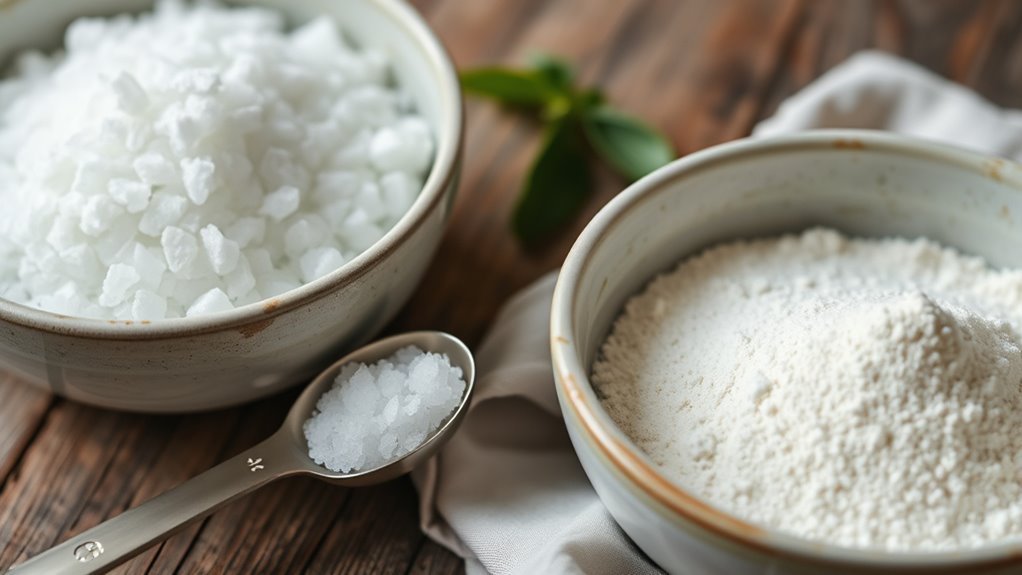
Pickling lime and pickling salt are two different ingredients often used in the pickling process.
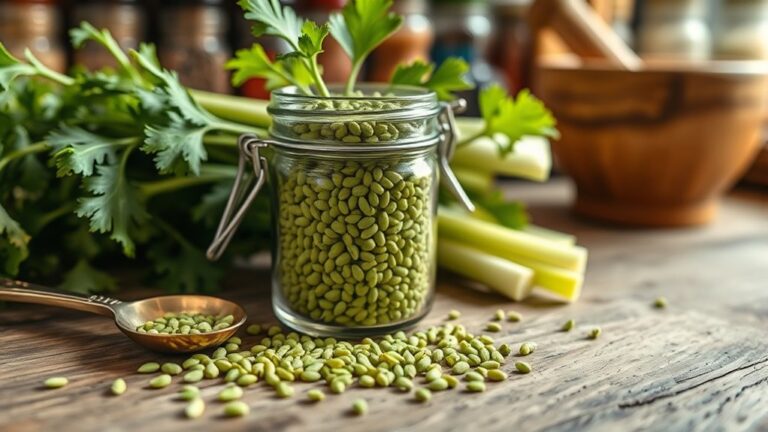
Pickling lime is a food-grade calcium hydroxide. It appears as a white powder and helps firm vegetables like cucumbers and green beans. It’s often used to give pickles a crisp texture.
Pickling lime is a white powder that helps firm vegetables and keep pickles crisp.
Pickling salt is a pure, fine-grained salt with no additives or anti-caking agents. You use it to create brines, which help with flavor and preservation.
Unlike regular table salt, pickling salt dissolves easily and doesn’t cloud the brine.
While both are important in different stages of pickling, they serve different purposes—lime for texture and salt for flavor and preservation.
Understanding these differences helps you use each ingredient correctly in your pickling projects.
How Do Their Compositions Differ?
While both pickling lime and pickling salt are essential in the pickling process, their chemical compositions are quite different. Pickling lime is mainly calcium hydroxide, a solid alkaline compound. It’s used to make pickled vegetables firmer and improve their texture.
In contrast, pickling salt is pure sodium chloride, a crystalline mineral that dissolves easily in water. It’s chosen because it preserves and flavors without adding color or impurities.
The main difference is that lime is a base that affects pH and texture, while salt acts as an antiseptic that inhibits bacterial growth. Their chemical properties determine their specific roles in pickling, so they can’t be substituted for each other.
Knowing these differences helps you use each ingredient correctly for safe, high-quality preserves.
When Should You Use Pickling Lime in Your Preserves?
You should use pickling lime when you want to boost the firmness and crispness of your preserves. It helps keep your fruits looking and feeling fresh.
It also helps prevent pectin breakdown, which keeps your fruits intact longer. This is especially useful if you want your preserves to maintain their texture.
Enhances Firmness and Crispness
When used correctly, pickling lime can really boost the firmness and crispness of your preserved vegetables. It strengthens the cell walls, helping veggies stay crunchy during processing and storage.
It’s best to use pickling lime with firm vegetables like cucumbers, green beans, or carrots, especially if you want that satisfying crunch. Just make sure to soak and rinse them well after applying the lime, because excess can make them gritty or affect the flavor.
Proper application is key—use the right amount and follow recommended soaking times for the best results. When done right, pickling lime enhances the texture without sacrificing taste, making your preserved veggies more enjoyable and visually appealing.
Prevents Pectin Breakdown
Using pickling lime is especially important when you want to prevent pectin breakdown in your preserves, as it helps maintain the fruit’s or vegetable’s structure. Pectin is responsible for the gel-like consistency in jams and jellies, and if it breaks down, your preserves may become too soft or runny.
Applying pickling lime early in the process strengthens the pectin, preserving the desired texture. This is particularly useful when working with softer fruits or vegetables that tend to lose their firmness during processing.
Ideal for Certain Recipes
Pickling lime is especially beneficial for recipes that require firm, crisp textures, like certain pickles, green beans, or rhubarb preserves. It helps keep things crunchy by strengthening the cell walls during processing. Use lime when you want your preserves to stay firm and appealing after storage.
| When to Use Pickling Lime | Why It Matters |
|---|---|
| Firm pickles | Preserves crunchiness |
| Green beans | Keeps texture crisp |
| Rhubarb preserves | Prevents softening during storage |
Apply lime carefully, following the proper steps, to get the texture you want. It’s perfect for recipes where firmness boosts flavor and presentation. Use it sparingly to avoid over-softening or any unwanted effects.
When Is Pickling Salt the Best Choice?
Ever wonder why pickling salt is often the preferred choice for certain recipes? You should use it when you want a clear, crisp texture in your preserved foods.
Pickling salt dissolves easily and doesn’t contain additives like iodine or anti-caking agents that can cloud brines or affect flavor. It’s ideal for making pickles, relishes, and fermented vegetables where clarity is essential.
If you’re aiming for a clean, vibrant look in your jars, pickling salt guarantees your produce stays bright and appealing. It’s also great when you want precise control over salt levels since it’s pure salt without any fillers.
Can You Substitute Pickling Lime for Salt and Vice Versa?
Can you substitute pickling lime for salt or vice versa? Not really. They serve different purposes in pickling and aren’t interchangeable. If you try to swap them, expect problems. Here’s what you should keep in mind:
- Pickling salt preserves flavor and prevents cloudiness but doesn’t affect texture.
- Pickling lime improves crispness but can cause safety issues if not used properly.
- Using lime instead of salt can lead to an overly firm texture, while replacing lime with salt affects preservation.
While both are used in pickling, each has a distinct role. Substituting one for the other can compromise safety, flavor, and texture. So, it’s best to use each as intended.
What Are Common Mistakes When Using Pickling Lime and Salt?
Using pickling lime and salt incorrectly can cause safety issues, poor texture, and bad flavor. One common mistake is mismeasuring ingredients, which can make your pickles too soft or too hard.
Another mistake is not rinsing the lime thoroughly. This can leave a bitter taste or even cause health concerns. Make sure to rinse lime well before using it.
Using the wrong type of salt, like non-iodized instead of pickling salt, can affect how well your pickles preserve. Always use the recommended type of salt for pickling.
Finally, poor storage habits can lead to clumping or spoilage. Store your ingredients in an airtight, cool, dry place to keep them fresh.
How Should You Handle and Store Pickling Lime and Salt Safely?
Handling and storing pickling lime and salt properly is key to keeping them safe and effective. First, always keep these ingredients in airtight containers to prevent moisture from getting in, which can cause clumping or spoilage.
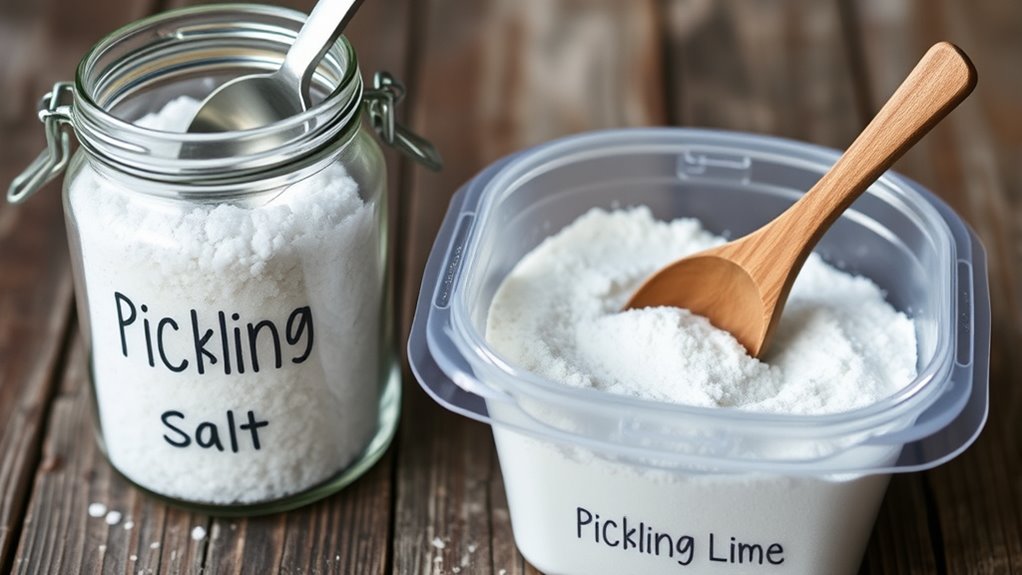
Store pickling lime and salt in airtight containers to prevent moisture and spoilage.
Second, store them in a cool, dry place away from direct sunlight, as heat and light can ruin their quality. Third, label containers clearly to avoid confusion and accidental misuse, especially if you have both ingredients on hand.
Never transfer pickling lime or salt to unmarked or inappropriate containers, and keep them out of reach of children and pets. Regularly check containers for signs of moisture or contamination, and throw away any that show spoilage.
Proper handling and storage help ensure your pickling ingredients stay safe and work well in your recipes.
Which Ingredient Is Best for Different Types of Pickling?
Choosing the right ingredient for pickling depends on the type of produce and the results you want.
For crisp, crunchy pickles, pickling salt is ideal because it helps keep the texture firm without making the brine cloudy. If you’re making traditional fermented pickles, salt helps develop flavor and supports fermentation, so pickling salt is your best bet.
For soft or sweet preserves, sugar or pickling sugar enhances sweetness and improves texture. Pickling lime is great for vegetables that need to stay firm, like green beans or okra, but it’s not suitable for fermenting.
Vinegar-based pickles rely on acid for preservation, so vinegar is essential. Each ingredient has a specific role, so choose based on whether you want crunch, flavor, or a particular preservation style.
Frequently Asked Questions
Are Pickling Lime and Pickling Salt Interchangeable in Recipes?
Pickling lime and pickling salt aren’t interchangeable in recipes. Pickling lime is calcium hydroxide used to keep pickles crisp, while pickling salt is pure sodium chloride used for flavor and preservation.
Using lime instead of salt can change the taste and texture, and vice versa. This could also affect safety and quality. Always stick to the recipe’s specified ingredient for the best results and safety.
How Does Pickling Lime Affect the Texture of Preserved Foods?
You notice how pickling lime makes your preserved foods crunchier, like biting into a crisp apple. It strengthens the pectin in fruits and vegetables, giving them a firm, satisfying texture.
When you add lime during processing, it acts as a firming agent, helping to preserve that delightful bite. Without it, your pickles might turn soft and limp.
Can Pickling Lime Be Used in Quick Pickling Processes?
Pickling lime isn’t ideal for quick pickling processes. It needs a long soaking and rinsing period to reduce its alkalinity, which doesn’t fit into the fast pace of quick pickling.
Quick pickling depends on vinegar and salt to create a safe, flavorful environment quickly. Using pickling lime could mess with the safety and texture of your preserved foods.
What Are the Health Risks Associated With Improper Use of Pickling Lime?
Using pickling lime improperly can pose health risks, like skin irritation, eye damage, or stomach issues if you swallow too much.
You might also end up consuming unsafe levels of calcium hydroxide, which can lead to poisoning. To stay safe, always follow instructions carefully, wear protective gear, and avoid inhaling or ingesting the lime.
Handling it properly helps prevent these health hazards and keeps your pickling process safe.
Do Different Regions Prefer One Ingredient Over the Other?
In some regions, pickling lime is preferred for its crisping qualities, while others favor pickling salt for flavor and preservation.
You might notice that the Midwest leans toward lime for its ability to improve texture, whereas coastal areas often choose salt for its traditional taste.
Your choice depends on regional recipes and local tastes, but both ingredients serve different roles, making them essential for specific pickling methods.
Conclusion
So, next time you’re in the pickling aisle, don’t get fooled—pickling lime isn’t salt’s twin, and vice versa. Mixing them up might turn your crunchy cucumbers into a science experiment.
Remember, using the right ingredient at the right time keeps your preserves safe and tasty. After all, if you wanted a surprise, you’d just toss everything together and hope for the best. That’s not the pickle way!
And no, pickling lime is not the same as pickling salt. They serve very different purposes in the pickling process.