7 Tips to Make Beef Shoulder Steak Tender
If you’ve ever tried cooking beef shoulder steak and ended up with a tough, chewy mess, you’re not alone. Many people struggle with making this cut tender and flavorful. Luckily, there are simple tricks to turn it into a melt-in-your-mouth delight.
To make beef shoulder steak tender, choose bright red, well-marbled cuts that feel firm, and avoid spoilage signs. Marinate with acidic ingredients like citrus or vinegar combined with herbs to break down fibers and add flavor, ensuring even coverage and refrigerating for at least two hours.
Use tenderizing techniques such as pounding or scoring. Slow cook or braise on low heat for hours, then let the steak rest before slicing. Avoid common pitfalls like overcooking or cutting too soon—continue to learn the best methods for perfect results.
Key Takeaways
- Choose a fresh, well-marbled beef shoulder steak for better tenderness and flavor.
- Marinate with acidic ingredients like vinegar or citrus to help break down muscle fibers.
- Pound the steak evenly with a meat mallet to physically tenderize thicker cuts.
- This simple step can make a big difference in how tender the steak turns out.
- Cook low and slow using methods like braising or slow cooking.
- This helps dissolve the connective tissues, making the meat softer and more flavorful.
- Rest the steak for 5-10 minutes after cooking.
- Doing so allows the juices to redistribute, which improves tenderness and juiciness.
How to Choose a Tender Beef Shoulder Steak
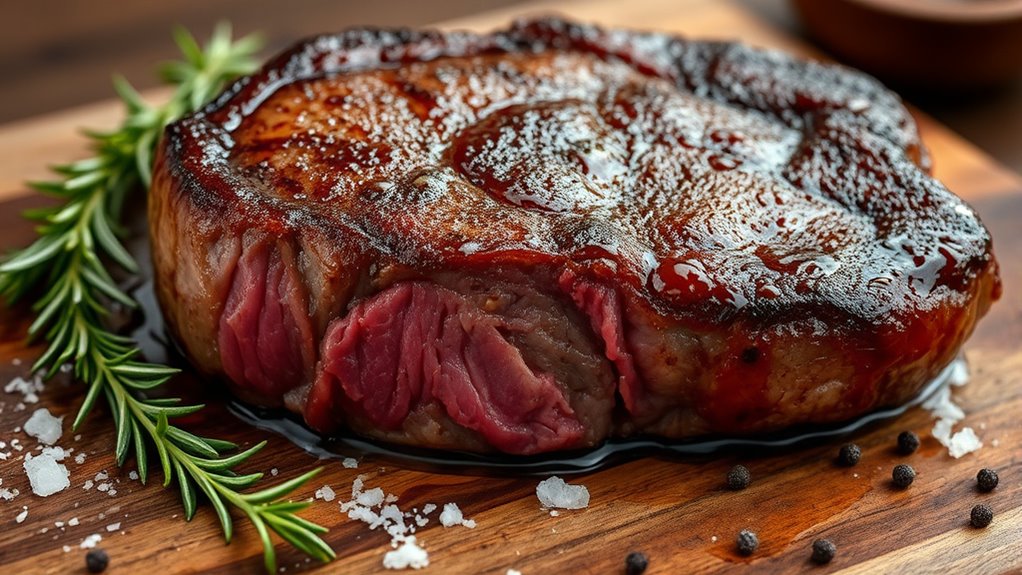
Choosing a tender beef shoulder steak starts with inspecting the meat carefully. Look for steaks with a bright, cherry-red color, which shows freshness. Avoid dull or brownish meat, as that suggests it’s been sitting too long.
Check the marbling—those thin streaks of fat running through the muscle. Good marbling helps keep the meat tender and flavorful. Steaks with evenly distributed fat will cook more evenly and stay juicy.
Good marbling ensures tender, flavorful, and evenly cooked steak with juicy results.
Feel the meat’s firmness; it should be firm but give a little when pressed. Steer clear of steaks that feel overly soft or mushy, as they might be past their prime.
Finally, look at the thickness of the cut. Thicker steaks tend to be more forgiving during cooking, helping you achieve a tender result.
Easy Marinating Tips to Break Down Tough Fibers
Marinating is one of the easiest ways to tenderize beef shoulder steak and break down tough fibers. To get the best results, use an acidic ingredient like vinegar, citrus juice, or yogurt. These help weaken the muscle fibers and make the meat more tender.
Mix in flavorful additions such as garlic, herbs, or soy sauce to boost the taste. Make sure the steak is fully submerged in the marinade and refrigerate for at least 2 hours, ideally overnight.
Avoid over-marinating because acids can start to “cook” the meat, making it mushy. Use a resealable bag or a shallow dish to ensure even coverage.
When you’re ready to cook, remove any excess marinade and pat the steak dry. Proper marinating guarantees your beef shoulder steak will be tender, flavorful, and easy to chew.
Best Home Tenderizing Techniques for Beef Shoulder
To effectively tenderize beef shoulder at home, try using a meat mallet or rolling pin to physically break down the muscle fibers. This simple technique helps loosen tough tissues, making your steak more tender and enjoyable. Gently pound the meat evenly on both sides, focusing on thicker areas for better results. You can also score the surface with a sharp knife to allow marinades to penetrate deeper.
Remember, patience is key—don’t rush the process. Here’s an emotional glimpse into what this can mean for you:
| Feel the Satisfaction | Savor the Flavor | Enjoy Juicier Bites |
|---|---|---|
| Confidence in your skills | Better tasting steak | A meal worth sharing |
| Pride in homemade tenderness | Less frustration | More smiles around the table |
Slow Cooking and Braising Methods for Juicy Results
Slow cooking and braising are your best bets for tender, juicy beef shoulder steak. These methods break down connective tissues, turning tough cuts into melt-in-your-mouth goodness.
To get the best results, use a slow cooker or a heavy-duty Dutch oven to keep the heat steady. Add enough liquid—broth, wine, or a mix—to cover part of the meat.
Cook on low for 6 to 8 hours or until the meat is fork-tender. Keep the lid on to trap moisture and ensure even cooking.
This gentle, moist heat allows collagen to break down slowly, making the beef succulent. Patience is key—don’t rush it for the most flavorful, tender steak.
Cooking Temperatures and Resting Tips for Perfect Steak
Getting your steak just right depends on knowing the right cooking temperatures and how long to rest it. Keep an eye on the internal heat so you don’t overcook it and lose that juicy goodness.
Resting the steak properly lets those flavorful juices stay inside, giving you a perfect bite every time. It’s all about patience to get that tender, juicy result.
Ideal Cooking Temperatures
Achieving the perfect beef shoulder steak depends on reaching the right internal temperature to ensure it’s tender and flavorful.
To do this, aim for specific temperatures based on how you like your steak:
- Rare – 120°F to 125°F, for a cool, red center.
- Medium Rare – 130°F to 135°F, with a warm, red interior.
- Medium – 140°F to 145°F, for a pink, firm steak.
- Well Done – 160°F and above, for fully cooked meat.
Use a reliable meat thermometer to check the temperature in the thickest part of the steak.
Avoid cutting into the steak too early, as that can release juices and change the final texture.
Reaching these temperatures properly guarantees a steak that is tender and flavorful.
Resting for Juiciness
Once you’ve cooked your steak to the desired temperature, resting it properly is key to locking in the juices and ensuring it’s tender.
After removing it from the heat, place the steak on a cutting board or plate and loosely cover it with foil.
Resist the urge to cut into it right away; resting lets the juices redistribute throughout the meat, so they don’t spill out.
Aim for a rest time of about 5 to 10 minutes, depending on how thick your steak is.
During this time, the internal temperature will stabilize, and the meat fibers will relax, making each bite more tender and flavorful.
Proper resting guarantees your beef shoulder steak stays juicy and tender when you serve it.
Monitoring Internal Heat
Monitoring the internal heat of your beef shoulder steak as it cooks helps you hit the perfect doneness without overdoing it. A reliable meat thermometer makes it easier to track progress and avoid guesswork.
Insert the thermometer into the thickest part of the steak for the most accurate reading. Know your target temperatures: 125°F for rare, 135°F for medium-rare, 145°F for medium, and 155°F for well-done.
Remove the steak from heat when it’s about 5°F below your target, since residual heat will finish cooking it. Let the steak rest for at least 5 minutes before slicing to allow juices to redistribute and temperature to stabilize.
This simple step guarantees a tender, juicy steak every time.
How to Slice Beef Shoulder for Maximum Tenderness
To get the most tender slices from beef shoulder, it’s important to cut against the grain. The grain is the direction of the muscle fibers running through the meat, which can be tough if sliced the wrong way.
Look closely at your cooked beef and spot the direction of the muscle fibers. Once you see the grain, position your knife perpendicular to those fibers for the best results.
Use a sharp knife to make clean, even cuts. This helps prevent shredding the meat and makes each slice look neat.
Slice the beef into thin, uniform pieces to maximize tenderness and make it easier to chew. Resting the meat before slicing allows the juices to redistribute, keeping each piece moist and flavorful.
Properly slicing against the grain guarantees that every bite is tender and enjoyable.
Common Mistakes That Toughen Beef Shoulder Steaks: And How to Avoid Them
One common mistake is overcooking beef shoulder steaks, which makes them tough and dry. Using proper tenderizing techniques can prevent this and keep the meat juicy.
If you skip these steps, you’ll end up with a less enjoyable, chewy steak.
Overcooking Leads Toughness
Overcooking beef shoulder steaks is one of the quickest ways to turn them tough and chewy. When you cook them too long, the muscle fibers tighten and lose moisture, making the meat dry and rubbery.
To avoid this, pay attention to these common pitfalls:
- Ignore internal temperature: Overcooking past the ideal temperature (about 135°F for medium) dries out the meat.
- Cook on high heat too long: High heat can sear quickly but can also overcook the exterior while the inside stays tough.
- Forget resting time: Cutting into hot steak immediately causes juices to escape, making it tougher.
- Use prolonged braising: Over-braising can break down connective tissue too much, leading to stringy meat.
Stay attentive, use a thermometer, and don’t rush the process to keep your steak tender.
Insufficient Tenderizing Techniques
Skipping proper tenderizing can leave beef shoulder steaks tough and chewy. If you don’t break down the muscle fibers effectively, your steak won’t be as tender as it could be. Using inadequate techniques like only salt seasoning or skipping marination can result in a tougher texture.
To improve, choose the right tenderizing method for your cut. Mechanical pounding works well for thicker cuts and helps break down fibers easily. Marinades add moisture and flavor while softening the meat a bit. Enzymatic tenderizers are great for tougher cuts and require longer marination to dissolve proteins.
Avoid common mistakes by selecting suitable methods. Doing so will ensure your steak stays tender and delicious every time.
Frequently Asked Questions
Can Beef Shoulder Steak Be Tenderized With Enzymatic Powders?
Yes, beef shoulder steak can be tenderized with enzymatic powders. You just need to sprinkle the enzyme evenly over the meat and let it sit for the time recommended on the package.
Usually, that’s about 15-30 minutes, but it can vary depending on the product. The enzymes work by breaking down connective tissues, which makes the meat more tender.
Just be careful not to overdo it, though. Too much enzyme can turn the steak mushy and ruin its texture.
Does Adding Acidity Help Tenderize Beef Shoulder Effectively?
Adding acidity definitely helps tenderize beef shoulder, transforming tough meat into melt-in-your-mouth goodness. Think of it like a magic spell that breaks down tough fibers, making your steak ridiculously tender.
Marinating with vinegar, citrus, or wine allows the acids to penetrate the meat, softening it effectively. Just don’t overdo it, or your steak might turn into a tangy, mushy mess.
Proper marination is the key to perfect tenderness.
How Long Should I Marinate for Maximum Tenderness?
Marinate your beef shoulder steak for at least 4 to 6 hours, but if you want maximum tenderness, go for 12 to 24 hours.
The longer you marinate, the more enzymes and acids help break down tough fibers, making the meat more tender.
Just make sure to keep it refrigerated during this time and use a non-reactive container to prevent any unwanted chemical reactions.
Is It Better to Cook Beef Shoulder Slowly or Quickly?
You should cook beef shoulder slowly to maximize tenderness and flavor. Slow cooking breaks down connective tissues, turning tough meat into melt-in-your-mouth goodness.
If you’re in a hurry, quick methods like high-heat searing won’t give you the same tender results. Patience really pays off when it comes to beef shoulder.
When you want tender, juicy beef, low and slow is the way to go. This method ensures your steak becomes irresistibly tender and full of flavor, making every bite worth the wait.
Can Freezing Improve the Tenderness of Beef Shoulder Steak?
Freezing beef shoulder steak can help improve its tenderness because ice crystals formed during freezing break down muscle fibers, making the meat easier to chew once cooked.
To get the best results, freeze the steak for about 24-48 hours, then thaw it slowly in the refrigerator.
This process can slightly boost tenderness, but marinating or slow cooking will have a bigger impact on making the steak tender.
Conclusion
Think of tender beef shoulder steak as a well-orchestrated symphony—you’re the conductor, guiding each step. With the right choices, marinating, tenderizing, slow cooking, and proper slicing, you turn tough cuts into melt-in-your-mouth masterpieces.
Avoid common pitfalls, and you’ll be hitting all the right notes. So, grab your utensils and dance through the process. Soon, you’ll be creating a juicy, tender beef shoulder steak that’s sure to impress every time.