How Many Calories Are in a Ground Beef Patty?
Many people trying to eat healthier or manage their calorie intake often find themselves confused about how many calories are in their favorite foods. If you’re wondering about ground beef patties, you’re not alone—this is a common question.
A standard 4-ounce cooked ground beef patty has about 290 calories if it’s 80% lean. If you choose leaner options like 90% or 95% lean, the calories drop to around 200 or 170.
The size of the patty and cooking method also influence calorie content. Grilling or broiling helps reduce fat and calories.
For more tips on making healthier choices and managing calories, there’s plenty more to investigate.
Key Takeaways
- A 4-ounce cooked ground beef patty usually has between 170 to 290 calories, depending on how fatty it is.
- If you go for leaner options like 90% lean beef, it’s about 200 calories.
Meanwhile, 80% lean beef tends to be around 290 calories.
- The size of your patty really matters. Smaller patties will have fewer calories, obviously.
- How you cook it also makes a difference. Grilling or broiling can help reduce calories because fat drips away during cooking.
- Picking leaner cuts and checking labels can help you keep your calorie intake in check when making ground beef patties.
How Many Calories Are in a Basic Ground Beef Patty?
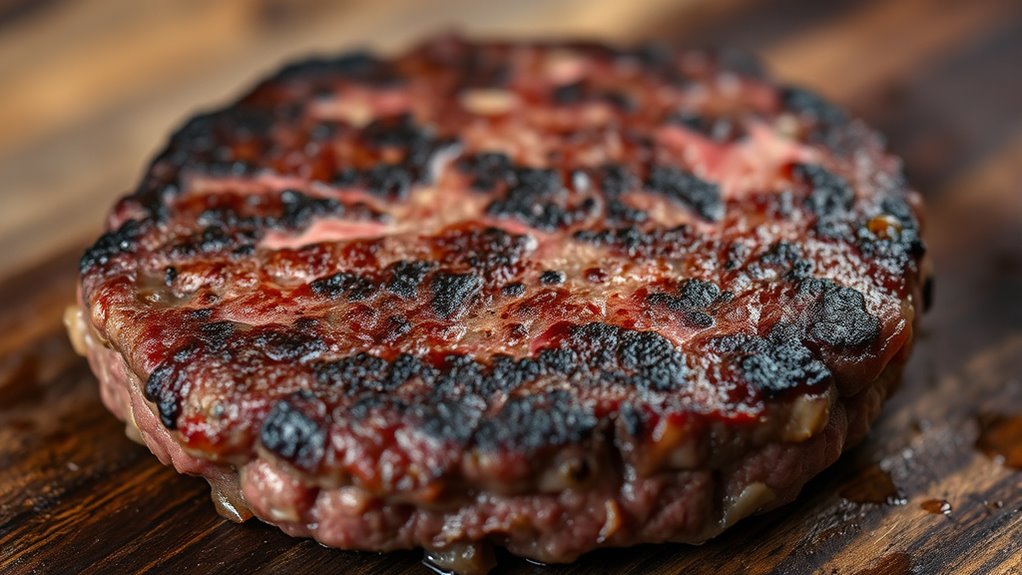
Ever wondered how many calories are in a basic ground beef patty? A standard 4-ounce cooked patty made from 80% lean, 20% fat ground beef usually has about 290 calories.
If you choose leaner meat, like 90% lean beef, the calorie count drops to roughly 200 calories for the same size. The main factors are the meat’s fat content and how much you serve.
Cooking methods also matter. Grilling or broiling tends to reduce fat and calories, while frying might add more. If you’re counting calories, knowing the type of ground beef and how you cook it can really help.
Always check labels and think about your cooking style for a more accurate calorie count. That way, you can enjoy your burger without surprises!
How Does Fat Content Influence Ground Beef Calories?
The fat content in ground beef directly impacts its calorie count because fat is more calorie-dense than protein or carbs. The higher the fat percentage, the more calories you get per serving.
Higher fat in ground beef increases calorie content, so choosing leaner options helps reduce calorie intake without sacrificing protein.
For example, an 80% lean ground beef has less fat and fewer calories compared to a 70% or 80% fat ground beef. Choosing a fattier option will increase your calorie intake even if the serving size stays the same.
Fat also affects flavor and juiciness, which can influence your preference. But if you’re watching your calories, opting for leaner ground beef means fewer calories without sacrificing protein.
Understanding how fat content influences calories helps you make smarter choices based on your dietary goals.
Comparing Calories in Ground Beef Types (80/20, 90/10, 95/5)
Different ground beef types vary in fat content, which directly affects their calorie counts.
You’ll notice that 80/20 has more calories than 90/10 or 95/5 because of its higher fat level.
Understanding these differences helps you choose the right option for your nutritional goals.
Fat Content and Calories
Understanding the fat content of ground beef is key to estimating its calorie count because higher fat levels generally mean more calories. For example, 80/20 ground beef contains about 80% lean meat and 20% fat, making it the most calorie-dense among common types. It has roughly 250 calories per 4-ounce patty.
In contrast, 90/10 ground beef has less fat, around 200 calories per patty, because of its leaner composition. The leanest option, 95/5, contains about 170 calories for the same serving, thanks to its minimal fat.
Keep in mind that fat contributes greatly to calorie content, so choosing a leaner ground beef reduces calorie intake while maintaining protein levels. Your selection directly impacts the total calorie count of your meal.
Nutritional Differences Among Types
Choosing the right type of ground beef directly affects your calorie intake because each variation has different fat content and, consequently, a different calorie count. For example, 80/20 ground beef has 80% lean meat and 20% fat, while 95/5 is leaner.
Higher fat content means more calories per serving. Here’s a quick comparison:
| Type | Fat Percentage | Calories per 3 oz |
|---|---|---|
| 80/20 | 20% | ~230 |
| 90/10 | 10% | ~200 |
| 95/5 | 5% | ~170 |
Choosing leaner options reduces calorie intake, making 95/5 ideal for lower-calorie diets. Understanding these differences helps you make informed choices for your health goals.
How Serving Size Affects Your Ground Beef Patty’s Calories
The size of your ground beef patty directly impacts its calorie content, meaning larger servings contain more calories than smaller ones. If you opt for a quarter-pound patty, you’ll consume around 250 calories, while a third-pound pat can have roughly 330 calories.
Smaller patties, like a 3-ounce serving, typically have about 200 calories. Adjusting the portion size makes it easier to control your calorie intake.
Keep in mind, even slight increases in size can greatly raise calories. Measuring your servings helps you stay on track with your dietary goals.
If you’re mindful of calories, sticking to standard sizes or measuring your portions makes it easier to manage what you eat. Remember, the larger the serving, the more energy you’ll get from your ground beef.
How Cooking Methods Change Ground Beef Calories
Cooking methods greatly influence the calorie content of ground beef because some techniques add calories while others help reduce fat and energy. When you pan-fry or sauté ground beef in oil or butter, you increase the overall calorie count by absorbing extra fats.
Grilling or broiling, on the other hand, allows excess fat to drip away, lowering the calorie content. Baking can also reduce calories if you drain excess grease afterward.
Grilling, broiling, and draining excess fat help reduce the calorie content of ground beef.
Conversely, cooking methods that involve added ingredients like breading or sauces can boost calories considerably. If you’re aiming to keep your ground beef lower in calories, opt for grilling, broiling, or baking, and always drain excess fat.
These techniques help you enjoy flavorful ground beef without unnecessary extra calories.
How to Calculate Calories in Homemade Ground Beef Patties
Calculating the calories in homemade ground beef patties is pretty simple once you know what ingredients and amounts you’re using. First, figure out the weight of your ground beef, usually in ounces or grams.
Check the nutrition label or USDA data for calories per ounce or gram. For example, 80% lean ground beef has about 71 calories per ounce. Multiply this number by the total weight to get the total calories.
If you add ingredients like breadcrumbs or cheese, find their calorie counts and add them to the beef’s total. Keep track of everything for accuracy.
Finally, divide the total calories by the number of patties you make to find the calories per patty. This method gives you a good estimate of your homemade burger’s caloric content.
Are Leaner Ground Beef Options Better for Calorie Control?
Are leaner ground beef options actually better for controlling calories? Generally, yes. Choosing leaner beef, like 90% or higher, cuts down on calorie intake per serving. This means less fat and fewer calories, helping you stay on track with your goals.
But keep in mind, leaner beef can be drier and less flavorful, so how you cook it really matters. Here’s a quick chart to compare:
| Beef Type | Calories per 3 oz | Fat Content |
|---|---|---|
| 80% lean | 215 | 13g |
| 90% lean | 170 | 9g |
| 95% lean | 150 | 6g |
| Extra lean | 120 | 3g |
Choosing leaner options helps with calorie control, but don’t forget to consider flavor and moisture for the best results.
How Do Toppings and Buns Add Calories to Your Burger?
Have you ever wondered how much extra calories toppings and buns add to your burger? Toppings like cheese, bacon, and sauces can really boost your burger’s calorie count.
For example, a slice of cheese adds around 70 calories, while a tablespoon of mayonnaise adds about 100 calories. Vegetables like lettuce and tomato add minimal calories but make your burger taste better and add some nutrition.
Buns also contribute a big chunk of calories—around 150–200 for a standard white bun. Choosing whole wheat or lettuce wraps can cut calories without sacrificing taste.
Remember, each addition adds up quickly. If you’re watching your intake, be mindful of portion sizes and opt for lighter options when you can.
Small changes can make a big difference in your burger’s overall calorie content.
Tips for Choosing Lower-Calorie Ground Beef Patties
To cut calories, opt for leaner ground beef options like sirloin or round. These cuts tend to have less fat, making your burger healthier.
Always check the fat content labels to make sure you’re choosing options with lower fat levels. It’s an easy way to make smarter choices.
Making these simple swaps can help you enjoy your burger without piling on extra calories.
Opt for Leaner Cuts
Choosing leaner cuts of ground beef is one of the easiest ways to reduce calorie content. Look for options labeled “lean” or “extra lean,” which typically contain less fat.
These cuts come from parts like sirloin, round, or loin, which naturally have less fat than chuck or brisket. When shopping, check the package for the fat percentage—aim for 10% or lower to cut calories considerably.
Leaner ground beef still offers good flavor and protein but with fewer calories from fat. Incorporate these cuts into your recipes to enjoy hearty meals without excess calories.
Check Fat Content Labels
When choosing ground beef, it’s important to check the fat content labels on the packaging. This helps ensure you’re picking a lower-calorie option since fat greatly affects the total calories.
Look for labels that specify leaner options, like 90% or higher lean meat. These cuts have less fat, which means fewer calories compared to higher-fat versions.
Pay attention to the percentage listed—higher numbers mean less fat and fewer calories. Avoid ground beef labeled as “regular” or “standard,” as these usually have more fat.
It’s also a good idea to compare labels between brands to find the leanest choice. By selecting packages with less fat, you can enjoy tasty ground beef while keeping your calorie intake in check.
How to Track Ground Beef Calories in Meal Planning
Tracking ground beef calories in meal planning starts with understanding the exact portion sizes and how they contribute to your daily intake. Use a kitchen scale to measure your beef accurately, and note the weight in grams or ounces.
Check the labels or reliable nutrition databases for calorie counts based on the weight. When preparing meals, record the portion size you’re consuming and calculate the calories accordingly.
Keep a food journal or use tracking apps to log each meal, making adjustments as needed. Be consistent with measurements to get an accurate picture of your intake.
What Are the Best Ways to Enjoy Ground Beef Patties Healthily?
Enjoying ground beef patties in a healthy way isn’t just about portion sizes; it’s about making smart choices in how you prepare and serve them. Choose leaner cuts, like 90% lean or higher, to cut down on saturated fat.
Grill, bake, or broil your patties instead of frying to avoid extra fats. Add vegetables to your meal by serving patties over greens or with grilled veggies on the side.
Opt for whole-grain buns or lettuce wraps instead of white bread to boost fiber. Limit high-calorie toppings like cheese and creamy sauces, and try healthier condiments such as mustard or salsa.
These simple swaps let you enjoy your favorite burger flavors without compromising your health goals.
Plant-Based Ground Beef Alternatives: How Do They Compare in Calories?
Are plant-based ground beef alternatives truly lower in calories compared to traditional beef? Generally, yes. Many plant-based options are made to mimic beef’s texture and flavor but with fewer calories, which can be helpful if you’re trying to watch your intake.
However, calorie content can vary depending on the brand and ingredients. Some plant-based products have added oils or fillers, which can increase the calorie count. Here’s a quick comparison:
| Product Type | Calories per 4 oz (113g) |
|---|---|
| Traditional Ground Beef | 200-250 |
| Plant-Based Alternative | 120-180 |
| Extra Oil or Fillers Added | 200+ |
Choosing the right option depends on your goals. Some plant-based alternatives can satisfy your cravings with fewer calories, making it easier to stay on track.
Frequently Asked Questions
How Does the Size of a Patty Affect Its Calorie Count?
The size of a patty directly impacts its calorie count because larger patties contain more meat and fat, which increases their calorie content.
When you make a bigger patty, you’re adding more grams of meat, meaning more calories per serving.
On the other hand, smaller patties have fewer calories.
Are There Specific Brands With Lower-Calorie Ground Beef Options?
Sure, some brands market “low-calorie” ground beef, but don’t be fooled—leaner options like 90% lean or higher usually have fewer calories.
Brands like Laura’s Lean, Applegate, and store brands often offer these healthier choices.
Just make sure to read the labels carefully—those sneaky calories hide in the fat content.
How Do Added Seasonings Impact the Calorie Content?
Adding seasonings can slightly increase the calorie content of your ground beef patty, especially if you use oil, sugar, or high-calorie sauces. Most herbs and spices have minimal calories, so they won’t greatly impact your meal.
However, be mindful of pre-made seasoning mixes or marinades that contain added sugars or fats, as these can add extra calories. Stick to simple, low-calorie seasonings for flavorful, guilt-free patties.
What Is the Calorie Difference Between Homemade and Store-Bought Patties?
The calorie difference between homemade and store-bought patties depends on the ingredients and how they’re prepared. Usually, homemade patties are leaner and lower in calories because you can control the meat-to-fat ratio and skip additives.
Store-bought options often have fillers or preservatives, which can bump up the calorie count a bit. You can cut calories by choosing leaner meat or making your own patties. On the other hand, store-bought ones save you time but might have more calories per serving.
How Do Leftovers Influence the Overall Calorie Intake?
Leftovers can increase your overall calorie intake if you’re not mindful. When you reheat and eat leftovers, you might accidentally eat more than a single serving, especially if portions are larger or if you snack on extras later.
To control calorie intake, measure your leftovers and stick to reasonable portions. Avoid mindless snacking so you don’t overdo it.
This way, leftovers become a convenient way to enjoy your meal without consuming too many calories.
Conclusion
Just like the legendary Hercules faced challenges with strength and strategy, you can master your ground beef choices. Knowing how many calories are in a ground beef patty helps you make smarter decisions.
By understanding calorie differences and cooking methods, you’re empowered to enjoy flavorful patties without overindulgence. Remember, moderation is your greatest ally—think of it as your own heroic quest for balance.
Armed with this knowledge about calories in a ground beef patty, you’re ready to conquer your meal goals with confidence and flair. Every burger can become a triumphant, healthful victory.