How Many Calories Are in 1 Cup of Ground Beef?
Are you trying to keep track of your calorie intake but feeling overwhelmed by the options? You’re not alone—many people struggle with figuring out how different foods fit into their goals.
Ground beef is a common protein choice, but its calorie content can be confusing. A cup of ground beef typically has between 220 and 290 calories, depending on the fat content and cooking method.
Leaner options, like 90% lean, usually contain around 220-250 calories when cooked, while fattier types, like 80% lean, can have closer to 290 calories.
Cooking methods like grilling can reduce calories by allowing fat to drip away.
If you want to learn more about how to make healthier choices, keep exploring!
Key Takeaways
- Raw, 90% lean ground beef contains approximately 220 calories per cup.
- Cooked ground beef generally has around 250 calories per cup because it loses water during cooking.
The calorie count can change depending on the fat content. For example, 80% lean ground beef has about 290 calories per cup.
Cooking methods like grilling can help reduce calories since fat drips away during the process.
Keep in mind, portion size and how you prepare the beef will also influence the total calorie content.
How Many Calories Are in a Cup of Ground Beef?
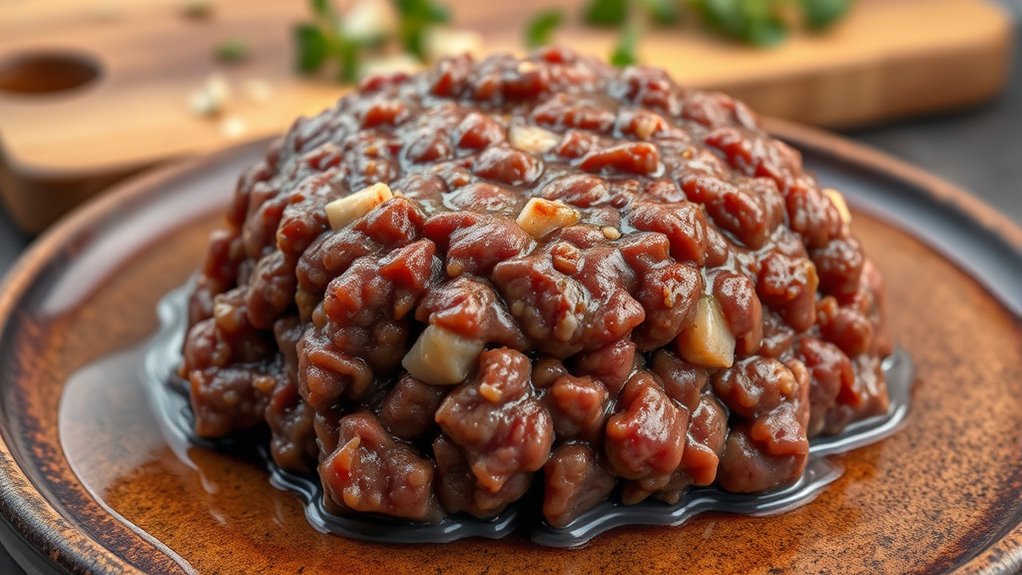
Ever wonder how many calories are in a cup of ground beef? The calorie count depends on the fat content and whether it’s cooked or raw.
Calorie content in ground beef varies by fat percentage and cooking method.
For raw, lean ground beef (90% lean), a cup contains about 220 calories. If you go with 80% lean, it jumps to roughly 290 calories per cup.
Cooking reduces water content, so the calorie density increases—that means cooked ground beef has more calories per cup than raw.
For example, cooked 90% lean ground beef contains approximately 250 calories per cup.
Keep in mind, these numbers can vary slightly based on the brand or how it’s prepared. Knowing these details helps you better estimate your intake and manage your dietary goals effectively.
What Are the Different Types of Ground Beef and Their Calories?
Ground beef comes in several types, mainly based on their fat content, which affects the calorie count. The leaner options, like 90% lean or higher, have less fat and fewer calories—about 170 calories per cooked 3-ounce serving.
Slightly fattier options, such as 80% lean, contain around 220 calories per serving. Regular ground beef, usually about 70% lean, has roughly 290 calories for a 3-ounce portion.
The fattier varieties, like 73% or 80% lean, have more calories because of the higher fat content. Picking the right type depends on your dietary goals, but keep in mind that more fat generally means more calories.
Knowing these differences helps you make smarter choices based on your nutritional needs.
How Does Fat Content Affect Ground Beef Calories?
The fat content in ground beef directly influences its calorie count because fat is more calorie-dense than protein or carbs. The higher the fat percentage, the more calories you’ll get per cup.
Higher fat in ground beef means more calories; choose your percentage based on flavor and dietary goals.
For example, 80% lean ground beef has fewer calories than 90% lean, which has less fat. If you go for 70% fat ground beef, expect even more calories due to the increased fat content.
Fat adds richness and flavor but also boosts the calorie count a lot. When tracking your intake, be mindful of the fat content to better manage your calorie goals.
Leaner options are lower in calories but might have a different texture and taste. So, choosing the right fat percentage depends on your dietary needs and flavor preferences.
How Do Cooking Methods Change Ground Beef’s Calorie Count?
Cooking methods can significantly change the calorie content of ground beef because they influence how much water and fat are retained.
When you cook ground beef, techniques like grilling, broiling, or roasting let excess fat drip away, which lowers the calories.
On the other hand, pan-frying or sautéing with added oils or butter can boost calories due to the extra fats involved.
Cooking also causes water loss, making the beef more calorie-dense per serving by concentrating nutrients and calories.
If you drain the fat after cooking, you reduce the calorie count. But cooking with high-fat ingredients or not draining excess fat can make it higher in calories.
Knowing these differences helps you manage your calorie intake based on how you cook your ground beef.
How to Choose Leaner Ground Beef to Save Calories
Choosing leaner ground beef is an easy way to cut calories without losing flavor. Look for labels like “90% lean” or “93% lean,” which show lower fat content. Just check the nutrition facts to compare fat and calorie levels directly.
When shopping, pick ground beef labeled “lean” or “extra lean” to keep the fat low. You can also ask your butcher for leaner options or for them to trim off any excess fat. Different cuts, like sirloin or round, naturally have less fat than chuck or brisket.
Avoid pre-packaged ground beef with added fillers or higher fat percentages, as these will boost calorie counts. Choosing leaner varieties helps you make healthier choices and enjoy the rich taste you love.
How to Measure Ground Beef at Home Accurately
Measuring ground beef accurately at home is important for controlling portion sizes and calorie intake. To do this well, follow these simple steps.
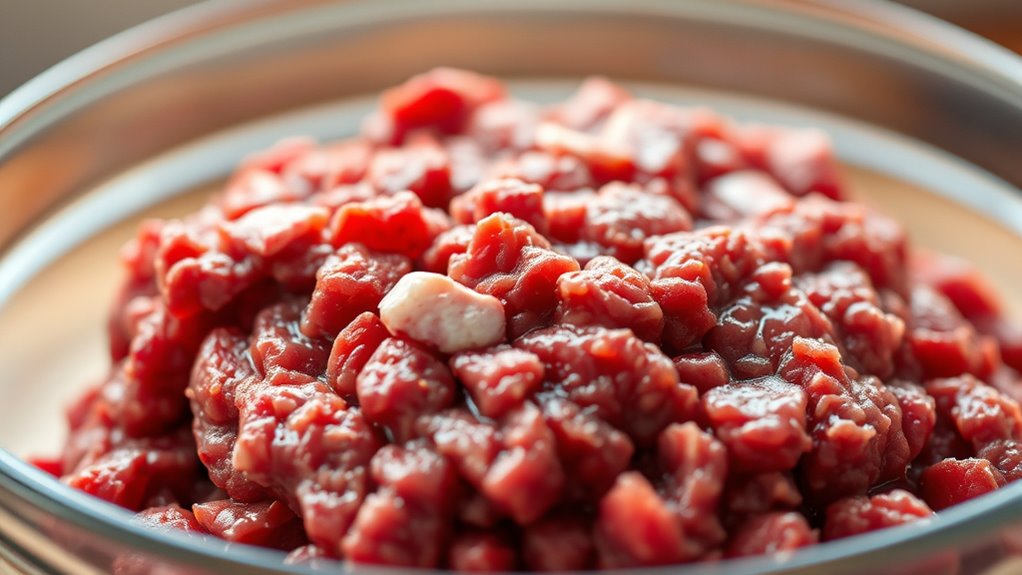
First, grab a standard measuring cup, preferably one with clear markings, and scoop the beef into it. Be gentle so you don’t press it down too tightly, which can change the weight.
Next, for the most precise measurement, use a kitchen scale. Place the beef on the scale and note the weight in grams or ounces. This way, you get an accurate reading every time.
How Does Portion Size Impact Ground Beef Calories?
Portion size directly impacts how many calories you get from ground beef. Eating a bigger portion means more calories, which can add up fast over time.
For example, a 3-ounce cooked serving has fewer calories than a 6-ounce one. Even small increases in size can really affect your daily calorie intake, especially if you often eat larger servings.
A 3-ounce serving has fewer calories than a 6-ounce portion, making portion control key to managing intake.
Using a food scale or measuring cups is a great way to keep portion sizes in check. It helps you avoid unintentionally overeating.
Being mindful of your portions lets you enjoy ground beef while managing your calorie intake. Smaller servings can still be satisfying, especially when paired with vegetables or other low-calorie ingredients.
How Do Ground Beef Calories Compare to Other Protein Sources?
When comparing ground beef to other protein sources, it’s helpful to look at calorie content per serving. You might be surprised at how different options stack up.
Chicken breast usually has about 165 calories per 3-ounce cooked serving, making it leaner than ground beef.
Tofu offers around 94 calories per half-cup, providing a plant-based, lower-calorie alternative.
Salmon contains approximately 206 calories per 3-ounce cooked portion, with healthy fats that add to its calorie count.
While ground beef can have more calories depending on fat content, these alternatives often provide similar or greater protein with fewer calories. Choosing the right option depends on your dietary goals and preferences.
Tips for Including Ground Beef in a Calorie-Conscious Diet
To include ground beef in a calorie-conscious diet, choose leaner options like 90% lean or higher. These have less fat and fewer calories per serving. Trimming visible fat before cooking can also help cut down on calories.
Cooking methods matter, so go for grilling, broiling, or baking instead of frying. Avoid adding too much oil or fats to keep the calorie count in check. Adding vegetables and fiber-rich ingredients makes meals more filling without extra calories.
Be sure to measure portions carefully with a scale or measuring cups. This helps prevent overeating. You can also mix ground beef with lean meats or plant-based proteins to stretch servings and lower overall calorie intake.
These simple tips let you enjoy the flavor of ground beef while sticking to a balanced, calorie-aware diet.
Common Mistakes to Avoid When Calculating Ground Beef Calories
Calculating the calorie content of ground beef can be straightforward, but many people make common mistakes that lead to inaccurate estimates. First, they often forget to account for the fat content, which varies widely and impacts calories considerably.
Second, people tend to overlook cooking methods. Draining grease or cooking with added fats changes the calorie count.
Third, using raw meat weight instead of cooked weight skews the results, since water loss during cooking reduces the weight but not the calories.
To avoid these mistakes, always check the fat percentage on the package. Record whether the beef is cooked or raw. And adjust for cooking losses and added ingredients.
Frequently Asked Questions
How Does the Cooking Time Influence Ground Beef’s Calorie Content?
Cooking time doesn’t greatly change the calorie content of ground beef itself, but it can influence the overall calorie count of your meal. As you cook, fat drips away, especially if you drain it, which reduces calories.
Longer cooking may also cause moisture loss, making the beef more concentrated in calories per ounce. So, while the beef’s inherent calories stay the same, your cooking method can change the final calorie intake.
Are There Any Health Benefits Associated With Lower-Calorie Ground Beef?
Think of lower-calorie ground beef as a gentle breeze guiding you toward healthier choices. It offers benefits like reduced saturated fat, which can support heart health, and fewer calories, helping with weight management.
Can Ground Beef Be Part of a Weight Loss Diet?
Yes, ground beef can be part of a weight loss diet if you choose leaner options and control your portions. Opt for lean or extra-lean ground beef to cut down on fat.
Cook it in healthy ways like grilling or broiling. Incorporate it into balanced meals with plenty of vegetables and whole grains.
Monitoring your overall calorie intake and staying active helps you reach your weight loss goals while still enjoying ground beef.
How Does Ground Beef Calorie Content Vary With Different Regional Recipes?
Regional recipes radically reshape ground beef’s calorie count. You’ll find leaner, lighter recipes in Latin American dishes, reducing calories with fresh vegetables and minimal fats.
Conversely, hearty, heavy recipes from regions like the Midwest often add extra oils, cheeses, or sauces, increasing the calorie content. So, depending on the recipe, ground beef’s calories can vary quite a bit—from slim and simple to rich and robust.
What Are Some Low-Calorie Ground Beef Alternatives?
If you’re looking for low-calorie ground beef alternatives, try lean turkey or chicken. They’re lower in fat and calories, making healthier options.
You can also experiment with plant-based proteins like lentils, mushrooms, or textured vegetable protein (TVP), which mimic ground beef’s texture but have fewer calories.
Adding spices and herbs can boost flavor without extra calories, helping your meals stay nutritious and satisfying.
Conclusion
Next time you scoop a cup of ground beef, picture a tiny mountain of rich, savory goodness—each bite fueling your day. Remember, choosing leaner options and minding your portion sizes can turn this flavorful staple into a smart, satisfying part of your diet.
Did you know that one cup of cooked ground beef typically contains around 250 calories? That’s a helpful detail to keep in mind as you plan your meals.
With a little awareness, you can enjoy ground beef without guilt, making mealtime a delicious journey where health and flavor collide. So, savor each bite and make every calorie count in your favorite dishes.