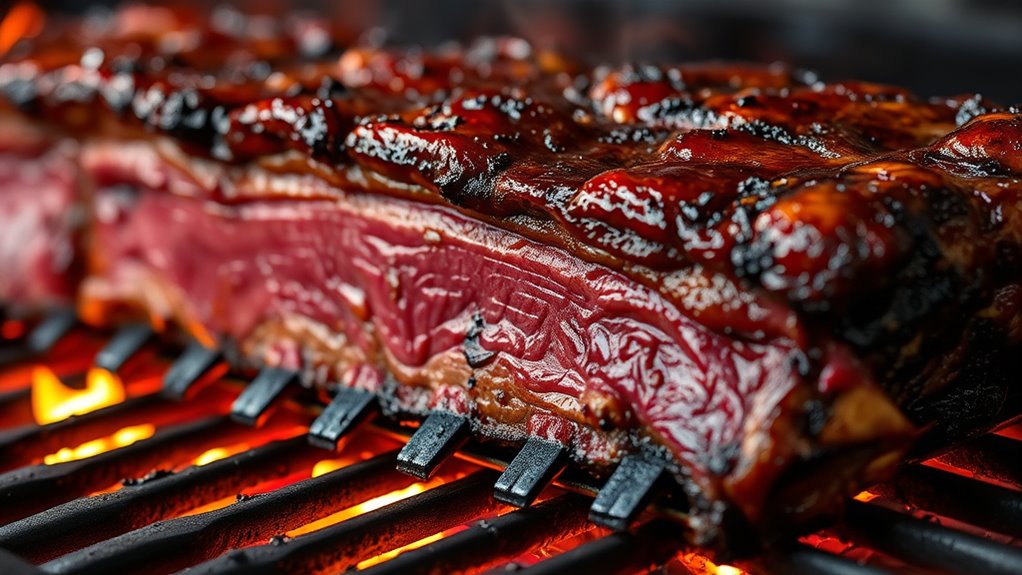
How Long to Smoke Beef Ribs at 700°F in 10 Steps
Many barbecue lovers dream of perfectly smoked beef ribs, but achieving that ideal tenderness and flavor can be tricky. If you’ve ever struggled with getting the timing just right or worried about overcooking, you’re not alone.
Mastering the art of smoking beef ribs at high temperatures like 700°F might seem challenging, but with the right approach, you can get delicious results quickly.
Smoking beef ribs at 700°F is quick but requires careful timing. Typically, you should cook them for 30 to 40 minutes, depending on thickness—about 30 minutes for 1 inch, up to 40 minutes for 2 inches.
Keep a close eye on internal temperature, aiming for 200°F, and watch for color and tenderness cues. Following these steps guarantees juicy, flavorful results. If you want to master each detail, keep exploring the process.
Key Takeaways
- Smoking beef ribs at 700°F usually takes about 30 to 40 minutes, but this can vary based on how thick the ribs are.
- Keep a meat thermometer handy to check when the ribs reach an internal temperature of 195°F to 203°F—that’s when they’re perfectly done.
- Make sure to maintain a steady 700°F heat. Keep an eye on the grill to prevent burning or uneven cooking.
- Place the ribs bone side down on your preheated grill grates so they cook evenly on all sides.
- Once they’re cooked, let the ribs rest for at least 10 minutes. This helps the juices settle and makes them more flavorful.
Why Smoke Beef Ribs at 700°F? Benefits and Considerations
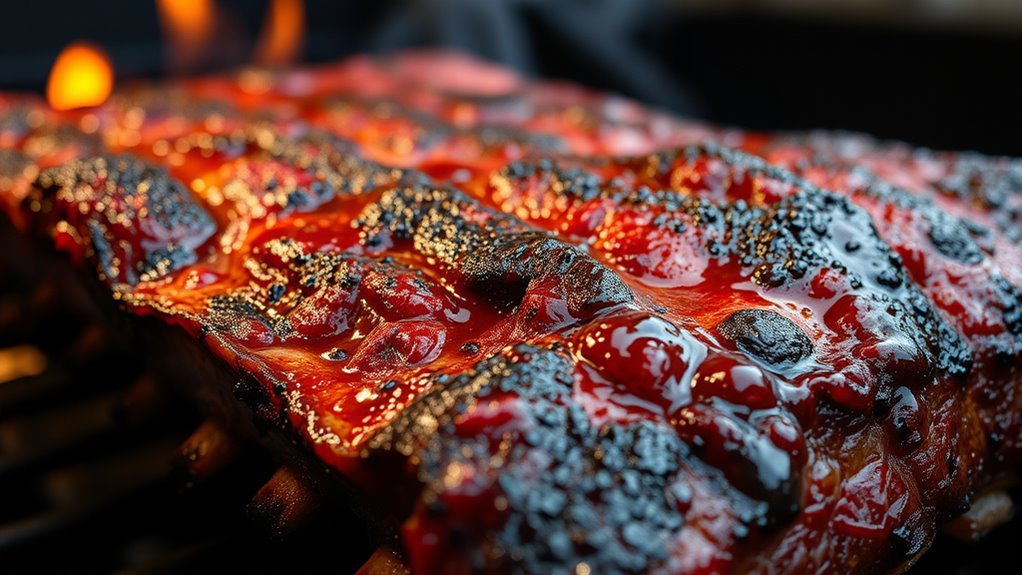
Smoking beef ribs at 700°F is actually not recommended because this temperature is too high for traditional smoking methods. Typically, smoking involves low and slow heat to break down connective tissues and develop flavor.
At 700°F, you risk burning the exterior before the interior cooks properly, which can lead to tough, charred meat. Some cooks use high-heat techniques like reverse searing or finishing methods to add a smoky flavor quickly.
Benefits of high-temperature smoking include shorter cooking times and a crisp crust. Still, you need to be careful with controlling the heat and avoiding overcooking.
For most people, low and slow remains the best approach. But understanding high-heat methods can help you choose the right technique depending on what you want to achieve.
How to Prepare Beef Ribs for High-Temperature Smoking
Before you crank up the heat, preparing your beef ribs properly can make all the difference in getting that flavorful, well-cooked result. Start by removing the silver skin to help the seasoning penetrate better and to tenderize the meat.
Next, trim any excess fat to prevent flare-ups and enhance the flavor. Then, season generously with a dry rub that includes salt, pepper, and your favorite spices—this will create a tasty crust at high temperatures.
| Step | Action | Purpose |
|---|---|---|
| Remove silver skin | Peel off the membrane | Helps the seasoning soak in and tenderizes |
| Trim excess fat | Cut off thick fat layers | Stops flare-ups and improves flavor |
| Apply dry rub | Season evenly | Builds flavor and crust |
10 Steps to Smoke Beef Ribs at 700°F
To achieve perfectly smoked beef ribs at 700°F, you need to set up your smoker with precision and patience. First, preheat your smoker to 700°F, making sure the temperature stays steady before adding the ribs. Use a reliable thermometer to keep an eye on the heat levels constantly.
Next, place the beef ribs directly on the grill grates, bone side down. Leave enough space around them for good heat circulation. Keep the lid closed to maintain a consistent temperature and smoke exposure.
Maintain the high heat throughout the process, avoiding sudden drops in temperature. If your smoker has vents or dampers, adjust them carefully to control airflow and keep the heat steady.
Finally, watch the ribs closely to ensure they cook evenly. Make sure they reach the desired internal temperature for perfect results.
How Long to Smoke Beef Ribs at 700°F?
Once you’ve set your smoker to 700°F and placed the beef ribs on the grill, timing is crucial for that perfect smoky flavor and tender texture. At this high heat, beef ribs cook pretty quickly, usually taking about 30 to 40 minutes.
Keep in mind, the exact time depends on how thick your ribs are. To help you out, here’s an approximate guide:
| Ribs Thickness | Smoking Time | Internal Temp |
|---|---|---|
| 1 inch | 30 minutes | 195°F – 203°F |
| 1.5 inches | 35 minutes | 195°F – 203°F |
| 2 inches | 40 minutes | 195°F – 203°F |
Make sure to watch them closely. Remember, these times are just estimates for the best results.
How to Check If Your Beef Ribs Are Done
To know when your beef ribs are finished, look for a deep, rich color change in the meat.
You can also test tenderness by twisting or probing the ribs. If they feel loose and easily pull apart, they’re likely done.
For the most accurate check, measure the internal temperature. Aim for around 200°F to guarantee perfect tenderness.
Visual Meat Color Change
The color of the meat is one of the most reliable indicators that your beef ribs are ready. As they cook, you’ll notice a distinct shift in hue.
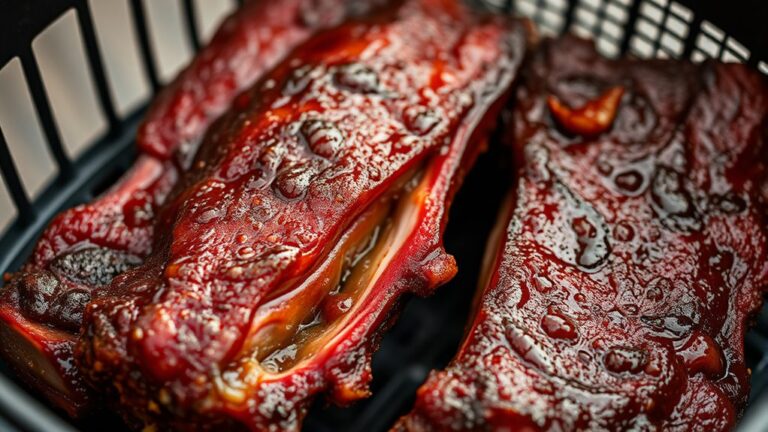
Initially, the ribs are a deep red or purple. As they smoke, they turn a vibrant pinkish-red, signaling they’re nearing doneness. When fully cooked, the meat takes on a rich, caramelized brown with a slight char on the surface.
| Stage | Visual Appearance |
|---|---|
| Raw Meat | Deep purple and red |
| Early Smoking | Bright pink with a hint of red |
| Midway | Pinkish-red, slightly dull |
| Near Finish | Rich brown with caramelization |
| Fully Cooked | Deep brown with a crust, slight char |
Tenderness Test Method
Wondering how to confidently tell when your beef ribs are perfectly cooked? The best way is through a tenderness test. Gently pick up a rack with tongs. If it feels tender enough to let go easily and the meat slightly pulls away from the bone, it’s ready.
You can also insert a probe or skewer into the thickest part. It should slide in smoothly without resistance. Remember, tenderness isn’t just about softness—it’s about the meat’s ability to yield without falling apart.
Keep these points in mind: The meat should feel soft yet firm. Bones may start to loosen slightly. The meat should pull away from the bone easily. The overall texture should be tender but not mushy.
This method helps you achieve perfectly smoked beef ribs every time.
Internal Temperature Check
Checking the internal temperature is one of the most reliable ways to confirm your beef ribs are fully cooked and safe to eat. Use a meat thermometer to get an accurate reading by inserting it into the thickest part of the meat, avoiding the bone.
For tender, safely cooked beef ribs, aim for an internal temperature of around 200°F to 205°F. This range guarantees the collagen has broken down, resulting in juicy, tender ribs.
Don’t rely solely on visual cues or tenderness tests; checking the temperature gives you a definitive confirmation. Be sure to let the ribs rest for at least 10 minutes after removing them from the smoker to allow the juices to redistribute.
This step ensures each bite is flavorful and moist.
Troubleshooting: Fixing Common Problems When Smoking at 700°F
Smoking beef ribs at 700°F can lead to a few common problems, but knowing how to troubleshoot them can make a big difference. If your ribs come out dry, overcooked, or uneven, don’t worry.
First, make sure your thermometer is accurate. Using a reliable one is key for controlling the temperature. If the ribs are drying out, try wrapping them sooner or spritzing with a liquid during cooking to keep them moist.
Uneven cooking can be fixed by rotating the ribs or adjusting the airflow. Keep a close eye on the heat to avoid flare-ups or charring, and steer clear of direct flames. Remember these tips:
- Use a quality thermometer for precise temperature control
- Keep the lid closed as much as possible
- Wrap ribs early if they cook too fast
- Adjust airflow to maintain consistent heat
Tips for Flavor, Juiciness, and Perfect Results
To guarantee your beef ribs are full of flavor and stay juicy, focus on proper seasoning and moisture management throughout the smoking process. Use a generous dry rub with salt, pepper, and spices to elevate flavor, but don’t forget to let the ribs rest after applying it. This helps the seasonings penetrate better.
Keep the ribs moist by spritzing them with a mixture of apple juice or beef broth every 30-45 minutes. Wrapping the ribs in foil during the last stage traps moisture and makes them more tender.
Maintain a consistent temperature of 700°F for even cooking, but be careful not to overcook, as that can dry out the meat. Rest the ribs for at least 10 minutes before slicing so the juices can redistribute, ensuring every bite is flavorful and juicy.
Frequently Asked Questions
Is Smoking Beef Ribs at 700°F Safe?
Smoking beef ribs at 700°F isn’t safe because this temperature is way too high for proper smoking. Usually, smoking is done between 225°F and 275°F to make sure the meat turns out tender and safe to eat.
At 700°F, you’re risking burning the meat and creating harmful smoke. Always use a good thermometer and stick to recommended temperatures. Avoid high heat smoking to keep your cooking safe and tasty.
What Type of Wood Is Best for High-Temperature Smoking?
For high-temperature smoking, you want woods that handle heat well and give strong flavors. Hickory and oak are top choices because they produce bold, smoky flavors and burn steadily at high temperatures.
Fruit woods like apple or cherry are milder but can be combined with stronger woods for a balanced flavor. Avoid softwoods like pine, which can create harsh fumes and aren’t suitable for cooking.
How Does High-Temperature Smoking Affect Rib Tenderness?
High-temperature smoking at 700°F can make your beef ribs tougher if you’re not careful. Studies show that rapid cooking at high heat can cause muscle fibers to tighten, which reduces tenderness.
To keep ribs juicy, sear them quickly and avoid overcooking. Using a meat thermometer helps ensure you hit the right temperature without going over.
Proper technique guarantees you get a smoky, flavorful exterior while maintaining that tender, melt-in-your-mouth interior you crave.
Can I Use a Regular Smoker at 700°F?
You can’t use a regular smoker at 700°F because most are designed to operate at much lower temperatures, typically between 225°F and 275°F.
Smoking at such high heat risks damaging the smoker and producing undesirable results.
If you want to cook beef ribs quickly, consider grilling or roasting instead.
For traditional smoking, stick to the recommended lower temperatures for tender, flavorful ribs.
What Are the Signs of Overcooking at This Temperature?
You’ll know you’ve overcooked beef ribs at 700°F if they become dry, tough, or stringy. The meat might also shrink quite a bit and lose its juicy feel.
When you bite into them, they’ll lack that tender, melt-in-your-mouth quality and could feel hard or chewy. Keep an eye on the internal temperature—if it goes over 203°F, the chances of overcooking go up.
Make sure to monitor carefully so your ribs don’t dry out and lose their perfect texture.
Conclusion
Smoking beef ribs at 700°F is a bold method that can give you a rich, smoky flavor in just a few minutes. Did you know that high-temperature smoking cuts down cooking time by up to 75% compared to traditional low-and-slow methods?
With the right prep and attention, you’ll get tender, flavorful ribs faster than ever. Just keep a close eye on the process to avoid overcooking. Your perfect, smoky beef ribs are within reach!