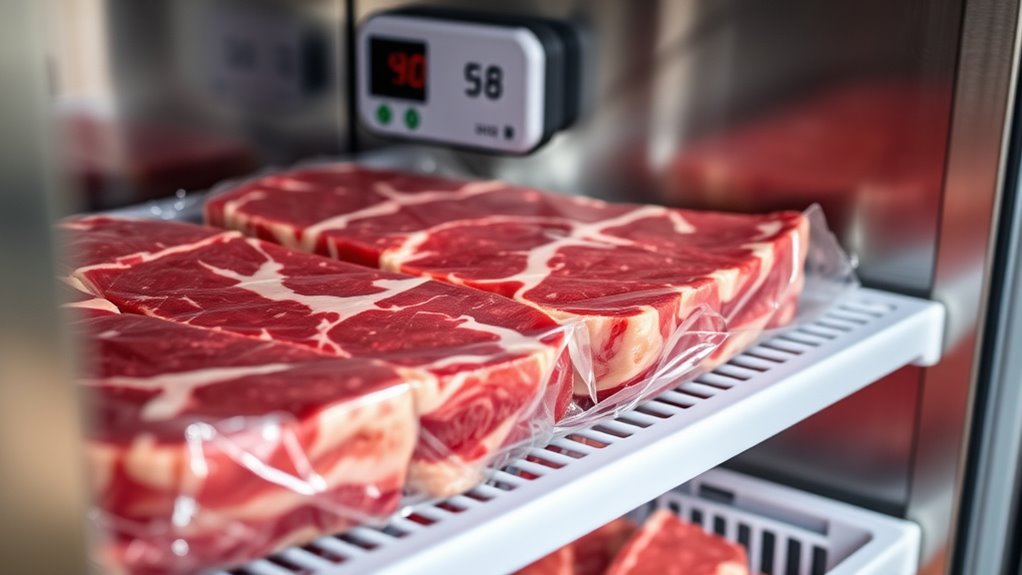
How Long Should You Keep Beef in the Fridge Safely?
Many people struggle with figuring out how long they can keep beef in the fridge without risking spoilage or foodborne illness. It’s a common concern, especially when you’re trying to make the most of your groceries and avoid waste.
You’re not alone in wanting to store beef safely while keeping it fresh and tasty.
You should keep fresh beef in the fridge for no more than 3 to 5 days at or below 40°F (4°C). How long you can store it depends on the cut, like tender or tough beef, and whether it’s ground or offal, which last only 1 to 2 days.
Always check for spoilage signs like sour smell, dull color, or slimy texture before cooking.
To learn more about proper storage and safety tips, keep exploring these guidelines.
Key Takeaways
- Fresh beef should be stored in the fridge for no more than 3 to 5 days at or below 40°F (4°C).
- Ground beef and offal only last about 1 to 2 days. Tougher cuts like roasts can stay safe for up to 7 days.
- Always check for signs of spoilage before cooking. Look out for a sour smell, dull color, or slimy texture.
- Proper packaging can help keep beef fresh longer. Using vacuum sealing or airtight containers is a good idea.
- Never leave beef out at room temperature for more than two hours. Bacteria grow quickly at warm temperatures, so it’s best to refrigerate promptly.
How Long Can You Safely Store Fresh Beef in the Fridge?
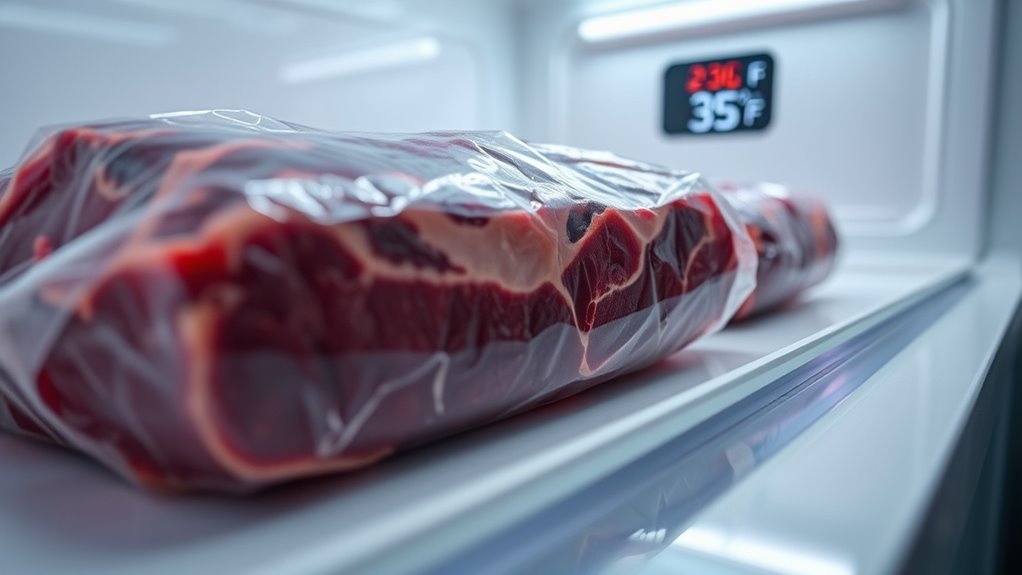
You can typically store fresh beef in the fridge for 3 to 5 days. To keep it safe, make sure your fridge is at or below 40°F (4°C).
Store the beef in the coldest part of your refrigerator, ideally on a plate or dish to catch any drips. Wrapping it tightly in plastic wrap, foil, or putting it in an airtight container helps prevent contamination and keeps it fresh longer.
Always check for signs of spoilage before cooking. Look out for a sour smell, slimy texture, or discoloration. If you’re unsure whether the beef is still good, it’s best to discard it.
Proper storage extends freshness and reduces the risk of foodborne illnesses, so when in doubt, play it safe.
Does the Type of Beef Change Its Storage Time?
Different cuts and types of beef can influence how long they stay fresh in the fridge. For example, tender cuts like steaks typically last 3 to 5 days, while tougher cuts like roasts can last up to 5 to 7 days.
Ground beef has a shorter window, usually 1 to 2 days, because of its increased surface area. Here’s a quick overview:
| Beef Type | Typical Storage Time | Best Use Timing |
|---|---|---|
| Steak | 3-5 days | Cook within a few days |
| Ground Beef | 1-2 days | Use immediately |
| Roast (Chuck, Brisket) | 5-7 days | Cook within a week |
| Liver & Offal | 1-2 days | Use quickly |
Knowing the type of beef helps you store it properly and avoid spoilage.
How Can You Tell If Beef Has Gone Bad?
Knowing how to identify spoiled beef is key to preventing foodborne illnesses and wasting money. First, check the smell—fresh beef should have a mild, meaty aroma. If it smells sour, rancid, or off, discard it immediately.
Next, examine the color. Fresh beef is bright red or pink, while spoiled meat turns dull, brown, or gray. Feel the texture—slimy or sticky beef indicates spoilage. Also, look for any visible mold or unusual spots.
If your beef shows any of these signs, it’s safest to toss it. Remember, trust your senses, and when in doubt, throw it out. Properly stored, beef shouldn’t have these signs beyond the recommended timeframe. Always err on the side of caution to stay safe.
Best Ways to Store Beef for Maximum Freshness
To keep beef fresh for as long as possible, proper storage techniques are essential. First, store beef in its original packaging if you plan to use it within a couple of days.
Store beef in its original packaging if you’ll use it soon to maintain freshness and quality.
For longer storage, transfer it to an airtight container or tightly wrap it with plastic wrap or aluminum foil. Keep the beef on the coldest shelf of your fridge, usually the bottom back, to maintain a consistent temperature.
Avoid overcrowding, which can raise the overall temperature and cause spoilage. If you’re not planning to use the beef soon, consider freezing it instead.
Label packages with dates to track freshness. Proper storage helps prevent bacteria growth and preserves flavor, ensuring your beef stays fresh and safe to eat.
Is Cooked Beef Safe to Keep in the Fridge?
Is cooked beef safe to keep in the fridge? Yes, but only for a limited time. Once you’ve cooked beef, refrigerate it within two hours to prevent bacteria growth. Store it in an airtight container or wrap it tightly with plastic wrap or foil. Proper storage helps maintain its quality and safety.
Typically, cooked beef stays safe for up to three to four days in the fridge. After that, the risk of bacteria increases, and it’s best to discard any leftovers. Always reheat cooked beef to an internal temperature of 165°F before eating again.
If you notice any sour smell, slimy texture, or discoloration, don’t risk it—throw it out. Proper storage and timely consumption keep your cooked beef safe and delicious.
How Long Does Ground Beef Last in the Refrigerator?
You should use ground beef within 1 to 2 days of refrigeration to prevent spoilage.
Keep an eye out for signs like a sour smell, slimy texture, or discoloration, which mean it’s no longer safe to eat.
Proper storage and quick use are key to keeping your ground beef fresh and safe.
Storage Duration Limits
Ground beef usually stays safe in the fridge for about 1 to 2 days after you buy it. To keep it safe, plan your meals so you cook or freeze it within this time.
If you’re not using it right away, freeze the beef at 0°F (-18°C) to make it last longer. Use airtight containers or freezer bags to prevent freezer burn and keep the quality up.
Remember, the longer ground beef stays in the fridge beyond the recommended time, the higher the chance of spoilage and bacteria growth. Always label your frozen packages with the date you froze them so you can keep track.
For the best freshness and safety, try to use ground beef within 1 to 2 days or freeze it immediately if you won’t cook it soon.
Signs of Spoilage
Freshness and safety depend on recognizing the signs that ground beef has gone bad. If you notice a sour or off smell, discard it immediately.
A slimy texture is another red flag, indicating bacterial growth. Look for discoloration—brown or gray patches can mean spoilage, especially if the meat was bright red when purchased.
Mold or any fuzzy growth on the surface is a clear sign the beef is no longer safe. Moreover, if the packaging is bloated or leaking, it’s best not to consume the meat.
Trust your senses—if anything seems unusual, it’s safer to throw it out. Proper storage and prompt inspection help prevent foodborne illness.
When in doubt, it’s better to be cautious than risk food poisoning.
Common Mistakes That Shorten Beef’s Shelf Life
Storing beef at the wrong temperature or leaving it out too long can speed up spoilage.
Poor packaging, like not sealing it properly, exposes it to bacteria and air, shortening its shelf life.
Paying attention to these common mistakes helps keep your beef fresh longer.
Improper Storage Temperatures
Maintaining the correct storage temperature is essential to keeping beef safe and fresh, yet many people accidentally shorten its shelf life by not paying attention to this detail. If the fridge isn’t cold enough, bacteria can grow rapidly, increasing the risk of spoilage and foodborne illness.
The ideal temperature for storing beef is at or below 40°F (4°C). Use a fridge thermometer to guarantee your appliance stays within this range. Avoid leaving beef in a warm spot or in the door, where temperature fluctuations are common.
Also, don’t overload your fridge, as poor air circulation can lead to uneven cooling. Proper temperature control slows bacterial growth, extending beef’s freshness and reducing waste. Always keep an eye on your fridge’s temperature for safe, longer-lasting beef.
Leaving Beef Out Too Long
Leaving beef out at room temperature for too long is a common mistake that can seriously cut down its shelf life and pose health risks. Bacteria grow quickly between 40°F and 140°F, making the meat unsafe to eat.
When beef sits out for more than two hours, it enters the danger zone, increasing the chance of foodborne illnesses. To keep your beef safe, pay attention to how long it stays at room temperature.
Some common mistakes include leaving beef unrefrigerated during meal prep or social gatherings, forgetting to refrigerate leftovers promptly, or covering beef with foil or plastic wrap while sitting out.
Sticking to proper timing helps keep your beef safe and extends its freshness.
Poor Packaging Practices
Poor packaging practices can significantly shorten the shelf life of beef by exposing it to air, contaminants, or moisture that speed up spoilage. If you don’t wrap beef properly, bacteria can thrive, and oxidation can cause spoilage and off-flavors.
Using the wrong packaging material or leaving the beef exposed increases the risk of freezer burn and bacterial growth. Always use airtight containers or vacuum-sealed bags and make sure your beef is tightly wrapped.
Here’s a quick comparison:
| Packaging Type | Pros | Cons |
|---|---|---|
| Plastic Wrap | Easy, inexpensive | Less airtight, prone to leaks |
| Vacuum Sealing | Extends shelf life, airtight | Requires special equipment |
| Aluminum Foil | Good for short-term storage | Not suitable for long-term |
| Resealable Bags | Convenient, affordable | Less effective without vacuum |
When Should You Throw Out Beef to Stay Safe?
Wondering when you should toss out beef to avoid foodborne illness? If beef develops a sour or off smell, slimy texture, or unusual discoloration, it’s time to discard it. These signs indicate bacterial growth that can cause illness.
Also, if beef has been in the fridge for more than 3-5 days, it’s safest to throw it out, even if it looks okay. Always trust your senses—don’t rely solely on expiration dates.
If beef has been refrigerated over 3-5 days, it’s safest to discard it, even if it appears fine. Trust your senses.
To stay safe, remember these key points:
- Sour or foul odor
- Slimy or sticky surface
- Discoloration or dull appearance
When in doubt, it’s better to err on the side of caution and discard questionable beef. Consuming spoiled meat can lead to food poisoning, so stay vigilant.
Frequently Asked Questions
Can Freezing Beef Extend Its Safe Storage Time in the Fridge?
Freezing beef doesn’t extend its safe storage time in the fridge. It halts bacterial growth but doesn’t keep the beef safe to eat forever.
Once you thaw frozen beef, you should cook or refrigerate it within 1 to 2 days. If you want to store beef longer, freezing is the way to go.
Just make sure to wrap it tightly to prevent freezer burn and keep the quality high.
Does Vacuum Sealing Affect Beef’s Refrigerator Shelf Life?
Vacuum sealing beef creates a tight barrier, locking out air and bacteria, so it extends the meat’s fridge life considerably.
Imagine the beef wrapped in a protective cocoon, staying fresh and juicy longer than usual.
By removing oxygen, vacuum sealing slows bacterial growth and spoilage.
You can safely keep beef this way for 1 to 2 weeks, or even longer when combined with freezing, ensuring your meat stays fresh and safe to eat.
How Does Storing Beef on the Door Impact Its Freshness?
Storing beef on the door can impact its freshness because the temperature there fluctuates more than in the fridge’s main compartment.
When you keep beef on the door, it’s exposed to temperature swings each time you open and close it. This can speed up spoilage.
For the best freshness, place beef in the coldest part of your fridge, usually toward the back. Keep the door for less perishable items instead.
What Temperature Should My Fridge Be to Keep Beef Safe?
You should set your fridge temperature to 40°F (4°C) or lower to keep beef safe. This temperature slows bacterial growth and helps maintain freshness.
Use a reliable thermometer to check the temperature regularly, especially if you notice fluctuations. Keep beef on the bottom shelf to prevent drips onto other foods.
Proper temperature control is key to preventing spoilage and foodborne illnesses. This way, your beef stays fresh and safe to eat.
Can Marinated Beef Last Longer in the Refrigerator?
Marinated beef can last a bit longer in the fridge, usually up to 2 days, thanks to the marinade’s acidity. This can slow down bacterial growth a little.
Just make sure to keep it refrigerated at or below 40°F (4°C). Always check for any off smells or slimy textures before cooking.
If you want to store it longer, consider freezing the marinated beef to keep it fresh and safe.
Conclusion
Think of your fridge as a vigilant guard, protecting your beef like a treasured artifact. If you follow proper storage times—usually 3 to 5 days for fresh beef—you’ll avoid spoilage and foodborne illness.
Remember, just like a delicate masterpiece, beef needs careful handling and timely disposal once its shelf life ends. When in doubt, trust your nose—it’s the best alarm system.
Keep your fridge’s guard up, and your meals will stay safe and delicious. For beef, sticking to that 3 to 5-day window is key to keeping it fresh and safe to eat.