
How Do Flea Eggs Look Like Salt
Are you tired of confusing tiny particles around your home and not knowing whether they’re flea eggs or just salt? Many people struggle with identifying these small specks, which can lead to unnecessary worry or missed infestations.
Don’t worry—you’re not alone in this, and understanding the differences can make all the difference.
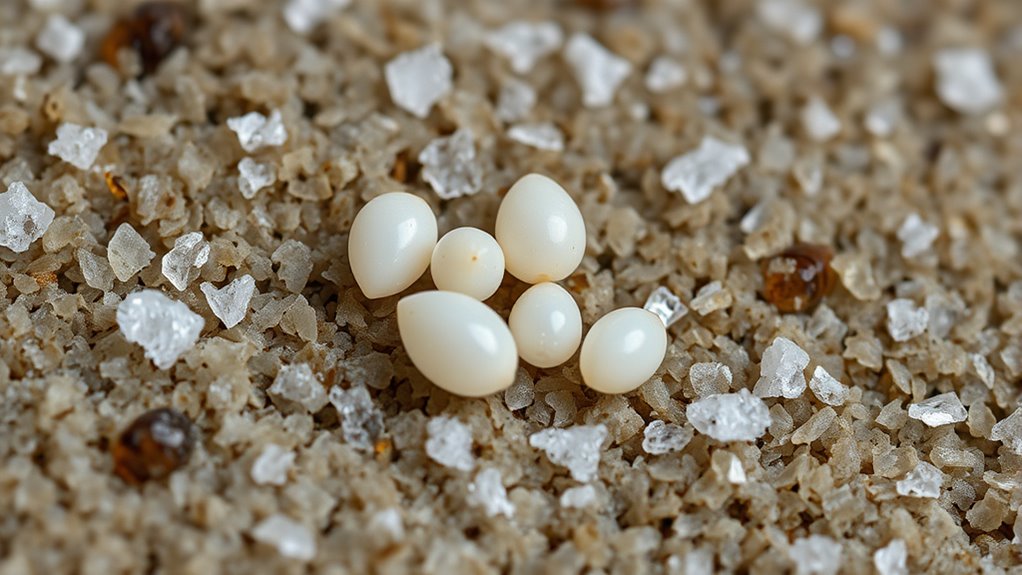
Flea eggs are tiny, white, oval-shaped, and about 0.5 millimeters long, often glossy and smooth. They look like small pearls or grains of lint, making them tricky to spot at first.
Salt crystals are usually irregular, jagged, and opaque. They’re generally larger than flea eggs, often exceeding 1 millimeter.
You’ll typically find salt in open areas like kitchens, whereas flea eggs tend to hide in bedding and carpets.
Keep exploring to uncover more tips on telling them apart and avoiding misidentification.
Key Takeaways
- Flea eggs are tiny, smooth, oval, and glossy. They look like tiny pearls, which is quite different from the irregular, crystalline salt grains.
- They are white and translucent, helping them blend into pet bedding and carpets. Salt, on the other hand, is opaque and usually found on hard surfaces.
- Flea eggs are about 0.5 mm long. They’re smaller and more uniform compared to salt crystals, which tend to be larger and jagged.
- Flea eggs are sticky and tend to cling to surfaces in clusters. Salt grains are scattered around and are free-moving.
- Using a magnifying glass can help you tell them apart. Flea eggs are hidden and shiny, unlike salt, which is more obvious and dull.
What Do Flea Eggs and Salt Look Like?
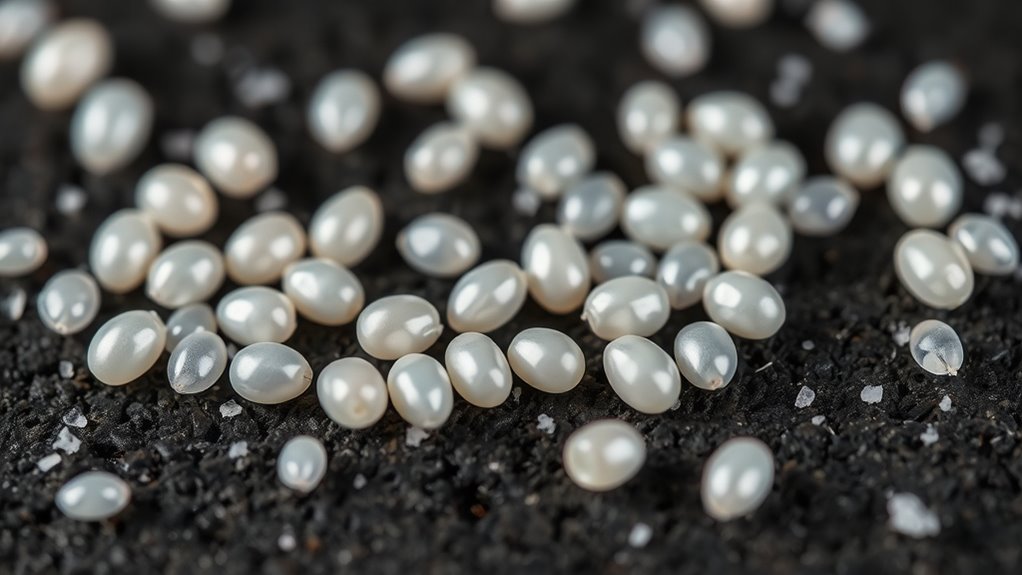
Flea eggs are tiny and oval-shaped, usually about 0.5 millimeters long. They’re smooth, shiny, and see-through, so they can be hard to spot with your naked eye.
When you get a closer look, they might look like little specks or grains. Salt crystals are similar—small, white, and granular—so it’s easy to confuse them.
Flea eggs have a slightly glossy surface, while salt crystals tend to be duller and rougher. Flea eggs are more uniform in shape and size, but salt grains can vary more.
When you’re checking your pet’s environment, these similarities can be confusing. But don’t rely only on how they look; clues like where they’re found and their texture can help you tell them apart.
How to Tell Flea Eggs Apart From Salt by Looks
How can you tell flea eggs apart from salt just by looks? Flea eggs are usually oval and smooth, with a slightly shiny surface that reflects light.
Flea eggs are smooth, oval, and shiny, unlike salt’s jagged, crystalline appearance.
Salt particles tend to be irregular in shape, often jagged or crystalline, and lack any uniformity. Flea eggs are uniform in size, about 0.5 millimeters long, making them look tiny and delicate.
Salt particles, on the other hand, vary a lot in shape and size, often forming sharp, angular crystals. Flea eggs are translucent or white, giving them a soft, pearl-like look.
Salt is opaque and usually white or off-white but can have a crystalline, jagged appearance that makes it stand out from the smooth, rounded shape of flea eggs.
Size and Shape Differences Between Flea Eggs and Salt Particles
Flea eggs are generally smaller than salt particles, measuring about 0.5 millimeters long, but their size can vary slightly. Their shape is usually oval or elliptical, unlike the more irregular or crystalline form of salt.
Recognizing these differences helps you distinguish flea eggs from salt more easily.
Size Variations Compared
Salt particles and flea eggs differ noticeably in size and shape, making it easier for you to identify them. Flea eggs are tiny, usually about 0.5 millimeters long, which is smaller than most salt grains.
Salt particles vary in size but are generally larger and more irregular, often exceeding 1 millimeter. Flea eggs are smooth, oval-shaped, and uniform in size, while salt grains can be jagged, crystalline, or irregularly shaped.
The small, consistent size of flea eggs helps you distinguish them from larger, more varied salt particles. Understanding these differences allows you to quickly recognize flea eggs in your environment, especially in bedding, carpets, or furniture where fleas lay eggs.
Shape Distinctions Noted
The shape differences between flea eggs and salt particles are key to identifying them accurately. Flea eggs are oval or elongated, with a smooth, shiny surface that reflects light, making them look slightly rounded.
In contrast, salt particles tend to be irregular, often jagged or crystalline, with sharp edges and a more matte finish. Flea eggs are uniform in shape, usually about 0.5 mm long, giving them a consistent look.
Salt grains vary widely in size and shape, with many having angular or crystalline forms. By observing these shape differences, you can easily tell flea eggs from salt particles.
Flea eggs will appear more rounded and smooth, while salt particles look jagged and uneven. These distinctions help you identify infestations more confidently.
Flea Eggs Are Usually Oval and White: Here’s Why
Flea eggs are usually oval and white because their shape helps them stick to surfaces and hide from predators. Their small size and smooth appearance make them look like tiny salt grains, which can cause confusion.
The white color also provides camouflage in bedding and carpets. Plus, their natural composition makes them less visible in most environments.
Shape and Size
Flea eggs are usually oval and white, which helps them serve their purpose. Their small size makes them harder for predators to see, blending into their environment easily.
Most flea eggs are about 0.5 millimeters long, similar to a tiny seed or a grain of salt. Their shape helps them stick to surfaces like pet fur, bedding, or carpets, so they don’t fall away easily.
The shape and size of flea eggs are designed for attachment and concealment. A smooth surface reduces friction, helping them stay in place, while their slight elongation allows them to fit into small cracks.
Rounded edges and a compact form help the eggs resist external forces and minimize damage during movement. All these features work together to support their survival and spread.
Color Similarities
Because their color closely resembles the environment they inhabit, flea eggs are typically oval and white. This helps them blend in seamlessly, making it hard to spot them unless you look carefully.
Flea eggs are often found on bedding, carpets, or upholstery, where their light color can mimic dust or lint. Their white hue also helps protect them from predators by not standing out against light backgrounds.
This color similarity is an evolutionary trait that boosts their chances of survival during the vulnerable early stages. By matching their surroundings, flea eggs avoid immediate detection and increase their chances of developing into adult fleas.
Recognizing this color similarity can help you identify potential flea infestations more effectively.
Why They Look White
Their white color isn’t accidental; it serves specific biological purposes that increase their chances of survival. Flea eggs are naturally white because this color helps them blend into their environment, like bedding, carpets, or furniture, making them less noticeable to hosts or predators.
White also reflects light, which can help keep the eggs cooler and prevent overheating in warm environments. Plus, the pale hue shows they’re still undeveloped since they haven’t yet absorbed nutrients or pigments from their surroundings.
This color also makes it easier for pest control professionals to spot flea eggs during inspections. Overall, their white appearance is an adaptive trait that helps keep the eggs hidden and protected until they hatch, boosting the chances of flea population survival.
How Flea Eggs and Salt Appear Under a Microscope
Under a microscope, flea eggs look like tiny, oval-shaped structures with smooth surfaces. They’re surprisingly uniform in size and often look translucent, almost like small, clear beads.
Salt crystals, when viewed the same way, also appear as small, transparent or white grains. But they tend to have jagged edges and uneven surfaces, unlike the smooth flea eggs.
Flea eggs are more rounded and smooth, giving them a consistent look. They’re usually about 0.5 millimeters in size, making them tiny but still visible with proper magnification.
While both can seem similar at first, their surface textures and shapes are the main clues to tell them apart under a microscope.
Texture and Surface Features of Flea Eggs vs. Salt
While flea eggs and salt crystals may look similar at first glance, looking closely at their surface textures shows clear differences. Flea eggs have a smooth, waxy surface that feels slick and even to the touch.
Salt crystals, on the other hand, tend to be rougher, with jagged edges and a grainy feel. Flea eggs often appear shiny or slightly translucent, reflecting light evenly.
Salt crystals are usually matte and uneven, lacking that shine. Their edges are jagged and irregular compared to the smooth, rounded edges of flea eggs.
You can also tell them apart by how they reflect light. Flea eggs have an even, soft shine, while salt crystals are dull and lack any shine.
Finally, the feel is different. Flea eggs feel slick and firm, whereas salt crystals are grainy and coarse. These differences make it easy to tell them apart.
Where Do Flea Eggs and Salt Usually Appear in Your Home?
Flea eggs and salt crystals tend to appear in different areas of your home, often giving clues about where they come from.
You’ll usually find flea eggs in spots where your pet spends a lot of time, like bedding, carpet fibers, or furniture upholstery. They hide in dark, warm places where fleas thrive.
Salt crystals are more likely to be found in the kitchen or bathroom, especially near sinks, cracks, or food storage areas.
Salt tends to stay in open, accessible spots, while flea eggs are hidden deep within fabrics or carpets.
Paying attention to these locations can help you figure out if you’re dealing with fleas or just salt, guiding your next cleaning or pest control steps.
Can Flea Eggs Be Differentiated From Salt by Their Environment or Behavior?
You can often tell flea eggs apart from salt by looking at where they are and how they behave. Flea eggs are usually found in places like pet bedding, carpets, or cracks in the floor where fleas tend to hang out.
They rarely show up in open, dry spaces like salt might. Flea eggs are sticky and can cling to surfaces or hair, so they don’t roll away like salt grains do.
Flea eggs are often laid in clusters and can be disturbed when you move furniture or clean. Salt, on the other hand, is scattered randomly and doesn’t change based on your actions.
Tips for Spotting Flea Eggs on Pets and in Your Home
Spotting flea eggs on pets and around your home takes a sharp eye and some simple checks. Start by closely inspecting your pet’s fur, especially around the neck, tail, and belly. Use a fine-toothed comb to go through the hair, looking for tiny, white, rice-shaped eggs that might cling to the strands.
Check bedding, carpets, and furniture cushions where fleas like to hide. Look for small, white specks that look like salt, but are actually flea eggs. In bright light, these eggs are easier to see, so don’t hesitate to use a flashlight if needed.
Regular inspections are key to catching infestations early. The sooner you spot the eggs, the easier it is to treat and prevent them from hatching and multiplying. Staying vigilant helps keep your home flea-free and your pet comfortable.
Risks of Confusing Salt With Flea Eggs and Why It Matters
Confusing salt with flea eggs can lead to misidentification, which might cause unnecessary exposure to toxic substances.
Salt isn’t harmful in small amounts, but mistaking it for flea eggs could make you overlook an infestation or use treatments that don’t work.
Getting pest identification right is crucial for safe and effective pest control.
Potential Toxicity Risks
Misidentifying salt crystals as flea eggs can have serious consequences, especially if you treat what you think are flea infestations without proper identification. Using the wrong remedies or chemicals meant for fleas can harm you or your pets.
Salt is generally safe, but ingesting or inhaling large amounts of flea eggs mistaken for salt could cause allergic reactions or stomach issues. Here’s a visual comparison:
| Salt Crystals | Flea Eggs |
|---|---|
| Smooth, shiny, and irregular | Tiny, oval, and slightly sticky |
| Larger, crystalline structure | Smaller, delicate, and fragile |
Confusing the two can lead to unnecessary exposure to harmful substances or ineffective treatment. Accurate identification is key to avoiding health risks and ensuring safe, effective pest control.
Effective Pest Identification
Accurately identifying flea eggs is really important because confusing them with common substances like salt can lead to ineffective treatments and potential health risks.
To do this, pay close attention to their size, shape, and texture. Flea eggs are tiny, about 0.5 millimeters, oval, and usually shiny or pearly in appearance.
Unlike salt grains, flea eggs are often found in dark, hidden areas such as carpets, bedding, or pet fur. Keep an eye out for signs of flea activity, like flea dirt or adult fleas.
Proper identification helps you avoid unnecessary cleaning or chemical use, saving you time and money. It also ensures you target the actual pests, reducing health risks to your family and pets.
Getting the identification right is a crucial first step for effective flea control.
How to Confirm if Tiny Particles Are Flea Eggs or Salt
Wondering how to tell if tiny particles are flea eggs or just salt? First, take a close look at the particles. Flea eggs are oval, smooth, and about 0.5 mm in size, while salt grains tend to be irregular or cubic.
Use a magnifying glass if needed to see the details clearly. To help tell them apart, compare these features:
| Feature | Flea Eggs | Salt Grains |
|---|---|---|
| Shape | Oval, smooth | Irregular, cubic |
| Size | Around 0.5 mm | Varies, usually larger |
| Surface Texture | Smooth | Crystalline, rough |
| Color | White or translucent | White, transparent |
| Location | Near pet bedding or carpets | On kitchen counters |
This comparison can help you identify if the tiny particles are flea eggs or salt based on how they look and where you find them.
Quick Tips for Identifying Flea Eggs vs. Salt
To quickly tell flea eggs from salt particles, look for a few simple visual clues. Flea eggs are oval-shaped and about 0.5 millimeters, so they’re a bit bigger than salt grains.
They usually have a smooth, shiny surface that reflects light just a little. Flea eggs tend to gather in small groups, especially around where pets rest or sleep.
Salt particles are irregular in shape, often jagged or crystalline, and they don’t form clusters. They also lack the shiny, smooth look of flea eggs.
Plus, flea eggs are more likely found on fabrics, carpets, or pet bedding. Salt particles are often seen on hard surfaces after a spill.
Knowing these differences helps you spot flea eggs quickly and accurately.
Frequently Asked Questions
Can Flea Eggs Be Hidden in Hard-To-See Places Like Carpets or Furniture?
Yes, flea eggs can hide in hard-to-see places like carpets or furniture. They often fall off your pet and settle into thick fibers or cracks, making them tough to spot.
You might not notice them until you see fleas or flea dirt. Regular vacuuming helps remove these eggs from carpets and furniture and disrupts the flea life cycle.
Be thorough and consistent to prevent a reinfestation.
Are There Any Chemical Tests to Differentiate Flea Eggs From Salt?
Yes, there are chemical tests that can help you tell flea eggs apart from salt. It might feel like you’re searching for a needle in a haystack, but specialized solutions can reveal the difference.
Flea eggs react differently to certain chemicals—they may turn specific colors or dissolve, unlike salt. These tests can help you identify the eggs accurately.
Knowing the difference can give you peace of mind in your battle against pests, without second-guessing what you’re dealing with.
How Long Do Flea Eggs Typically Stay Visible Before Hatching?
Flea eggs usually stay visible for about 1 to 6 days before hatching, depending on environmental conditions like temperature and humidity. If it’s warm and humid, they hatch faster.
You might notice them more in your pet’s bedding or carpet. Keep an eye out for tiny, white, oval-shaped eggs.
Act quickly to control the flea infestation before the larvae emerge. Regular cleaning helps prevent ongoing problems.
Do Flea Eggs Have a Distinct Smell That Sets Them Apart From Salt?
No, flea eggs don’t have a distinct smell that sets them apart from salt. You might expect a scent, but they’re odorless, blending into your environment unnoticed.
Imagine tiny, almost invisible specks—shimmering subtly, like grains of salt—lying quietly on your pet’s bedding or carpet. The real surprise is that they’re so innocuous.
Yet, they hold the potential to hatch into a flea infestation if left unchecked.
Can Flea Eggs Be Harmful or Cause Allergic Reactions if Mistaken for Salt?
Flea eggs themselves aren’t harmful or likely to cause allergic reactions if mistaken for salt.
But if you ingest or come into contact with them in large amounts, you might experience irritation or allergic responses—especially if you’re sensitive to flea allergens.
It’s best to carefully identify any small, white particles before using or ingesting.
And if you suspect a flea infestation, consider consulting a pest control professional to prevent potential health issues.
Conclusion
Don’t let the fear of mistaking salt for flea eggs overwhelm you. By paying close attention to size, shape, and texture, you can tell them apart with confidence.
Remember, rushing to judgment might cause unnecessary panic or lead you to miss actual signs of an infestation. Take your time, examine carefully, and don’t hesitate to seek professional help if needed.
Knowing the difference isn’t just about cleanliness. It’s about protecting your home and loved ones from unwelcome pests, including flea eggs that can look surprisingly like tiny salt grains.