
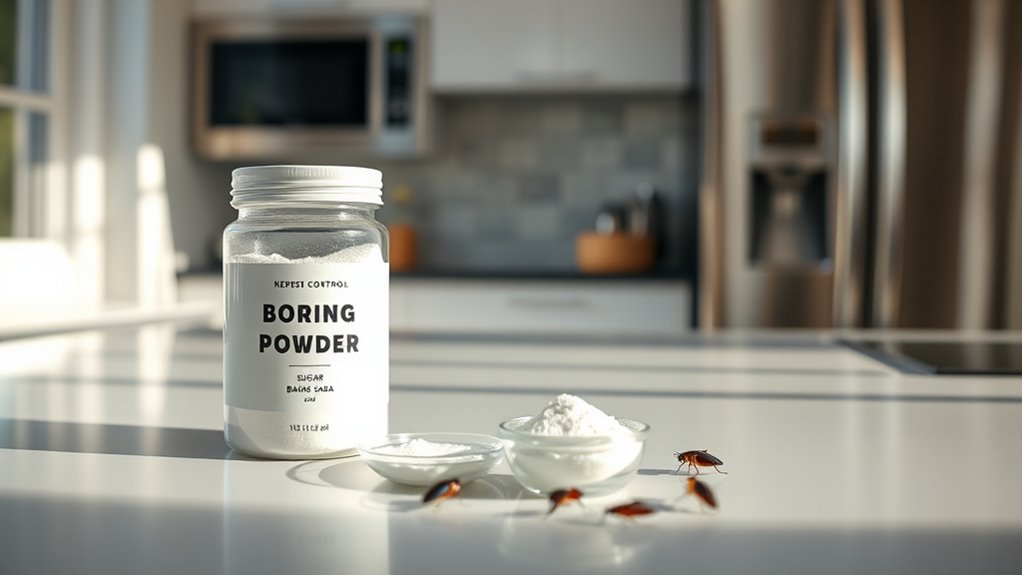
Effective Ways to Get Rid of Cockroaches in the Kitchen
Dealing with cockroaches in the kitchen is a common frustration many homeowners face. You’re not alone—these pests can be stubborn and hard to get rid of, making mealtime and cleaning feel stressful.
Luckily, there are effective ways to tackle the problem head-on.
To effectively get rid of cockroaches in your kitchen, clean thoroughly by wiping surfaces, sweeping floors, and storing food in airtight containers.
Seal cracks and entry points to block their access. Use natural repellents like essential oils or traps, but combine these with chemical treatments such as baits or sprays for best results.
Regular maintenance and vigilance are key. If the problem persists, seeking professional help can prevent bigger issues down the line.
Keep going to learn more useful tips.
Key Takeaways
- Maintain strict kitchen cleanliness by regularly cleaning surfaces, floors, and hiding spots. This helps eliminate food sources and hiding places for cockroaches.
- Seal cracks, gaps, and entry points with caulk or door sweeps. Doing this can prevent cockroaches from getting in and spreading around.
- Use bait stations, traps, or residual insecticidal sprays in areas where cockroaches are most active. These targeted methods can help reduce their numbers effectively.
- Store food in airtight containers and dispose of garbage frequently. This reduces the attractants that draw cockroaches into your kitchen.
- If the infestation keeps coming back despite DIY efforts, consider calling in professional pest control services.
Why Are Cockroaches in My Kitchen?
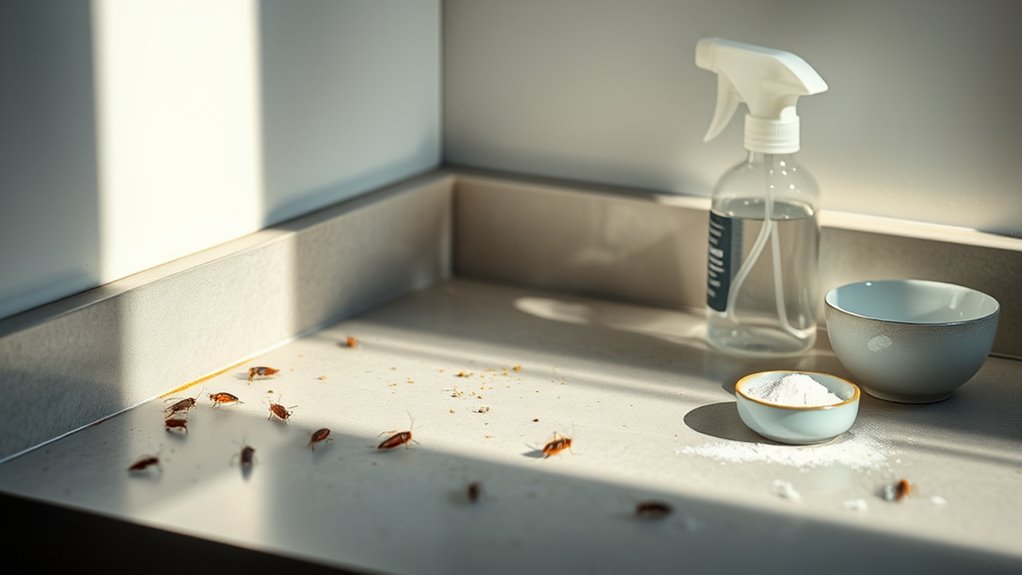
Cockroaches are often found in kitchens because this environment provides everything they need to thrive: food, water, and shelter. You leave crumbs or spills on counters and floors, attracting them with easy access to nourishment.
Leaky pipes or standing water create a reliable water source, which they need daily. Clutter and cracks behind appliances or cabinets offer perfect hiding spots, keeping them safe from predators and making it easier to reproduce.
If you don’t clean regularly or seal entry points, you make your kitchen inviting. Cockroaches are nocturnal, so they hide during the day and come out at night to scavenge.
Understanding these factors helps you realize why your kitchen is their favorite spot and how to make it less appealing.
How Can I Tell If I Have a Cockroach Infestation?
You might notice cockroaches scurrying across your counters or floors, which is a clear sign of an infestation.
Unusual odors, often musty or oily, can also signal their presence.
Moreover, look for droppings and egg casings in hidden corners or cracks around your home.
Visible Cockroach Sightings
How can you tell if those tiny shadows or sightings are signs of an infestation? If you spot live cockroaches during the day, it’s a clear sign they’ve established a nest nearby, since they’re usually nocturnal.
Look for quick-moving, dark insects darting across your kitchen counters, floors, or behind appliances. You might also notice shed skins or egg casings, which appear as small, light-colored capsules.
Sometimes, cockroaches hide in cracks, under sinks, or inside appliances. Keep an eye out for movement or the insects themselves during routine checks.
If you’re finding multiple sightings over several days, it’s likely you have a problem that needs immediate action. Recognizing these visible signs helps you address the infestation early before it worsens.
Unusual Odors Appear
Unusual odors are often one of the earliest signs of a cockroach infestation that you might notice, especially when the problem is starting to grow. You may detect a musty, oily smell near the kitchen or dark corners. This scent results from the secretion of cockroaches and their droppings. Recognizing this odor early helps you act quickly before the infestation worsens.
| Odor Type | What It Indicates |
|---|---|
| Musty, oily smell | Cockroaches are present in large numbers |
| Sweet, sickly scent | Possible presence of egg casings or secretions |
| Sharp, chemical odor | Hidden nests or dead roaches |
| Persistent smell | Ongoing infestation, needs immediate action |
| No odor | Infestation might be minimal or absent |
Droppings and Egg Casings
Detecting cockroach droppings and egg casings is one of the easiest ways to confirm if you have an infestation. Droppings look like small, dark specks or smudges, often hiding in corners, under sinks, or behind appliances. They may look like coffee grounds or black pepper.
Egg casings, called oothecae, are oval, leathery shells that contain multiple eggs. You might find these in cracks, crevices, or near food sources. Finding droppings and egg casings means active cockroach activity and a current infestation.
Regularly check areas like cabinets, drawers, and behind appliances to catch the problem early. If you notice these signs, it’s time to act fast to eliminate the pests and stop them from spreading further.
Cleaning Tips to Keep Cockroaches Away
Keeping your kitchen clean and organized is key to preventing cockroach problems.
Make sure you wipe down surfaces and sweep regularly to remove food crumbs and residue.
Also, store food in airtight containers to eliminate easy access for pests.
Regular Kitchen Cleaning
Regularly cleaning your kitchen is one of the best ways to prevent cockroach infestations. Make sure to wipe down countertops, sinks, and stovetops every day to get rid of food residues and grease that attract pests.
Pay close attention to corners, baseboards, and behind appliances, where crumbs and spills often build up unnoticed. Vacuum or sweep the floor regularly to remove hidden food particles and debris.
Don’t forget to clean underneath appliances and inside cabinets to eliminate hiding spots. Use disinfectants to kill bacteria and leave surfaces smelling fresh.
Keeping your kitchen clutter-free also helps because it reduces hiding places for cockroaches and makes cleaning easier. Regular, thorough cleaning disrupts their food sources and keeps infestations at bay.
Proper Food Storage
Proper food storage is key to preventing cockroach infestations since they’re attracted to easily accessible food. Leaving crumbs, uncovered dishes, or open packages invites pests into your kitchen.
To keep cockroaches away, store food in airtight containers. This makes it harder for them to get to your food. Keep your pantry organized and check regularly for expired or spilled items.
Here are some storage tips:
- Use sealed glass or plastic containers for grains, cereals, and snacks.
- Store fruits and vegetables in the refrigerator or sealed baskets.
- Clean spills right away and avoid leaving dirty dishes overnight.
Are Natural Remedies Effective for Cockroach Control?
Are natural remedies truly effective in controlling cockroaches? While some people swear by options like bay leaves, cucumber peels, or essential oils, their effectiveness is often limited.
Natural methods may help repel cockroaches temporarily, but they rarely eliminate an infestation entirely. Cockroaches are resilient pests that adapt quickly, and natural deterrents might not reach hidden areas where these pests thrive.
Natural repellents may help temporarily, but they rarely eradicate resilient cockroach infestations entirely.
Using natural remedies can be a good supplementary approach, especially for minor issues or prevention. However, they shouldn’t be relied upon as a sole solution.
For serious infestations, combining natural remedies with thorough cleaning and professional treatments offers a more reliable way to control these unwelcome guests.
Always remember, persistence is key to managing cockroaches effectively.
What Are the Best Chemical Treatments for Cockroaches?
In regard to effectively eliminating cockroaches, chemical treatments are often the most powerful option available. They provide quick results and target hard-to-reach areas.
When choosing a treatment, consider products like insecticidal sprays, bait stations, and residual powders. These options work in different ways: sprays kill on contact, bait stations lure cockroaches to ingest poison, and powders leave a residue that continues to kill over time.
Imagine using a spray to directly hit hiding spots, setting bait stations near cracks and crevices, or dusting powders along baseboards and inside cabinets. Each method targets cockroaches where they hide, ensuring a more effective eradication.
Just remember to follow label instructions carefully for safety and maximum effectiveness.
Long-Term Strategies to Prevent Cockroach Reinfestation
After using chemical treatments to get rid of cockroaches, the next step is to stop them from coming back. Seal cracks, gaps, and holes around doors, windows, and pipes to block their entry points.
Keep your kitchen clean by wiping down counters, cleaning crumbs, and taking out the trash regularly. Store food in airtight containers to keep cockroaches away. Reduce clutter, especially cardboard boxes and paper, which hide them.
Fix leaks and cut down on moisture because cockroaches are attracted to water sources. Keep the environment dry and well-ventilated. Regularly check hidden corners, appliances, and behind furniture for any signs of new activity.
Staying consistent with cleanliness and sealing entry points is key to long-term prevention and keeping your kitchen cockroach-free.
When Should I Call Pest Control for Severe Infestations?
Wondering when it’s time to call pest control for a severe cockroach infestation? If your efforts aren’t making a dent or the problem gets worse despite your cleaning, that’s a clear sign.
You should consider professional help if you see cockroaches in multiple rooms or at night, which shows a widespread outbreak.
The infestation still sticks around after using traps and baits for a week or more.
You also notice a strong, musty odor that won’t go away, indicating a large colony.
Severe infestations can quickly become unmanageable on your own. Calling pest control early can help prevent health risks, property damage, and the spread of germs.
When the situation feels overwhelming, professional help is your best option.
Frequently Asked Questions
How Do Cockroaches Enter My Home?
Cockroaches get into your home through tiny cracks, gaps around pipes, vents, or doors. They often hitch a ride on grocery bags, boxes, or used appliances brought inside.
Warmth and moisture attract them, so they look for kitchens and bathrooms. Leaving food out or not sealing entry points makes it easier for them to invade.
Regular inspections and sealing potential entryways can help prevent these pests from getting in.
Can Cockroaches Spread Diseases?
Yes, cockroaches are like tiny, unwelcome messengers of disease. They carry bacteria, viruses, and parasites on their bodies and in their droppings, which can contaminate your food and surfaces.
When you see these pests, you’re not just dealing with a nuisance but a real health threat. Their presence can spread illnesses like salmonella, dysentery, and food poisoning.
That’s why it’s so important to act quickly and thoroughly to get rid of them.
Are There Eco-Friendly Pest Control Options?
Yes, eco-friendly pest control options exist. You can use natural deterrents like bay leaves, cucumber peels, or essential oils such as peppermint and tea tree oil to repel cockroaches.
Keeping your kitchen clean, sealing cracks, and removing food sources also help prevent infestations. These simple steps make a big difference.
Biological traps with beneficial nematodes or diatomaceous earth are safe for the environment and effective. They offer a chemical-free way to manage pests.
These methods protect your home without the use of harmful chemicals, making them a great eco-friendly choice.
How Long Does It Take to Eliminate a Cockroach Infestation?
On average, it takes about 2 to 4 weeks to eliminate a cockroach infestation, but it depends on how severe it is and the methods you use.
You’ll see faster results if you clean thoroughly, seal off entry points, and use effective baits or traps.
Can Sealing Cracks Completely Prevent Cockroach Entry?
Sealing cracks can really cut down on cockroach entry, but it won’t completely stop them. Cockroaches are pretty good at finding tiny gaps and hidden spots to get inside your home.
To keep them out effectively, it’s best to combine sealing cracks with other tricks like keeping your place clean, storing food properly, and using traps or baits.
Regular inspections are a good idea too. They help you spot new entry points early, giving you a better shot at keeping your kitchen cockroach-free.
Conclusion
By staying vigilant and keeping your kitchen clean and inviting, you create an environment that discourages cockroaches. Regularly inspecting your space and fixing small issues early can prevent problems from escalating.
A tidy kitchen is like a warm, welcoming home—no place for pests to hide. Remember, addressing clutter and spills promptly makes a big difference in pest prevention.
With these strategies, you can turn your culinary space into a fortress against cockroaches. Maintaining cleanliness and vigilance ensures your kitchen stays pest-free and inviting.