10 Essential Steps to Remodel Your Kitchen Like a Pro
Remodeling your kitchen can feel overwhelming, especially with so many decisions and details to consider. Many people struggle with turning their vision into reality without overspending or running into unexpected issues. You’re not alone—planning ahead can make all the difference.
To remodel your kitchen like a pro, start by clearly defining your goals and setting a realistic budget, including funds for surprises. Secure the necessary permits and understand local building codes before you begin.
Design a functional layout, choosing durable materials and efficient appliances. Hire reliable contractors and keep the project on track through regular assessments.
Don’t forget to inspect work carefully and add personal touches. Follow these steps to guarantee a smooth renovation—you’ll find even more helpful tips if you continue exploring.
Key Takeaways
– Define clear goals, budget, and obtain necessary permits before starting the remodel.
Knowing what you want and how much you can spend keeps things on track from the get-go.
Design an efficient layout focusing on the work triangle and functional zones.
This makes your kitchen more practical and enjoyable to use every day.
Select durable materials and cohesive appliances that match your style and budget.
Choosing quality options ensures your remodel looks great and lasts a long time.
Prepare the work area by clearing and protecting surfaces to ensure safety and cleanliness.
A tidy space helps the project go smoothly and keeps everything safe during the process.
Regularly monitor progress, inspect work quality, and add finishing touches for a polished look.
Staying on top of things means your kitchen will turn out just how you envisioned.
Define Your Kitchen Remodeling Goals and Set a Realistic Budget
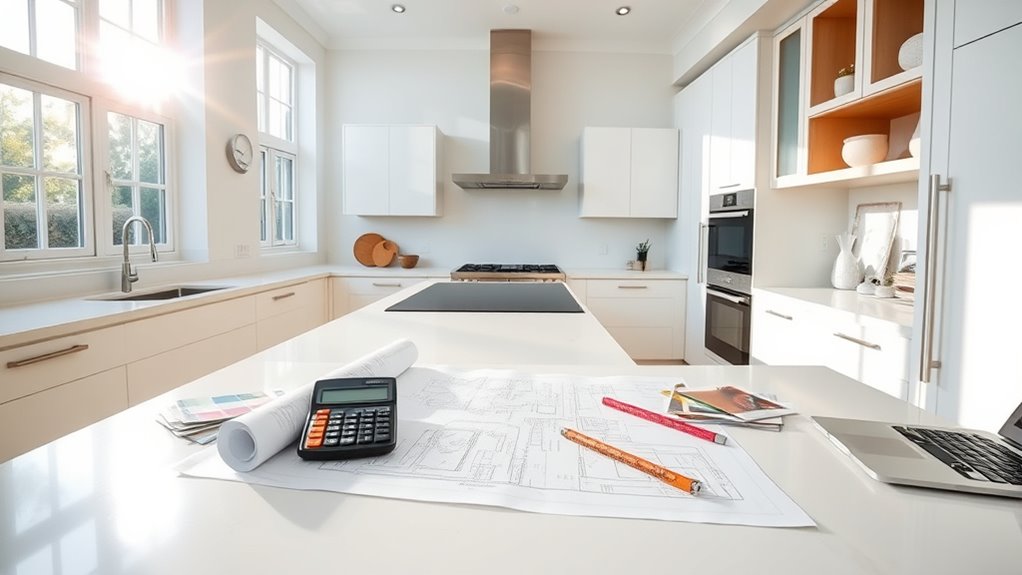
Before jumping into your kitchen remodel, it’s important to clearly define your goals and set a realistic budget.
Think about what you want to improve—more storage, better appliances, or a new layout? Prioritize your needs and decide which features are must-haves versus nice-to-haves.
Having a clear vision helps guide your decisions and keeps you focused throughout the project.
A clear vision ensures focused decisions and a smoother kitchen remodel journey.
Next, figure out how much you’re willing to spend. Be honest about your finances and include extra funds for unexpected costs.
Research average prices for materials and labor to create a practical budget.
With well-defined goals and a solid budget from the start, your project is more likely to stay on track and avoid costly surprises.
Secure Permits and Understand Building Codes Before You Start
Before starting your kitchen remodel, make sure you get the necessary permits. It’s important to understand your local building codes too.
These requirements help ensure your project follows the rules and avoids fines or delays.
Take the time to check what permits you’ll need and follow all the regulations for a smooth renovation.
Permits Required for Renovation
Securing the necessary permits is a key step in your kitchen renovation to make sure everything complies with local building codes and regulations. The permits you need depend on the scope of your remodel, like electrical, plumbing, or structural changes.
Usually, a building permit is required for major updates, while minor ones might not need any. It’s a good idea to contact your local building department early to find out which permits apply and to submit the right applications.
Skipping permits can cause fines, delays, or even having to undo work later. Be sure to keep copies of all permits and approvals on-site throughout the project.
This helps ensure your renovation stays legal, safe, and up to code. It also gives you peace of mind during and after the remodel.
Complying With Local Regulations
Making sure you comply with local regulations is an essential step that goes hand-in-hand with obtaining permits. You need to understand building codes and zoning laws to avoid fines or project delays.
Before starting, check with your local building department to identify specific requirements. Familiarize yourself with restrictions on electrical, plumbing, and structural work.
Securing the necessary permits guarantees your project meets safety standards and legal obligations. Here’s a quick overview:
| Step | Action | Result |
|---|---|---|
| Research Regulations | Contact local authorities | Know what’s required |
| Obtain Permits | Submit plans and applications | Legal approval for work |
| Schedule Inspections | Arrange inspections during progress | Verify compliance at each stage |
| Final Approval | Complete final review | Official sign-off on project |
Design a Functional and Stylish Kitchen Layout
Designing a functional and stylish kitchen layout starts with understanding how you use your space and what features matter most to you. Think about your daily routines—do you need a large prep area, a cozy breakfast nook, or ample storage?
Focus on the classic work triangle: the fridge, stove, and sink should form an efficient triangle to minimize movement. Consider traffic flow—avoid cluttered pathways that hinder movement.
Incorporate zones for cooking, cleaning, and storage, ensuring each has enough space. Style-wise, choose a layout that complements your home’s overall design, whether it’s open-concept or more segmented.
Keep in mind how natural light enters your space, and plan for lighting fixtures that improve both function and ambiance. A well-thought-out layout enhances usability and aesthetic appeal.
Select Durable Materials and Appliances That Match Your Style and Budget
Choosing materials and appliances that are both durable and stylish guarantees your kitchen lasts and looks great.
You’ll want options that match your aesthetic while fitting within your budget. So, consider quality and cost-effectiveness.
Balancing these points helps you create a space that’s functional, attractive, and affordable.
Material Durability and Quality
Selecting durable materials and appliances is key to creating a kitchen that can handle daily use while still matching your style and budget. Focus on high-quality options like quartz countertops, which resist scratches and stains better than natural stone.
For cabinets, choose solid wood or plywood with a tough finish to ensure they last. When picking appliances, go for brands known for reliability and energy efficiency, even if they cost a bit more.
Materials like stainless steel aren’t just stylish—they’re also resistant to dents and rust. Remember, investing in quality means fewer repairs and replacements in the long run, saving you money.
Style Coordination and Aesthetics
Your kitchen’s style and aesthetics should seamlessly reflect your personal taste while staying within your budget. To do this, choose materials and appliances that match your design vision without overspending.
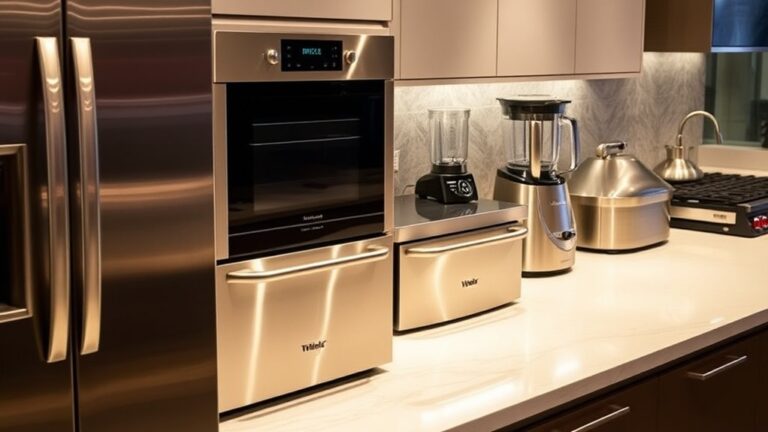
Focus on creating harmony with cohesive color schemes, textures, and finishes. Durable materials like quartz countertops or porcelain tiles blend style with longevity. When selecting appliances, pick ones that complement your overall look and meet your needs.
| Style Aspect | Recommended Material/Appliance |
|---|---|
| Modern | Stainless steel appliances, sleek cabinetry |
| Rustic | Reclaimed wood, vintage-style fixtures |
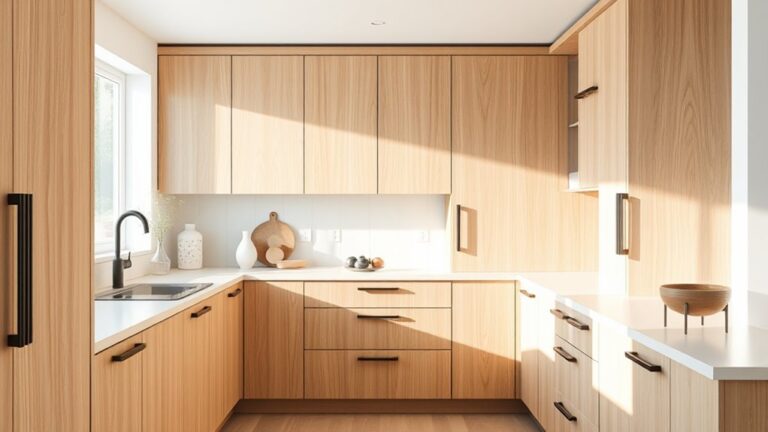
| Minimalist | Hidden handles, matte finishes |
| Traditional | Ornate fixtures, warm-toned woods |
Matching style elements ensures your kitchen feels both functional and visually appealing.
Budget-Friendly Appliance Options
When trying to keep your kitchen stylish without spending too much, choosing affordable yet durable appliances can really make a difference. Look for brands known for reliable performance at a lower price point.
Consider energy-efficient models to save on utility bills in the long run. Stainless steel finishes often give a sleek look without the high cost, making them a great choice.
Many budget-friendly appliances come with warranties that ensure durability. You don’t have to sacrifice style—there are plenty of options that match different aesthetics while staying within your budget.
Start with essential appliances like a refrigerator, stove, and dishwasher. Then, add smaller gadgets as needed to complete your kitchen.
With a bit of research, you can find appliances that are both functional and stylish without overspending.
Hire Reliable Contractors and Clarify Your Timeline
Finding reliable contractors is key to keeping your kitchen remodel on track and meeting your expectations. You want pros who communicate well, stick to deadlines, and do quality work.
Start by researching local contractors, reading reviews, and asking friends for referrals. Once you have some options, interview them thoroughly to check experience and credentials.
Be clear about what you want and set a realistic timeline. Talk about key milestones and deadlines upfront, and make sure everything is in writing.
Staying involved and keeping the lines of communication open helps ensure everyone’s on the same page. Clarify how changes will be handled and what the process is for fixing issues.
Prepare Your Space and Protect Your Home During Renovation
Before starting your renovation, clear the work area to keep things organized and safe. This helps prevent accidents and makes the space easier to work in.
Cover and protect surfaces like countertops and floors to prevent damage from dust, debris, and spills. It’s a simple step that can save you a lot of cleanup later.
Taking these steps ensures your home stays clean and minimizes surprises during the remodel. Plus, it makes the whole process smoother and less stressful.
Clear the Work Area
Starting your kitchen remodel means creating a safe and organized workspace, which is essential for a smooth renovation process. Begin by clearing countertops, cabinets, and the floor of any items that could get damaged or obstruct your work. Remove small appliances, dishes, and utensils, and store them safely elsewhere.
Clear out furniture or unnecessary fixtures that could get in the way. This not only prevents accidents but also gives you ample room to work efficiently. Decluttering makes it easier to access the areas you’re remodeling and guarantees nothing gets in the way.
As you clear your space, double-check that pathways are unobstructed to avoid trips or falls. A tidy, open area sets the foundation for a successful and safe kitchen renovation.
Cover and Protect Surfaces
Once you’ve cleared the work area, it’s time to protect your home and surfaces from dust, paint, and debris. Covering your belongings prevents damage and makes cleanup easier. Use drop cloths or plastic sheeting to cover floors, countertops, and cabinets. Secure these coverings with painter’s tape to prevent shifting.
Consider the following:
- Prioritize protection for high-traffic and delicate areas.
- Use quality materials to ensure durability against dust and paint splatters.
- Seal off non-renovation zones to contain dust and debris, helping keep your home cleaner.
Taking these steps helps safeguard your home’s value and makes post-remodel cleaning easier. Proper protection allows you to work confidently, knowing your space is shielded from potential damage.
Monitor the Remodeling Progress and Keep in Touch With Your Team
Regularly monitoring the remodeling progress helps you stay informed and quickly catch any issues. Check in with your team often, whether through site visits or updates, to make sure everything stays on track.
Good communication prevents misunderstandings and allows you to address problems early. Use the table below to keep organized with your key check-ins:
| Date | Focus Area | Notes |
|---|---|---|
| Week 1 | Demolition | Clear, no damage to surrounding areas |
| Week 2 | Framing and Plumbing | Confirm measurements and placements |
| Week 3 | Electrical and HVAC | Verify code compliance and function |
| Week 4 | Final Inspection | Address last-minute issues |
Staying engaged and keeping lines of communication open will help your project run smoothly and ensure your vision stays on track.
Inspect Work Carefully and Address Issues Promptly
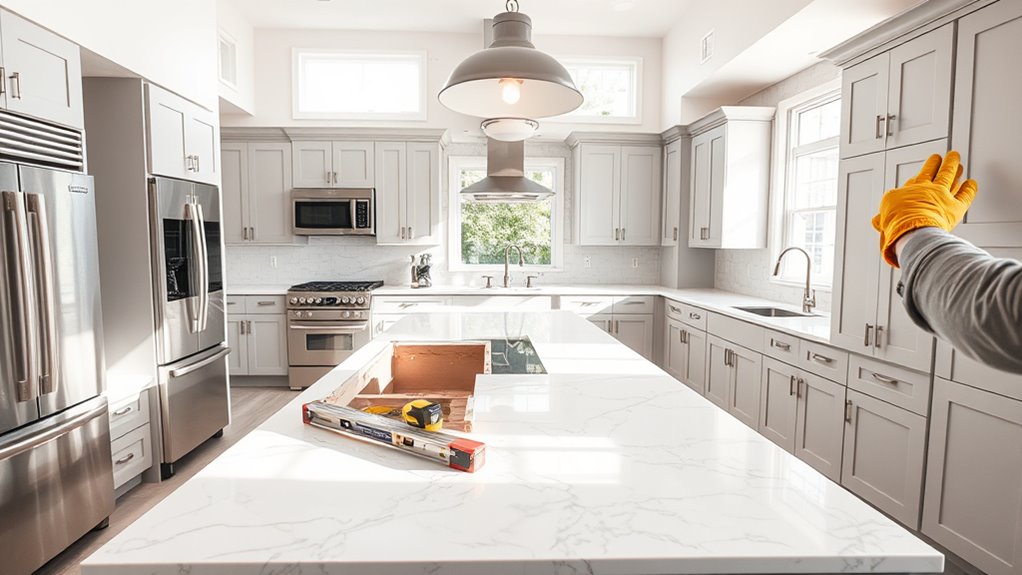
Careful inspection of the work as it progresses helps catch issues early before they become costly or delay the project. Regularly check for quality and accuracy, making sure everything lines up with your plans.
Regular inspections during work prevent costly delays and ensure everything aligns with your plans.
If you spot a problem, don’t wait—fix it immediately to prevent it from getting worse. Focus on these key areas:
- Structural Integrity: Make sure cabinets, countertops, and fixtures are installed properly and stable.
- Finish Quality: Look for smooth surfaces, even paint, and precise fitting.
- Safety Standards: Confirm wiring, plumbing, and ventilation meet safety codes.
Finish up and Personalize Your New Kitchen With Finishing Touches
After finishing the main construction and installation work, it’s time to add those final touches that really make your kitchen feel complete and personalized. Start by choosing hardware that matches your style, like sleek modern handles or vintage knobs.
Then, arrange your accessories thoughtfully—place dishes, utensils, and decorative items in a way that’s both functional and visually appealing. Consider giving the walls and cabinets a fresh coat of paint or a touch-up to make everything look perfect.
Lighting can really change the vibe, so think about installing under-cabinet lights or pendant fixtures to create a cozy atmosphere. Finally, add personal touches like photo frames, plants, or unique decor items that reflect your personality.
These finishing details turn your kitchen from just a functional space into a warm, inviting part of your home.
Maintain Your Kitchen and Plan for Long-Term Care
A well-maintained kitchen is the foundation for lasting beauty and functionality. To keep it in top shape, develop a routine for long-term care.
First, clean surfaces regularly to prevent buildup and damage. Second, check plumbing and appliances periodically to catch issues early.
Third, plan for seasonal updates like re-sealing grout or replacing worn-out hardware. These steps help keep your kitchen safe, efficient, and attractive.
Proper maintenance also extends the lifespan of your investments and reduces costly repairs down the line. By staying proactive, you can avoid neglect that could harm your remodel.
Consistent care keeps your kitchen looking fresh and functioning smoothly. It’s a space you’ll love for years to come.
Regular attention is the key to preserving your remodeling effort’s long-term success.
Frequently Asked Questions
How Can I Maximize Storage in a Small Kitchen Remodel?
To maximize storage in your small kitchen remodel, you should utilize vertical space by installing tall cabinets and open shelving. Incorporate multi-functional furniture like a kitchen island with built-in storage.
Use drawer dividers and pull-out organizers to keep things tidy. Consider adding hooks or magnetic strips for utensils and knives.
Finally, choose cabinets with clever internal organizers to make the most of every inch, keeping your space efficient and clutter-free.
What Are Eco-Friendly Options for Kitchen Remodeling?
You can choose eco-friendly options like recycled or sustainably sourced cabinets and countertops made from recycled materials.
Energy-efficient appliances are also a great choice for a greener kitchen. Opt for low-VOC paints and finishes to improve indoor air quality.
Install water-saving fixtures to reduce water use and conserve resources.
Incorporate LED lighting and solar-powered options to cut down on electricity consumption.
Using eco-conscious materials and appliances benefits the environment and creates a healthier, more sustainable space for you to enjoy.
How Do I Choose the Right Lighting for My Kitchen?
To choose the right lighting for your kitchen, think about layering different types of light like ambient, task, and accent lighting. Mixing these creates a well-balanced and functional space.
Go for energy-efficient LEDs to save money and help the environment. They last longer and use less power, making them a smart choice.
Consider the color temperature too. Warm light gives a cozy feel, while cool light makes it easier to see details clearly.
Make sure your fixtures match your style and decor. And don’t forget to position task lights over work areas for safety and better visibility.
What Are Common Mistakes to Avoid During a Kitchen Renovation?
Don’t bite off more than you can chew, especially during a kitchen renovation.
Common mistakes include rushing the planning stage, overlooking storage needs, and choosing trendy elements over timeless functionality.
You might also forget to set a realistic budget or neglect to communicate clearly with your contractor.
Avoid these pitfalls by staying organized, sticking to your plan, and being flexible when unexpected issues pop up.
How Can I Incorporate Smart Technology Into My Kitchen Design?
You can incorporate smart technology into your kitchen by choosing connected appliances like refrigerators, ovens, and dishwashers that sync with your smartphone.
Install voice-activated assistants for hands-free control and smart lighting to set the perfect ambiance.
Consider adding a smart faucet with touchless controls and a home security system.
Conclusion
Remember, a well-remodeled kitchen unfolds like a gentle dance—each step carefully planned, with every detail softly falling into place.
Stay engaged, keep communication flowing smoothly, and don’t rush the process.
With patience and a keen eye for detail, your dream kitchen will blossom into a cozy, functional space you’ll cherish.
Embrace the journey, and soon enough, you’ll be savoring every moment spent in your beautifully transformed kitchen.
In the end, following these steps will help you remodel your kitchen like a pro and create a space you’ll love for years to come.