
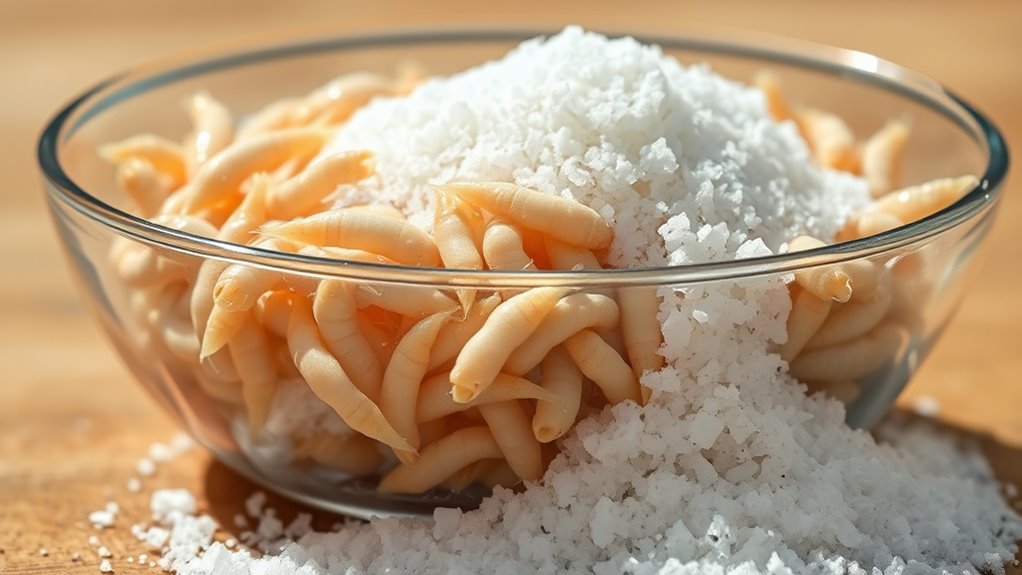
How to Use Salt to Kill Maggots Effectively
Dealing with maggots can be pretty unsettling, and you’re not alone in struggling with how to get rid of them effectively. Many people find it frustrating to control these pests without resorting to harsh chemicals.
Luckily, simple home remedies like salt can make a big difference.
To kill maggots with salt, start by cleaning the area thoroughly to remove organic matter, then dry it completely.
Generously sprinkle a thick, even layer of salt over the affected spots, making certain to cover all maggots and breeding sites.
Reapply salt every few days or as needed to keep the area dry and inhospitable for maggots.
Protect yourself with gloves and stay vigilant—more tips to guarantee the job’s done effectively are just ahead.
Key Takeaways
- Generously sprinkle a thick, even layer of salt directly on the maggots and breeding sites for the best contact.
- Before applying salt, clean and dry the affected area thoroughly. This helps the salt work more effectively.
- Reapply salt every few days or whenever you notice new maggots. This keeps the area dry and makes it less appealing to pests.
- Let the salt sit for 12 to 24 hours. During this time, it will dehydrate and kill the maggots.
- When handling the salt, wear gloves to stay safe. Also, keep the salt away from children and pets to prevent accidents.
What Are Maggots and Why Do They Invade Certain Areas?
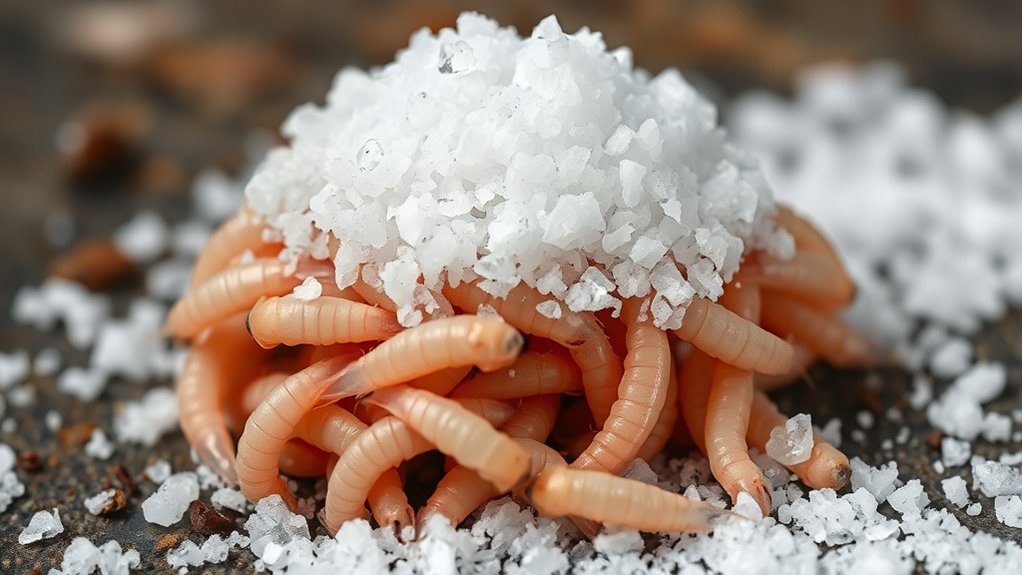
Maggots are the larval stage of flies, and they often appear where there’s decaying organic matter. You’ll usually find them in rotting food, garbage, or animal waste, where they thrive on decomposing material.
They are small, soft, and white or pale in color, making them easy to spot in messy areas. Maggots are attracted to these environments because they provide the nutrition they need to grow and develop into adult flies.
Their presence signals that organic material is breaking down and needs attention. They invade areas with poor sanitation or clutter that traps moisture and debris.
Understanding why maggots appear helps you identify problem spots early, so you can take quick action to prevent their spread and keep your space clean.
How to Get Your Space Ready to Kill Maggots With Salt
Before applying salt to kill maggots effectively, you need to prepare the area thoroughly. First, remove any loose debris, food scraps, or organic material that might attract more maggots.
Clean the surface with soap and water to eliminate residues and odors that could draw pests back. Dry the area completely, since moisture can hinder salt’s effectiveness.
Cleaning and drying the area removes residues and moisture that can attract maggots and weaken salt’s effectiveness.
If possible, isolate the infested spot by sealing nearby entry points or blocking off the area to prevent maggots from spreading. Wear gloves to protect your skin and ensure safety during cleanup.
Clearing the space thoroughly minimizes the risk of reinfestation and allows the salt to work directly on the maggots and their breeding site. Proper preparation sets the stage for a successful treatment.
How to Properly Apply Salt to Dehydrate and Kill Maggots
To effectively dehydrate and kill maggots with salt, start by generously sprinkling a thick layer of salt directly onto the affected area. Make sure to cover all the maggots and their breeding sites completely.
Spread the salt evenly so it covers every inch of the surface. This helps draw out moisture and dehydrate the maggots quickly. Avoid piling the salt too thick in one spot, which can block airflow.
Instead, use a uniform layer of salt that forms a solid barrier. This prevents the maggots from escaping or burrowing deeper into the area. Leave the salt in place for several hours or overnight.
This method ensures thorough dehydration, effectively killing the maggots and disrupting their lifecycle.
How Much Salt Do I Need, and How Often Should I Reapply?
You’ll want to use enough salt to thoroughly cover the maggots and their breeding area. Usually, a few handfuls or a layer about half an inch thick does the trick.
Reapply the salt every few days or whenever you notice new maggots popping up. This helps keep them from coming back.
Keep an eye on the area to see if the maggots are dying off. Adjust the amount or how often you reapply as needed to stay on top of the problem.
Recommended Salt Quantities
Using the right amount of salt is key to killing maggots effectively without wasting resources. Usually, just sprinkle a generous layer of salt directly on the maggots and the affected area—about a handful per square foot.
If you’re dealing with a big infestation, just increase the amount proportionally. You don’t need too much—just a thick coating to dehydrate and kill the maggots quickly.
Make sure the salt stays in place for several hours to get the best results. If new maggots appear, reapply salt as needed but avoid using too much. Proper measurement helps you get quick results and reduces waste, making your treatment more efficient.
Reapplication Frequency Tips
Applying salt repeatedly is essential for guaranteeing all maggots are effectively eliminated, especially as new ones may hatch after the initial treatment. To keep the area clear, reapply salt every few days until you’re confident no maggots remain.
Each reapplication should cover the affected area thoroughly, creating a dry, white barrier. Visualize a layer of salt crunching underfoot, forming a barrier that prevents maggot movement and hatching.
Remember:
- Reapply after rain or moisture to maintain effectiveness.
- Use a generous amount to cover all surfaces thoroughly.
- Check regularly for new maggot activity and reapply as needed.
Consistency is key—don’t skip reapplications, or maggots might hatch and re-establish. Regular reapplication helps guarantee complete eradication over time.
Monitoring Effectiveness
To effectively monitor how much salt you need and how often to reapply, pay close attention to the condition of the affected area. Look for signs of maggot activity; if you notice fewer or no maggots, your salt treatment is working.
If maggots remain or reappear quickly, increase the salt amount or reapply more often. Keep track of how dry the area is and how well the salt is covering it, making sure it stays moist enough to be effective.
Reapplication should happen every few days or as needed, especially after rain or cleaning. Regular inspections help you see if the salt is killing the maggots or if more needs to be added.
Adjust your approach based on what you observe to stay in control and prevent further infestation.
How Long Does Salt Take to Kill Maggots?
Salt kills maggots through desiccation, but how long it takes can depend on things like the amount you use and the size of the maggots.
Usually, you’ll see them die within a few hours to a day, but some situations might slow down the process.
Knowing these factors can help you get a better idea of how quickly salt will work in your specific case.
Salt’s Desiccation Effect
Salt’s desiccation effect on maggots isn’t instant but usually takes a few hours. When you sprinkle salt directly onto maggots, it pulls moisture from their bodies, causing them to dry out and die.
As the salt touches their soft tissues, it creates a dehydrating environment that speeds up desiccation. Imagine the maggots shrinking quickly and their movements slowing as their internal fluids evaporate.
You might notice tiny, writhing creatures gradually stiffening, with moisture seeping out and leaving a damp salt trail. Their color fades from pink or white to a shriveled, darker shade.
The process works well, but patience is important. The desiccation doesn’t happen right away, so give it a few hours for the salt to do its job thoroughly.
Time for Maggots to Die
After sprinkling salt on maggots, you’ll notice they don’t die instantly. Instead, it takes some time for the desiccation process to fully eliminate them. Typically, maggots start to die within a few hours, but complete death may take anywhere from 12 to 24 hours.
This depends on how much salt you used and the environmental conditions. During this time, you’ll see the maggots gradually shrivel and turn a darker color as they dehydrate.
It’s important to give the salt enough time to work effectively. Avoid disturbing the area prematurely, and keep it dry and undisturbed.
Patience is key for the salt to fully kill the maggots and prevent them from coming back.
Factors Influencing Speed
Several factors can influence how quickly salt kills maggots, so the process can vary from one situation to another. The amount of salt used, the maggots’ stage of development, and the surface area exposed all matter.
If you spread a generous, even layer of salt directly on the maggots, they’ll die faster. Larger or more developed maggots might take a bit longer to die than tiny larvae.
Also, if the maggots are in a thick mass, the salt has to penetrate deeper, which slows things down. Imagine a fine dusting covering every inch, thick clusters of maggots fighting the salt, and salt seeping into crevices and cracks.
These factors all play a role in how quickly you’ll see results.
Can You Combine Salt With Other Natural Maggot Control Methods?
Combining salt with other natural maggot control methods can boost your ability to eliminate infestations effectively. You might use salt alongside techniques like vinegar traps or citrus peels, which naturally repel maggots.
Salt acts as a desiccant, dehydrating maggots on contact, while vinegar can attract and trap them. Citrus peels emit strong scents that deter maggots from laying eggs.
Using these methods together creates a multi-layered approach, making it harder for maggots to survive or reproduce. Just sprinkle salt directly on infested areas, add vinegar to attractants, or place citrus peels nearby.
Combining these natural techniques improves overall effectiveness, helping you control maggot populations more efficiently without relying solely on salt.
Safety Tips for Handling Salt and Preventing Re-infestation
Handling salt carefully is essential to stay safe and prevent accidental injuries. When applying salt, wear gloves to avoid skin irritation and prevent ingestion if touched accidentally. Keep salt away from children and pets, especially in areas prone to re-infestation.
Store salt in a sealed container to prevent spills and contamination. Be mindful of proper ventilation to avoid inhaling fine particles during application. To prevent re-infestation, thoroughly clean the affected area, removing any leftover maggots and debris.
Store salt securely, ensure good ventilation, and thoroughly clean to prevent re-infestation and maintain safety.
Seal cracks or entry points that attract flies, and maintain cleanliness to discourage future infestations. Imagine a sealed jar of salt, a pair of gloves, and a freshly cleaned surface—these visuals reinforce safe handling and effective prevention.
Stay vigilant to keep maggots and flies at bay.
Common Mistakes to Avoid When Using Salt Against Maggots
One common mistake is using too little salt, which won’t effectively kill the maggots.
You also need to apply salt properly, making sure it covers the affected area thoroughly.
Don’t forget to follow safety precautions to protect yourself and prevent accidental harm.
Using Insufficient Salt Quantity
Using too little salt often leads to ineffective results when trying to eliminate maggots. If you don’t apply enough, the maggots can survive and continue their infestation. When the salt quantity is insufficient, it won’t create the dehydration and desiccation needed to kill them effectively.
Instead, you might see maggots still crawling around or spreading to nearby areas. Imagine a thin layer of salt barely covering the surface, leaving gaps for maggots to thrive. Salt sprinkled unevenly creates patches where maggots remain protected.
Insufficient salt that dissolves quickly also fails to maintain contact and kill the pests. To avoid this mistake, always use a generous, even amount of salt. This guarantees it penetrates thoroughly and produces the desired desiccating effect.
Applying Salt Improperly
Applying salt incorrectly is a common mistake that can weaken your efforts to get rid of maggots. If you sprinkle salt unevenly or in small amounts, it might not reach all the maggots or get into their hiding spots effectively.
Instead of just scattering a light layer of salt, use a generous, direct application that covers the infested area thoroughly. Don’t wait too long to apply salt after spotting maggots—delaying treatment can let them spread or develop further.
Make sure to give the salt enough time to work. Rushing the process reduces its effectiveness. Applying salt too sparingly or unevenly can let some maggots survive and keep the infestation going.
Proper, consistent application is key to making sure all maggots are effectively targeted.
Ignoring Safety Precautions
Neglecting safety precautions when handling salt can lead to unnecessary risks, even if your goal is to eliminate maggots effectively. You might accidentally irritate your skin, inhale salt particles, or damage surfaces if you’re not careful. Always wear gloves to protect your skin from irritation or burns caused by concentrated salt. Keep salt away from your eyes and mouth, as contact can cause discomfort or injury. Be cautious when spreading salt in enclosed spaces because salt dust can become airborne and cause respiratory issues.
Salt spilling onto your skin can cause irritation. Salt dust floating into your eyes can be very uncomfortable. Inhaling fine salt particles during application can also pose health risks.
How to Clean up After Removing Maggots With Salt
Once you’ve successfully removed the maggots with salt, it’s crucial to clean and disinfect the area thoroughly. Wear gloves and pick up any remaining maggots or debris using a paper towel or disposable tool.
Next, wash the area with hot, soapy water to remove any residue and salt crystals. After cleaning, spray or apply a disinfectant to kill bacteria and neutralize odors.
Let the disinfectant sit for the recommended time before wiping it away with a clean cloth. Make sure to dry the area completely to prevent moisture buildup, which can attract new pests.
Proper cleanup restores cleanliness and helps keep your environment hygienic. It also reduces the chances of future infestations.
Other Natural and Chemical Ways to Kill Maggots Besides Salt
Besides salt, there are several natural and chemical methods you can use to kill maggots effectively. You might consider pouring boiling water directly onto the maggots, which instantly destroys them.
Another option is applying insecticidal sprays designed to target larvae, ensuring quick eradication. You could also use lime or bleach to create an inhospitable environment; pouring these substances over infested areas causes dehydration and death.
Visualize the boiling water sizzles as it hits the maggots, or the spray instantly stops their movement. Lime or bleach releases fumes that deter further infestation. These methods work fast and are effective at eliminating maggots without much fuss, helping you clean up and restore hygiene efficiently.
Frequently Asked Questions
Can Salt Prevent Future Maggot Infestations?
Yes, salt can help prevent future maggot infestations by drying out and killing maggots and their eggs. You should regularly sprinkle salt on trash, rotting food, or damp areas where maggots might appear.
This creates a hostile environment for maggots to hatch and survive. Keep your trash sealed and clean to further reduce the chances of infestations.
Use salt as part of your prevention strategy to help keep maggots at bay.
Is Salt Effective on All Types of Maggots?
Salt is generally effective on common maggots, but it might not work on all types. Some maggots, especially those in hard-to-reach areas or resistant species, can survive salt treatment.
You might want to consider combining salt with other methods like proper sanitation and insecticides for better results. Always identify the maggot type first, since some infestations need specific approaches for complete eradication.
How Does Salt Compare to Chemical Maggot Killers?
Salt is a humble hero compared to chemical maggot killers, which are like nuclear options in pest control.
While salt works slowly and is safe for the environment, chemical killers act fast and wipe out maggots instantly.
If you want quick, powerful results, chemicals dominate. But if you’re after a natural, less aggressive approach, salt can still do the job, just at a snail’s pace.
Can Salt Harm Pets or Children if Used Indoors?
Yes, salt can harm pets or children if used improperly indoors. If they swallow large amounts, salt can cause poisoning, leading to symptoms like vomiting, diarrhea, or more serious health issues.
To keep everyone safe, avoid putting too much salt near areas where kids or pets can reach. Store salt out of their reach and be careful when using it around your home.
Especially in places where children or animals might come into contact with it, take extra precautions.
What Are Signs That Maggots Have Been Completely Eradicated?
You’ll know maggots are gone when the area looks pristine and is free of any movement or smell—like a spotless, bug-free paradise.
Check for the absence of wriggling larvae and a fresh, clean scent. No visible carcasses or worms should remain.
After a few days, if you see no new maggots and the area stays clean, you’ve successfully eradicated them.
Regular inspections will help ensure they don’t make a comeback.
Conclusion
Think of salt as a silent guardian, quietly working behind the scenes to banish maggots from your space. When used correctly, it dehydrates and kills them effectively, stopping their invasion in its tracks.
Remember to follow safety tips, reapply as needed, and clean thoroughly afterward. Using salt to get rid of maggots can be a simple yet powerful method.
With patience and the right approach, you’ll turn your space from a maggot harbor into a fortress of cleanliness. This will restore your peace of mind and comfort while effectively using salt to kill maggots.