How to Keep Dogs Safe in Salt Water Pools
Many dog owners love relaxing around salt water pools, but keeping your furry friend safe can be a concern. You’re not alone—many people struggle with ensuring their pups stay safe while enjoying a swim.
To keep your dog safe in salt water pools, supervise them at all times and limit their swimming sessions to prevent fatigue. Use safety gear like life jackets and provide easy access with ramps or steps.
Rinse your dog thoroughly after swimming and watch for signs of discomfort or illness. Be aware of symptoms like vomiting, lethargy, or excessive drooling, and seek veterinary help if needed.
Learning more on prevention tips guarantees your pup stays happy and healthy around salt water pools.
Key Takeaways
- Supervise dogs closely during swimming. Keep an eye on them to prevent fatigue and watch for any signs of distress or if they swallow salt water.
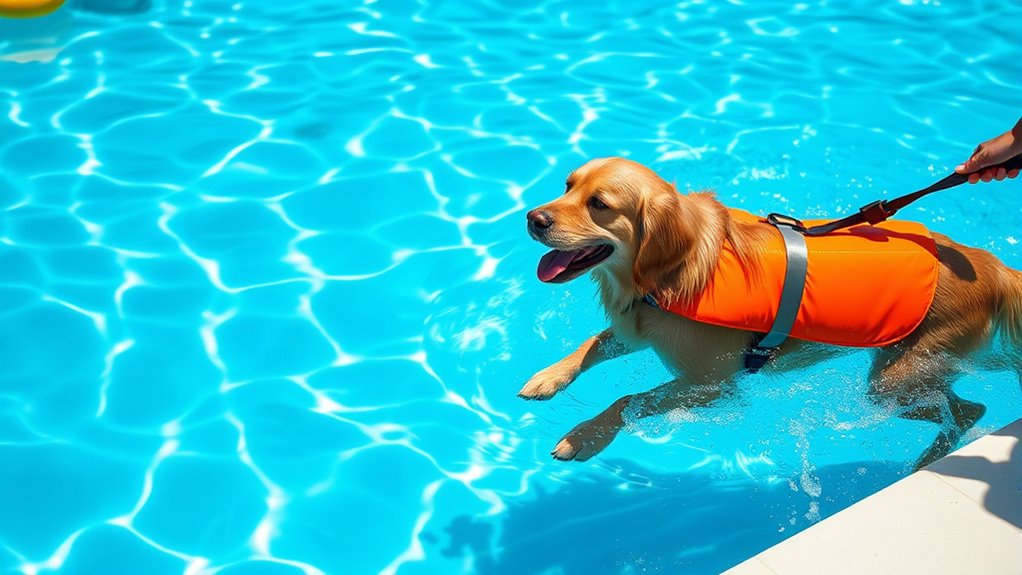
- Use safety gear like life jackets, especially for dogs that are new to swimming or seem unsure. Providing ramps or steps can make it easier for your dog to get in and out of the pool.
- After swimming, rinse your dog with fresh water. This helps wash away the salt and can prevent skin or eye irritation.
- Limit how long your dog swims. Too much time in salt water can lead to dehydration or salt toxicity.
- Keep an eye out for any discomfort or unusual symptoms. If your dog shows signs of salt poisoning or isn’t feeling well, be ready to seek veterinary care right away.
How Salt Water Pools Affect Dogs’ Health and Safety
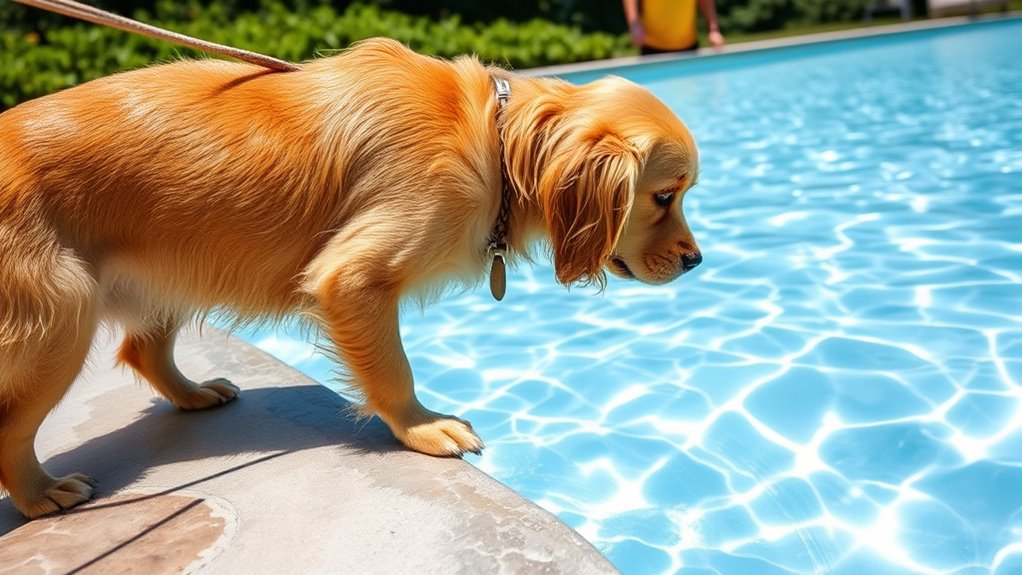
Salt water pools may seem like a safer alternative to traditional chlorinated pools, but they still pose health risks for dogs. The salt can irritate your dog’s skin and eyes, causing discomfort or infections.
Salt water pools can still irritate your dog’s skin and eyes, posing health risks despite being less harsh than chlorinated pools.
If your dog swallows salt water while swimming, it can lead to an upset stomach, vomiting, or diarrhea. Too much salt exposure might also cause dehydration, especially if your dog isn’t drinking enough water.
The salty environment can dry out your dog’s skin and coat, leading to itching or irritation. Some breeds with sensitive skin are more vulnerable to these effects.
While salt water pools generally contain fewer harsh chemicals than chlorinated pools, it’s still important to watch your dog carefully. Rinsing them off after swimming can help reduce health risks.
What Risks Are There When Dogs Drink or Jump Into Salt Water Pools?
When your dog drinks or jumps into a salt water pool, they might face health risks like salt toxicity, which can cause vomiting or diarrhea.
They could also experience skin and eye irritation from the salt, or become dehydrated and upset their stomach.
Knowing these dangers helps you keep your pup safe around salt water pools.
Salt Toxicity Risks
Dogs that drink or jump into salt water pools face the risk of salt toxicity, which can cause serious health issues. When they ingest too much salt, it can disrupt their electrolyte balance, leading to dehydration, vomiting, diarrhea, and in severe cases, seizures or coma.
To understand the danger, consider this table:
| Salt Intake Level | Symptoms | Immediate Action |
|---|---|---|
| Mild | Thirst, vomiting | Offer fresh water, monitor |
| Moderate | Diarrhea, lethargy | Seek veterinary care |
| Severe | Seizures, coma | Emergency veterinary treatment |
Keeping your dog safe means preventing overexposure and recognizing signs of toxicity early.
Skin and Eye Irritation
Exposure to salt water pools can cause skin and eye irritation in dogs, especially if they often drink or splash around in the water. Salt can dry out their skin, leading to redness, itching, and irritation.
When saltwater gets into your dog’s eyes, it can cause discomfort, redness, and tearing. Dogs with sensitive skin or pre-existing skin issues are more at risk.
If your dog spends a lot of time in the pool, watch for signs like scratching, pawing at their eyes, or rubbing against furniture. To help prevent problems, rinse your dog with fresh water after swimming and keep pool time short.
Regularly check their eyes and skin for any signs of irritation. If you notice anything unusual, consult your vet for advice.
Dehydration and Upset Stomach
Salt water pools can pose health risks if your dog drinks the water or takes frequent jumps into it. Dehydration is a common concern because salt draws moisture from your dog’s body, which can make them very thirsty and lead to electrolyte imbalances.
Swallowing salt water can also upset their stomach, causing vomiting or diarrhea. To help avoid these issues, always provide fresh water nearby and limit your dog’s time in the pool.
Here’s a quick overview of the main risks:
| Risk | Effect |
|---|---|
| Dehydration | Excessive thirst, lethargy |
| Upset Stomach | Vomiting, diarrhea |
| Salt Toxicity | Rare but serious, needs vet care |
Keeping these things in mind can help keep your dog safe and happy around pools.
Essential Safety Gear and Pool Features to Protect Your Dog
Ensuring your fluffy companion’s safety in the pool starts with having the right gear and features in place. A sturdy, dog-specific life jacket is essential, especially if your dog isn’t a strong swimmer or the pool is deep. Look for one with a handle for easy rescue and visibility accents so you can keep track of your pup.
Pool ramps or steps designed for dogs help them enter and exit safely without slipping or straining. Installing a pool cover or fence creates a physical barrier, preventing accidental falls when you’re not supervising directly.
Consider adding a pool alarm to alert you if your dog enters the water unexpectedly. These safety features give you peace of mind and help keep your dog secure around the saltwater pool.
How to Supervise and Limit Your Dog’s Access to the Pool
Having the right safety gear and pool features in place is a great start, but close supervision is key to keeping your dog safe. Always watch your dog when they’re near or in the pool, even if they’re experienced swimmers.
Supervise your dog at all times near the pool to ensure their safety and prevent accidents.
Limit their access by using gates or barriers to prevent unsupervised entry. When your dog is in or around the pool, stay nearby and keep a close eye on their behavior.
If they show signs of fatigue or distress, gently guide them out of the water. Establish rules about pool access, such as only allowing your dog in when supervised.
Consistent supervision helps prevent accidents like jumping in unexpectedly or getting trapped, and keeps your dog safe while enjoying salt water pool time.
Signs Your Dog Might Be Unwell After Pool Time
After your dog finishes pool time, it’s important to watch for any signs they might be unwell, as some issues can develop quickly. Look for excessive drooling or pawing at their mouth, which could mean irritation or that they swallowed salt water.
Keep an eye out for vomiting or diarrhea, which can indicate stomach upset from swallowing too much salt or pool chemicals. Also, watch their energy level—if they seem lethargic, it might be a sign of dehydration or illness.
Notice if they’re limping or favoring a limb, as this could be from slips or minor injuries. Additionally, monitor their breathing—labored or rapid breathing can be a warning sign.
If you see any of these signs, it’s best to contact your veterinarian promptly. This way, you can ensure your dog stays safe and healthy after pool time.
What to Do If Your Dog Gets Sick After Swimming
If your dog shows signs of illness after swimming, act quickly to assess their condition.
Look for symptoms like vomiting, lethargy, or difficulty breathing, and don’t wait to seek veterinary help.
Prompt action can make a big difference in their recovery.
Recognize Symptoms Quickly
Recognizing symptoms quickly is key to making sure your dog gets prompt help if they don’t feel well after swimming. Keep an eye out for signs like vomiting, diarrhea, excessive drooling, or trouble breathing—these show something’s wrong.
Also, watch for your dog acting unusually tired, weak, or showing muscle tremors or seizures. Changes in their behavior, like confusion or staggering, are red flags.
Stay alert during and after swimming, especially if they swallow water or spend lots of time in the pool. Spotting issues early can help you act fast and possibly prevent serious health problems.
If you see any of these signs, don’t wait. Trust your instincts and get veterinary help right away.
Seek Veterinary Assistance Immediately
When you notice your dog showing signs of illness after swimming, acting quickly can make all the difference. Contact your veterinarian immediately if your dog exhibits symptoms like vomiting, diarrhea, lethargy, or difficulty breathing.
Do not try to treat serious symptoms at home, as saltwater poisoning, infections, or other complications need professional care. Keep your dog calm and comfortable while you prepare to transport them to the vet.
Bring any relevant details, such as how long they were swimming, water conditions, and what symptoms you’ve observed. Prompt veterinary attention can prevent complications and ensure your dog gets the right treatment.
Frequently Asked Questions
Can All Dog Breeds Tolerate Salt Water Pools Equally?
Not all dog breeds tolerate salt water pools similarly. Some breeds, especially those with sensitive skin or breathing issues, might experience discomfort or health problems from salt exposure.
Small or short-haired dogs could be more prone to irritation, while thick-coated breeds might overheat.
It’s important to monitor your dog closely, watch their reactions, and talk to your vet if you notice any signs of distress or discomfort in the salt water environment.
How Often Should I Rinse My Dog After Pool Visits?
You should rinse your dog with fresh water immediately after each pool visit, especially if they’ve been in a salt water pool. Doing so removes salt, chlorine, and other chemicals that can irritate their skin and coat.
If your dog swims often, consider rinsing them thoroughly every time. This helps prevent dryness and discomfort.
Regular rinsing also reduces the risk of skin infections and keeps their coat healthy.
Are There Specific Dog Pool Accessories I Should Avoid?
You should avoid dog pool accessories with small parts or sharp edges. They can be hidden dangers, like landmines waiting to cause trouble.
Items like inflatable toys with loose pieces, sharp-edged flotation devices, or anything made with toxic materials can pose risks. It’s better to choose sturdy, non-toxic gear made for pups.
Keep an eye on the accessories you pick, making sure they’re safe and suitable. This way, your dog can enjoy the water without any surprises or accidents.
What Are Symptoms of Saltwater Poisoning in Dogs?
Saltwater poisoning in dogs can cause symptoms like vomiting, diarrhea, excessive drooling, and weakness. You might also notice dehydration, tremors, or seizures in severe cases.
If your dog shows any of these signs after being in a saltwater pool, you should seek veterinary care immediately.
Keep a close eye on your pup during and after pool time, and make sure they stay well-hydrated to prevent poisoning.
How Can I Train My Dog to Stay Safe Around Pools?
You can train your dog to stay safe around pools by teaching commands like “leave it” and “come” with positive reinforcement. Practice supervised visits near the pool, rewarding calm behavior.
Use barriers or pool covers when you’re not watching. Gradually introduce your dog to the water, making sure they’re comfortable and confident.
Consistent training and supervision help prevent accidents and keep your dog safe around pools.
Conclusion
By staying vigilant and prepared, you can turn the salt water pool into a safe haven for your beloved pet. Think of it as a well-guarded treasure chest that protects your dog’s health and happiness.
Keep an eye on them, use safety gear, and know the signs of trouble.
With these tips, your pup will enjoy pool time as much as you do, creating memories that shine brighter than the sun on water.
And remember, keeping your dog safe in salt water pools is all about being cautious and attentive.