What Should My Freezer Temperature Be for Food Safety?
If you’ve ever opened your freezer only to find that your food isn’t as frozen as it should be, you’re not alone. Many people struggle with keeping their freezer at the right temperature for food safety and quality.
To keep your food safe, set your freezer temperature to 0°F (-18°C). This temperature prevents bacteria growth and keeps food properly frozen, maintaining quality and safety.
Use a reliable thermometer to check the temperature regularly and adjust the thermostat as needed.
Signs of problems include food being too soft, frost buildup, or ice patches.
Keep your freezer at the right temperature to avoid spoilage and guarantee your food stays fresh—discover more useful tips ahead.
Key Takeaways
- The ideal freezer temperature for food safety is 0°F (-18°C).
- Regularly check it with a reliable thermometer to make sure it’s consistent.
- Temperatures above 0°F can allow bacteria to grow and cause food to spoil.
- Keep your food frozen solid with small ice crystals to help maintain quality.
- If the temperature isn’t at 0°F, just adjust the thermostat to bring it back to the right level.
What Is the Ideal Freezer Temperature for Food Safety?
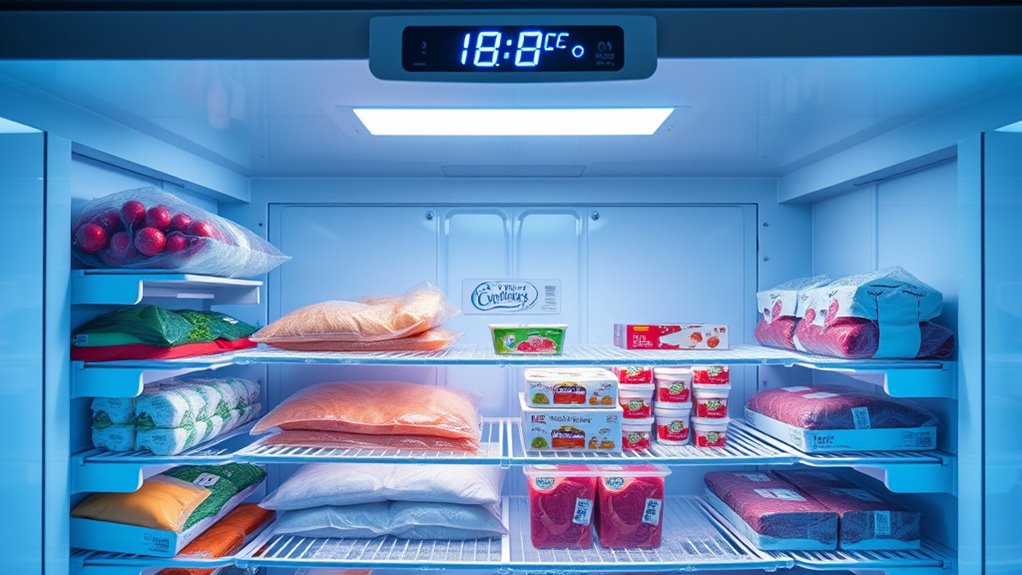
Have you ever wondered what the perfect freezer temperature is to keep your food safe? The ideal temperature is 0°F (-18°C). At this level, your freezer prevents bacteria growth and keeps food properly frozen.
The perfect freezer temperature is 0°F (-18°C) to prevent bacteria growth and keep food safely frozen.
Temperatures above 0°F risk allowing bacteria to develop or food to thaw gradually, which can lead to spoilage. Keeping your freezer at 0°F guarantees that ice crystals stay small and food remains in prime condition.
It’s vital to use a reliable thermometer to monitor the temperature regularly. If your freezer isn’t consistently at 0°F, you might need to adjust the settings or check the door seal.
Maintaining this temperature is essential for food safety, quality, and preventing waste.
Why Maintaining the Correct Freezer Temperature Matters
Maintaining the correct freezer temperature is crucial because it directly affects the safety and quality of your food. If your freezer is too warm, bacteria can grow, which increases the risk of foodborne illnesses and spoilage.
Freezing at the right temperature slows down bacterial growth, helping to keep your food fresh and nutritious. It also prevents freezer burn, which can ruin the texture and flavor of your items.
Keeping your freezer at or below 0°F (-18°C) ensures your food stays safe to eat for a longer time. Ignoring this can lead to unsafe food, wasted money, and health risks.
Regularly checking and maintaining the proper temperature helps you avoid these problems. It keeps your food safe, fresh, and delicious.
How to Check and Set Your Freezer Temperature Correctly
To keep your freezer at the right temperature, it’s important to regularly check it with a reliable thermometer. Place the thermometer in the center, making sure it doesn’t touch the walls or door seals.
Wait at least 8 to 12 hours for an accurate reading. If your freezer isn’t at the recommended 0°F (-18°C), you’ll need to adjust the thermostat.
Most freezers have a dial or digital control. Turn the dial slightly or use the settings to lower or raise the temperature. Then, wait another 8 to 12 hours and recheck the thermometer.
Consistent monitoring helps your freezer stay at a safe temperature, which prevents food spoilage and keeps your food safe to eat. Regular checks are a simple way to avoid potential food safety issues.
Signs Your Freezer Is Too Cold or Too Warm
How can you tell if your freezer isn’t operating at the right temperature? If your food is freezing too hard or developing ice crystals quickly, it might be too cold. Conversely, if items feel soft or there’s excess frost buildup, your freezer could be too warm.
You may notice frozen goods starting to thaw or develop freezer burn, which indicates temperature inconsistency. Strange icy patches or a foul smell can also signal temperature issues.
Moreover, if your freezer cycles on and off frequently or runs constantly, it might be struggling to maintain a proper temperature. Regularly checking for these signs helps ensure your freezer stays within the safe range, keeping your food preserved and safe to eat.
What Are the Food Safety Risks of Incorrect Freezer Temperatures?
When your freezer isn’t maintaining the proper temperature, food safety becomes a serious concern. If it’s too warm, bacteria and mold can grow quickly on frozen foods, risking foodborne illnesses when you thaw and cook them. This can lead to spoilage, off-odors, and unsafe consumption.
Conversely, if your freezer is too cold, it can cause freezer burn, affecting texture and quality, although it’s less of a health risk. Improper temperatures also increase the chance of equipment failure, which can lead to large quantities of food thawing unexpectedly.
This not only wastes money but also raises the risk of contamination. Maintaining the right freezer temperature is essential for preventing these safety issues and keeping your food safe to eat.
Tips to Keep Your Freezer at the Right Temperature and Prevent Spoilage
Keeping your freezer at the right temperature requires regular monitoring and simple adjustments. Use a reliable thermometer to check the temperature at least once a month, making sure it stays around 0°F (-18°C).
If it’s too warm, adjust the thermostat accordingly. Avoid overloading the freezer, as this can block airflow and cause uneven cooling. Keep the door sealed tightly and try not to open it too often to maintain consistent temperatures.
Regularly inspect the door seals for cracks or gaps, and replace them if needed. Label and date food items to track freshness and prevent overcrowding. If you notice frost buildup, defrost the freezer promptly to keep it running efficiently.
Frequently Asked Questions
How Often Should I Monitor My Freezer’s Temperature?
You should check your freezer’s temperature at least once a day to make sure it stays consistent and safe. Regular checks help you catch issues early, like temperature changes that could affect your food safety.
Use a reliable thermometer and keep a record of the temperatures. This way, you can spot trends or problems before they become serious.
Consistent monitoring gives you peace of mind and helps ensure your frozen foods stay safe and well-preserved.
Can a Freezer Be Too Cold for Food Safety?
Absolutely, a freezer can be too cold for food safety, turning your frozen goodies into unrecognizable ice sculptures or causing freezer burn that ruins texture and flavor.
If your freezer dips below 0°F, it can make food overly hardened, making it tough to enjoy and possibly damaging the packaging.
Keep it just right—around 0°F—to ensure your food stays safe, fresh, and delicious without turning into a frozen disaster.
What Tools Are Best for Checking Freezer Temperature?
You should use a reliable thermometer to check your freezer temperature. Digital fridge and freezer thermometers are popular because they give quick, accurate readings and are easy to read.
You can also use dial thermometers, but make sure they’re calibrated correctly. For the best results, place the thermometer in the middle of the freezer, away from the walls or door.
Check the temperature regularly to keep your food safe and ensure everything stays frozen properly.
Does Freezer Temperature Affect Food Texture and Quality?
Yes, freezer temperature directly impacts your food’s texture and quality. If it’s too warm, ice crystals melt, leading to freezer burn and sogginess, especially in meats and vegetables.
A properly maintained temperature around 0°F (-18°C) keeps food frozen solid, helping preserve freshness and prevent freezer burn.
How Quickly Should I Adjust the Temperature if It’s Off?
You should adjust your freezer temperature immediately if it’s off. Once you notice the temperature is incorrect, turn the thermostat to the recommended setting and wait at least 4 hours to see if it stabilizes.
For a more accurate reading, use a thermometer after this period. Prompt adjustments help prevent food spoilage, preserve quality, and guarantee safety.
Conclusion
Think of your freezer as a vigilant guardian, protecting your food from hidden dangers. Keep it at 0°F to guarantee everything stays fresh and safe. Regularly check the temperature, just like tuning a delicate instrument, so you avoid the chaos of spoiled or unsafe food.
When you maintain the right temp, you’re confidently sailing through mealtime without worries. Your freezer’s perfect temperature is your secret weapon for safe, delicious meals every time.