Induction Cooktop Vs Electric – 8 Key Differences to Consider
Many people struggle with choosing the right cooktop for their kitchen, feeling overwhelmed by all the options out there. If you’re trying to decide between an induction cooktop and an electric one, you’re not alone. It can be confusing to weigh the pros and cons of each.
Induction cooktops heat cookware directly using electromagnetic fields, offering faster cooking, precise temperature control, and higher energy efficiency compared to electric models, which use heating elements beneath a surface.
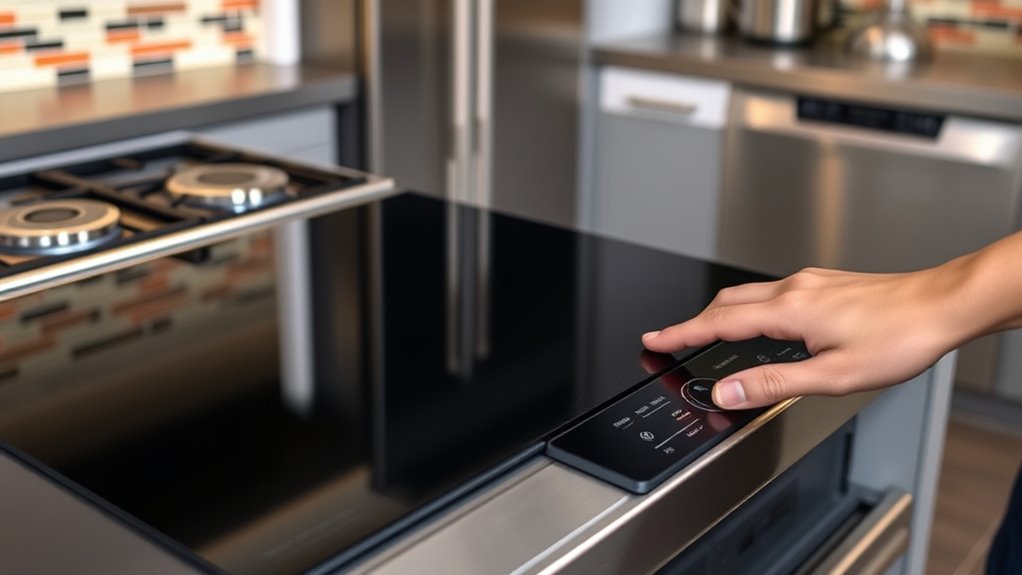
Induction surfaces stay cooler and are safer, with features like automatic shut-off, but they require compatible cookware.
Electric cooktops tend to be more affordable and easier to use with various pots and pans.
To learn more about these differences, you’ll find helpful insights further on.
Key Takeaways
- Induction cooktops heat cookware directly through electromagnetic fields. This means they respond faster than electric models, which heat through beneath-surface elements.
- They’re more energy-efficient, with about 80-90% of the energy used effectively. Plus, they cook food quicker, saving you both time and energy compared to electric cooktops.
- The surfaces of induction cooktops stay relatively cool, which helps reduce burn risks. Many also come with safety features like automatic shut-off and child locks for added peace of mind.
- Cleaning is much easier on induction cooktops because of their smooth, flat surfaces. Electric coil models can trap spills, making them a bit more work to maintain.
How Do Induction and Electric Cooktops Work?
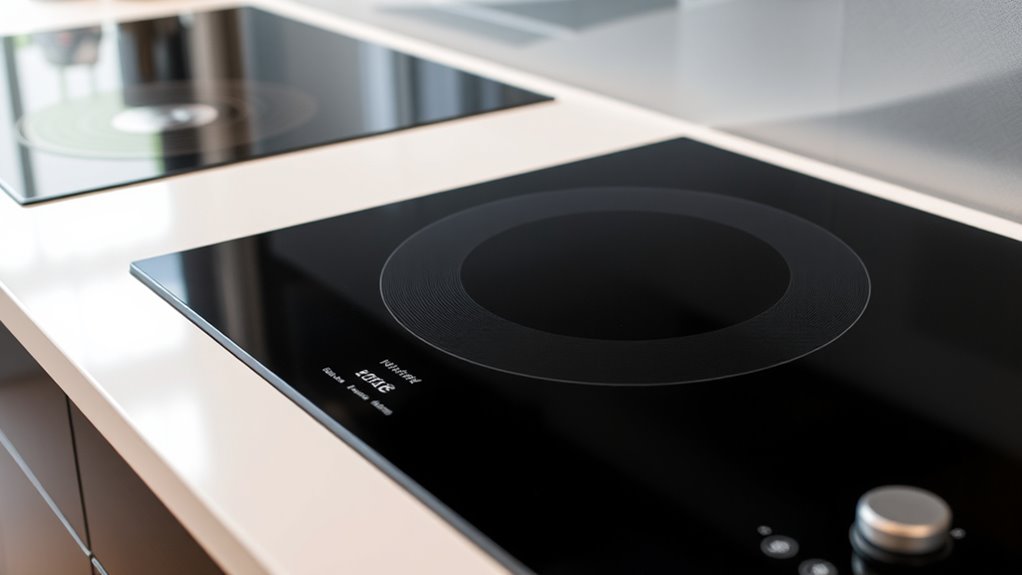
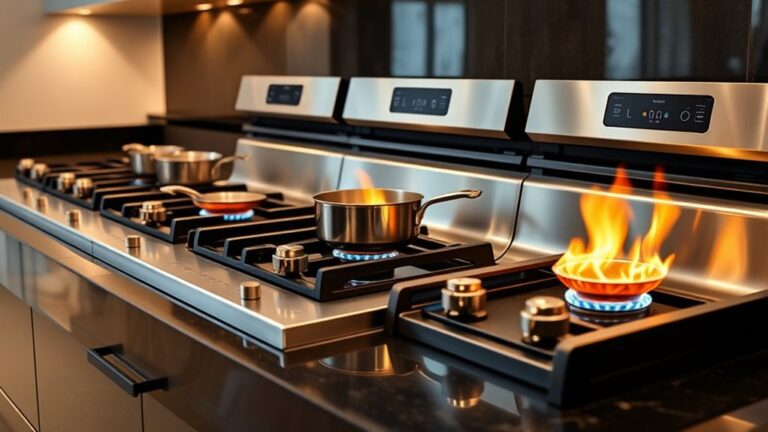
Induction and electric cooktops work differently to generate heat for cooking. With electric cooktops, you’ll find a heating element beneath a smooth glass surface. When you turn it on, electricity heats this element, which then radiates heat upward to warm your cookware.
The process is steady but can take longer to heat up and cool down. Induction cooktops, on the other hand, use electromagnetic fields to directly heat your cookware. When you select a setting, an electric current creates a magnetic field that induces heat inside ferromagnetic pots and pans.
This means the heat is generated instantly within the cookware itself, leading to rapid response times. The key difference is how heat is produced—electric heating warms indirectly, while induction heats directly through magnetic energy.
Which Cooks Faster: Induction or Electric?
Regarding cooking speed, how heat is generated really makes a difference. Induction cooktops heat cookware directly through magnetic fields, which means you get rapid, precise heat transfer.
Electric cooktops, however, rely on heating elements that heat up more slowly, leading to longer cooking times.
That’s why induction cooktops usually boil water or cook food faster—saving you time in the kitchen.
Induction cooktops boil water and cook food faster, helping you save time and enjoy quicker, more efficient meals.
Experience the thrill of boiling water in seconds instead of minutes.
Enjoy quick adjustments to your cooking temperature with instant responses.
Save energy and cut down wait times during meal prep.
Feel confident knowing your food cooks evenly and swiftly.
Choosing induction means you’ll get faster results, making your cooking faster and more enjoyable.
How Energy Efficient Are Induction and Electric Cooktops?
While both induction and electric cooktops convert electrical energy into heat, induction cooktops are usually more energy-efficient because they transfer heat directly to the cookware with minimal loss. This direct transfer means less energy gets wasted, making induction cooktops faster and cheaper to run.
Electric cooktops heat the surface first, then transfer heat to the cookware, which uses more energy. Induction models typically get around 80-90% energy efficiency, while electric ones are closer to 65-75%. Over time, especially if you cook often, that difference adds up.
If saving energy and lowering utility bills matter to you, induction cooktops are the better choice when it comes to efficiency.
What Safety Features Do Induction and Electric Stoves Offer?
Because induction cooktops heat cookware directly through electromagnetic fields, they come with built-in safety features that reduce the risk of accidents. If you remove the cookware, the cooktop automatically turns off, preventing burns or fires.
Many models include overheat protection, shutting down if the surface gets too hot. Some have child lock features, keeping little hands from turning on or tampering with the stove.
Moreover, since the surface remains relatively cool, there’s less chance of burns from touching a hot cooktop. These safety features give you peace of mind, especially in busy households or when children are around.
- *Child safety locks that prevent accidental activation*
- *Automatic shut-off when cookware is removed*
- *Overheat protection for added safety*
- *Cool-to-touch surfaces minimize burn risks*
How Easy Is It to Clean and Maintain These Cooktops?
Cleaning and maintaining your cooktop is straightforward, but it varies between induction and electric models.
Surface cleaning requires different approaches, and spill management can be easier or harder depending on the design.
Regular upkeep helps keep both types in top shape with minimal effort, but some surfaces need more frequent attention.
Surface Cleaning Requirements
Induction cooktops usually have smooth, flat surfaces made of glass or ceramic, which makes cleaning easy. Just wipe away spills or splatters with a damp cloth to keep your cooktop looking new.
Their sleek design means there are no grates or burners to scrub, making cleanup less of a hassle. Plus, since the surface heats only when in contact with cookware, messes tend to be smaller and easier to clean up.
Feel confident maintaining a spotless cooktop with minimal effort. Imagine starting your day with a shiny surface, ready for your next meal.
The smooth surface also discourages food from sticking, so cleaning up is quick and satisfying. Keeping your cooktop clean becomes a simple part of your routine, not a chore.
Spill Management Ease
Spill management on induction cooktops is simple because of their smooth, flat surfaces. When spills happen, they’re easy to wipe away since there are no grates or burners to navigate around. A quick wipe with a damp cloth usually clears messes efficiently.
Electric cooktops, especially coil types, can be trickier. Spills might get trapped around coils and burners, which takes more effort to clean thoroughly. The flat surface of induction models prevents food from seeping into cracks, making cleanup faster.
Here’s a quick comparison:
| Feature | Induction Cooktop | Electric Cooktop | Ease of Spill Management |
|---|---|---|---|
| Surface Type | Smooth and flat | Coiled or smooth | Easier to clean |
| Spill Penetration | No cracks or gaps | Potential for trapping spills | Less effort needed |
| Cleaning Time | Quick and simple | Can be time-consuming | Generally quicker |
Maintenance Frequency and Effort
Maintaining these cooktops varies in effort and frequency, depending on their design. Induction cooktops are usually easier to clean because their smooth glass surface doesn’t have coils or burners that trap food. Electric cooktops, especially coil models, need more effort because grime can build up around the coils and burners.
You’ll love how simple induction cleaning is—just wipe away spills quickly before they harden. Electric coil models require scrubbing and careful maintenance to prevent corrosion.
Feel confident knowing you can restore your cooktop’s shine in minutes.
Experience the satisfaction of a spotless kitchen with less effort.
Avoid frustration with stubborn stains that seem impossible to remove.
Enjoy peace of mind, knowing your appliance stays in top shape effortlessly.
What Are the Costs of Induction and Electric Cooktops?
The initial cost of purchasing an induction cooktop can be quite a bit higher than an electric one, but it’s important to think about the long-term costs too. Induction models usually have a higher upfront price because of advanced technology and better build quality.
That said, they’re often more energy-efficient, which can help lower your monthly utility bills over time. Electric cooktops tend to cost less initially but might use more energy, leading to higher costs in the long run.
Installation costs are usually similar for both types, although induction units might need specialized wiring. When choosing, consider your budget and how much you’ll use the cooktop, as the initial expense could be balanced out by savings on energy and maintenance down the road.
Who Should Choose an Induction Cooktop?
Are you someone who values speed, precision, and energy efficiency in your cooking? An induction cooktop might be perfect for you. If you enjoy quick heat-up times and precise control over temperature, induction offers unmatched responsiveness. It’s ideal if you’re passionate about cooking and want to save time in the kitchen. Plus, if you prioritize safety and energy savings, induction’s surface only heats when a pot is present, reducing risks.
Consider an induction cooktop if you want faster cooking and boiling times. You also value precise temperature control or safety in your kitchen. Energy efficiency might be important to you too.
If these points resonate, induction could really enhance your cooking experience.
What Are the Main Limitations of Induction and Electric Stoves?
While induction and electric stoves offer many benefits, they also have some notable limitations that could affect your cooking experience.
Induction stoves need compatible cookware, so if your pots and pans aren’t magnetic, you’ll need to buy new ones. They also tend to be more expensive upfront and can make a buzzing noise when in use.
Electric stoves often heat up slowly and may have uneven heat distribution, making precise cooking tricky. They’re generally less energy-efficient and can be harder to clean because of their coil or flat surface design.
Both types rely on electricity, so if there’s a power outage, you won’t be able to cook. Knowing these limitations can help you decide if these stoves are right for your needs and lifestyle.
Frequently Asked Questions
Can I Use All Types of Cookware on Induction and Electric Cooktops?
You can’t use all types of cookware on induction and electric cooktops. For induction, your cookware needs to be magnetic. Cast iron and stainless steel usually work, but aluminum and glass won’t.
Electric cooktops are more versatile and work with most cookware, including glass and ceramic. To be sure, check if a magnet sticks to your pot or pan. If it does, it’s compatible with induction.
Are Induction Cooktops Suitable for Professional or Commercial Kitchens?
Induction cooktops are highly suitable for professional or commercial kitchens. They heat quickly, precisely, and offer excellent temperature control, which is essential in busy environments.
Their safety features and energy efficiency make them a practical choice. While they require compatible cookware, many commercial kitchens prefer induction for its cleanliness and speed.
If you’re thinking about upgrading, induction can boost your kitchen’s productivity and safety standards effectively.
How Do Temperature Controls Differ Between Induction and Electric Stoves?
You’ll find that induction stoves offer precise temperature controls, allowing you to adjust heat instantly with a touch or dial. This makes cooking more accurate and responsive.
Electric stoves, on the other hand, tend to have slower, less responsive controls because their heating elements take time to heat up or cool down.
This means induction provides more consistent control, especially when you need exact temperatures. Electric stoves might lead to slight delays in heat adjustments.
What Are the Power Requirements for Installing Induction Versus Electric Cooktops?
A stitch in time saves nine, and understanding power needs helps you avoid future headaches.
For induction cooktops, you’ll usually need a dedicated 240-volt outlet with higher amperage, often between 30 and 50 amps depending on the model.
Electric cooktops generally require similar outlets but might have slightly lower amperage needs.
Always check your home’s electrical system and talk to a professional to ensure safe, proper installation.
This way, you can avoid overloads and enjoy your new cooktop worry-free.
Do Induction Cooktops Emit Electromagnetic Fields That Affect Health?
Induction cooktops emit electromagnetic fields, but they are generally considered safe for most people. The fields are localized and weaken quickly with distance, so the potential health risks are reduced.
If you have a pacemaker or other medical devices, it’s a good idea to check with your doctor before using an induction cooktop. For the average person, exposure levels are low and unlikely to cause harm.
Still, if you’re worried about it, you can use cookware with a handle or just take breaks from cooking. That way, you can cook comfortably and safely.
Conclusion
Choosing between induction and electric cooktops depends on your cooking style and priorities. Did you know induction cooktops heat up to 50% faster than traditional electric ones? If speed and energy efficiency matter to you, induction might be your best bet.
Think about safety, maintenance, and budget when making your decision. Induction cooktops are safer because they stay cooler to touch, but they can be more expensive initially. Electric cooktops are easier to maintain and often more affordable upfront.
Whichever you choose, understanding these key differences helps you cook smarter and safer every day. For many, considering induction cooktops for their speed and efficiency makes them a popular choice.