
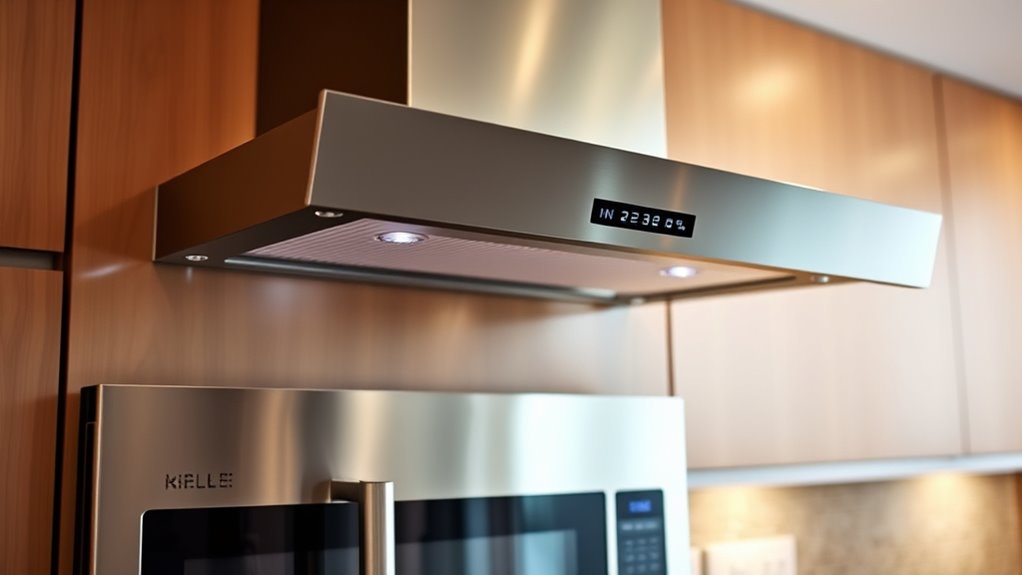
What Is a Microwave Oven Exhaust Hood?
Many people struggle with lingering smoke, steam, and cooking odors taking over their kitchens. It’s frustrating when these smells stick around long after you’ve finished cooking and can even affect indoor air quality.
A microwave oven exhaust hood is a ventilation device installed above your microwave to remove smoke, steam, and cooking odors. It uses a fan and filters to pull away pollutants, preventing grease buildup and improving indoor air quality.
You can choose models based on your kitchen size and cooking habits, ensuring quiet operation and effective filters.
If you want to learn more about how these hoods work and how to select the right one, keep going.
Key Takeaways
- A microwave oven exhaust hood helps remove smoke, steam, and odors that come from cooking.
- It’s installed right above the microwave to keep the air cleaner and the kitchen tidier.
- This hood uses filters and a fan to catch grease, smoke, and smells, making sure the air stays fresh.
- It also helps prevent grease from building up on walls and cabinets, which can be a fire hazard.
- Overall, it keeps the cooking area comfortable by efficiently removing pollutants from the air.
What Is a Microwave Oven Exhaust Hood and Why Do You Need One?
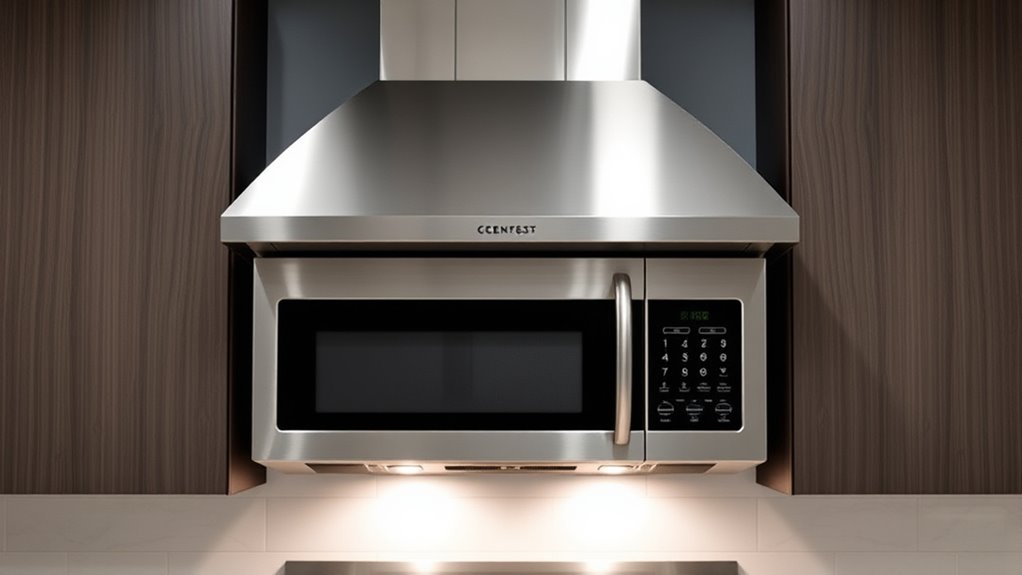
A microwave oven exhaust hood is a venting system that removes smoke, steam, and cooking odors from your kitchen. It’s installed above your microwave to help keep the air clean and fresh.
Without it, smoke and strong smells can stick around, making your kitchen uncomfortable and affecting indoor air quality. An exhaust hood also helps prevent grease buildup on walls and cabinets, which means less cleaning for you.
If your microwave is in a small or poorly ventilated space, a hood becomes even more important. It boosts safety by reducing the risk of smoke inhalation and potential fires.
How Do Microwave Exhaust Hoods Work?
Microwave exhaust hoods have a ventilation system that pulls air away from your cooking area to get rid of smoke, steam, and odors.
As the air moves through the hood, it passes through filters that trap grease and particles, helping keep the air clean.
This process ensures your kitchen stays fresh and free from lingering smells.
Ventilation Mechanism
When you cook with a microwave oven that has an exhaust hood, the ventilation mechanism kicks into gear to keep your kitchen air fresh. It pulls air through vents in the hood, which are connected to a fan.
As the fan spins, it creates suction, drawing away smoke, steam, and odors that happen during cooking. This airflow is key to stopping lingering smells and reducing moisture build-up, which can lead to mold or damage.
The fan often adjusts its speed automatically depending on how much smoke or steam is detected, but you can also set it manually. This ventilation system makes sure pollutants are cleared away quickly, helping keep your kitchen clean and safe.
Filtration Process
To effectively remove smoke, steam, and odors, microwave exhaust hoods use a filtration process that captures contaminants before they escape into your kitchen. The primary filters trap grease, smoke particles, and other airborne pollutants.
Usually, these filters are made of materials like aluminum or charcoal. Grease filters catch solid particles and prevent buildup on the hood’s internal components.
Charcoal or carbon filters absorb odors and fumes, especially when the hood operates in recirculating mode. You’ll need to regularly clean or replace these filters to keep them working their best.
Some hoods have a mix of grease and charcoal filters working together to improve air quality. Proper filtration helps your kitchen stay fresh, reducing lingering smells and airborne particles that can affect indoor air quality.
Choosing the Right Microwave Exhaust Hood for Your Kitchen
Choosing the right microwave exhaust hood depends on your kitchen’s layout and cooking habits. Think about how much space you have and what kinds of cooking you do most.
If you often fry or steam, go for a higher CFM (cubic feet per minute) to effectively remove smoke and odors. For smaller kitchens, a slim, under-cabinet model might be the best fit.
Noise levels matter too—quiet hoods make cooking more comfortable. Here’s a quick guide to help you decide:
| Kitchen Size | Cooking Frequency | Hood Type |
|---|---|---|
| Small | Occasional | Under-cabinet, Compact |
| Medium | Regular | Wall-mounted, Slide-in |
| Large | Frequent | High-CFM, Downdraft |
| Open-plan | All-day use | Powerful, Quiet |
| Limited space | Light cooking | Slim, Ventless |
Pick a hood based on your needs, available space, and cooking style for the best performance.
Features to Look for in a Microwave Venting System
When choosing a microwave venting system, you’ll want to evaluate ventilation power and speed to effectively clear smoke and odors.
The type of filters and how easy they are to maintain also matter, ensuring your system stays efficient over time.
Prioritizing these features helps keep your kitchen fresh and hassle-free.
Ventilation Power and Speed
A microwave venting system’s ventilation power and speed are key for effectively removing smoke, steam, and odors from your kitchen. You want a system that can handle the intensity of your cooking, especially when frying or boiling.
Look for high airflow ratings, measured in cubic feet per minute (CFM). A higher CFM means better removal capacity. Speed settings are also important; multiple speeds let you adjust the airflow based on your cooking needs.
If you often cook heavy meals, a powerful, high-speed fan guarantees quick removal of fumes. Conversely, lower speeds work well for light steaming or reheating.
Choosing a system with adequate power and adjustable speeds ensures your kitchen stays fresh and free of lingering smells.
Filter Types and Maintenance
Your microwave venting system’s filter is essential for trapping grease, smoke, and odors, helping your kitchen stay clean and fresh.
There are mainly two types of filters: charcoal and metal. Metal filters catch grease and are washable, while charcoal filters absorb odors but need replacing regularly.
Proper maintenance is key—clean metal filters weekly and replace charcoal filters every few months. Keeping your filters clean and updated ensures efficient venting and helps your vent hood last longer.
Regular upkeep is simple but crucial for peak performance.
Installing and Maintaining Your Microwave Exhaust Hood
Installing a microwave exhaust hood requires careful attention to detail to guarantee it functions effectively and safely. First, choose a location that’s directly above your microwave or cooktop, confirming proper clearance as specified by the manufacturer.
Secure the hood firmly to the wall or cabinet, using appropriate anchors and tools. Connect the venting system, whether ducted or ductless, making sure all joints are sealed to prevent leaks.
Once installed, regularly clean the filters and exterior surfaces to maintain peak airflow and efficiency. Check the venting system periodically for blockages or damage, especially if you notice reduced performance or lingering odors.
Proper installation and maintenance guarantee your exhaust hood operates safely, effectively removes smoke and odors, and prolongs its lifespan.
Troubleshooting Common Problems With Microwave Hoods
Even with proper installation and maintenance, microwave hoods can run into issues that affect how well they work. Common problems include poor ventilation, unusual noise, and lights not working.
If your hood isn’t ventilating properly, check the filters and vents for blockages or dirt buildup. Clogged filters can really reduce airflow and make your hood less effective.
Unusual noise might come from loose parts or a failing fan motor. Try tightening any loose connections or consider replacing the motor if needed.
When the lights stop working, inspect the bulbs and electrical connections. Sometimes a burnt-out bulb or wiring issue is all it takes to fix the problem.
Regular cleaning and timely repairs can help prevent these common issues from becoming bigger problems.
Frequently Asked Questions
Can a Microwave Exhaust Hood Be Installed Outdoors?
Yes, you can install a microwave exhaust hood outdoors, but make sure it’s rated for outdoor use. Look for models that are weatherproof and resistant to rain and humidity.
Proper ventilation is key to prevent moisture buildup and damage. Make sure the setup allows for good airflow and keeps the area dry.
Also, pay attention to electrical safety. Use outdoor-rated wiring to ensure everything stays safe and functional over time.
With the right setup, an outdoor microwave exhaust hood can vent fumes effectively while handling outdoor conditions.
What Is the Typical Lifespan of a Microwave Exhaust Hood?
A microwave exhaust hood usually lasts around 5 to 10 years, depending on how much you use it and how well you maintain it. Regular cleaning of the filters and making sure your ventilation is working properly can help extend its life.
If you notice it making strange noises, losing suction, or having electrical problems, it’s probably time to think about replacing it. Taking good care of your hood keeps it working efficiently and safely, helping it do its job of removing smoke, steam, and odors from your kitchen.
Are There Specific Safety Standards for Microwave Exhaust Hoods?
Yes, there are specific safety standards for microwave exhaust hoods. These standards ensure that the hoods effectively vent smoke, grease, and odors while helping prevent fire hazards.
Look for products certified by organizations like UL (Underwriters Laboratories) or ETL. These organizations test for safety and performance, giving you peace of mind.
Following these standards helps you keep a safe kitchen environment. It also reduces fire risks and ensures proper ventilation during cooking.
How Energy-Efficient Are Different Microwave Venting Systems?
Some microwave venting systems are surprisingly energy-efficient, but it varies. You’ll find that ducted hoods typically save more energy by venting outdoors, which reduces the work the fan has to do.
On the other hand, recirculating hoods use filters that can increase energy consumption over time. To get the most efficiency, choose a model with a high-efficiency motor and the right size for your space.
Keep an eye on energy ratings because your choice can really make a difference in your energy bills.
Can a Microwave Exhaust Hood Be Integrated With Smart Home Systems?
Yes, you can integrate a microwave exhaust hood with smart home systems. Many modern hoods come with Wi-Fi or Bluetooth, so you can connect them to your smartphone or voice assistants like Alexa or Google Assistant.
This allows you to control and monitor the hood remotely. You can turn the vent on or off, change fan speeds, and even get maintenance alerts. It makes your kitchen more convenient, smarter, and more efficient.
Conclusion
A microwave oven exhaust hood is your kitchen’s unsung hero, stopping smoke, steam, and cooking odors from taking over. It helps keep the air fresh and your space comfortable.
By understanding how these hoods work and choosing the right one, you can easily maintain a clean and inviting kitchen. Proper installation and regular maintenance are key to ensuring your exhaust system lasts for years.
Think of it as the finishing touch that keeps your culinary space clean and cozy. With a good exhaust hood, you won’t have to battle smoke and smells every time you cook.