Diagnosing Common Gas Stove Oven Issues: A Repair Guide
Dealing with a malfunctioning gas stove oven can be frustrating, especially when you’re trying to get dinner on the table. Many people struggle with issues like uneven heating, strange smells, or ignition problems, and it’s easy to feel stuck.
You’re not alone—these are common concerns, but the good news is, most can be fixed with a little troubleshooting.
If your gas stove oven isn’t working properly, start by checking for common issues like uneven heating, strange smells, or ignition problems.
Test the igniter for continuity and replace it if needed. Confirm gas supply and burners are clear of debris, and reset safety valves if necessary.
Watch for error codes and panel issues that may need fixing.
For safety and long-term solutions, staying attentive now will guide you through solving these problems effectively.
Remember, many of these issues are manageable once you understand what to look for.
Key Takeaways
- Check for uneven heating, strange smells, or ignition problems to identify common gas stove oven issues.
- Test the oven igniter for continuity with a multimeter. If there’s no reading or if the glow is weak, it’s time to replace it.
- Verify the gas supply, thermostat, and burner cleanliness to troubleshoot heating failures.
- Inspect the control panel for error codes, damage, or loose connections. These can help diagnose electronic issues.
- Always prioritize safety. Detect gas leaks using soap tests, and if problems persist, it’s best to consult professionals.
Common Gas Stove Oven Problems and How to Spot Them
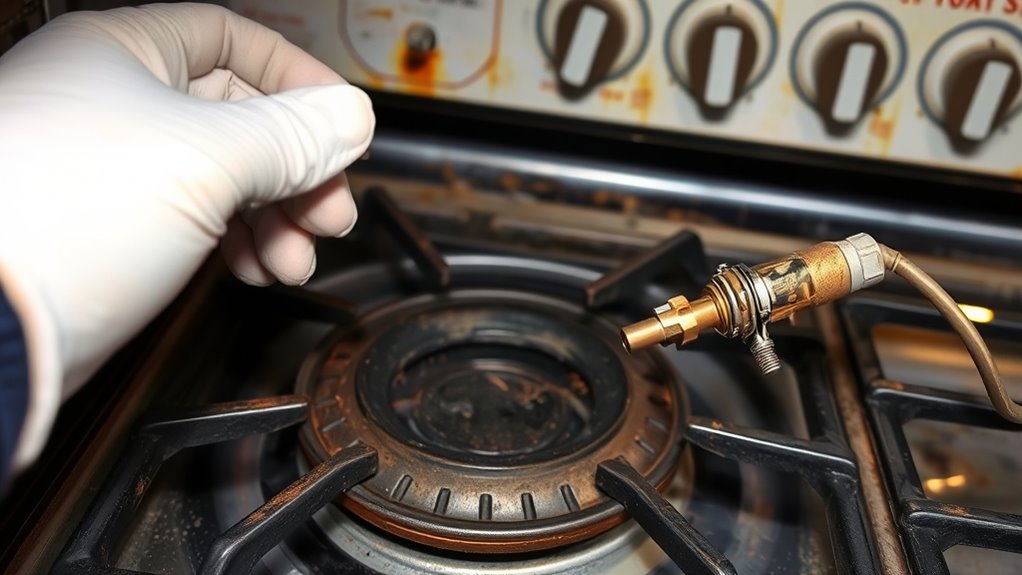
Gas stove oven problems can often be spotted early if you know what to look for. If your oven isn’t heating evenly, that’s a sign something might be wrong. You might notice hot spots or cold patches inside the oven.
A strange smell or visible smoke when you turn it on also signals an issue. If your oven won’t turn on, check for a loose or faulty control knob. Unusual noises like buzzing or clicking can point to electrical or mechanical problems.
An oven that takes too long to preheat or doesn’t reach the set temperature is another red flag. Spotting these signs early helps you fix problems before they get worse, saving you time and money on repairs.
How to Test and Fix a Faulty Oven Igniter
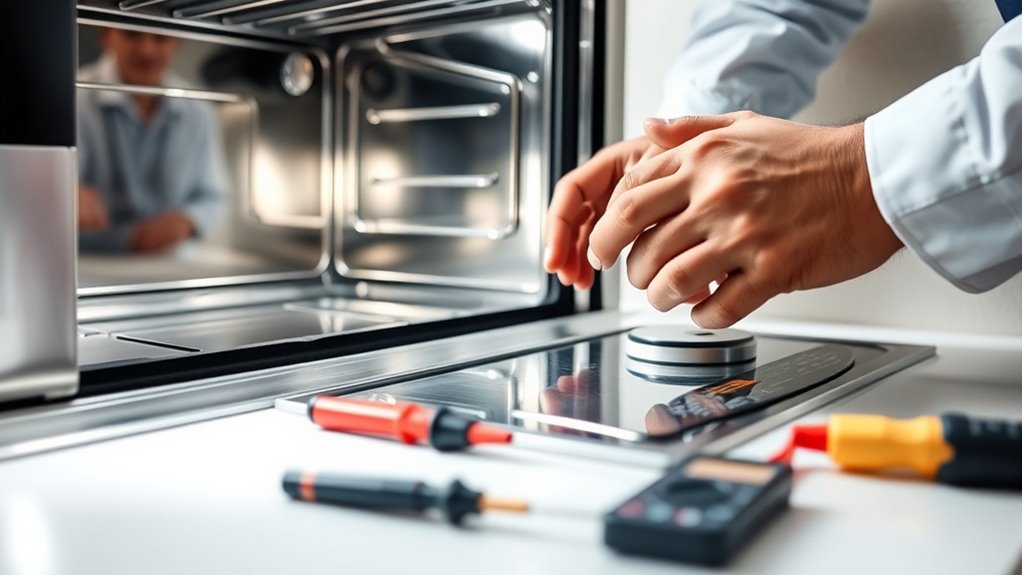
To test if your oven igniter is working properly, start by checking its continuity with a multimeter. If the reading is zero or infinite, you’ll need to replace the igniter.
Replacing a faulty igniter is straightforward and restores your oven’s ability to ignite reliably.
Checking Igniter Continuity
Before testing your oven igniter, make sure it’s unplugged and the gas supply is turned off for safety.
You’ll need a multimeter to check the igniter’s continuity. Follow these simple steps:
- Disconnect the igniter from the wiring harness.
- Set your multimeter to the ohms (Ω) setting.
- Place the probes on each terminal of the igniter.
If the multimeter shows a reading, usually between 50 to 400 ohms, the igniter has continuity and is probably working fine.
No reading means an open circuit, so the igniter is faulty.
Testing continuity helps you see if the igniter can conduct electricity.
If there’s no continuity, you’ll need to replace the igniter to get your oven working again.
Replacing Faulty Igniter
If your multimeter shows no continuity in the igniter, it’s time to replace it to restore proper oven function. First, make sure the oven is unplugged and the gas supply is off.
Remove the oven’s back panel or access panel to reach the igniter. Disconnect the wires connected to the igniter, noting their positions for reassembly.
Carefully unscrew or unclip the faulty igniter from its mounting. Install the new igniter by attaching it securely and reconnecting the wires in their original places.
Once everything is in place, restore power and turn on the oven to test the new igniter. It should glow brightly and ignite the gas properly.
If it doesn’t, double-check your connections or consider testing the gas valve for issues.
Troubleshooting Gas Oven Heating Problems
When your gas oven isn’t heating properly, it can be frustrating and inconvenient. To troubleshoot, start by checking these key areas:
- Gas supply. Make sure the gas valve is fully open and there are no blockages or leaks.
- Thermostat. Verify that the temperature setting is correct and the thermostat isn’t faulty.
- Ignition system. Confirm the igniter sparks consistently; a weak or broken igniter can prevent proper heating.
If these components seem fine, inspect the oven burner for clogs or debris. Also, consider if the oven’s safety valve is working properly. Addressing these issues can often fix uneven or no heating and get your oven back to normal quickly.
Deciphering and Fixing Error Codes and Panel Issues
When your oven shows error codes or the control panel behaves strangely, it’s important to understand what those signals mean.
Knowing how to interpret the codes correctly helps you figure out what’s wrong and choose the right fix.
Troubleshooting panel issues can save you time and avoid unnecessary repairs.
Getting familiar with these signals makes fixing your oven much easier.
Understanding Error Code Meanings
Understanding error codes on your gas stove oven is key for quick troubleshooting and repairs. These codes act like a language that points out specific issues with your appliance, saving you time and guesswork.
To figure them out, start with your user manual or the manufacturer’s guide, which explains what each code means.
Pay attention to patterns in the error display—some codes might pop up during particular problems.
You can also check online resources and manufacturer websites for updated lists and troubleshooting tips for common error codes.
Knowing what these codes mean helps you determine if it’s a simple fix, like a sensor glitch, or if you need professional help.
Always follow safety precautions when interpreting error codes and working on repairs to avoid accidents.
Troubleshooting Panel Malfunctions
Panel malfunctions can disrupt your gas stove oven’s operation, so it’s important to figure out if error codes are pointing to a real problem or if the panel itself is faulty. If buttons aren’t responding, error codes won’t clear, or the display flickers, you might be dealing with a panel issue.
Start by turning off the power and inspecting the control panel for visible damage or loose connections. Sometimes, cleaning the panel and ensuring all wires are securely connected can fix the problem.
If error codes keep showing up or the display stays blank, you might need to replace the control board. Always check your user manual for specific error code meanings and troubleshooting steps before attempting any repairs.
Proper diagnosis helps avoid unnecessary replacements and keeps your stove safe to use.
Why Your Oven Won’t Stay Lit and How to Repair It
If your oven refuses to stay lit, it’s often due to a faulty thermocouple or a problem with the gas supply. A thermocouple detects heat and signals the gas valve to stay open; if it’s damaged, it cuts off gas, shutting the oven off.
To fix this, start by checking the thermocouple for signs of damage or dirt, and replace it if necessary. Then, verify that the gas supply line is open and delivering gas consistently.
Finally, clean any debris or buildup around the burner and pilot light, as these can interfere with ignition and cause issues.
How to Detect and Fix Gas Leaks Safely
Wondering how to detect gas leaks in your oven safely? First, smell for any strong, rotten-egg odor. That’s a good sign there might be a leak.
Next, do a soap and water test. Mix dish soap with water, then apply it to connections and hoses. If bubbles form, it means there’s a leak.
Here’s a quick table to help you spot common leak points:
| Connection Area | Leak Indicator |
|---|---|
| Gas line fittings | Bubbles during soap test |
| Burner connections | Unusual odor near the burners |
| Regulator attachment | Hissing sound or bubbles |
| Valve seals | Persistent smell or bubbles |
Always turn off the gas supply before inspecting or fixing. If you’re unsure, it’s best to call a professional.
Safety should always come first!
When to Call a Professional for Gas Oven Repairs
Detecting gas leaks is the first step toward safe repairs, but some issues can be beyond your expertise. If you notice persistent problems or signs of danger, it’s time to call a professional.
You should contact a repair technician if:
- The oven doesn’t ignite or the flame is irregular, even after cleaning and troubleshooting.
- You smell gas despite turning off the stove, which could mean a leak that needs expert inspection.
- The oven makes strange noises, has unusual odors, or heats inconsistently that you can’t fix safely on your own.
Trying to fix problems beyond basic troubleshooting can be risky. When in doubt, prioritize safety and let a qualified professional diagnose and repair the issue properly.
Frequently Asked Questions
How Often Should I Perform Maintenance on My Gas Stove Oven?
You should perform maintenance on your gas stove oven at least once a year. Regular checks help ensure safety and efficiency, preventing potential problems.
Clean the burners, check for blockages, and make sure the pilot light or ignition system works properly. If you notice uneven heating or strange noises, do maintenance sooner.
Routine upkeep keeps your oven safe, reliable, and in good shape, which helps extend its lifespan.
Can I Replace Oven Parts Myself Without Professional Help?
Yes, you can replace oven parts yourself, but keep in mind the risks involved. DIY repairs save you money and can be pretty satisfying.
That said, they also require careful attention to safety and the right tools. If you’re comfortable with basic mechanical tasks and follow the manufacturer’s instructions, you might be able to handle simple replacements like knobs or igniters.
However, for more complex issues or gas-related repairs, it’s best to call in a professional. This helps prevent hazards and ensures the job gets done safely.
What Safety Precautions Are Necessary When Repairing Gas Appliances?
When repairing gas appliances, you should turn off the gas supply first to prevent leaks. Always guarantee the appliance is unplugged and cool before starting work.
Use proper tools and wear safety gloves and goggles to protect yourself. Work in a well-ventilated area, and avoid sparks or open flames.
If you’re unsure or uncomfortable, it’s safest to hire a professional to handle repairs safely.
How Do I Identify if My Gas Supply Is Causing Oven Issues?
You can tell if your gas supply is causing oven issues by checking for a strong, steady flame when you turn it on.
If the flame is yellow or flickering, or if there’s no ignition at all, your gas supply might be the problem.
Also, listen for any hissing sounds or gas odors near your appliance, which could mean a leak.
If you’re unsure, it’s best to contact a professional right away.
Are There Eco-Friendly Cleaning Methods for Gas Stove Ovens?
You can definitely clean your gas stove oven eco-friendly. Many people worry about harsh chemicals, but vinegar and baking soda work wonders.
Spray vinegar on greasy areas, then sprinkle baking soda for a gentle scrub. For stubborn spots, make a paste of baking soda and water.
Not only are these methods safe for your family and the environment, but they also leave your oven fresh and spotless without harmful fumes.
Conclusion
Remember, your gas oven is like a trusted companion, keeping your meals warm and delicious. When problems pop up, don’t let frustration simmer—tackle each issue step by step, just like untangling a knot.
If troubleshooting feels overwhelming or you smell gas, it’s best to call in the pros. Safety always comes first. With patience and proper care, you’ll keep your oven humming smoothly.
By doing so, you’ll ensure your gas stove oven remains reliable, turning everyday cooking into a delightful experience rather than a stressful one.