How to Safely Rinse With Salt Water After Tooth Extraction
Are you worried about the healing process after a tooth extraction? You’re not alone—many people struggle with knowing the right post-op care to ensure a smooth recovery.
One common concern is how to safely rinse without disrupting the healing site. You should wait at least 24 hours after your tooth extraction before rinsing with salt water.
When you’re ready, mix half a teaspoon of salt in 8 ounces of warm, not hot, water until dissolved. Gently swish the solution for about 30 seconds, then spit out carefully.
Avoid vigorous rinsing or using a straw to prevent dislodging the clot. Keep an eye on how you feel, and more tips on ensuring safe healing are just ahead.
Key Takeaways
- Wait at least 24 hours after your tooth extraction before you start rinsing with salt water.
- Mix half a teaspoon of salt into warm water until it’s fully dissolved.
- When rinsing, do it gently for about 30 seconds. Be careful not to swish too vigorously, as this can disturb the blood clot.
- You can rinse 2 to 3 times a day, especially after meals.
- Remember, avoid using a straw during the healing process because the suction can cause complications.
- If you notice increased pain, bleeding, or swelling, stop rinsing and contact your dentist for advice.
When Can I Start Rinsing With Salt Water After Tooth Extraction?
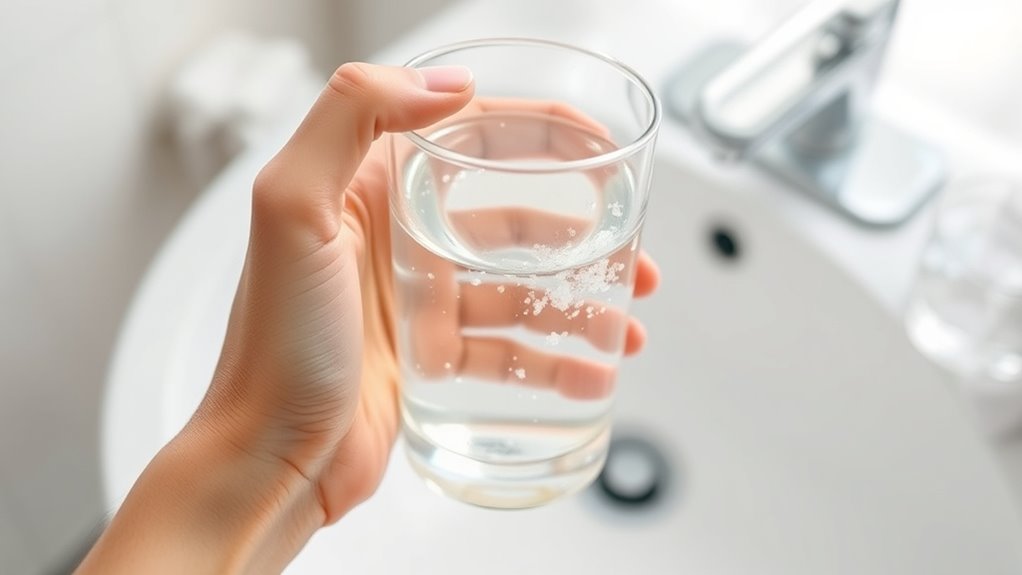
Wondering when you can start rinsing with salt water after your tooth extraction? Typically, it’s best to wait at least 24 hours before you begin gentle rinses.
During this initial period, your body forms a blood clot that protects the extraction site and promotes healing. Rinsing too soon or too vigorously can dislodge this clot, leading to dry socket or prolonged discomfort.
Waiting at least 24 hours helps protect your blood clot and promotes proper healing after tooth extraction.
Once the first day has passed and you feel comfortable, you can start with mild salt water rinses to help reduce bacteria and promote healing. Always listen to your body—if you experience pain or bleeding, wait longer before attempting any rinses.
Follow your dentist’s specific instructions to guarantee proper healing and avoid complications.
How To Prepare A Salt Water Rinse For Post-Extraction Healing
To prepare a salt water rinse suitable for post-extraction healing, start by gathering the right ingredients. You’ll need about half a teaspoon of salt and a cup of warm water—around 8 ounces.
Use warm water because it dissolves the salt more effectively and feels soothing. Pour the water into a clean glass or cup and add the salt. Stir until it’s fully dissolved.
Make sure the solution is warm but not hot to avoid irritation. If you want, you can add a pinch of baking soda for extra soothing properties.
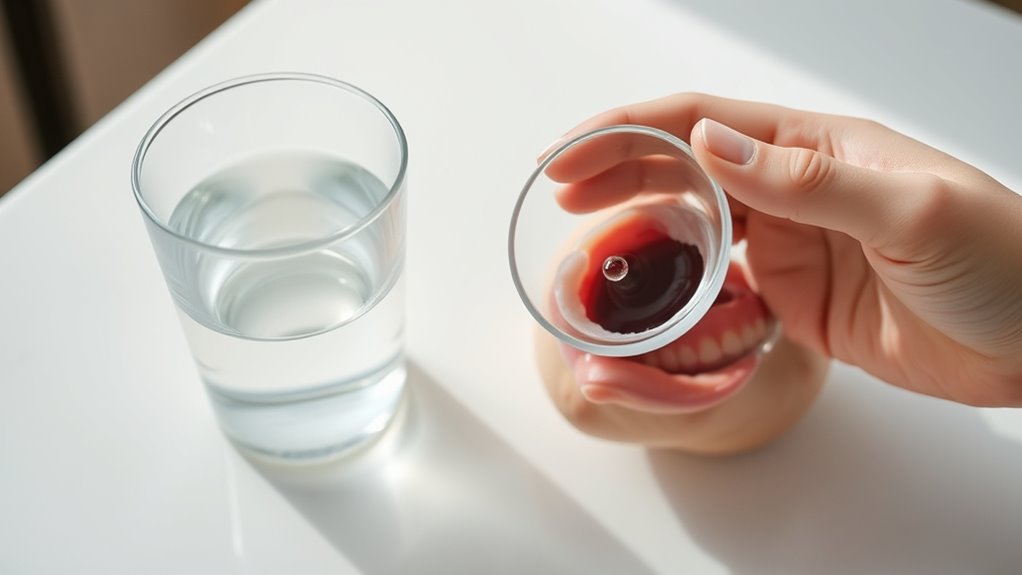
Once it’s ready, swish a small amount of the solution in your mouth, focusing on the extraction site. Just avoid swishing vigorously.
Prepare a fresh rinse each time to keep everything clean and effective.
How To Rinse Properly Without Disrupting Your Healing Process
While rinsing with salt water is key for healing, it’s just as important to do it gently and correctly so you don’t interrupt the recovery. Use a soft rinse and avoid vigorous swishing that could disturb the blood clot.
Rinse for about 30 seconds, then spit out gently. Don’t use a straw, as sucking can dislodge the clot. Be consistent but gentle, rinsing 2-3 times daily after meals.
Here’s a quick guide to help you visualize:
| Action | Tip |
|---|---|
| Use gentle swishing | Avoid vigorous motions |
| Rinse for 30 seconds | Don’t overdo it |
| Spit out gently | Prevent clot disturbance |
| Avoid straws | Sucking can dislodge the clot |
| Maintain hygiene | Rinse after eating or drinking |
Common Mistakes To Avoid When Rinsing After Tooth Extraction
Even with careful rinsing practices, mistakes can still happen that hinder healing. One common error is rinsing too forcefully, which can dislodge the blood clot and cause dry socket. Avoid swishing vigorously; instead, gently tilt your head and let the solution flow softly.
Another mistake is using overly salty or hot water, which can irritate the extraction site. Stick to a mild saltwater solution at room temperature for rinsing. Rinsing immediately after eating can also disturb the clot or introduce food particles.
It’s best to wait at least 24 hours before rinsing. Once you do, rinse gently to avoid disrupting healing. Over-rinsing or rinsing too frequently can also be harmful. Follow your dentist’s instructions carefully to ensure proper healing and avoid setbacks.
How Often And How Long Should You Rinse With Salt Water?
How often and how long you rinse with salt water depends on your healing stage and your dentist’s advice. Usually, in the first 24-48 hours, it’s best to avoid rinsing so you don’t dislodge the blood clot.
After that, rinse gently 2-3 times a day, for about 30 seconds each time. Just follow these steps:
Start rinsing 24 hours after your surgery.
Use a warm salt water solution—about half a teaspoon of salt in 8 ounces of water.
Rinse gently, avoiding vigorous swishing.
Continue this routine for at least 7-10 days or as your dentist recommends.
Always follow your dentist’s advice and don’t overdo it to avoid irritation or complications.
Signs You Should Stop Rinsing And When To Contact Your Dentist
You should stop rinsing immediately if you notice increased pain, bleeding that doesn’t slow down, or persistent swelling, as these can indicate complications.
If pain gets worse despite rinsing, it might be a sign of an infection or a problem with healing.
Continuous bleeding suggests the blood clot may be dislodged or a blood vessel is bleeding.
Persistent swelling that doesn’t improve could mean an infection or inflammation.
In these cases, avoid rinsing further and contact your dentist right away.
Also, if you notice a foul taste, fever, or unusual discomfort, seek professional advice.
Continuing to rinse when signs of problems appear can make things worse.
Trust your instincts—getting in touch with your dentist promptly can prevent bigger issues and help you heal properly.
Frequently Asked Questions
Can Salt Water Rinses Cause Any Allergic Reactions?
Salt water rinses can cause allergic reactions if you’re sensitive to salt or certain additives. You might notice redness, swelling, or itching in your mouth.
If you see any of these signs, stop using the rinse and talk to your healthcare provider. To keep things safe, use plain, sterile salt water and don’t overdo it.
Always follow your dentist’s instructions for after-extraction care to stay safe.
Are There Alternatives to Salt Water for Rinsing?
Yes, there are alternatives to salt water for rinsing. You can try a diluted hydrogen peroxide solution, but be sure to use only small amounts and dilute it properly to avoid irritation.
Chamomile tea or medicated mouthwashes recommended by your dentist also work well for soothing your mouth and keeping it clean. Always check with your dentist before trying new rinses to make sure they’re safe for your recovery.
How Does Salt Water Help in Healing the Extraction Site?
Salt water helps your healing by reducing bacteria and soothing the extraction site. It creates an environment that discourages infection, helping your tissues heal faster.
The salt also pulls out any debris or food particles, keeping the area clean. Rinsing gently with salt water promotes blood flow and reduces swelling.
This can decrease discomfort and support a smoother, quicker recovery process.
What Are the Risks of Over-Rinsing With Salt Water?
Over-rinsing with salt water can actually slow down your healing, cause irritation, and even dislodge blood clots.
It can also lead to dry socket or infection, which might make your discomfort last longer.
You might notice more pain, bleeding, or that your healing process gets disrupted.
To avoid these issues, rinse gently and no more than 2-3 times a day.
Always follow your dentist’s advice for the best results.
Protect your healing by rinsing wisely and not overdoing it.
Should I Avoid Rinsing if I Experience Pain?
If you experience pain while rinsing, it’s best to stop immediately. Pain could mean you’re irritating the area or rinsing too vigorously, which might disturb the healing site.
Instead, gently rinse with a saltwater solution and avoid applying too much force. If the pain continues or gets worse, reach out to your dentist for advice.
Listening to your body’s signals is important. It can help prevent complications and support smoother healing after your tooth extraction.
Conclusion
As you gently swirl the salt water around your mouth, imagine it soothing and cleansing each tiny corner of your healing site. Think of this simple act as a wave washing away any lingering debris or bacteria, helping your gums knit back together stronger.
With patience and care, you’ll soon see your smile brightening again, like dawn breaking after a quiet night. Trust in this gentle routine of rinsing with salt water, and your recovery will be smooth and steady.