Whats Best Salt to Use – Top 8 Picks
Many people struggle with choosing the right salt for their cooking, feeling overwhelmed by the options available. You’re not alone—finding the perfect salt can make a big difference in flavor and health.
If you want versatile seasoning, sea salt or Himalayan pink salt are great choices because of their minerals and rich taste.
For more precise seasoning, kosher or table salt work best. Each type offers unique textures and benefits, so experimenting can help you discover your favorite.
Stay tuned—there’s more to uncover about how each salt can enhance your dishes and well-being.
Key Takeaways
- Choose unrefined salts like sea salt or Himalayan pink salt for added minerals and richer flavor.
- Use coarse salts such as kosher salt for better control and texture in seasoning and finishing.
- Consider flavor and mineral content to enhance dish complexity and nutritional benefits.
- Store salts in airtight, cool, dry containers to maintain freshness and prevent clumping.
- Match salt type to culinary purpose: fine salts for baking, coarse for seasoning, specialty salts for unique flavor profiles.
Understanding Different Types of Salt and How They Differ
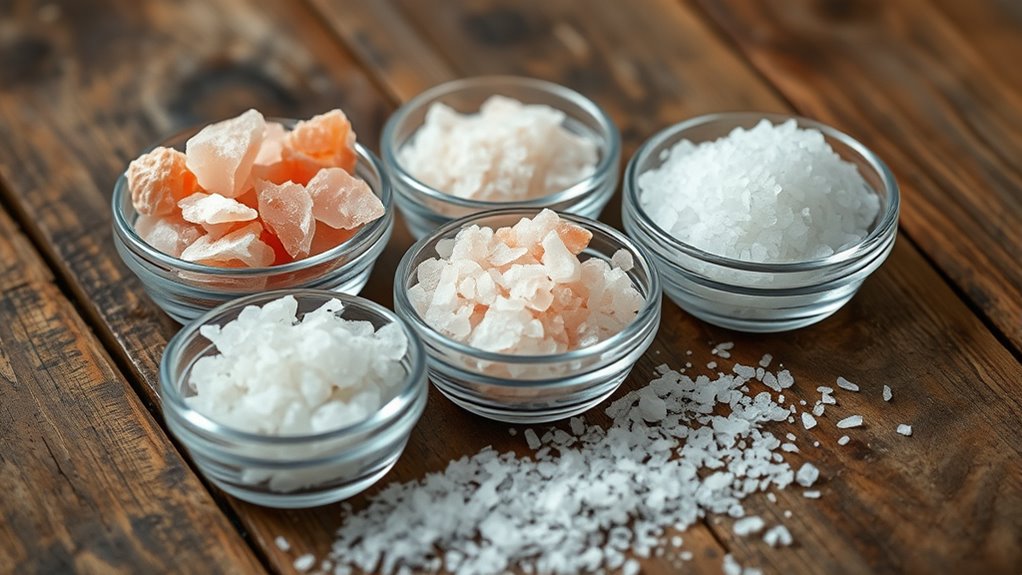
While all salts are mainly sodium chloride, they can differ quite a bit in texture, mineral content, and how they’re processed.
You’ll notice that table salt is very fine and highly purified, often with anti-caking agents to keep it flowing smoothly.
Kosher salt has larger grains, making it perfect for seasoning and koshering meat. It gives you more control over how much you use.
Sea salt is harvested from evaporated seawater, so it retains trace minerals that add subtle flavor and texture.
Himalayan pink salt contains minerals like iron oxide, which gives it a distinctive color and a mild mineral taste.
Each type differs in processing and mineral richness, which affects flavor, texture, and how you use it in cooking.
Knowing these differences helps you pick the right salt for your culinary needs.
Sea Salt: Flavor and Versatile Uses in Cooking
Sea salt offers a rich, mineral-infused flavor that can really elevate any dish. Its versatility makes it perfect for seasoning everything from salads to grilled meats.
You’ll find it’s an easy way to add depth and texture to your cooking. Plus, it’s straightforward to use and brings out the best in many ingredients.
Rich Flavor Profile
A pinch of sea salt can really change the flavor of your dishes, giving a rich, complex taste that enhances rather than overpowers. Its mineral content adds depth, bringing out the natural flavors of your food.
Unlike processed salts, sea salt keeps trace minerals like magnesium and calcium, which give it a distinctive taste. This depth makes it great for finishing dishes, roasting vegetables, or seasoning meats.
Its coarse crystals also add a satisfying crunch and allow for better control and even distribution. Plus, it’s versatile enough for cooking or just adding a finishing touch.
| Aspect | Benefit |
|---|---|
| Mineral Content | Adds subtle mineral flavors |
| Texture | Coarse crystals bring a satisfying crunch |
| Flavor Complexity | Improves overall dish depth |
| Versatility | Suitable for cooking and finishing touches |
| Natural Purity | Minimal processing preserves flavor and nutrients |
Culinary Versatility
Sea salt’s natural versatility makes it an essential ingredient in many culinary applications. You can use it to season vegetables, meats, and seafood, bringing out their natural flavors.
Its coarse texture makes it perfect for finishing dishes, adding a satisfying crunch and burst of saltiness. You might also use it in brines and marinades to tenderize and flavor proteins evenly.
Sea salt works well in baking, balancing sweetness and enriching doughs with depth. Its mineral content can subtly influence the taste of soups, stews, and sauces, providing a nuanced saltiness.
Plus, you can sprinkle it on salads or popcorn for added texture. Overall, sea salt’s adaptability makes it a go-to for elevating a variety of dishes effortlessly.
Himalayan Pink Salt: Minerals and Health Benefits
Himalayan pink salt contains a variety of minerals that you won’t find in regular table salt, making it a healthier choice. These minerals may support your overall well-being and help balance your electrolytes.
Considering its nutritional profile, it’s worth exploring how this salt can benefit your health. It’s a tasty way to add some extra minerals to your diet while enjoying your meals.
Rich Mineral Content
Because of its rich mineral content, Himalayan pink salt offers more than just flavor; it provides a variety of essential nutrients that can support your health. It contains over 80 trace minerals, including magnesium, potassium, calcium, and iron, which are crucial for maintaining bodily functions.
These minerals help with electrolyte balance, bone health, and muscle function. Unlike regular table salt, Himalayan pink salt’s natural composition preserves these minerals, making it a more wholesome choice.
While you typically consume small amounts of salt, choosing one with a diverse mineral profile can improve your overall nutrient intake. This mineral richness not only boosts flavor but also offers a natural way to incorporate beneficial elements into your diet.
Potential Health Advantages
The mineral content in Himalayan pink salt can offer several potential health benefits when included in your diet. Its trace minerals, such as magnesium, potassium, and calcium, may support better hydration, muscle function, and bone health.
Some studies suggest it can help balance electrolytes and reduce muscle cramps. Unlike regular table salt, Himalayan pink salt contains fewer additives and preservatives, which may lower your risk of negative reactions.
Plus, the minerals might aid in detoxification and improve skin health. While it’s not a magic cure, replacing refined salt with Himalayan pink salt can contribute to overall wellness.
Incorporating it into your meals in moderation may boost mineral intake and support your body’s natural functions.
Kosher Salt: Perfect for Cooking and Seasoning
Kosher salt is a popular choice in both professional kitchens and home cooking because of its coarse texture and clean, pure flavor. Its larger grains make it easy to pinch and sprinkle evenly, giving you better control over seasoning.
Unlike finer salts, kosher salt dissolves slowly, so you can taste as you go and avoid oversalting. Many chefs prefer it for seasoning meat, vegetables, and even brining because it enhances flavor without overpowering.
Its purity means fewer additives, so your dishes keep a natural, fresh taste. Plus, its coarse grains are great for rimming cocktail glasses or adding a crunchy finish.
Table Salt: Pros, Cons, and When to Use It
Table salt is the most common type of salt used in everyday cooking because it has fine grains and dissolves quickly. It’s versatile and easy to measure, making it perfect for seasoning dishes or adding to recipes.
However, its high sodium content can be a concern if you’re watching your intake. One advantage is that it’s affordable and widely available.
But since it’s heavily processed, it lacks the trace minerals found in other salts, which can affect flavor. Use table salt for quick seasoning, baking, or when precise measurements matter.
Avoid relying on it solely for finishing dishes because it can taste too salty or dull. Overall, it’s a reliable, everyday salt, but it’s best paired with more flavorful or mineral-rich salts for added depth.
Flavor and Specialty Salts: Unique Variations to Try
Uncovering flavor and specialty salts opens up new dimensions in cooking by adding unique textures and tastes that go beyond basic seasoning. These salts come in a variety of forms, each offering distinct characteristics. For example, Himalayan pink salt provides a mild mineral flavor and a vibrant hue, perfect for finishing dishes.
Flavored salts infused with herbs, spices, or citrus add an aromatic punch, elevating simple recipes. Sea salts like fleur de sel deliver a delicate crunch and subtle brininess, ideal as a finishing touch.
Smoked salts introduce a rich, smoky flavor that enhances grilled or roasted foods. Using these specialty salts allows you to experiment and add depth, complexity, and visual appeal to your dishes.
Incorporating them highlights your culinary creativity and makes everyday meals more extraordinary.
How to Choose the Best Salt for Your Cooking and Health Goals
How do you choose the right salt to meet both your cooking preferences and health needs? First, think about your dietary restrictions or health goals. If you’re watching sodium, go for lower-sodium options like sea salt or Himalayan pink salt, which tend to have less sodium per serving.
For more mineral content, unrefined salts like fleur de sel or Celtic sea salt are great choices. Consider the flavor too—some salts have a stronger, more complex taste that can really elevate certain dishes. Texture also plays a role—finely ground salts dissolve quickly and are perfect for seasoning, while coarser salts add a nice crunch.
Ultimately, pick a salt that matches your health priorities and suits your cooking style. This way, you get to enjoy both great flavor and health benefits.
Storing Salt Properly and Using It Effectively in Your Kitchen
Proper storage is key to keeping your salt fresh and ready to use whenever you need it. Keep salt in an airtight container to prevent moisture from causing clumps. Store it in a cool, dry place away from heat and humidity.
Using the right container helps preserve flavor and keeps your salt clean. Measure it accurately for consistent seasoning. Keep a small salt shaker nearby for quick seasoning, and save larger amounts for cooking.
Here’s a quick guide to storing and using salt:
| Storage Method | Best Location | Usage Tips |
|---|---|---|
| Airtight jar | Pantry or kitchen shelf | Keep dry and away from moisture |
| Salt shaker | Countertop | Season during cooking or at the table |
| Mason jar | Cool, dark cupboard | Store bulk salt |
| Plastic container | Dry area | Seal tightly after use |
| Metal tin | Cool, dry place | Great for bulk storage |
Frequently Asked Questions
Is Natural Salt Healthier Than Processed Salt?
Yes, natural salt is generally healthier than processed salt because it retains trace minerals like magnesium, calcium, and potassium, which are often removed during processing. These minerals can support your overall health.
Processed salt, on the other hand, usually contains added anti-caking agents and lacks the natural minerals. Choosing natural salt, such as sea salt or Himalayan salt, can provide you with more nutrients and fewer additives.
Can Salt Impact Specific Health Conditions?
Salt can significantly affect certain health conditions, like hypertension and kidney problems, acting like a double-edged sword. If you have high blood pressure, eating too much salt can increase your risk of heart issues.
For kidney issues, too much salt puts extra stress on your organs. You should be mindful of how much you consume, choosing the right type of salt and keeping moderation in mind.
This way, you can keep your health on track without hitting dangerous waters.
How Does Salt Influence Food Preservation?
Salt plays an essential role in food preservation by drawing moisture out of food and creating an environment inhospitable for bacteria and mold.
When you apply salt, it inhibits microbial growth, helping to extend the shelf life of foods. This process, known as osmosis, helps prevent spoilage.
You’ll notice salt is especially effective for curing meats, fermenting vegetables, and making preserved foods, keeping them fresh longer without needing refrigeration.
Are There Any Environmental Concerns With Salt Production?
Are you aware that salt production can pose environmental concerns? It often involves significant land use, water consumption, and energy, which can harm ecosystems and deplete resources.
Mining for rock salt can disturb habitats, while evaporation processes may lead to water pollution. Shouldn’t we be mindful of these impacts and seek sustainable practices?
What Are the Best Salts for Salt-Sensitive Individuals?
If you’re salt-sensitive, opt for unrefined or mineral-rich salts like Himalayan pink salt or Celtic sea salt. These contain trace minerals that may help reduce sensitivity and inflammation.
Avoid highly processed table salts, which have additives and fewer minerals. Always start with small amounts and monitor how your body reacts.
Consulting with a healthcare professional can also guide you to the safest choices tailored to your sensitivities.
Conclusion
Choosing the right salt transforms your cooking from ordinary to extraordinary, like adding the final brushstroke to a masterpiece. Whether you prefer the mineral-rich glow of Himalayan pink salt or the clean simplicity of kosher salt, each type has its place in your kitchen.
By understanding their differences and benefits, you’ll turn everyday seasoning into a secret ingredient. Elevate your dishes with a sprinkle of purpose and a dash of flavor, making the best salt a key part of your culinary toolkit.