What Type of Salt Is Safe for Concrete
Many homeowners and property managers know the struggle of keeping concrete surfaces safe during winter. You want to prevent slips and falls, but harsh salts can damage your concrete over time. You’re not alone—finding the right de-icer that’s both effective and gentle on your surfaces can feel overwhelming.
If you want a salt safe for concrete, choose options like calcium magnesium acetate or potassium chloride, which are less corrosive and cause minimal surface damage.
Avoid using rock salt or calcium chloride, as they can speed up deterioration and crack your concrete.
Instead, opt for these safer alternatives and apply sparingly, especially in cold weather.
Want to learn more about protecting your concrete while de-icing? Keep exploring to find out how to do it right.
Key Takeaways
- Calcium magnesium acetate (CMA) is eco-friendly and causes minimal damage to concrete surfaces.
- Sodium chloride (rock salt) and calcium chloride can damage concrete over time due to corrosion and scaling.
- Potassium chloride is less corrosive and safer for concrete when used appropriately.
- Salts that dissolve slowly reduce the risk of uneven distribution and surface damage.
- Always follow application guidelines and inspect concrete regularly for signs of deterioration.
What Makes a Salt Safe for Concrete? Key Factors to Know
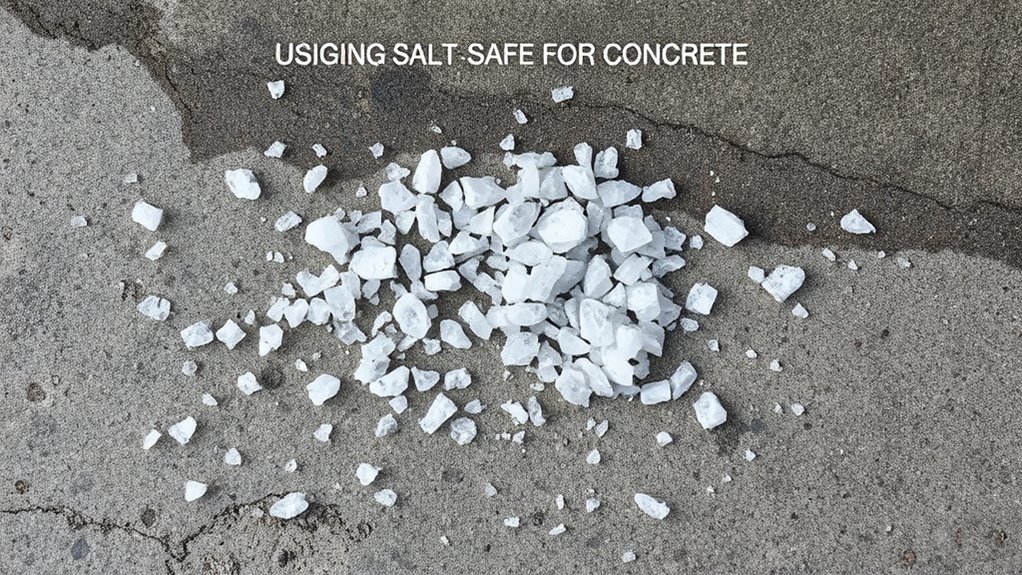
To determine if a salt is safe for concrete, you need to evaluate its chemical makeup and how it interacts with the material. Look for salts that cause little or no corrosion of reinforcement steel, as this can weaken the concrete over time.
Salts containing calcium or magnesium are usually safer because they tend to cause less damage compared to chlorides, which speed up steel corrosion. Think about how the salt dissolves and spreads; salts that dissolve too quickly might lead to uneven distribution and potential damage.
Also, check if the salt reacts with the concrete’s components, which can cause cracking or surface deterioration. By understanding these factors, you can pick salts that minimize long-term damage and keep your concrete surfaces durable.
How Do Different Salts Affect Concrete Surfaces?
Different salts can really affect concrete surfaces in different ways, mainly depending on what they’re made of and how they react with the concrete.
Some salts, like calcium chloride, can speed up the corrosion of reinforcement steel and lead to surface scaling. Others, such as calcium magnesium acetate, are less reactive and tend to cause less damage.
Here’s a quick look at how various salts impact concrete:
| Salt Type | Effect on Concrete |
|---|---|
| Calcium chloride | Promotes corrosion and causes surface scaling |
| Sodium chloride | Leads to surface damage over time |
| Calcium magnesium acetate | Causes minimal damage and is environmentally friendly |
Is Rock Salt Harmful to Your Concrete? What You Should Know
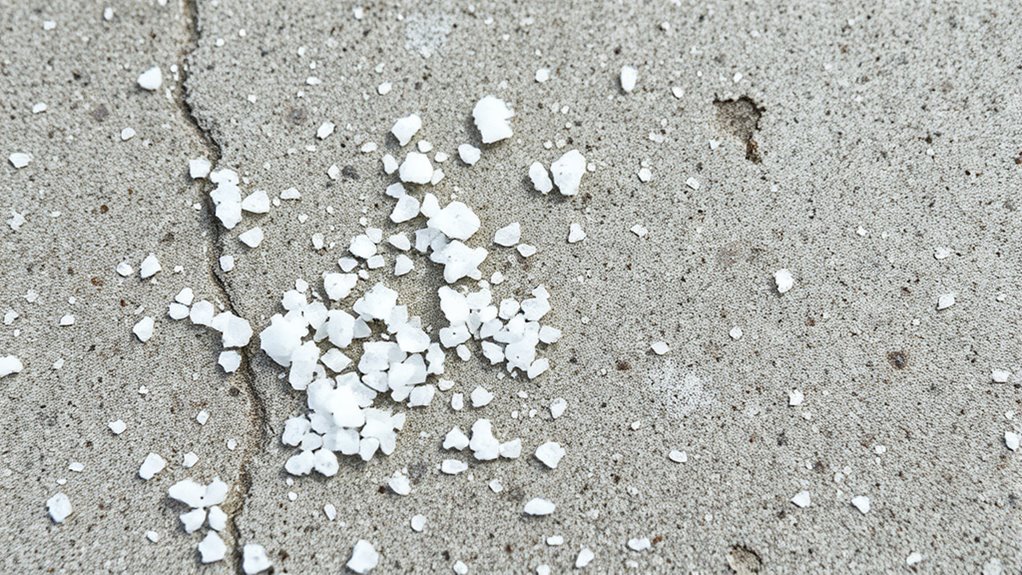
Rock salt is a common de-icing agent during winter, but many wonder if it harms their concrete surfaces. The truth is, rock salt can be harmful over time, especially if used repeatedly or in large amounts. It can cause surface scaling, cracking, and deterioration by absorbing moisture and expanding within small cracks. This process weakens the concrete’s structure and shortens its lifespan.
To protect your concrete, consider these points:
- Salt can speed up freeze-thaw damage in cold climates
- Using too much wears down the surface over time
- Salt can corrode nearby metal fixtures and reinforcement
- Alternatives like calcium chloride are gentler on concrete
Being mindful of how much salt you use and exploring safer options can help keep your concrete surfaces in good shape longer.
Benefits of Using Calcium Magnesium Acetate on Concrete
Using calcium magnesium acetate offers an eco-friendly alternative to traditional deicers, helping you protect the environment. It also reduces surface damage to your concrete, maintaining its integrity longer.
Eco-Friendly Deicing Solution
As an eco-friendly alternative to traditional salt, calcium magnesium acetate (CMA) offers several environmental benefits when used as a deicing solution on concrete. It’s less harmful to plants, wildlife, and water sources, making it a responsible choice for environmentally conscious areas.
CMA also reduces corrosion of nearby metals and infrastructure, helping extend the lifespan of your concrete surfaces. Plus, it breaks down faster than traditional salt, which means less residue buildup over time.
Using CMA can help you maintain safer walkways without damaging the environment or your concrete surfaces. It’s a smart choice for those who want effective deicing with a lower environmental impact.
- Safer for surrounding vegetation and ecosystems
- Less corrosive to metal fixtures and vehicles
- Breaks down quickly, reducing long-term residue
- Helps preserve concrete integrity over time
Reduced Surface Damage
Because calcium magnesium acetate (CMA) is gentler on concrete surfaces, it significantly reduces the risk of surface damage compared to traditional salts. You won’t have to worry about pitting, spalling, or crumbling that often come with harsher deicers.
CMA forms a thin, protective layer, helping to preserve your concrete’s strength and look. This means fewer repairs and less maintenance over time, saving you money and frustration.
Imagine your driveway staying intact, free of ugly cracks and surface deterioration, even after harsh winters. Knowing your concrete remains strong and undamaged can bring real peace of mind.
| Traditional Salt | CMA’s Gentle Effect |
|---|---|
| Causes surface pitting | Preserves surface integrity |
| Leads to cracking | Minimizes damage |
| Accelerates deterioration | Protects concrete |
| Increases repair costs | Reduces maintenance needs |
Is Calcium Chloride Safe for Concrete? Pros and Cons
Is calcium chloride a safe additive for concrete? It can be, but it really depends on how you use it. Calcium chloride speeds up the freezing and thawing process, helping your concrete set faster in cold weather.
However, it also has some drawbacks. It can cause surface damage over time, leading to cracks and spalling. Plus, it may accelerate corrosion of embedded steel reinforcement, weakening the structure.
Consider these pros and cons:
- Fast curing in cold conditions
- Potential surface damage over time
- Corrosion risk for steel reinforcements
- Cost-effective and widely available
Use calcium chloride carefully, especially on exposed surfaces or reinforced concrete, to avoid long-term issues.
Is Potassium Chloride a Concrete-Friendly De-Icer?
Wondering if potassium chloride is safe for your concrete surfaces? It’s generally considered less corrosive than calcium chloride, making it a more concrete-friendly de-icer.
Potassium chloride works effectively at lower temperatures, helping to melt ice without damaging your concrete as quickly. However, it’s not completely risk-free; overuse or prolonged exposure can still lead to surface deterioration, especially if your concrete is already compromised.
It’s also less effective at extremely low temperatures compared to other salts. While potassium chloride is a safer choice for many concrete surfaces, it’s important to use it sparingly and follow manufacturer instructions.
How to Choose the Best Salt for Your Climate and Usage
When choosing a salt, think about your climate’s temperature changes and how severe your winters are.
Consider how you’ll be using the salt and focus on safety for both your concrete and the environment.
Making the right choice helps you de-ice effectively without harming your surfaces or risking safety.
Climate Compatibility Considerations
Choosing the right salt for your concrete depends heavily on your climate conditions. If you live in a cold, snowy area, you’ll want a salt that melts ice effectively without damaging the concrete. In milder climates, less aggressive salts may do the trick.
Humidity and temperature fluctuations also matter. High humidity can lead to more corrosion, so pick salts that are less corrosive. Windy or coastal regions might need salts that resist washing away or cause less corrosion.
Think about how often snow and ice events happen. More frequent use calls for a durable, safe de-icing salt. Cold, snowy areas need effective, low-corrosion options, while coastal regions require salts resistant to moisture and saltwater. Mild climates can get away with gentler, less aggressive salts.
Usage and Safety Factors
Selecting the right salt involves evaluating how often you’ll need to apply it and ensuring it’s safe for your concrete and environment. Consider the temperature fluctuations in your area because frequent freeze-thaw cycles demand a different salt type than milder winters.
Always follow manufacturer guidelines for application rates to prevent surface damage or chemical harm. Use less salt if you’re concerned about environmental impact or if your concrete is relatively new.
Be mindful of safety because some salts can be corrosive or toxic. Handle them with gloves and avoid overuse. Regularly inspect your concrete for signs of damage or deterioration, and adjust your salt choices accordingly.
Proper usage and safety awareness help extend your concrete’s lifespan and protect the surrounding ecosystem.
Tips for Applying Salt Safely to Protect Your Concrete
Applying salt carefully is key to protecting your concrete while keeping ice and snow at bay. To do this right, follow a few simple tips.
First, always choose the right salt type, like calcium magnesium acetate, which is less corrosive and gentler on your surface.
Second, apply the salt evenly and sparingly. Overdoing it can actually harm your concrete and cause more problems.
Third, avoid applying salt during extremely cold weather. It’s less effective then and can lead to surface damage.
Finally, rinse off any excess salt once the ice has melted. This helps prevent long-term corrosion and keeps your concrete in good shape.
Keep these tips in mind to stay safe and protect your concrete during winter.
Alternative De-Icing Methods That Won’t Damage Concrete
When looking for ways to de-ice your walkways without damaging your concrete, there are several effective alternatives to traditional salts. These methods can keep your surfaces safe and ice-free while avoiding corrosive damage.
One option is using sand or kitty litter for traction without any chemicals. They help prevent slipping but need to be removed afterward and aren’t great at melting ice.
Sand and kitty litter provide traction but require removal and don’t melt ice effectively.
You can also try calcium magnesium acetate, which is less corrosive and more environmentally friendly. It’s a bit more expensive and may not be as easy to find.
Warm water with a splash of dish soap melts ice quickly and safely. It’s a simple, short-term fix that works well in a pinch.
Heated mats or cables provide direct heat, stopping ice from forming altogether. Though effective, they can be costly to install and operate.
How to Recognize and Repair Salt-Damaged Concrete
You can spot salt damage by looking for spalling, cracking, or a powdery surface on your concrete.
Once you’ve identified the problem, repairs usually involve removing loose material and applying the right fillers or sealers.
To prevent future issues, try using salt alternatives and keep up with proper maintenance techniques to protect your concrete.
Identifying Salt Damage Signs
How can you tell if salt has damaged your concrete? You’ll notice certain signs indicating salt damage. Cracks may develop, especially along joints or in areas exposed to de-icing salts. You might see a powdery or spalled surface, where the top layer flakes off. Discoloration, like whitish or salty stains, can also appear. Sometimes, the concrete feels rough or crumbly underfoot, indicating deterioration.
Here are some signs to look for:
- Cracks and flaking in the surface
- White or salty stains on the concrete
- Rough, crumbly texture
- Pitting or small holes forming over time
Recognizing these signs early helps prevent further damage and guides proper repair actions.
Effective Repair Techniques
Addressing salt damage in concrete requires prompt and effective repair techniques to prevent further deterioration. First, assess the extent of damage by inspecting for cracks, spalling, or surface erosion.
If the damage is superficial, you can remove loose debris and clean the surface with a high-pressure washer to eliminate salt residues. For more severe issues, remove the damaged concrete using chipping tools or a jackhammer, then thoroughly clean the area.
Once clean, apply a high-quality patching mix or concrete repair mortar to fill cracks and replace lost material. After repairs, consider sealing the surface with a penetrating concrete sealant to inhibit salt penetration and moisture ingress.
Acting quickly and accurately guarantees your concrete remains durable and prevents costly future repairs.
Preventing Future Damage
To prevent future damage from salt in concrete, it’s important to spot early signs of deterioration and act quickly. Look for surface spalling, cracking, or a whitish efflorescence, which are signs of salt damage.
Address issues promptly to minimize structural harm and avoid costly repairs later. Regular maintenance helps catch problems early, so don’t skip inspections.
You should also consider sealing your concrete to reduce salt penetration. Plus, avoid using de-icing salts containing chlorides on concrete surfaces.
Here are some proactive steps:
- Inspect your concrete regularly for cracks and surface damage
- Clean salt residues promptly with water
- Apply breathable sealers to block salt ingress
- Use salt alternatives or less aggressive de-icers during winter
Staying vigilant helps preserve your concrete’s integrity over time.
Expert Tips for Long-Lasting, Concrete-Safe De-Icing Practices
Using the right de-icing practices is key to protecting your concrete surfaces and making them last longer. First, choose gentler options like calcium magnesium acetate or sand instead of salt.
Apply de-icers sparingly and only when necessary. This helps reduce chemical exposure and potential damage. Removing snow and ice promptly also prevents buildup and reduces stress on the surface.
Avoid metal shovels, as they can scratch or chip the concrete. Use this table to understand how different de-icing methods can impact your concrete:
| Method | Effect on Concrete | Recommended Usage |
|---|---|---|
| Salt (NaCl) | Causes surface deterioration | Use sparingly and avoid prolonged contact |
| Calcium Magnesium Acetate | Less corrosive | Safe, effective alternative |
| Sand | Provides traction | When de-icing isn’t needed |
| Bleach or Chemicals | Can cause surface damage | Avoid for de-icing |
| Hot Water | Potential for cracking | Use with caution |
Frequently Asked Questions
Can Natural Salts Be Used Safely on Concrete Surfaces?
Yes, natural salts can be used safely on concrete surfaces, but it’s important to choose the right type. Calcium magnesium acetate (CMA) is a popular natural de-icer that’s gentle on concrete and environmentally friendly.
Avoid using salts like calcium chloride or rock salt, as they can damage the concrete over time by causing corrosion or surface deterioration. Always read labels and follow application instructions for safety and durability.
How Often Should Salt Be Reapplied to Prevent Concrete Damage?
You should reapply salt only when the ice returns, usually every few hours during a storm. Think of salt as a gentle whisper, not a shouting match—frequent reapplication can wear down your concrete like relentless waves eroding a shoreline.
To protect your surface, apply it sparingly and only when needed. Overdoing it risks damage, so stay vigilant, like a lighthouse guiding ships safely through icy waters.
Are There Specific Brand Recommendations for Concrete-Safe De-Icers?
Yes, there are specific brands of de-icers that are safer for concrete, like Morton Safe-T-Salt and Safe Step. These products usually contain calcium or magnesium chloride, which are less corrosive than sodium chloride.
When choosing a brand, look for labels that say “concrete-safe” or “pet-friendly.” Always follow the application instructions carefully to minimize potential damage.
You might also consider using sand or cat litter for extra traction. These options don’t carry the chemical risks that de-icers do.
What Environmental Impacts Do Different Salts Have on Concrete Surroundings?
Imagine you’re in a time machine, choosing a salt to protect your concrete without harming the environment. Sodium chloride, common in rock salt, can cause soil and water pollution, harming plants and aquatic life. Calcium magnesium acetate is more eco-friendly, reducing environmental damage.
You should prioritize salts that minimize corrosion and runoff, like calcium-based options, to keep your surroundings safe while maintaining your concrete’s integrity.
Does the Age or Condition of Concrete Affect Salt Safety?
Yes, the age and condition of concrete really impact its salt safety. Older or damaged concrete tends to be more vulnerable to salt penetration, which can lead to deterioration over time.
If your concrete is new and in good shape, it’s generally more resistant to salt damage. But if it’s cracked or porous, you should use less aggressive de-icing salts or avoid them altogether.
Regular maintenance and sealing can also help improve its resilience against salt damage.
Conclusion
Choosing the right salt can protect your concrete and extend its lifespan. For example, calcium magnesium acetate is a safer alternative to harsh rock salt. It helps prevent surface damage and saves you money on repairs.
Imagine a homeowner who switched to safer de-icing methods and avoided costly patchwork after a tough winter. Using the right salt makes a big difference.
By understanding which salts are safe and applying them properly, you can keep your concrete strong and durable for years to come. When it comes to protecting your concrete, choosing the right salt is key.