What Part of the Cow Does Beef Bacon Come From?
Are you a fan of bacon but tired of the usual pork options? You’re not alone—many people struggle with finding new, tasty ways to enjoy bacon beyond the classic.
Beef bacon is a great alternative that offers rich flavor and a satisfying texture.
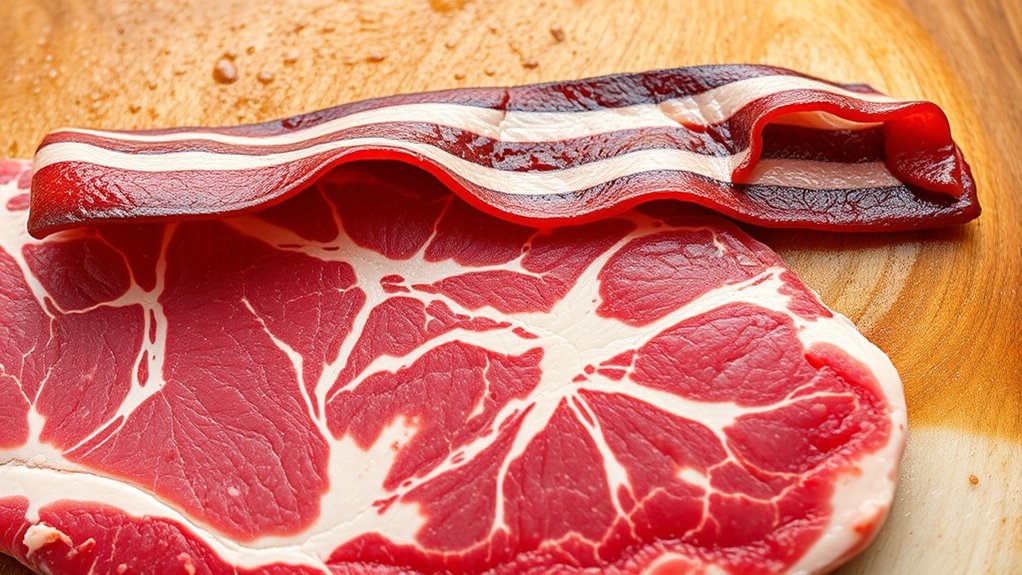
Beef bacon comes from fatty, flavorful parts of the cow, mainly the belly, brisket, or navel areas. These cuts have the right balance of meat and marbling to produce a rich, dense bacon.
The belly is popular because of its layered fat and meat, giving it a deliciously crispy edge.
Meanwhile, brisket offers a hearty, beefy flavor that many bacon lovers appreciate.
If you keep exploring, you’ll uncover more about how these cuts are transformed into delicious beef bacon.
Key Takeaways
– Beef bacon is typically made from cuts like the belly, navel, or brisket, which have a good fat-to-meat ratio.
The belly provides layered fat and meat, similar to traditional pork bacon.
Navel cuts are dense, flavorful, and ideal for curing and smoking.
Brisket offers a fattier, richer base suitable for beef bacon.
Other cuts like coulotte or rump can also be used for specialty beef bacon varieties.
What Is Beef Bacon and How Is It Different From Pork Bacon?
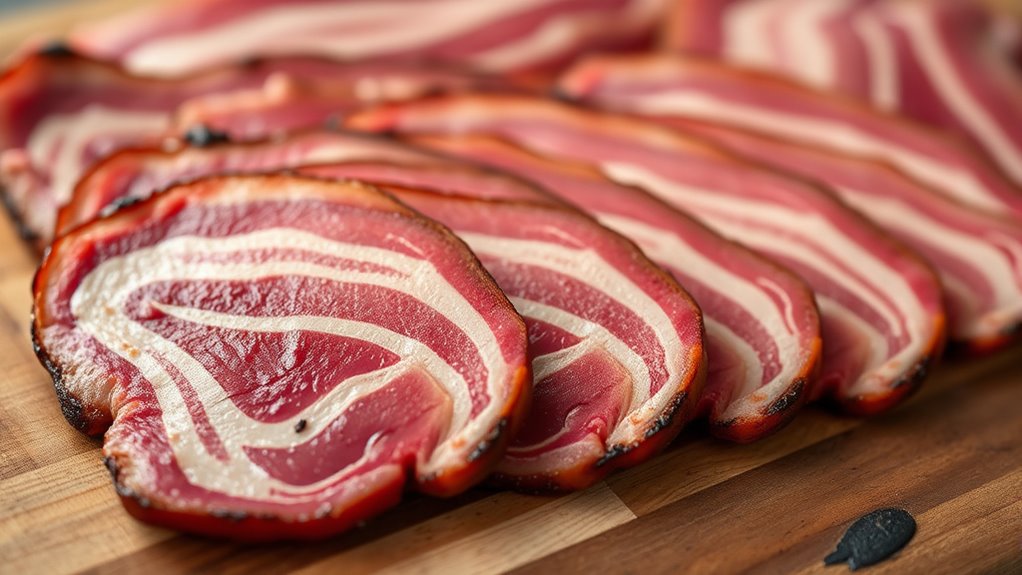
Beef bacon is a type of cured meat made from beef, usually from the belly or other fatty cuts, that’s sliced and smoked or cooked to create a bacon-like product. Unlike traditional pork bacon, which comes from pig belly, beef bacon uses cow meat, giving it a distinct flavor and texture.
You’ll notice that beef bacon tends to be darker and denser, with a richer, beefier taste. It’s often leaner than pork bacon but still retains enough fat for flavor and crispiness when cooked. While both are cured and smoked, beef bacon may need longer cooking times because of its density.
Which Part of the Cow Is Used to Make Beef Bacon?
The cuts of beef used to make beef bacon typically come from the brisket, belly, or navel area of the cow. These parts are chosen because they contain the right balance of fat and meat, giving beef bacon its signature flavor and texture.
When you look at these areas, you’ll find cuts that are rich in marbling, which helps produce a crispy, flavorful bacon. The brisket provides a hearty, fatty base, while the belly is prized for its layers of fat and meat.
The navel, which is part of the belly, offers a dense, flavorful cut. These cuts are often cured and smoked to turn into beef bacon. The fat content in these areas really influences the taste and crunch of the final product.
How Is Beef Bacon Made From Its Source Cut?
To make beef bacon, you start by choosing the right cut, like beef belly or brisket, which has the right fat and texture.
Next, you cure the meat with salt and other seasonings to add flavor and help preserve it.
After curing, the meat is smoked to give it that delicious smoky taste and further preservation.
This whole process transforms the raw cut into the tasty beef bacon you enjoy.
Selecting the Right Cut
Choosing the right cut is key to making flavorful beef bacon. You want a cut with enough fat to keep the bacon juicy and tasty. Look for sections that have a good balance of meat and fat, which helps with flavor and texture.
Avoid leaner cuts that won’t render properly during cooking. Instead, focus on areas that provide the right fat content and structure for high-quality beef bacon.
Some great options include chuck eye roll, brisket, round, plate, and short plate. These cuts have the ideal fat distribution needed for tender, flavorful bacon that’s easy to slice thin.
Curing and Smoking Process
Once you’ve chosen the perfect cut with the right mix of meat and fat, the next step is turning it into beef bacon through curing and smoking. First, you cure the meat with a blend of salt, sugar, and spices, which helps draw out moisture and boosts flavor.
The meat then rests for several days so it can fully absorb those flavors. After curing, you smoke the beef at low temperatures, giving it a smoky aroma and helping to preserve it further.
The process can vary depending on the flavor and texture you want, but generally, it follows these steps:
| Step | Duration | Method |
|---|---|---|
| Curing | 5-7 days | Salt and spice mix |
| Resting | 1-2 days | Refrigeration |
| Smoking | 2-4 hours | Low heat smoke |
| Slicing | As needed | Thin slices |
What Makes the Source Cut Suitable for Beef Bacon?
The source cut’s suitability for beef bacon depends on its flavor, texture, and marbling. You want a cut that offers rich taste without being too tough or greasy.
Good beef bacon comes from cuts with even marbling, which helps keep it moist and flavorful during curing and smoking. The right cut should be firm but tender, making it easy to slice thinly and crisp up nicely.
It should also have enough fat to develop flavor but not so much that it becomes greasy. A balanced fat content ensures good richness without excess oiliness.
Look for consistent marbling for flavor and moisture, along with a firm texture that can be sliced and fried easily. The muscle structure should be even for uniform curing, and the cut should hold up to smoking without falling apart.
Are There Different Types of Beef Bacon Based on the Cut?
You’ll notice that different cuts of beef produce various types of beef bacon, each with unique flavors and textures. Some cuts give you a richer, fattier experience, while others are leaner and crisper.
These differences create specialty beef bacon varieties that are perfect for different tastes and recipes. So, depending on the cut, you can enjoy a different bacon experience every time.
Different Cuts, Different Flavors
Different cuts of beef bacon can offer distinct flavors and textures, making each variety unique. The part of the cow you pick really impacts the taste, fat content, and overall experience.
For example, brisket-based beef bacon tends to be richer and fattier, while sirloin cuts are leaner with a milder flavor. Knowing the cut helps you get a sense of what to expect.
Think about factors like fat distribution, which affects richness and juiciness. Meat tenderness also plays a role in how chewy the bacon is.
Flavor intensity varies from beefy to subtle, and some cuts crisp better when cooked. The appearance, including color and marbling, can give you clues about quality.
Choosing the right cut lets you personalize your beef bacon to suit your taste preferences.
Variations in Texture
Since the cut of beef influences flavor and fat content, it also greatly affects the texture of beef bacon. Different cuts give you a range of textures—from tender and juicy to lean and firm.
For example, beef belly makes a softer, more tender bacon with a melt-in-your-mouth feel. Cuts like round or sirloin tend to be leaner and firmer.
The marbling inside the cut also impacts chewiness. Higher fat content creates a richer, more supple bite. The thickness of the slices matters too—thicker cuts feel more substantial, while thinner slices crisp up more easily.
Knowing the cut helps you anticipate the texture and pick the beef bacon that matches your preferred mouthfeel and cooking style.
Specialty Beef Bacon Types
Are there distinct types of beef bacon based on the cut? Yes, different cuts produce varying textures and flavors, giving each type a unique character. You might encounter:
- Coulotte bacon from the sirloin cap, offering a leaner, beefier taste.
- Brisket bacon with rich marbling, delivering a smoky, tender experience.
- Rump bacon from the hindquarter, known for its lean profile and hearty flavor.
- Chuck bacon from the shoulder, with a balance of fat and meat for a savory bite.
- Plate bacon from the belly area, similar to traditional pork bacon but with a beef twist.
Each cut influences the flavor, fat content, and texture, giving you a diverse range of beef bacon options.
Why Do Butchers Choose Specific Cuts for Beef Bacon?
Butchers choose specific cuts for beef bacon because these cuts have the perfect mix of flavor, fat, and texture for a tasty bacon experience. They look for areas with enough marbling to keep it juicy and flavorful without becoming greasy.
Cuts like the brisket or navel are favorites because their natural fat distribution boosts flavor and makes curing and smoking easier. These cuts also have a firm yet tender texture that slices well and holds up during cooking.
How Do You Cook and Enjoy Beef Bacon?
Wondering how to get the best flavor and texture from beef bacon? Start by cooking it over medium heat to avoid burning the fat and to ensure it becomes evenly crispy. You can pan-fry, bake, or grill beef bacon—pick what works best for you.
For a quick snack, pan-frying for 3-4 minutes per side is perfect. Baking at 400°F on a wire rack for 15-20 minutes gives you crispy results with less mess. You can enjoy beef bacon on its own, in sandwiches, or as a salad topping.
To boost the flavor, try adding a glaze or seasoning before cooking. Use a hot skillet for quick crispiness, or bake for even, mess-free cooking. Adding spices or a glaze can make it extra tasty.
Serve beef bacon with eggs or pancakes for a hearty breakfast. Remember to store leftovers in airtight containers to keep them fresh.
Frequently Asked Questions
Is Beef Bacon Considered Healthier Than Pork Bacon?
Beef bacon can be considered healthier than pork bacon, but it really depends on how you prepare it. Typically, beef bacon has less fat and fewer calories, especially if you choose leaner cuts.
It also contains more protein and might have fewer additives or preservatives. However, both types can be high in sodium and saturated fats, so moderation is important.
Opt for lean cuts and healthier cooking methods to get the most benefits.
Can You Make Beef Bacon at Home From Any Cut?
Yes, you can make beef bacon at home from any cut, but some are better suited than others. Usually, a fatty, flavorful cut like beef navel or brisket works best because they have the right mix of meat and fat for curing and smoking.
Avoid lean cuts because they won’t give you that rich, bacon-like texture you’re after. With proper curing and smoking, almost any suitable cut can be turned into homemade beef bacon.
How Long Does Beef Bacon Typically Last in the Fridge?
Beef bacon typically lasts about 5 to 7 days in your fridge when stored properly. Think of it like a weekend getaway—if you don’t use it within that time, it’s best to let it go, or you risk spoilage.
Keep it in an airtight container or wrap it tightly. Always check for any off smells or sliminess before cooking, to guarantee it’s still good to enjoy.
Are There Regional Differences in Beef Bacon Cuts?
Yes, there are regional differences in beef bacon cuts. In the United States, it’s often sliced from brisket or sirloin, which gives it a fattier, more marbled flavor.
In the UK and other parts of Europe, beef bacon may come from the plate or flank, resulting in leaner slices.
These regional differences affect the flavor, texture, and how you might cook the bacon.
Depending on where you’re shopping or cooking, you’ll find a variety of options.
What Are Common Seasoning Variations for Beef Bacon?
You’ll find that beef bacon is often seasoned with a variety of flavors to enhance its rich, savory profile. Common seasonings include black pepper, garlic, smoked paprika, and brown sugar for a touch of sweetness.
Some people like to add chili powder or cayenne for a bit of heat. Others prefer herbs like thyme or rosemary to give it a nice aroma.
You can also get creative with marinades or rubs to really customize the flavor. This way, your beef bacon can be uniquely delicious every time.
Conclusion
Imagine biting into a smoky, savory slice that’s as rich and satisfying as a sunset on a quiet evening. Beef bacon, crafted from specific cuts of the cow, offers a hearty alternative to pork bacon.
Typically, it comes from the beef plate, brisket, or sometimes the sirloin. Butchers carefully select these parts to create a flavorful, tender treat that transforms your meals into a celebration of bold, meaty goodness.
So next time you indulge, remember you’re savoring a piece of the cow’s story—made from parts like the plate or brisket, giving you that rich, beefy flavor in every bite.