

How to Identify the Theme of the Peter Pan Story
Are you curious about the deeper meaning behind the beloved story of Peter Pan? Many people struggle to find the true message hidden in this classic tale. Understanding its themes can unlock a new level of appreciation for the story.
To identify the theme of Peter Pan, focus on how characters and symbols reflect ideas about innocence, imagination, and the desire to stay young. Think about Peter’s refusal to grow up and how Neverland represents eternal childhood.
Notice how settings and character interactions express the contrast between joy and danger. Exploring these elements will reveal the story’s core message about childhood’s wonder and the bittersweet nature of growing up.
If you keep exploring, you’ll uncover even more about its deeper meaning and what the story really teaches us about life and innocence.
Key Takeaways
- Look for recurring motifs like childhood innocence, imagination, and the desire to avoid growing up.
- Pay attention to character traits and how they interact. These can reveal underlying messages about youth and maturity.
- Notice symbols such as Neverland and flight. They often stand for freedom, imagination, and eternal youth.
- Observe the story’s tone and conflicts. Are they focused on adventure and innocence, or do they highlight fears of growing up?
- Think about how different adaptations emphasize various themes. They can reflect societal values and changing views on childhood.
What Is the Main Message of Peter Pan?
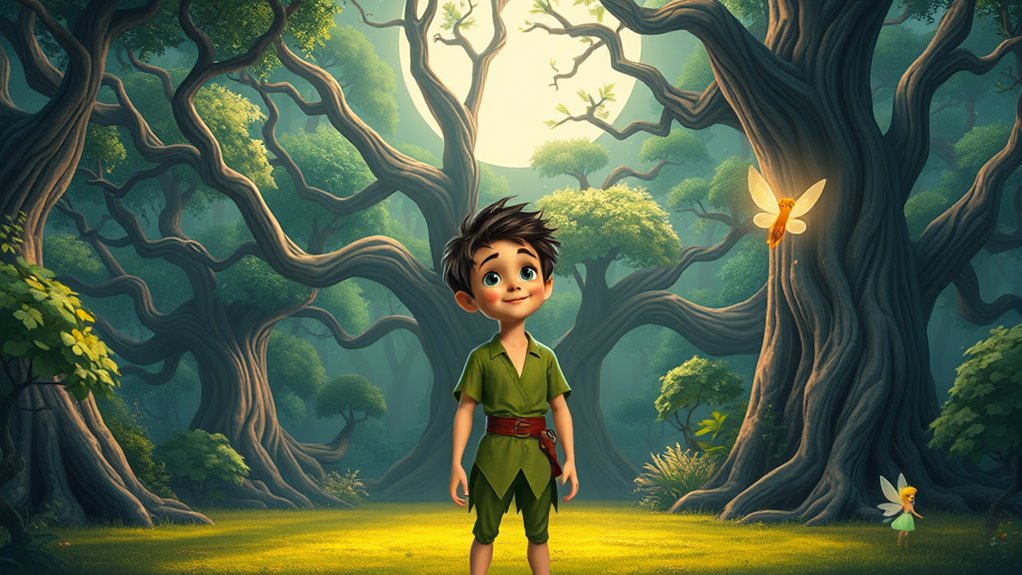
The main message of *Peter Pan* is about holding onto childhood innocence and imagination, even as life pushes us toward maturity. It’s a reminder that childhood is a time of wonder where dreams feel real and anything’s possible.
Peter symbolizes this innocence, refusing to grow up and embracing adventure without worrying about consequences. The story encourages you to cherish your imagination and keep a sense of wonder alive.
Even as responsibilities grow, growing up is inevitable. But you don’t have to completely lose your playful spirit. By keeping that childlike curiosity, you can find joy and magic in everyday life, no matter how old you get.
How Do Characters Reflect the Story’s Key Themes?
Characters in *Peter Pan* embody the story’s core themes by personifying innocence, imagination, and the desire to escape adulthood.
Peter himself represents eternal youth and the adventurous spirit. He refuses to grow up and embraces the limitless possibilities of imagination.
Peter embodies eternal youth and boundless imagination, forever refusing adulthood’s constraints and embracing endless adventures.
Wendy reflects innocence and nurturing. She embodies the longing to preserve childhood wonder while also facing the realities of growing up.
Tinker Bell highlights the power of belief and imagination. She shows how faith and fantasy shape their world.
Captain Hook symbolizes the fears and consequences of losing innocence. He also represents the dangers of adult obsession with power.
The characters’ interactions reveal the tension between childhood innocence and adult responsibilities. These themes are woven into their choices, conflicts, and growth throughout the story.
How Do Symbols Like Neverland and Flight Highlight the Theme?
Symbols like Neverland and flight are powerful images that highlight the main themes of the story. They emphasize our desire to escape reality and keep childhood innocence alive.
Neverland isn’t just a place; it’s a symbol of eternal youth. It’s a world where the worries of grown-up life simply don’t exist.
Flight represents freedom and imagination. It shows the ability to break free from limitations, whether physical or emotional.
These symbols remind us that the story isn’t just about adventure. It’s about holding onto wonder and innocence as we grow.
How Does the Setting Reinforce Peter Pan’s Message?
The setting of Neverland plays a crucial role in reinforcing the story’s core message about preserving childhood wonder and innocence. It’s a magical, timeless place where time stands still, allowing children to investigate, dream, and imagine without adult restrictions.
Neverland’s endless adventures and fantastical landscapes symbolize freedom from the responsibilities and limitations of adulthood. This environment encourages you to see childhood as a special, sacred space that should be cherished and protected.
The vibrant, unpredictable nature of Neverland reminds you that innocence and curiosity are crucial to a fulfilling life. By creating this enchanting setting, the story emphasizes that maintaining a sense of wonder is fundamental to preserving the spirit of childhood.
How Is Childhood Innocence Portrayed in the Story?
Childhood innocence in Peter Pan is vividly brought to life through the playful, trusting nature of the children and their unwavering belief in magic. You see this innocence in Wendy, John, and Michael’s pure faith in Neverland’s wonders, refusing to see it as dangerous or frightening.
Their curiosity and openness make them vulnerable but also highlight their genuine belief in happily-ever-afters. Tinker Bell’s delicate, shimmering presence symbolizes childhood’s fragile beauty and innocence.
Even in moments of danger, the children’s trust in Peter’s leadership and their hope for adventure show their unspoiled view of the world. This innocence makes their experience enchanting but also underscores how fleeting childhood’s pure, untainted perspective truly is.
What Does Growing Up Say About the Story’s Themes?
Growing up in Peter Pan highlights the inevitable loss of innocence that comes with maturity. It shows how growing up often means leaving behind childhood wonder, imagination, and simplicity.
The story suggests that maturity involves facing realities that can dampen the carefree spirit of youth. It demonstrates that growing up isn’t just about aging physically but also about accepting responsibilities, fears, and limitations.
Peter’s refusal to grow up symbolizes a desire to cling to innocence and eternal youth. This tension reveals a deeper theme: while maturity is natural, it can also come at the cost of joy and innocence.
The narrative encourages us to reflect on balancing adulthood with preserving the wonder of childhood.
How Is the Desire for Adventure Emphasized Throughout?
Throughout Peter Pan, the desire for adventure is vividly emphasized through lively descriptions of Neverland’s landscapes—lush forests, mysterious caves, and shimmering lagoons—that spark curiosity.
The characters’ actions also highlight this craving: Peter’s daring flights, bold battles, and constant pursuit of new experiences showcase a relentless pursuit of excitement.
Peter’s daring flights and bold battles embody an unyielding quest for adventure and excitement.
The story’s energetic tone and fast-paced scenes keep you engaged, making adventure feel central to the characters’ lives.
Their willingness to leave safety behind and embrace the unknown shows how deeply adventure is woven into the story’s core, symbolizing freedom, revelation, and a refusal to grow up.
How Does Peter Pan Represent Eternal Youth?
Peter Pan embodies eternal youth through his refusal to grow up and his ability to remain forever young. His endless childhood symbolizes a desire to escape adult responsibilities and welcome innocence.
You’ll notice how he lives in the moment, free from worries or aging. This timeless quality makes him a symbol of perpetual youthfulness.
His refusal to age highlights the allure of staying young forever. His carefree attitude shows the joy of innocence.
His ability to fly represents freedom from life’s limitations. His adventures demonstrate a boundless spirit that never fades.
What Role Do Loss and Bittersweet Moments Play in the Narrative?
Loss and bittersweet moments serve as poignant reminders of the fleeting nature of childhood and innocence in the story. They show us that growing up means letting go of some dreams and ideals, even if it hurts.
When Peter loses Wendy or characters face goodbyes, it emphasizes that innocence isn’t permanent and change is inevitable. These moments add emotional depth, making us think about our own experiences with growing up.
Bittersweetness also highlights how beautiful childhood is, even if it’s temporary. It reminds us to cherish those joyful, innocent moments because they don’t last forever.
How Can You Analyze the Story to Uncover Its Underlying Themes?
To uncover the underlying themes of a story, start by looking at the characters’ motivations, actions, and relationships. These elements show what the story truly values or questions. Pay attention to how characters behave and interact—what they fight for, fear, or cherish.
Next, look for recurring symbols or motifs that highlight certain ideas. Consider the conflicts and how they are resolved, as these often reveal the story’s core messages. Reflect on the tone and what emotions it brings out, which can give clues to deeper meanings.
Identify key moments that challenge the characters’ beliefs. Notice patterns in how characters grow or change over time. Analyze dialogue to find underlying messages or ideas.
Finally, observe symbols and recurring imagery that reinforce the themes. All these elements together help you understand what the story is really about.
How Do Different Adaptations Reinforce or Change the Story’s Themes?
Have you ever wondered how different adaptations of Peter Pan emphasize or change its core themes? Each version highlights or tweaks themes like innocence, imagination, or the fear of growing up.
Some movies focus on childhood freedom, showing how carefree and adventurous Peter is. Others explore the darker side of Neverland, revealing its mysteries and dangers.
Adaptations often add new characters or scenes that reinforce or challenge the original message, making the story feel fresh or more complex.
| Adaptation Type | Theme Focus |
|---|---|
| Movies | Emphasize adventure and innocence |
| Plays | Highlight the importance of imagination |
| Modern TV | Question the cost of eternal youth |
| Rewrites | Shift focus to growing up and loss |
These changes show how themes evolve, reflecting different cultural values and what audiences expect from the story.
Frequently Asked Questions
How Can Symbolism Help Reveal the Story’s Central Themes?
Symbolism helps you uncover the story’s central themes by giving deeper meaning to characters, objects, or events. When you notice symbols like Peter’s shadow or Neverland itself, you see how they represent ideas like childhood innocence or escapism.
Paying attention to these symbols allows you to interpret the story’s messages more fully. It helps you connect them to broader themes about growing up, freedom, and imagination.
What Role Does Imagination Play in Conveying the Theme?
Imagine Peter Pan as a symbol of limitless imagination, guiding you to see how imagination conveys themes like innocence, freedom, and escapism. Your mind becomes a canvas where fantastical elements highlight the importance of dreaming and childhood wonder.
As you welcome Peter’s adventures, you realize that imagination isn’t just play. It’s a powerful tool that reveals deeper truths about life, identity, and the desire to escape reality.
How Do Character Interactions Illustrate the Story’s Messages?
You see character interactions in Peter Pan highlighting its messages by showing contrasts between childhood innocence and adult responsibilities.
For example, Peter’s playful attitude emphasizes the importance of imagination and freedom. Wendy’s nurturing side reflects themes of growing up and caring.
When characters debate or share feelings, it reveals their desires, fears, and values. This helps you understand the story’s deeper messages about innocence, maturity, and the importance of imagination in life.
In What Ways Does the Story Address Societal Expectations?
You see the story addressing societal expectations through its portrayal of childhood innocence, the desire for adventure, and the reluctance to grow up.
It challenges conventional roles by highlighting Peter’s refusal to conform and Wendy’s longing for independence.
The narrative encourages you to question societal pressures, adopt imagination, and value personal choice.
It shows how societal expectations can both confine and inspire, depending on your perspective and willingness to challenge norms.
How Does the Story’s Tone Influence Its Theme Perception?
The story’s tone shapes how you perceive its theme by creating an atmosphere that emphasizes innocence, adventure, or nostalgia.
If the tone is fanciful and light, you might see themes of childhood wonder and freedom.
Conversely, a darker tone can highlight themes of loss or innocence slipping away.
Your emotional response to the tone guides your understanding, making the story’s underlying messages resonate more deeply.
Conclusion
Imagine Peter Pan as a whispering breeze, guiding you through a garden where innocence blooms and fleeting moments drift like leaves. As you explore the story’s symbols and characters, you’re invited to reflect on your own childhood and the dreams you chase.
By uncovering its themes, you can see how the tale’s magic reminds us that while youth is temporary, the memories and lessons it leaves behind are timeless treasures in our life’s journey. Recognizing these themes helps us understand the deeper message behind Peter Pan’s story.