Is Sea Salt the Same as Epsom Salt?
Are you often confused about which salt to use for cooking or relaxation? You’re not alone—many people struggle with understanding the differences between various salts and their best uses. Choosing the right one can make a big difference in your experience and benefits.
Sea salt and Epsom salt are not the same. Sea salt is natural, harvested by evaporating seawater, and mainly contains sodium chloride with trace minerals. It’s ideal for cooking and seasoning.
Epsom salt is a purified mineral compound, magnesium sulfate, used mainly in baths for relaxation and muscle relief.
Understanding their different compositions helps you choose the right salt for your needs. This knowledge can improve your cooking, self-care, and overall well-being.
To learn more about their differences and best applications, keep exploring the details below.
Key Takeaways
- Sea salt is mainly sodium chloride with some trace minerals. Epsom salt is magnesium sulfate, a pure chemical compound.
- Sea salt has coarse, flaky crystals that you might use for seasoning or exfoliating your skin. Epsom salt, on the other hand, has fine grains and is often used in baths to help relax muscles.
- They’re produced differently. Sea salt is made by evaporating seawater, while Epsom salt is mined or created synthetically.
- Sea salt can help with skin hydration and provide minerals your body needs. Epsom salt is mostly used to soothe muscles and reduce inflammation.
- They’re not interchangeable. Sea salt is mainly for cooking and skincare, while Epsom salt is more for therapeutic uses and gardening.
What’s the Difference Between Sea Salt and Epsom Salt?
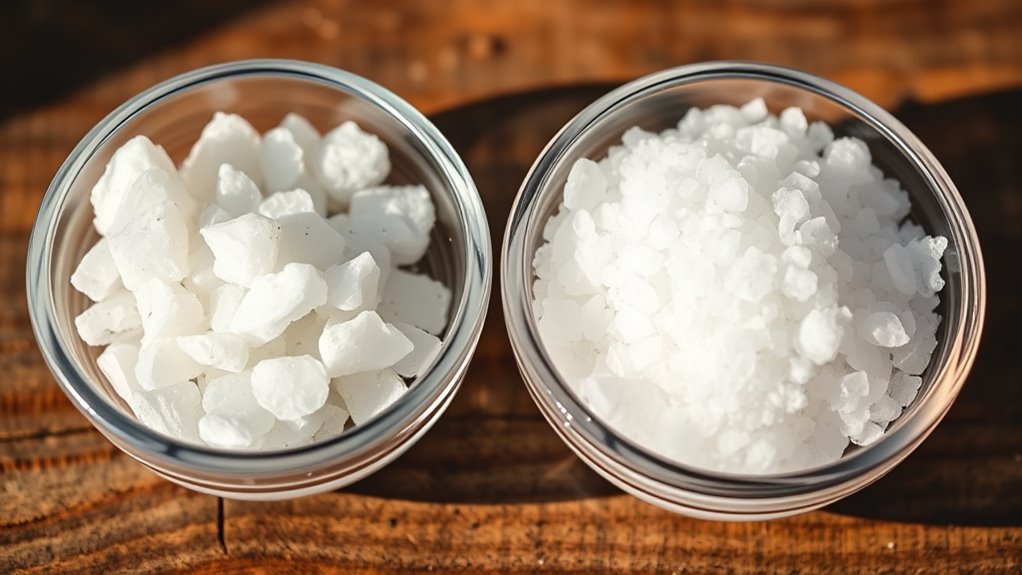
Have you ever wondered what sets sea salt apart from Epsom salt? The main difference is in their composition. Sea salt is harvested from evaporated seawater and contains minerals like magnesium, calcium, and potassium, which give it a unique flavor and texture.
Epsom salt, on the other hand, is a pure chemical compound called magnesium sulfate. It’s made through mining or synthetic processes, not from seawater. While sea salt is often used in cooking and seasoning, Epsom salt is mainly used for baths, soaking, and relaxation.
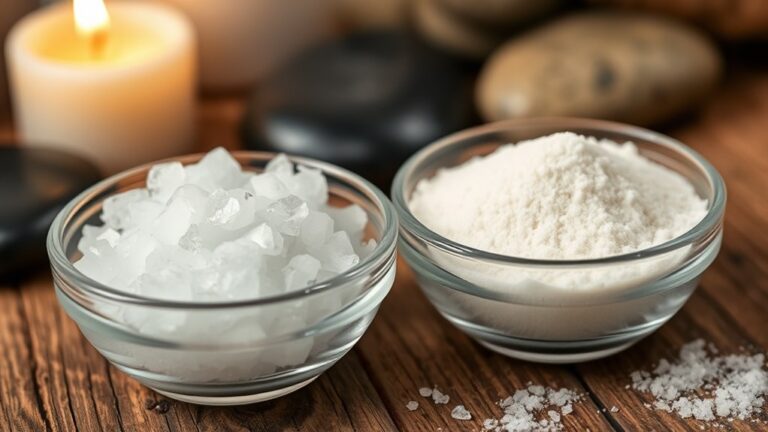
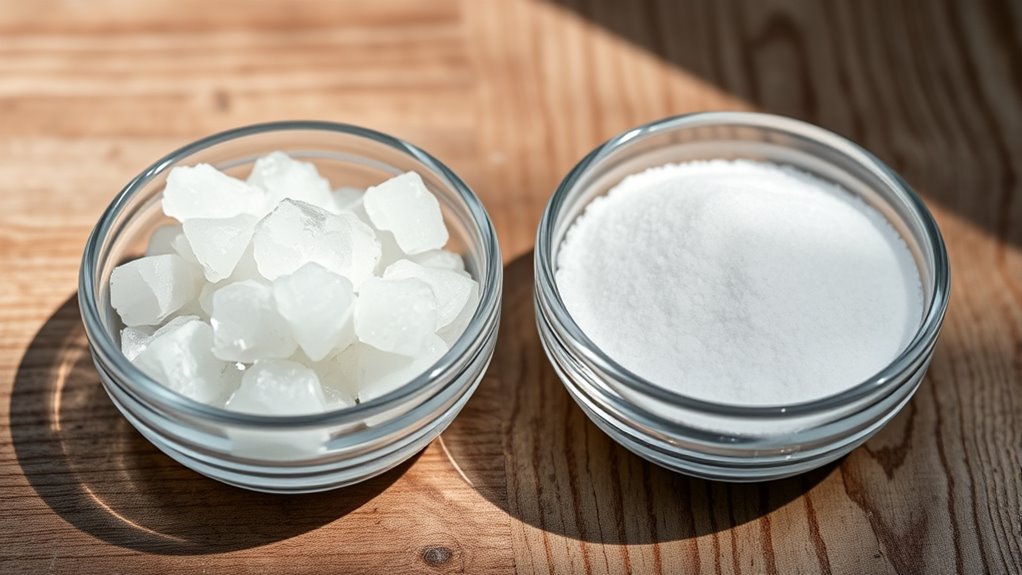
The textures are different too. Sea salt crystals are usually coarse or flaky, while Epsom salt has a finer, grainy look. Knowing these differences can help you pick the right one for your needs.
How Are Sea Salt and Epsom Salt Made?
You might be surprised to learn how sea salt and Epsom salt are produced, each through different natural processes and manufacturing methods. Sea salt comes from evaporating seawater, leaving behind minerals that give it its unique composition.
Epsom salt, on the other hand, is made from mineral-rich waters or synthesized through industrial processes.
Natural Extraction Processes
Sea salt is produced through the natural evaporation of seawater, where sunlight and wind help remove water, leaving behind crystalline salt. This process occurs in shallow ponds or salt flats, where seawater is allowed to evaporate gradually.
As the water diminishes, salt crystals form and are collected. Epsom salt, on the other hand, is extracted from mineral-rich deposits. It’s mined directly from underground mineral springs or sedimentary deposits formed over millions of years.
The mineral deposits are then processed to produce pure Epsom salt. Both processes rely on natural resources—seawater for sea salt and mineral deposits for Epsom salt—but they involve different environments and extraction methods.
While sea salt depends on evaporation, Epsom salt is derived from mineral mining. Each follows unique natural pathways.
Composition and Minerals
The composition of sea salt and Epsom salt is quite different because of their unique mineral contents. Sea salt mainly contains sodium chloride, along with trace minerals like magnesium, calcium, and potassium. Epsom salt, on the other hand, is magnesium sulfate, rich in magnesium and sulfur.
These differences affect how each salt is used and what effects they have. Sea salt is harvested from evaporated seawater, while Epsom salt comes from mineral-rich deposits or natural spring water.
Their mineral makeup gives them distinct properties and applications. For example, sea salt’s minerals can benefit skin and flavor, while Epsom salt is popular for soothing baths and muscle relaxation.
Manufacturing Methods Used
Manufacturing methods for sea salt and Epsom salt are quite different, reflecting their unique origins. You make sea salt by evaporating seawater, often using sunlight and wind to speed up the process. This can take several months depending on the climate.
In contrast, Epsom salt is made either synthetically or mined from mineral deposits. It’s created by extracting magnesium sulfate from natural sources or processing brine solutions. During production, magnesium and sulfate ions are combined under controlled conditions to form crystalline Epsom salt.
While sea salt retains the natural composition of seawater, Epsom salt is mainly a purified mineral compound. These different manufacturing methods affect their purity, texture, and overall qualities you experience when using either salt.
Common Uses of Sea Salt in Cooking and Seasoning
Sea salt adds a burst of natural flavor to dishes, making it a popular choice for both seasoning and finishing touches. You can sprinkle it on salads, roasted vegetables, or grilled meats to improve their taste. Its coarse texture makes it ideal for seasoning steaks or seafood right before serving, adding a satisfying crunch and flavor boost.
Sea salt also works well in baking, balancing sweetness and enriching dough or batter. Many chefs use it as a finishing salt, lightly sprinkling it over dishes to provide a subtle saltiness and a hint of mineral flavor. Moreover, it’s great for seasoning homemade dressings, marinades, and brines.
Its natural composition and mineral content give your dishes a more complex flavor compared to regular table salt.
When Should You Use Epsom Salt for Health and Wellness?
You should consider using Epsom salt when you want to relieve muscle tension or soothe soreness after a workout. It’s a simple way to help your muscles relax and recover.
It can also improve your skin’s health by helping to reduce inflammation and dryness. Knowing when to use it can make your self-care routine more effective and targeted.
Relieving Muscle Tension
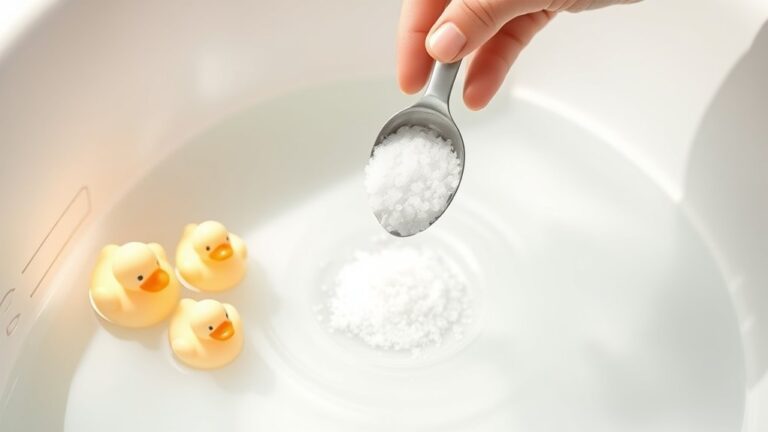
Epsom salt is often the go-to remedy when muscle tension becomes a concern. You should consider using it when your muscles feel sore, tight, or fatigued after workouts or long periods of activity. Dissolving Epsom salt in a warm bath helps the magnesium and sulfate penetrate your skin, easing soreness and promoting relaxation.
Here are three times you might use Epsom salt:
- After intense exercise or physical activity to reduce soreness.
- When experiencing muscle cramps or spasms.
- To soothe tension or stiffness after a stressful day.
Using Epsom salt regularly can help maintain muscle elasticity and prevent future discomfort. It’s a simple, effective tool for muscle tension relief.
Enhancing Skin Health
When you want to boost your skin health, adding Epsom salt to your routine can really help. Its magnesium sulfate helps soothe irritated skin, cut down on inflammation, and speed up healing.
Just toss about two cups of Epsom salt into warm bathwater and soak for 15-20 minutes. It opens your pores, pulls out toxins, and leaves your skin feeling soft and refreshed.
It’s especially good if you’re dealing with dryness, itching, or minor skin irritations. Remember to rinse off afterward to wash away any leftover salt.
Using it regularly can improve your skin’s clarity, elasticity, and overall health. But don’t overdo it, especially if you have open wounds or sensitive skin.
If you’re unsure about your skin, it’s always a good idea to check with a dermatologist before using Epsom salt frequently.
How Do Their Compositions Affect Their Benefits?
The different chemical compositions of sea salt and Epsom salt directly influence their respective benefits. Sea salt contains minerals like magnesium, calcium, and potassium, which can improve skin hydration, promote mineral absorption, and support overall skin health. Epsom salt, composed mainly of magnesium sulfate, is known for relaxing muscles, reducing inflammation, and easing soreness.
- The magnesium in sea salt helps balance skin moisture and can boost healing.
- The calcium and potassium support skin renewal and hydration.
- The magnesium sulfate in Epsom salt penetrates the skin to relax muscles and reduce swelling.
Your choice depends on your needs: sea salt benefits your skin’s mineral content, while Epsom salt targets muscle relaxation and inflammation.
Can You Substitute Sea Salt for Epsom Salt in Baths and Skincare?
Can you substitute sea salt for Epsom salt in baths and skincare routines? While both are popular for relaxation and skin benefits, they’re not interchangeable.
Epsom salt contains magnesium sulfate, which helps soothe muscles and reduce inflammation. Sea salt, on the other hand, is rich in minerals like magnesium, calcium, and potassium, which can exfoliate and nourish your skin.
If you try replacing Epsom salt with sea salt, expect different effects. Sea salt might leave your skin feeling gritty and may not dissolve as easily in water, making it less ideal for muscle relaxation.
For skincare, sea salt can exfoliate dead skin cells but might be too abrasive for sensitive skin. Use them accordingly based on your desired outcome and skin type.
Health Benefits of Sea Salt and Epsom Salt
Sea salt and Epsom salt both offer unique health benefits that can boost your wellness routine. Sea salt has essential minerals like magnesium, calcium, and potassium that support hydration, muscle function, and healthy skin.
Epsom salt, mainly magnesium sulfate, helps relax muscles, reduce inflammation, and promote detoxification. Adding these salts to your routine can enhance relaxation and overall well-being.
Here are some specific benefits:
- Muscle Relief: Epsom salt eases sore muscles and joint pain after workouts.
- Skin Nourishment: Sea salt exfoliates dead skin and improves elasticity.
- Stress Reduction: Both salts help calm the nervous system and promote relaxation through mineral absorption.
Safety Tips and Possible Side Effects of Both Salts
While adding sea salt or Epsom salt to your wellness routine can offer benefits, it’s important to be aware of potential safety concerns. Overuse or improper application may cause skin irritation, dehydration, or allergic reactions.
If you have sensitive skin or health conditions, it’s a good idea to check with a healthcare professional before using them. Always follow recommended dosages and guidelines.
| Precaution | Possible Side Effect |
|---|---|
| Use in moderation | Skin irritation or dryness |
| Avoid ingestion unless instructed | Gastrointestinal discomfort |
| Check for allergies | Allergic reactions or rashes |
Remember to listen to your body. Discontinue use if you feel discomfort and seek medical advice if needed. Staying informed helps you enjoy the benefits safely.
Choosing the Right Salt for Your Needs: Final Tips
Choosing the right salt depends on your specific needs and preferences, so it’s essential to consider factors like intended use, flavor, and potential health benefits.
Selecting the right salt depends on your needs, focusing on use, flavor, and health benefits for the best choice.
To make an informed choice, keep these key points in mind:
- Purpose: Use sea salt for cooking and seasoning, while Epsom salt is better suited for baths or gardening.
- Flavor Profile: Sea salt has a more complex taste that can enhance dishes, whereas Epsom salt has no flavor and isn’t meant to be eaten.
- Health Benefits: Epsom salt helps absorb magnesium through the skin, which can soothe muscles, while sea salt contains trace minerals that might be good for your health.
Understanding these differences will help you pick the best salt for your needs.
Frequently Asked Questions
Are Sea Salt and Epsom Salt Suitable for the Same Skincare Routines?
Sea salt and Epsom salt aren’t suitable for the same skincare routines because they serve different purposes. Sea salt is great for exfoliating and detoxifying your skin thanks to its mineral content.
Epsom salt is better for soothing sore muscles and reducing inflammation through soaking. You can add sea salt to scrubs, but use Epsom salt in baths for relaxation.
Always follow specific instructions for each to avoid skin irritation.
Can I Use Sea Salt Instead of Epsom Salt for Muscle Relaxation?
Think of your muscles as a stressed-out sponge; Epsom salt is like a gentle squeeze that releases tension effectively. You can use sea salt instead, but it won’t provide the same magnesium benefits that relax muscles.
Sea salt mainly detoxifies and exfoliates, so it’s not as effective for muscle relaxation. For best results, stick with Epsom salt when aiming to soothe and unwind tired muscles.
What Are the Environmental Impacts of Harvesting Each Type of Salt?
Sea salt harvesting can harm marine ecosystems if not managed sustainably, as it involves large-scale evaporation ponds that disrupt habitats. Proper management is key to minimizing environmental damage.
Epsom salt, derived from mineral-rich brines or mined from underground deposits, generally has a lower environmental footprint when extracted responsibly. Sustainable practices are important for both types of salt.
Overharvesting or improper disposal of salt can lead to habitat destruction or pollution. This can impact local flora and fauna, so it’s essential to consider environmental impacts in the harvesting process.
Do Both Salts Contain Minerals Beneficial for Health?
Both sea salt and Epsom salt contain minerals that can be beneficial for health, but they do so in different ways. Sea salt is packed with trace minerals like magnesium, calcium, and potassium, which help with hydration and muscle function.
Epsom salt mainly provides magnesium sulfate, which is known for easing muscle soreness, reducing inflammation, and helping you relax. Incorporating either salt into your routine can boost your mineral intake, but they serve different health purposes.
How Do Storage Requirements Differ Between Sea Salt and Epsom Salt?
You should store sea salt in an airtight container in a cool, dry place to prevent clumping and moisture absorption. Epsom salt, however, benefits from being kept in a sealed container away from humidity, but it’s more tolerant of slightly humid environments.
Both salts last longer when kept dry and airtight, but sea salt’s moisture absorption makes the storage conditions slightly more critical to maintain its quality.
Conclusion
In the world of salts, sea salt and Epsom salt are like two stars shining in different skies—one adds flavor and sparkle, the other offers soothing relief. Knowing their unique qualities helps you choose the right one for your needs, like selecting the perfect brushstroke for your wellness canvas.
Sea salt is harvested from evaporated seawater. It’s often used in cooking and beauty routines because of its mineral content and crunchy texture.
Epsom salt, on the other hand, is made of magnesium sulfate. It’s best known for baths that help relax muscles and ease soreness.
Many people wonder if sea salt and Epsom salt are the same. The answer is no—they are quite different in composition and purpose.
Sea salt is primarily used for flavor and cosmetic purposes, while Epsom salt is mainly for therapeutic baths and skin care.
So, explore their depths with confidence, and let each salt be a guiding light on your journey to health and harmony. Whether you need the flavor of sea salt or the soothing touch of Epsom salt, understanding their differences helps you make the right choice.