Is Pink Salt the Same as Celtic Salt?
Many people struggle with choosing the right type of salt for their cooking and health needs. With so many options out there, it’s easy to feel overwhelmed or unsure which one to pick.
Pink salt and Celtic salt are not the same; they come from different sources and have unique traits. Pink salt, often mined from Himalayan deposits, has a mild, slightly sweet flavor and vibrant pink color due to trace minerals like iron.
Celtic salt, harvested from French coastal flats, has a briny flavor, moist texture, and earthy tone.
Both offer mineral benefits, but their uses and flavors vary. Exploring more will help you choose the right one for your needs.
Key Takeaways
- Pink salt, often called Himalayan salt, and Celtic salt come from different sources. Pink salt is mined from Himalayan deposits, while Celtic salt is harvested from French coastal salt flats.
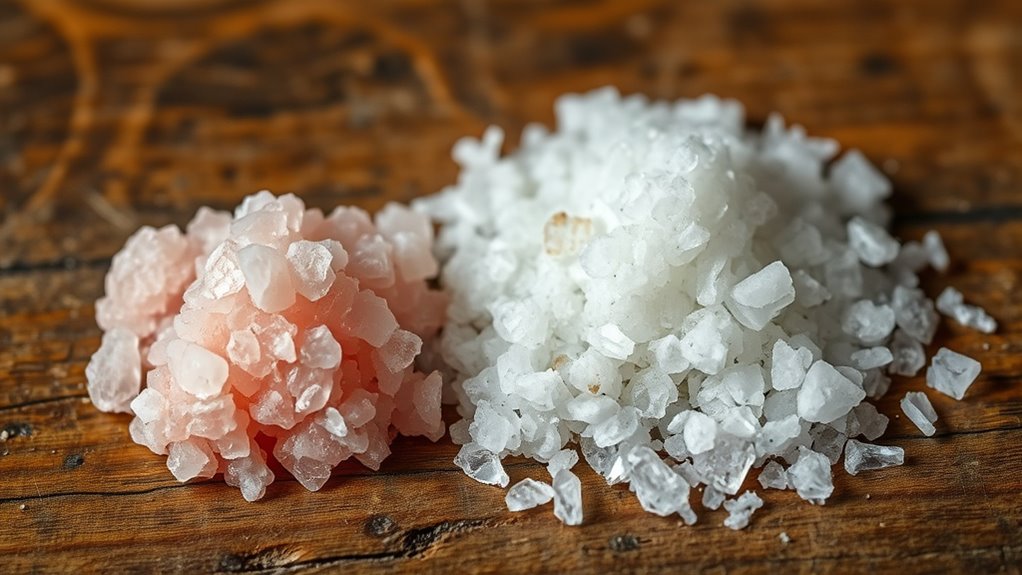
- Pink salt gets its distinctive pink hue from iron oxide. Celtic salt, on the other hand, looks moist and has a grayish or white appearance.
- They also differ in mineral content. Pink salt contains over 80 trace minerals, making it rich in nutrients. Celtic salt has magnesium and an earthy flavor.
- Usually, pink salt is dry and coarse, which makes it great for garnishing dishes. Celtic salt tends to be moist with a flaky texture, perfect for seasoning.
- Both salts are minimally processed and come from different regions. That’s what makes each one unique in flavor and appearance.
What Are Pink Salt and Celtic Salt?
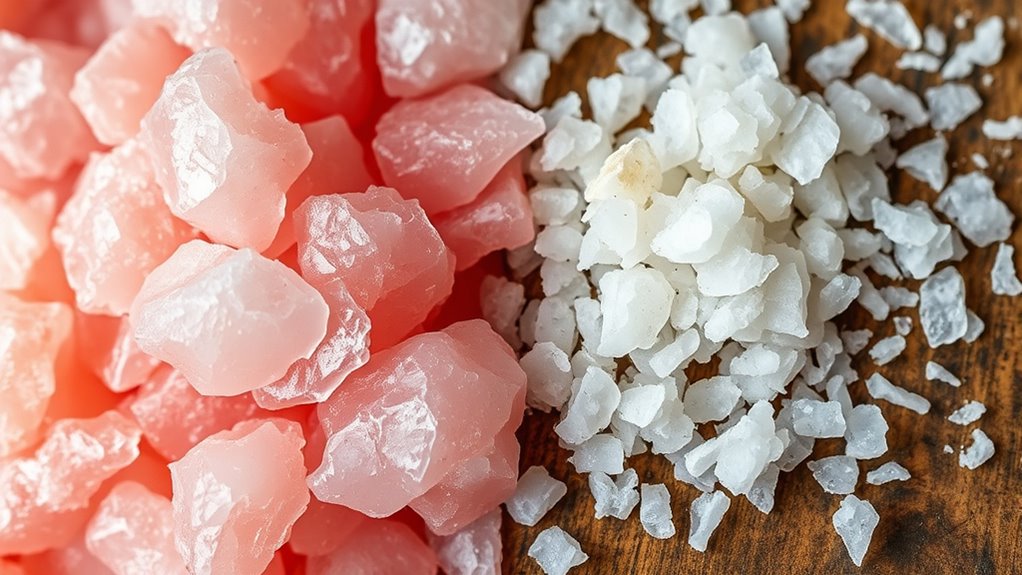
Pink salt and Celtic salt are both natural sea salts, but they come from different places and have unique qualities. Pink salt, often called Himalayan pink salt, is mined from ancient sea deposits buried deep in the mountains. Its pink color comes from trace minerals like iron oxide.
Pink and Celtic salts are natural sea salts with unique mineral contents and origins.
Celtic salt, also known as grey salt, is harvested from salt flats along the coast of France. It’s moist and has a coarse texture, with a variety of minerals like magnesium, calcium, and potassium.
Both types of salt are minimally processed, so they keep most of their natural minerals. Pink salt tends to look more refined, while Celtic salt is typically coarse and moist.
Their different origins and mineral contents give them distinct flavors and culinary uses.
How Are They Sourced and Processed?
The ways pink salt and Celtic salt are sourced and processed reflect their unique origins. Pink salt, often from Himalayan deposits, is mined from ancient salt beds deep underground. It’s usually harvested through traditional mining methods, then minimally processed to remove impurities without refining.
Celtic salt, on the other hand, is harvested from coastal seawater in France. It’s collected through traditional hand-raking methods during low tide, then naturally dried in the sun and air. Unlike refined table salt, Celtic salt retains much of its natural moisture and mineral content.
Both salts avoid chemical additives, but their processing methods differ considerably. Pink salt undergoes mining, while Celtic salt is gathered directly from seawater. These differences in sourcing and processing give each salt its distinct character and mineral profile.
What’s Inside: Mineral Content of Pink and Celtic Salts
Both pink salt and Celtic salt are valued for their rich mineral content, which makes them stand out from regular table salt. Pink salt, usually mined from the Himalayas, has over 80 trace minerals like potassium, magnesium, calcium, and iron, giving it its unique color and flavor.
Celtic salt, harvested from coastal regions, keeps many minerals such as magnesium, calcium, and trace elements that give it a moist texture and earthy taste. These minerals not only enhance flavor but may also provide health benefits.
While both salts have more nutrients than refined table salt, their mineral profiles differ because of their sources and how they’re processed. Celtic salt offers a more complex mineral blend, whereas pink salt has a higher iron content.
How Do Processing Methods Affect Salt Quality?
Processing methods greatly influence salt quality by removing impurities and affecting mineral content. Refinement processes can strip away natural elements, reducing potential health benefits.
Less processed salts often retain more nutrients, making them a better choice for those seeking natural options.
Understanding these differences helps you choose salts that best suit your health and flavor preferences.
Impact of Refinement Processes
Refinement methods greatly influence salt quality by removing impurities and changing mineral content. When salt is heavily refined, it’s often bleached and stripped of trace minerals, leaving mostly pure sodium chloride.
This process can make the salt look more appealing and help it last longer on shelves. But it also reduces some of the health benefits that come from natural minerals.
On the other hand, minimally processed salts keep more of their original mineral profile. This can add flavor and nutritional value to your salt.
The level of refinement affects texture, color, and taste, which in turn influences how we perceive quality. Highly refined salts tend to be finer and more uniform, while less processed ones may be coarser with a more complex flavor.
Your choice really depends on whether you prefer purity, flavor, or mineral content in your salt.
Mineral Content Variations
The methods used to produce different salts directly impact their mineral content, which in turn affects flavor, nutritional value, and health benefits. For example, unrefined salts keep more trace minerals, giving them unique tastes and potential health perks.
In contrast, refined salts often lose these minerals during processing, resulting in a purer but less mineral-rich product. The following table highlights key mineral differences:
| Salt Type | Mineral Content |
|---|---|
| Pink Salt | Contains magnesium, calcium, potassium |
| Celtic Salt | Rich in magnesium, sulfate, and trace elements |
| Table Salt | Mainly sodium chloride, few minerals |
These variations influence not only flavor but also how beneficial each salt can be for your health.
Preservation of Natural Elements
How salt is handled after harvesting really affects its natural mineral content and overall quality. If it’s heavily refined or processed, many beneficial minerals get removed, leaving mostly pure sodium chloride.
For example, traditional Celtic salt is usually dried naturally and minimally processed, so it keeps its trace minerals and natural moisture. On the other hand, industrial salt often goes through bleaching, anti-caking treatments, and extensive refining, which strips away these elements.
Pink salt, like Himalayan varieties, is often minimally processed too, so it retains most of its mineral profile. The way salt is processed impacts not only mineral retention but also taste, texture, and health benefits.
To get the most natural elements, choose salts that are harvested and processed with minimal intervention. This way, you keep the full spectrum of minerals and flavors that each type has to offer.
Taste and Texture Differences Between Pink and Celtic Salt
Pink salt and Celtic salt differ noticeably in both taste and texture, offering unique sensory experiences.
Pink salt has a mild, slightly sweet flavor with subtle mineral notes, making it popular as a finishing salt. Its coarse crystals can be crunchy and moist, adding a delicate crunch to dishes.
Pink salt offers a mild, sweet flavor with subtle mineral notes, perfect for finishing dishes with a delicate crunch.
Celtic salt, on the other hand, has a briny, more robust flavor with a hint of earthiness. Its moist, flaky texture feels slightly gritty and dissolves slowly on the tongue.
The texture of Celtic salt makes it great for seasoning during cooking, while pink salt’s finer crystals are perfect for garnishing or delicate dishes.
These differences influence how you experience dishes, with pink salt providing a subtle finish and Celtic salt offering a more pronounced, mineral-rich taste.
Health Benefits of Pink Salt Versus Celtic Salt
While both pink salt and Celtic salt are often praised for their mineral content, they offer different health benefits that might influence your choice. Pink salt, especially Himalayan variety, contains trace minerals like iron, magnesium, and potassium, which support hydration and mineral balance. Its lower sodium content may help reduce water retention and bloating.
Celtic salt, on the other hand, is rich in magnesium and trace minerals, promoting muscle function and nerve health. Its moist texture indicates higher moisture content, which can help with electrolyte replenishment.
Some believe Celtic salt’s mineral profile supports detoxification, while pink salt’s unique mineral composition is linked to better mineral absorption. Your health goals and specific needs can guide which salt offers more targeted benefits for you.
Best Uses for Pink Salt and Celtic Salt in Cooking
Both pink salt and Celtic salt bring unique flavors and textures to your cooking, making them versatile ingredients in the kitchen. You can use pink salt as a finishing touch on dishes like grilled vegetables or steaks to enhance flavor and add a subtle crunch.
Celtic salt is great for seasoning hearty soups and stews, giving them mineral-rich depth. Consider sprinkling Celtic salt on salads for a crunchy texture or using pink salt in marinades to boost flavor without overpowering.
Each salt’s distinct qualities help make your dishes more flavorful and interesting.
How Do Mineral Differences Impact Flavor and Appearance?
The minerals in pink and Celtic salts give them distinct flavors that can influence your dishes. These minerals also affect their appearance, with pink salt showing a vibrant hue and Celtic salt having a more muted tone.
Understanding these differences helps you choose the right salt to improve both the taste and look of your food.
Mineral Content and Taste
Mineral content plays an essential role in shaping the flavor and appearance of pink salt and Celtic salt. These minerals influence not just taste but also the subtle nuances that distinguish each salt.
For example, the mineral variety and concentration can create a mild, sweet, or briny flavor profile. Here are four ways mineral differences impact your experience:
- Trace minerals add depth to the flavor, making it more complex.
- Magnesium and calcium can introduce slight bitterness or crunch.
- Iron content in pink salt results in a subtle metallic note.
- Mineral impurities influence the overall saltiness and aftertaste.
Understanding these differences helps you select the right salt for your culinary needs.
Visual Differences and Appearance
Mineral content doesn’t just influence the flavor of pink salt and Celtic salt. It also creates visual differences that help you tell them apart.
Pink salt often has a vibrant hue because of iron oxides, which gives it a pink or rose color. Celtic salt looks different—it appears as moist, grayish or white crystals with a coarse texture.
These visual clues make it easier to distinguish between the two. Here’s a quick comparison:
| Feature | Pink Salt | Celtic Salt |
|---|---|---|
| Color | Pink or rose | Grayish, white |
| Texture | Coarse, crystalline | Moist, flaky |
| Appearance | Often blocks or large grains | Damp, granular |
Your eyes can tell you a lot about each salt’s origin and mineral content.
Popular Uses and Trends for Each Salt
Pink salt and Celtic salt each carve out unique niches in culinary and wellness trends. You’ll find pink salt popular in gourmet dishes, salt lamps, and detox routines. It’s valued for its mineral content and striking color.
Celtic salt is favored for its mineral-rich profile in cooking, especially in traditional recipes and finishing touches. Both salts add special flavors and textures to your dishes.
Here are four key trends. First, in gourmet cooking, both salts elevate dishes with their distinct flavors and textures. Second, in health and wellness, Celtic salt is often used for detoxing, while pink salt is popular in salt therapy.
Third, their aesthetic appeal makes them stand out. Pink salt’s vibrant hue and Celtic salt’s moist texture add visual and tactile interest. Lastly, in home décor, salt lamps made from pink salt are trendy for ambiance and claimed health benefits.
How to Choose the Right Salt for Your Kitchen
How do you decide which salt is best for your kitchen? First, think about the flavor profile you want. Fine table salt dissolves quickly and works well for baking and everyday cooking.
If you’re after a more complex taste, try sea salts like Celtic or pink Himalayan salt, which add subtle mineral notes. The texture matters too—coarse salts are great for finishing dishes or seasoning at the table.
Your cooking style plays a role as well. If you use a lot of salt in your recipes, a large bulk container might be more budget-friendly. Also, consider any dietary needs or preferences.
Ultimately, choosing the right salt depends on your cooking habits and flavor preferences. It’s all about enhancing dishes without overcomplicating your kitchen essentials.
Things to Consider When Buying Authentic Pink or Celtic Salt
When buying authentic pink or Celtic salt, it’s important to check labels or certification to confirm its authenticity.
Knowing where and how the salt is harvested also matters, as these details affect quality and purity.
Being informed about these factors helps ensure you’re getting the real deal.
Authenticity Verification Methods
Verifying the authenticity of pink or Celtic salt is key to making sure you’re getting a genuine product with its claimed health benefits and unique minerals. To do this, consider these simple methods:
First, check the label. Look for clear sourcing info and signs of minimal processing. Authentic salts usually specify where they come from.
Next, inspect the texture and color. Real pink salt should have a vibrant hue, while Celtic salt is moist and greyish. Fake versions might look dull or too uniform.
Then, smell and taste the salt. Genuine salts have a mild mineral aroma and a subtle flavor. Artificial ones might lack this complexity.
Finally, research the seller. Buy from reputable sources with good reviews that are transparent about their sourcing practices.
Source and Harvest Details
To make sure you’re getting authentic pink or Celtic salt, pay close attention to the source and harvest details provided by the seller. Genuine pink salt usually comes from ancient salt deposits in places like the Himalayas or Pakistan, where it’s mined from deep underground mineral-rich layers.
Celtic salt, on the other hand, is harvested from coastal salt flats in France’s Brittany region, using traditional methods that involve natural evaporation of floodwaters.
Check that the salt is harvested through sustainable, traditional techniques such as hand-raking or solar evaporation, rather than industrial processes. Authentic sources often share details about their location, extraction methods, and environmental practices.
Knowing these details helps confirm that you’re purchasing a high-quality, unadulterated product that keeps its natural mineral content intact.
Frequently Asked Questions
Are Pink Salt and Celtic Salt Gluten-Free?
Yes, both pink salt and Celtic salt are naturally gluten-free. Since they’re minimally processed and come from natural mineral deposits or ocean water, they usually don’t have gluten or gluten-containing additives.
That said, it’s always a good idea to check labels or ask vendors if you have gluten sensitivities. Cross-contamination can happen during processing or packaging.
But overall, both salts are safe choices for a gluten-free diet.
Can Pink Salt and Celtic Salt Be Used Interchangeably?
Yes, you can generally use pink salt and Celtic salt interchangeably in recipes and for seasoning. Both salts add mineral-rich flavor and have similar textures, making them versatile in the kitchen.
However, they might have slight flavor differences and look a bit different, which can subtly affect the dish’s taste or presentation. Just keep that in mind.
If you’re sensitive to mineral flavors or color, you might want to adjust the amounts slightly. Overall, they can be swapped pretty easily in most situations.
Do Pink and Celtic Salts Contain Any Harmful Contaminants?
You might be surprised, but pink and Celtic salts can contain trace contaminants like heavy metals, though usually in tiny amounts. These minerals naturally occur in the environment, and processing methods influence purity levels.
While generally safe for most people when used in moderation, it’s wise to buy from reputable sources to minimize potential risks. Always check labels and consider any health conditions before adding large quantities to your diet.
How Long Do Pink and Celtic Salts Typically Last?
Pink and Celtic salts typically last indefinitely if stored properly in a cool, dry place. Their natural minerals and salt content prevent spoilage, so there’s no expiration date.
You should keep them in airtight containers to avoid moisture absorption, which can cause clumping. As long as they stay dry and uncontaminated, you can enjoy their flavor and mineral benefits for years.
Just make sure to reseal them tightly after each use.
Are There Any Allergies Associated With Pink or Celtic Salt?
Are you worried about allergies with pink or Celtic salt? Typically, these natural salts are safe for most people, but some individuals with sensitivities might experience reactions due to trace minerals or contaminants.
Have you ever noticed skin irritation or respiratory issues after consuming or handling these salts? If so, it’s a good idea to talk to your healthcare provider.
Always choose high-quality, purified options to help reduce the risk of allergic responses.
Conclusion
Choosing between pink salt and Celtic salt depends on your taste and health priorities. Did you know Celtic salt contains nearly 80 essential minerals, making it a nutrient powerhouse?
Whether you prefer the vibrant hue of pink salt or the mineral-rich, moist texture of Celtic salt, understanding their unique qualities helps you make an informed choice.
So, explore their flavors and benefits, and pick the salt that best fits your culinary and wellness goals.
Pink salt and Celtic salt are quite different, especially in mineral content and texture, so considering these differences can guide your decision.