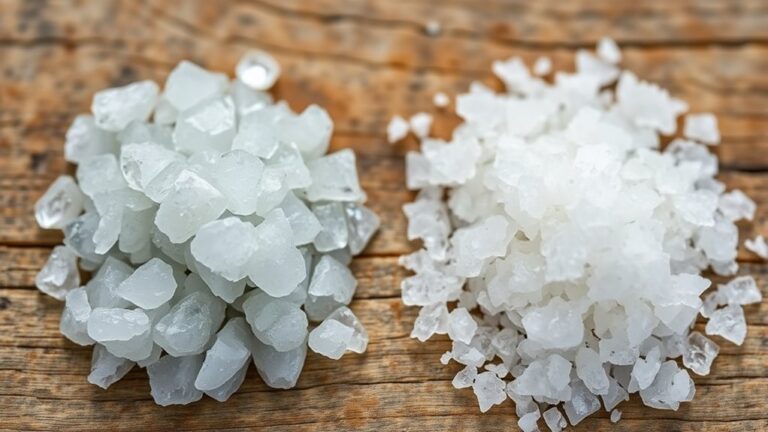
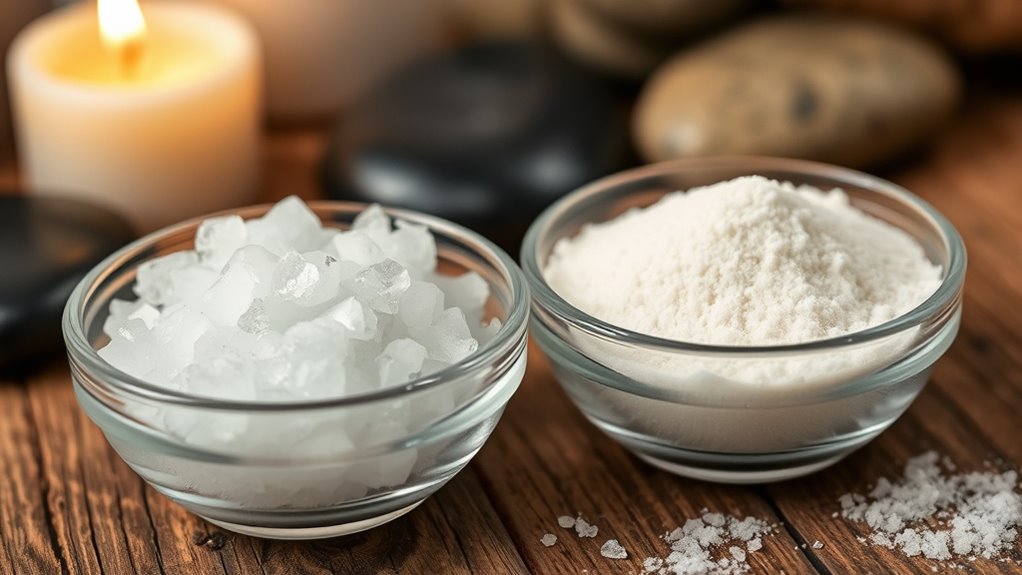
Are Dead Sea Salt and Epsom Salt the Same?
Many people struggle with finding the right bath salts to soothe tired muscles or improve their skin. It can be confusing to choose between different types, especially when they all seem similar. You’re not alone—understanding the differences can make all the difference.
No, Dead Sea Salt and Epsom Salt aren’t the same. Dead Sea Salt comes from the mineral-rich waters of the Dead Sea and contains a variety of minerals like magnesium, potassium, and calcium, which benefit your skin and reduce inflammation.
Epsom Salt, made from magnesium sulfate, mainly helps with muscle relaxation and detoxing.
Understanding their differences can help you choose the right one for your needs, and there’s more to uncover if you want to learn further.
Key Takeaways
- Dead Sea Salt and Epsom Salt have different mineral compositions. Dead Sea Salt is rich in minerals, while Epsom Salt is mainly magnesium sulfate.
- They come from different parts of the world. The Dead Sea is located in the Middle East, whereas Epsom Salt comes from England.
- Dead Sea Salt is known for helping with skin conditions like psoriasis. On the other hand, Epsom Salt is great for relaxing muscles and easing soreness.
- Because of their unique mineral contents and therapeutic properties, their uses and benefits are quite different.
- You’ll also notice a difference in price and availability. Dead Sea Salt tends to be more expensive, while Epsom Salt is more widely accessible.
What Are Dead Sea Salt and Epsom Salt? An Introduction
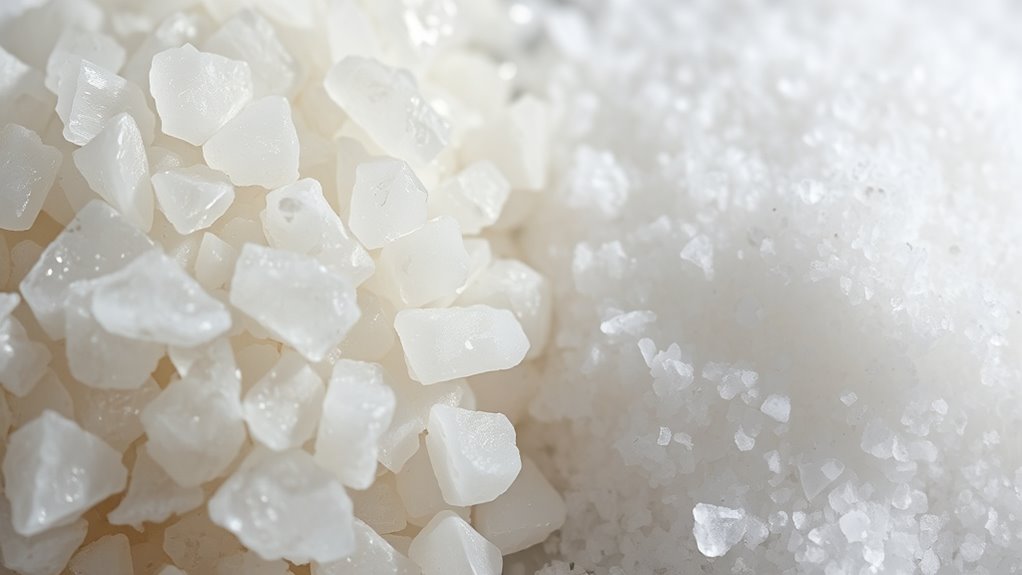
Dead Sea Salt and Epsom Salt are popular ingredients in bath and skincare routines, but they are quite different in origin and composition. Dead Sea Salt comes from the mineral-rich waters of the Dead Sea, containing minerals like magnesium, calcium, and potassium.
Dead Sea Salt and Epsom Salt differ in origin and mineral content, offering unique benefits for skin and relaxation.
These minerals are known for their skin benefits and therapeutic properties. Epsom Salt, on the other hand, is a pure compound called magnesium sulfate. It’s made from mineral-rich waters but processed into crystalline form.
People mainly use Epsom Salt for muscle relaxation and easing soreness. While both are used in baths, they serve different purposes and offer distinct benefits.
Understanding where they come from helps you make informed choices for your skincare and relaxation routines.
Where Do Dead Sea Salt and Epsom Salt Come From? Origins Explained
You might be surprised to learn that Dead Sea Salt comes from the mineral-rich waters of the Dead Sea between Jordan and Israel. Epsom Salt, on the other hand, is derived from mineral deposits and springs in places like Surrey, England.
Their locations influence their unique mineral compositions. Dead Sea Salt contains high levels of magnesium, potassium, and calcium, while Epsom Salt is mainly made of magnesium sulfate.
Knowing where these salts come from helps explain their distinct properties and uses.
Geographic Origins and Locations
While both Dead Sea Salt and Epsom Salt are popular for their therapeutic benefits, they come from very different places. Dead Sea Salt is from the Dead Sea, a hypersaline lake bordered by Israel, Jordan, and the West Bank. It’s famous for its mineral-rich waters and unique environment.
Epsom Salt, on the other hand, originates from mineral-rich springs in Epsom, England. It naturally forms through the evaporation of mineral waters. Here’s a quick comparison:
| Location | Water Body | Notable Feature |
|---|---|---|
| Dead Sea | Hypersaline lake | Highest salt concentration globally |
| Epsom Springs | Mineral springs | Rich in magnesium sulfate |
| Geographic Area | Middle East / Europe | Different climates and environments |
Composition and Mineral Content
The origins of Dead Sea Salt and Epsom Salt shape their unique mineral makeups, which influence their therapeutic benefits. Dead Sea Salt comes from the mineral-rich waters of the Dead Sea, containing high levels of magnesium, potassium, calcium, and bromides.
This special mineral blend helps improve skin hydration, reduce inflammation, and promote relaxation. Epsom Salt is a purified form of magnesium sulfate, mainly sourced from mineral springs or synthetic processes.
It’s mostly made up of magnesium and sulfate ions, which penetrate your skin to soothe sore muscles, ease cramps, and support detoxification. These differences in composition are key to understanding why each salt offers different benefits.
Your choice depends on the specific minerals you’re after and the effects you want from your bath or skincare routine.
How Do Their Compositions Differ? Key Differences in Dead Sea and Epsom Salts
Dead Sea salt and Epsom salt differ greatly in their chemical makeup, which affects how we use them and their benefits. Dead Sea salt has high levels of minerals like magnesium, potassium, and calcium, making it good for skin and health. Epsom salt is mainly magnesium sulfate, with little else.
| Mineral | Dead Sea Salt | Epsom Salt |
|---|---|---|
| Main Component | Magnesium, Potassium, Calcium | Magnesium sulfate |
| Mineral Content | Rich in trace minerals | Purely magnesium sulfate |
| Uses | Skin therapy, mineral absorption | Muscle relaxation, detox |
These differences impact how each salt interacts with your body and skin. They shape their specific benefits and uses.
What Are the Main Benefits for Skin and Body? Uses of Dead Sea and Epsom Salts
Both Dead Sea and Epsom salts offer amazing benefits for your skin and body. They can help heal skin conditions and ease muscle tension when you use them in baths or treatments.
Exploring their specific uses can help you decide which salt suits your needs best. Whether you’re looking for relaxation or skin relief, these salts have something to offer.
Skin Healing Properties
Many people turn to Dead Sea salt and Epsom salt for their amazing skin healing benefits, helping both skin and body in different ways. Dead Sea salt has minerals like magnesium, potassium, and bromide that soothe irritated skin, reduce inflammation, and support cell renewal. Epsom salt, which is high in magnesium sulfate, helps detoxify skin, calm redness, and boost elasticity.
Both salts can help with skin conditions like eczema and psoriasis when used in baths or topical treatments. Adding them to your skincare routine can restore moisture, reduce redness, and promote healing.
| Benefit | Description |
|---|---|
| Anti-inflammatory | Eases swelling and irritation |
| Moisturizing | Boosts skin hydration |
| Detoxification | Draws out impurities |
| Skin regeneration | Supports healing of damaged skin |
| Eczema and psoriasis relief | Eases symptoms and soothes skin |
Muscle Relaxation Benefits
Using Dead Sea and Epsom salts in your bath can give you powerful muscle relaxation benefits that soothe tired, tense muscles and ease discomfort.
Epsom salt contains magnesium sulfate, which helps reduce inflammation and relax muscle fibers. It’s perfect after workouts or long days.
Dead Sea salt is packed with minerals like magnesium, potassium, and bromides that penetrate the skin to relax muscles and boost circulation.
Regular soaks can help lessen soreness, stiffness, and cramps. These salts also promote better blood flow, helping your muscles recover faster.
Whether you’re an athlete or just deal with daily tension, adding these salts to your bath can help you unwind and restore your body’s natural relaxation response.
Are Dead Sea Salt and Epsom Salt the Same? A Clear Comparison
Are Dead Sea Salt and Epsom Salt actually the same? Not quite. Dead Sea Salt is rich in minerals like magnesium, potassium, and calcium, and comes from the mineral-laden waters of the Dead Sea. Epsom Salt, on the other hand, is magnesium sulfate created through industrial processes. They differ in composition, texture, and origin.
| Feature | Dead Sea Salt | Epsom Salt | Key Difference |
|---|---|---|---|
| Composition | Minerals like magnesium and potassium | Magnesium sulfate | Different mineral makeup and source |
| Texture | Coarser and grainy | Fine and crystalline | How they feel and look |
| Origin | Natural mineral deposits | Made through industrial processes | Natural versus synthetic |
| Use | Skin and mineral therapy | Muscle relief and baths | Their main applications |
Which Salt Is Better for Relaxing Baths? Therapeutic and Comfort Effects
In relaxing baths, the type of salt you choose can really change your experience. Dead Sea salt is packed with minerals like magnesium, potassium, and bromides, which help soothe muscles and hydrate your skin. It encourages relaxation by easing stiffness and reducing inflammation.
Dead Sea salt soothes muscles, hydrates skin, and promotes relaxation with its rich mineral blend.
Epsom salt, mainly made of magnesium sulfate, is great for calming nerves and relieving sore muscles. It promotes deeper relaxation and can help lower stress, making it perfect for unwinding after a long day.
Both salts have their benefits, but Dead Sea salt’s mineral mix offers more extensive relief for skin and joints. On the other hand, Epsom salt’s focus on magnesium supports mental calmness.
Ultimately, your personal preferences and relaxation needs will guide which salt makes your bath more enjoyable.
Are There Risks or Side Effects? Safety Tips for Using Dead Sea and Epsom Salts
Although Dead Sea and Epsom salts are generally safe for most people, they can cause side effects or allergic reactions in some individuals. If you have sensitive skin or allergies, try a small patch test before using a full soak.
Overuse or soaking for too long can lead to skin irritation or dryness. People with open wounds or skin infections should avoid soaking, as salt might worsen irritation or slow healing.
Pregnant women should check with their healthcare provider before using, especially with high concentrations of salts. Be careful if you have kidney or heart issues, as minerals could cause complications.
Always follow the recommended dosages and avoid ingesting salts unless your doctor says it’s okay. After soaking, rinse thoroughly to remove any residue and prevent dryness or irritation.
How to Use Dead Sea and Epsom Salts for Best Results
Wondering how to get the best results from Dead Sea and Epsom salts? Start by dissolving the salts in warm water, making sure they fully dissolve before you use them.
Dissolve salts in warm water for optimal relaxation and skin benefits.
For a relaxing bath, add 1 to 2 cups of salts and soak for 15-20 minutes. This helps relax your muscles, soften your skin, and reduce inflammation.
If you’re using salts for skincare, try creating a gentle scrub by mixing them with a carrier oil or soap to exfoliate dead skin cells.
For foot soaks, half a cup of salts in a foot basin works well. Always rinse thoroughly afterward and hydrate your skin.
Regular use and proper soaking time help maximize the benefits. Remember, consistency is key to enjoying the full therapeutic effects of these salts.
Price, Quality, and Where to Buy: Choosing the Right Salt
Choosing the right salt depends on balancing cost, quality, and where you shop. Dead Sea salt tends to be pricier but offers higher mineral content, while Epsom salt is usually more affordable.
Quality varies based on purity and processing. Look for natural, unrefined options for the best benefits. Where you buy also matters; specialty stores and reputable online vendors often guarantee better quality.
Here’s a quick comparison:
| Feature | Dead Sea Salt | Epsom Salt |
|---|---|---|
| Price | Higher | Lower |
| Mineral Content | Rich in minerals | Mainly magnesium sulfate |
| Purity | Often pure, natural | Pure, refined |
| Best for | Skin, relaxation | Muscle relief, detox |
| Purchase Locations | Specialty shops, online | Drugstores, online |
Choose based on what you need and your budget.
Final Verdict: Dead Sea Salt vs. Epsom Salt – What’s the Difference?
Understanding the differences between Dead Sea Salt and Epsom Salt helps you choose the right option for your needs. Their unique compositions and mineral contents lead to distinct therapeutic benefits and uses.
Cost and accessibility also play a role in your decision. Let’s compare these key points to see which salt best suits you.
Composition and Mineral Content
While Dead Sea Salt and Epsom Salt are both popular for their mineral benefits, they differ greatly in their composition. Dead Sea Salt is rich in minerals like magnesium, potassium, calcium, and bromide, naturally found in the Dead Sea’s waters. Its mineral content is complex, offering a wide range of elements that benefit skin and health.
Epsom Salt, on the other hand, is mainly made up of magnesium sulfate. It contains only magnesium and sulfate ions, with no other significant minerals. This key difference means Dead Sea Salt provides a broader spectrum of minerals, while Epsom Salt mainly focuses on magnesium.
Knowing these compositions helps you pick the right salt for your needs, whether you want a mineral-rich experience or a simple magnesium supplement.
Therapeutic Benefits and Uses
Both Dead Sea Salt and Epsom Salt are known for their therapeutic benefits, but they serve different purposes because of their mineral content. Dead Sea Salt helps soothe skin conditions like psoriasis and eczema, promotes relaxation, and reduces inflammation.
Epsom Salt, which is rich in magnesium, is great for easing muscle tension, relieving soreness, and improving sleep. When you soak in these salts, you activate your body’s natural healing processes, helping stress melt away and muscles unwind.
| Benefit | Dead Sea Salt | Epsom Salt |
|---|---|---|
| Skin soothing | Yes | No |
| Muscle relaxation | No | Yes |
| Anti-inflammatory | Yes | No |
| Stress relief | Yes | Yes |
| Soreness relief | No | Yes |
Cost and Accessibility
When choosing a salt for your wellness routine, cost and accessibility are big factors. Dead Sea salt tends to be more expensive because it comes from a specific region and often needs to be imported. This can make it harder to find in some areas and may add shipping costs if you buy online.
Epsom salt is more widely available at drugstores, supermarkets, and online. It’s usually more affordable, making it a practical choice if you’re on a budget or want something convenient. Its popularity for foot soaks and baths means it’s easy to find.
If saving money and ease of access are your priorities, Epsom salt makes sense. But if you’re after specific benefits from Dead Sea salt, the extra cost might be worth it, even if it’s less available.
Frequently Asked Questions
Can Dead Sea Salt and Epsom Salt Be Used Interchangeably?
You can’t really use Dead Sea salt and Epsom salt interchangeably because they have different compositions and benefits. Dead Sea salt has minerals like magnesium, potassium, and calcium that help soothe your skin and boost hydration.
Epsom salt is mainly magnesium sulfate, which is great for relaxing muscles and reducing inflammation. While both are helpful, they serve different purposes, so pick one based on what you need.
Are There Specific Skin Conditions Better Treated With One Salt Type?
Yes, some skin conditions respond better to specific types of salt. For instance, if you have psoriasis or eczema, Dead Sea Salt might help because of its high mineral content that soothes inflammation and promotes healing.
Epsom Salt, which is rich in magnesium, is great for reducing muscle tension and calming minor skin irritations. It’s often a good choice for soothing skin that’s irritated or inflamed.
It’s best to consider your particular skin condition and chat with a dermatologist to find out which salt type is the most suitable for you.
Do Both Salts Have Similar Mineral Content Benefits?
Both salts offer unique mineral benefits, but they’re not exactly the same. Dead Sea Salt is packed with magnesium, potassium, and calcium, which help soothe skin and boost hydration.
Epsom Salt mainly provides magnesium sulfate, which is great for relaxing muscles and reducing inflammation. Think of it like a mineral-rich oasis versus a gentle, calming bath—each one serves a different purpose.
You can enjoy their benefits by choosing the salt that best fits your skin or muscle care routine.
How Long Should I Soak When Using Each Type of Salt?
You should soak for about 15 to 20 minutes when using either Dead Sea Salt or Epsom Salt. This helps your body absorb the minerals and relax your muscles.
Make sure the water is comfortably warm, not hot, to avoid dehydration. If you’re new to salt baths, start with 10 minutes and slowly increase your time.
Always listen to your body and stay hydrated afterward.
Are There Any Medical Conditions That Contraindicate Their Use?
Some medical conditions, like open wounds, skin infections, or severe eczema, can make soaking in Dead Sea or Epsom salts risky.
You might also want to avoid them if you have high blood pressure, heart issues, or kidney problems.
Always check with your healthcare provider before using these salts, especially if you have underlying health concerns.
Better safe than sorry. Your health is worth more than any bath!
Conclusion
While Dead Sea salt and Epsom salt might seem similar, they’re actually quite different. One isn’t better than the other; each offers unique benefits for your skin and relaxation.
Don’t fall for the myth that they’re interchangeable. Understanding their differences can truly change your self-care routine.
So, next time you indulge, choose the salt that really meets your needs. Enjoy the soothing, healing power each one provides. Your body will thank you.