8 Easy Steps to Smoke Beef Brisket in an Electric Smoker
Many barbecue enthusiasts dream of perfectly smoked beef brisket, but the process can seem intimidating or time-consuming. If you’ve struggled to get that tender, flavorful result, you’re not alone.
Luckily, using an electric smoker simplifies things and makes achieving that smoky perfection easier.
To smoke beef brisket in an electric smoker, start by choosing one with adjustable racks and a good temperature range.
Prepare your brisket by trimming excess fat and applying a flavorful dry rub.
Preheat the smoker to 225-250°F, then place the brisket inside, fat side up, and keep the temperature steady.
Smoke until it reaches 195-205°F, then rest it for at least 30 minutes before slicing.
If you’d like detailed tips on each step, there’s more to investigate.
Key Takeaways
- Choose a suitable electric smoker with adjustable racks, a temperature range of 225°F-275°F, and easy controls.
- Prepare and season the brisket with a rub. Then, let it rest for at least an hour before smoking.
- Preheat the smoker to 225°F-250°F. Place the brisket fat side up and keep the temperature and smoke levels steady.
- Smoke until the internal temperature reaches 195°F-205°F. Once done, let the brisket rest for 30 minutes wrapped in foil.
- Troubleshoot any temperature fluctuations and monitor smoke levels to ensure a perfect cook.
- When slicing, cut against the grain for the best tenderness. Enjoy your delicious smoked brisket!
How to Choose the Best Electric Smoker for Brisket
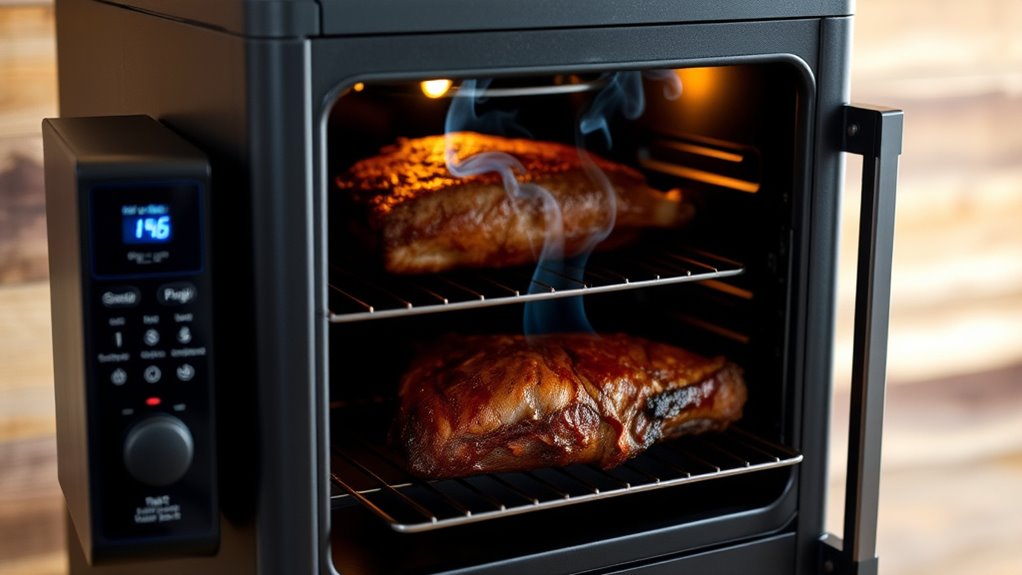
Are you unsure how to pick the right electric smoker for brisket? First, consider the size. Briskets are large, so you want a smoker with enough capacity to fit your cut comfortably. Look for models with adjustable racks to make handling easier and to accommodate different sizes.
Next, check the temperature range and consistency. A good electric smoker should maintain steady heat between 225°F and 275°F for low and slow smoking. Ease of use matters too—features like digital controls, timers, and easy-to-clean interiors make the process simpler.
Finally, think about durability and build quality. A well-made smoker with quality materials will provide better heat retention and last longer. By focusing on size, temperature control, ease of use, and durability, you’ll find the perfect smoker for your brisket.
Preparing Your Beef Brisket: Trimming and Seasoning
Preparing your beef brisket starts with trimming and seasoning to guarantee ideal flavor and texture. Begin by removing excess fat, especially the thick layer on top, to prevent flare-ups and promote even cooking. Leave a thin fat cap for moisture and flavor.
Next, apply a generous coat of seasoning—either a simple salt and pepper rub or a custom spice blend. Be certain to cover all sides evenly, pressing the rub into the meat.
Let the brisket rest with the seasoning for at least an hour, or overnight if possible, to improve flavor penetration. Proper trimming prevents uneven cooking, while thorough seasoning assures a flavorful crust.
These steps set the foundation for a tender, smoky brisket that’s packed with delicious flavor.
Getting Your Electric Smoker Ready for Smoking
Start by cleaning out your electric smoker to ensure a fresh, smoke-free environment. Remove any leftover ashes, debris, or old wood chips, and wipe down the interior with a damp cloth.
Check that the heating element and thermostat are working properly, and make sure the drip tray is clean and in place. Fill the water pan with fresh water to help keep the meat moist during smoking.
Preheat your smoker to around 225°F to 250°F before adding your brisket. This helps with consistent cooking and better smoke absorption from the start.
Finally, ensure the vents are slightly open to allow proper airflow. Taking these steps will get your smoker ready for optimal smoking performance.
Applying the Perfect Dry Rub for Flavor and Bark
Applying the right dry rub is key to building flavor and getting that perfect bark on your brisket. Start by patting your meat dry so the rub sticks well.
Generously coat the entire surface, pressing the spices into the meat to create an even layer. A good dry rub mixes salt, sugar, paprika, garlic powder, onion powder, and black pepper.
Coat the meat evenly with a flavorful dry rub, pressing spices into the surface for perfect coverage.
Feel free to add herbs or chili powder for extra flavor. Be careful not to over-rub, as this can toughen the meat. Make sure every part is covered evenly.
Let the brisket sit with the rub for at least an hour or overnight if you can. This helps the flavors penetrate better.
Getting the dry rub right sets the foundation for a flavorful, well-barked brisket.
Monitoring and Maintaining the Right Temperature During Smoking
Once the dry rub is applied and the brisket is ready to go, maintaining a consistent temperature throughout the smoking process is really important. Use your electric smoker’s built-in thermometer to keep a close eye on the internal temperature.
Set the smoker to stay between 225°F and 250°F for the best results. Try not to open the lid too often, as this can cause temperature swings and make the cooking take longer.
If you notice the temperature rising or falling, adjust the smoker’s controls accordingly. Keep a digital thermometer handy to check the brisket’s internal temperature periodically.
Consistency is key to ensuring even cooking and tender meat. By carefully monitoring and maintaining the right temperature, you’ll set yourself up for a perfectly smoked brisket.
How to Smoke Brisket to Tender Perfection
To get tender, flavorful brisket, start with the right cut and keep an eye on the smoker’s temperature.
As it cooks, monitor the internal temperature so you don’t overdo it.
Once it’s done, let the meat rest before slicing to lock in those juices.
Follow these steps, and you’ll always end up with a perfect brisket.
Choosing the Right Cut
Choosing the right cut of beef is key if you want your smoked brisket to be tender and flavorful. Look for a cut with good marbling—fat streaks throughout the meat—that help keep it moist and tasty during smoking.
Go for a whole brisket, usually called a “packer cut,” which includes both the flat and point muscles. This gives you a nice balance of tenderness and richness. Steer clear of leaner cuts, as they tend to dry out and get tough.
To visualize, keep these points in mind:
- A brisket with visible marbling, not overly lean.
- A full packer cut, including both flat and point sections.
- Well-trimmed surface, free of excess fat and silver skin.
Choosing wisely lays the foundation for a perfectly smoked brisket.
Mastering Temperature Control
Mastering temperature control is key to turning a good brisket into a tender, juicy masterpiece. Set your electric smoker to around 225°F, which is perfect for slow-cooking brisket.
Use a reliable thermometer to keep an eye on the meat’s internal temperature. Aim for about 195°F to 205°F for that perfect tenderness.
Keep the heat steady and avoid fluctuations that can dry out or toughen the meat. If the temperature rises too quickly, lower the smoker’s heat a bit.
If it drops, increase it gradually. Staying consistent with the temperature helps the collagen break down slowly, giving you a moist, flavorful brisket.
Stay attentive throughout the process, and you’ll get that melt-in-your-mouth texture everyone loves.
Resting for Juiciness
Once you’ve finished smoking your brisket, resting it is key to locking in the juices and getting that tender, flavorful result. Resting helps the meat’s fibers reabsorb moisture and settle, so it doesn’t lose too much juice when you slice.
To get the most juiciness, wrap the brisket loosely in foil or butcher paper. This keeps it warm while letting some air circulate.
Put it on a cutting board or tray and let it rest for at least 30 minutes. For larger cuts, an hour is even better.
Keep it in a warm spot or wrap it in a towel to stay hot and juicy until you’re ready to serve. Proper resting turns your brisket into a tender, flavorful masterpiece.
How to Know When Your Brisket Is Done and Resting Tips
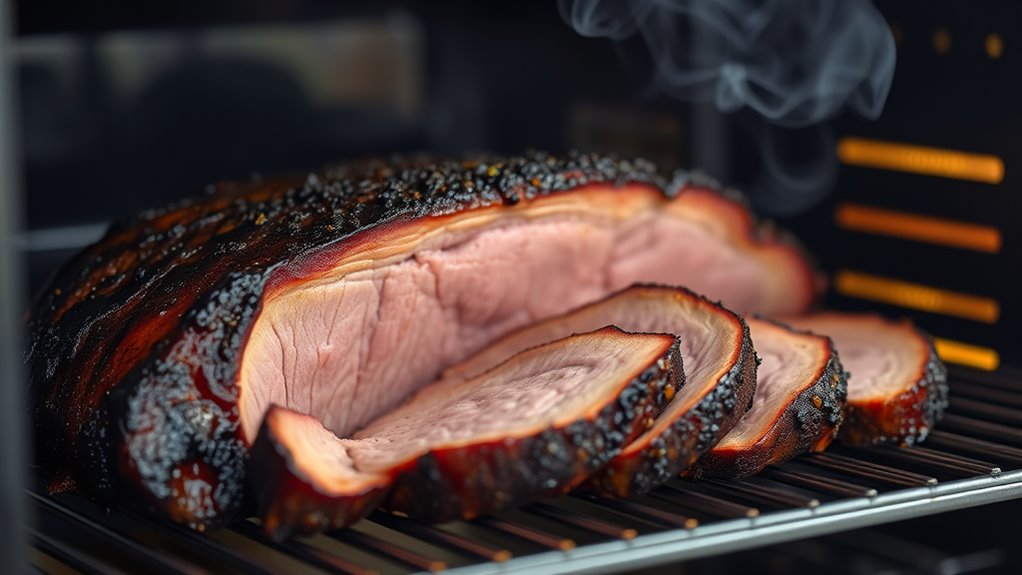
You’ll know your brisket is done when it hits an internal temperature of about 195-205°F and feels tender when you poke it.
Look for a dark, bark-like crust and a slight jiggle in the center—that’s a good visual cue.
After resting for at least 30 minutes, the juices settle, making your brisket more flavorful and easier to slice.
Visual and Textural Signs
Knowing when your brisket is done mainly comes down to visual cues and texture. Look for a deep mahogany bark forming on the outside—that’s a good sign it’s absorbing the smoke properly.
When you insert a thermometer, aim for an internal temperature around 195-205°F. The meat should feel tender but not mushy, with a slight bounce when pressed.
You’ll also notice a visible “probe test”: if a toothpick or probe slides in easily without resistance, your brisket is probably ready. Here are the key signs to look out for:
- A dark, firm crust with a slight bark.
- An internal temperature between 195-205°F.
- Tenderness that allows easy probing without resistance.
These signs confirm your brisket is perfectly smoked and ready to rest.
Resting Time Benefits
Resting your brisket after smoking is essential because it allows the juices to redistribute throughout the meat, resulting in a more tender and flavorful bite. When you remove the brisket from the smoker, the internal temperature remains high, and juices are still pushed toward the center.
Resting gives these juices time to settle evenly, preventing them from spilling out when you slice. A good rule of thumb is to let it rest for at least 30 minutes, wrapped loosely in foil or a towel.
This process also helps the meat fibers relax, making each slice more tender. You’ll know your brisket is ready when it reaches an internal temperature of around 195-205°F and feels firm yet yields slightly under pressure.
Proper resting guarantees maximum flavor and moisture.
Troubleshooting Common Smoking Problems
Even with careful preparation, smoking beef brisket can sometimes present challenges. You might find your brisket isn’t tender enough, smoke isn’t absorbing properly, or the meat turns out too dry. To troubleshoot:
- Check your temperature. Make sure your smoker stays steady between 225-250°F. Fluctuations can cause uneven cooking.
- Monitor smoke levels. Too little smoke results in bland flavor, while too much can make the meat bitter. Use quality wood chips and avoid overloading.
- Manage moisture. Dry brisket often means it cooked too long or at too high a temperature. Wrap the meat during the stall or use a water pan to keep it moist.
Addressing these issues will help you achieve a tender, flavorful brisket every time.
Frequently Asked Questions
How Long Should I Let My Brisket Rest Before Slicing?
You should let your brisket rest for at least 30 minutes before slicing. This helps the juices redistribute throughout the meat, making every bite tender and full of flavor.
Wrap the brisket loosely in foil and place it on a cutting board or plate while it rests. If you have extra time, resting for up to an hour can make it even more tender and juicy.
Can I Add Wood Chips During the Smoking Process?
Yes, you can add wood chips during smoking, but do it carefully to avoid smoldering or excessive smoke.
To keep your brisket flavorful, soak the chips beforehand and add them gradually, usually every hour or so.
Don’t open the smoker too often, as this releases heat and prolongs cooking.
This way, you guarantee a steady smoke, enhancing flavor without disrupting your cooking process.
What’s the Ideal Internal Temperature for Smoked Brisket?
The ideal internal temperature for smoked brisket is around 195 to 205°F. You want to cook it low and slow until it’s tender and easily pulls apart.
Use a reliable meat thermometer to keep an eye on the temperature throughout the process.
Keep in mind, the brisket may need some resting time after smoking to let the juices redistribute. This helps ensure it stays moist and flavorful when you slice into it.
How Do I Prevent My Brisket From Drying Out?
Imagine you’re preparing a brisket for a family gathering, and you want it juicy. To prevent drying out, keep the smoker’s temperature steady.
Wrap the brisket in foil or butcher paper once it hits the ideal internal temperature. Basting with broth or adding a water pan in the smoker also helps retain moisture.
These steps guarantee your brisket stays tender and flavorful throughout the cooking process.
Is It Better to Wrap the Brisket During Smoking?
Wrapping your brisket during smoking is often a good idea, especially if you want tender, moist meat. It traps moisture and speeds up the cooking process, helping prevent the meat from drying out.
You can use foil or butcher paper, depending on the kind of bark and texture you prefer. Wrap the brisket once it hits your target internal temperature, usually around 165°F.
Keep smoking until the brisket reaches your desired tenderness. Wrapping at the right time makes a big difference in the final result.
Conclusion
As you finally reveal your smoked brisket, imagine slicing into that perfect, smoky crust giving way to tender, juicy meat. The aroma lingers like a warm hug, each bite a symphony of flavor and craftsmanship.
With patience and care, you’ve transformed simple ingredients into a masterpiece. Celebrate this smoky journey, knowing each step brought you closer to a feast that’s rich, bold, and unforgettable.
This whole process, especially when using an electric smoker, makes your smoked beef brisket truly special. It’s a delicious mastery you can be proud of.