How Many Calories Are in Two Fried Eggs?
Many people love starting their day with a hearty breakfast, but figuring out the calorie count can be tricky. If you’re watching your intake, you’re not alone—many struggle to keep track of calories in their favorite foods, like fried eggs.
Knowing exactly how many calories are in two fried eggs helps you stay on top of your health goals without sacrificing flavor.
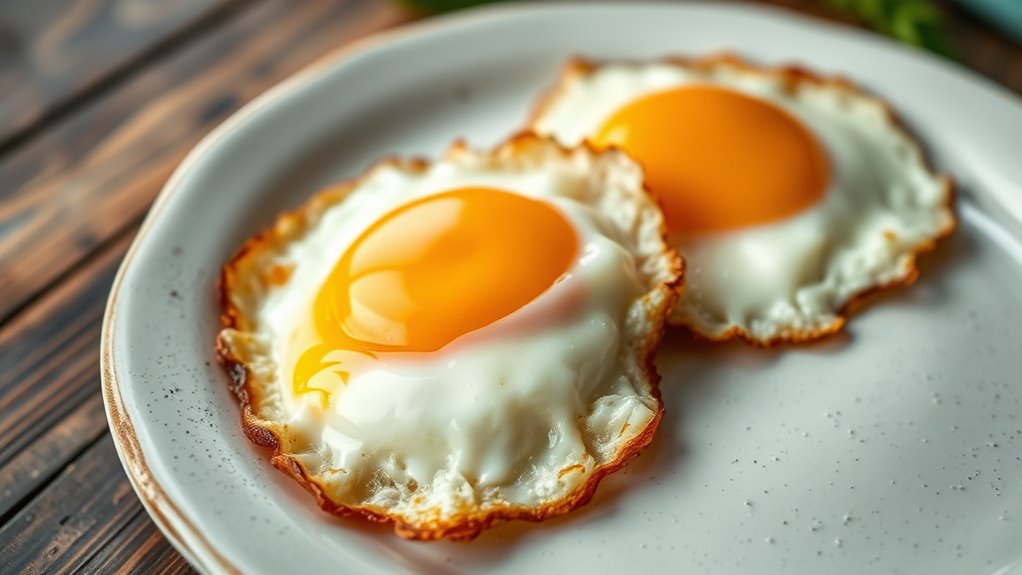
Two fried eggs typically contain around 180 calories, though the number can vary based on how they’re cooked and what ingredients you use. Frying with butter or oil adds more calories, while using a non-stick spray keeps it lower.
Egg size and extras like cheese also influence the total. If you want to find out how to enjoy fried eggs with fewer calories or compare them to other breakfast options, keep exploring further.
Key Takeaways
- Two large fried eggs usually have about 180 calories, but this can vary based on how you cook them and what fats you use.
- If you fry them in butter, the calories go up to around 90-100 per egg, so for two, you’re looking at roughly 180-200 calories.
- On the other hand, using cooking spray or dry-frying keeps the calorie count lower, around 70-80 per egg, which totals about 140-160 calories for two.
- Keep in mind, egg size matters too. Larger eggs have more calories than smaller ones.
- And if you add cheese or bacon, that will boost the calorie count even more.
How Many Calories Are in Two Fried Eggs?
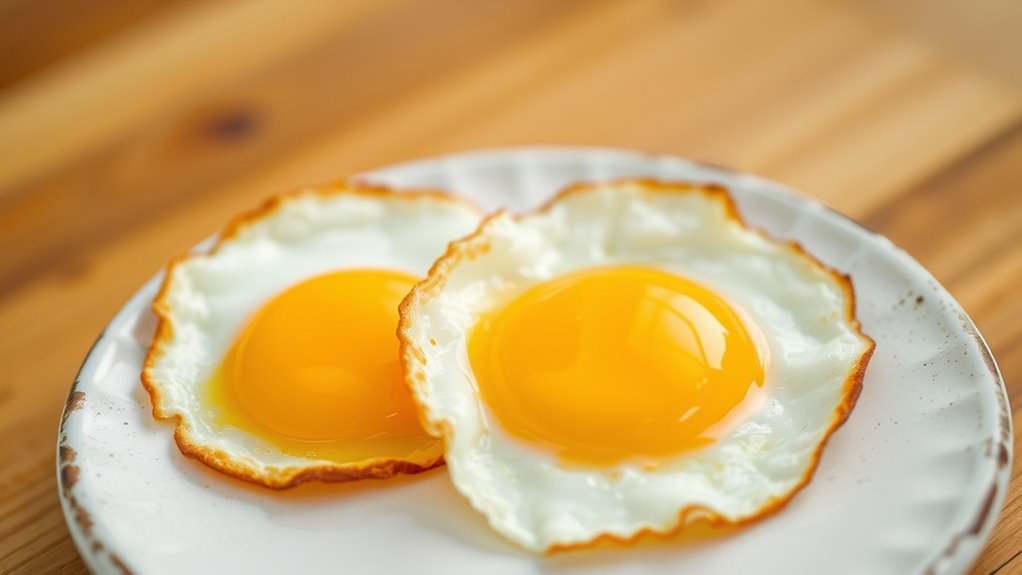
Wondering how many calories you’ll consume with two fried eggs? On average, a single large fried egg has about 90 calories. So, when you fry two, you’re looking at roughly 180 calories.
Two fried eggs average around 180 calories, depending on oil and egg size.
This count assumes you’re using minimal oil or butter. Adding more fat will increase the calorie count. The size of the eggs also matters; larger eggs contain more calories.
If you cook with butter or oil, expect the calories to go up further. Keep in mind, different cooking methods and added ingredients can influence the total calorie content.
But in their basic form, two fried eggs come to around 180 calories. They make a moderate, protein-rich option for your meal.
What Factors Influence the Calorie Content of Fried Eggs?
Several factors can greatly influence the calorie content of fried eggs, so it’s important to think about how you prepare them. The type and amount of fat you use for frying really make a difference. Butter adds more calories than just a light spray of cooking spray.
The size of the eggs also matters—larger eggs naturally contain more calories than smaller ones. Plus, the cooking temperature and time can affect how much moisture and fat the eggs absorb, which can subtly change their calorie count.
If you add extras like cheese, bacon, or more butter, you’ll increase the total calories. Even the type of pan you use can make a difference—non-stick surfaces often require less oil. Being aware of these factors can help you estimate and control the calories in your fried eggs better.
How to Estimate Calories in Fried Eggs Based on Cooking Method and Additions
To estimate the calories in fried eggs accurately, consider both your cooking method and any added ingredients. The way you cook and what you add can significantly change the calorie count.
Frying with butter, for example, adds more calories than using a non-stick spray. Here’s a quick guide to help you out:
| Cooking Method | Typical Additions | Estimated Calories (per egg) |
|---|---|---|
| Fried in butter | Butter, cheese, oil | 90-100 calories |
| Fried with spray | Minimal oil or spray | 70-80 calories |
| Fried in oil | Vegetable or olive oil | 85-95 calories |
| Dry-fried | No additions | 70 calories |
Remember to adjust based on portion sizes and ingredients for a more accurate count.
Healthy Ways to Cook and Serve Fried Eggs With Fewer Calories
Cooking and serving fried eggs in healthier ways can significantly cut down their calorie content without losing flavor. Instead of using butter or lots of oil, try a non-stick skillet with a light spray of cooking spray or just a small drizzle of olive oil.
Cook your eggs over medium or low heat to prevent them from soaking up too much fat. You can also use egg whites or a mix of whole eggs and whites to reduce calories while still getting plenty of protein.
Serve your eggs on whole-grain toast or with fresh veggies for extra fiber and nutrients. Season with herbs, spices, or a splash of hot sauce instead of high-calorie toppings like cheese or creamy sauces.
These simple swaps let you enjoy fried eggs with fewer calories while keeping them tasty and satisfying.
How Fried Eggs Compare to Other Breakfast Options in Calories
When comparing fried eggs to other breakfast options, their calorie content often surprises people. A typical two-egg fried breakfast has about 180 calories, but this can vary depending on how it’s cooked and what’s added.
For example, a serving of oatmeal with fruit has around 150 calories, making it slightly lower. A slice of whole-grain toast with butter adds roughly 120 calories, while a breakfast sausage link can add over 200 calories.
Fried eggs are more calorie-dense than some cereals or fruits. Adding butter or oil increases the calorie count quite a bit. Comparing portion sizes is key to understanding the differences in calories.
Knowing how fried eggs compare helps you make smarter breakfast choices to balance calories and nutrition.
Tips for Managing Your Calorie Intake When Eating Fried Eggs
To keep your fried eggs healthier, start by choosing cooking oils like olive or avocado that add fewer calories and healthy fats. Keep your portions in check and avoid piling on extra ingredients like cheese or butter, which can quickly boost calorie counts.
Small adjustments like these make it easier to enjoy your eggs without overdoing it.
Use Healthy Cooking Oils
Choosing the right oil can greatly reduce the calorie content of your fried eggs. Opt for healthier oils like olive oil, avocado oil, or low-calorie cooking sprays.
These options contain healthier fats and usually require less oil to cook your eggs, which helps cut down on calories. Using too much butter or oil adds unnecessary calories without much flavor benefit.
When cooking, use a non-stick pan and a small amount of oil to keep calories in check. Consider cooking spray for a light coating that prevents sticking without adding excess fat.
Control Portion Sizes
Managing portion sizes is a simple way to keep your calorie intake in check while still enjoying fried eggs. By controlling how much you eat, you can avoid consuming too many calories without losing flavor.
Start with a standard serving—about one fried egg—and adjust based on your dietary needs. To help you visualize, here’s a quick guide:
| Portion Size | Calories |
|---|---|
| 1 fried egg | ~90 kcal |
| 2 fried eggs | ~180 kcal |
| 1/2 cup cooked eggs | ~70 kcal |
| 1 large fried egg | ~90 kcal |
| 3 fried eggs | ~270 kcal |
Stick to smaller portions and pair your eggs with vegetables or whole grains. This way, you can control calories while still enjoying your meal.
Limit Additive Ingredients
Limiting additive ingredients like butter, cheese, or creamy sauces can really cut down the calorie count of your fried eggs. These extras often add empty calories without much nutritional benefit.
Instead, try cooking your eggs with minimal or no fat, like using a non-stick pan or spray. You can boost flavor with herbs and spices instead of high-calorie toppings.
Use olive oil spray instead of butter, and skip cheese or opt for low-fat versions. Also, avoid creamy sauces or heavy gravies to keep things lighter.
Frequently Asked Questions
Do Organic Eggs Have Fewer Calories Than Conventional Eggs?
Organic eggs don’t have substantially fewer calories than conventional eggs. The calorie content mainly depends on the size of the egg, not whether it’s organic or conventional. Usually, a large egg has about 70 calories, regardless of its label.
Organic eggs might have slight differences in nutrient levels, but these don’t significantly impact the calorie count. You can choose organic eggs for other benefits without worrying about calories.
How Does the Size of the Egg Affect Calorie Content?
A larger egg contains more calories than a smaller one. For example, a jumbo egg has about 90 calories, while a small egg has around 55.
When you cook eggs, size directly impacts the calorie count. So, if you’re watching your intake, choosing smaller eggs can help.
Knowing egg sizes helps you better estimate your meal’s calorie content and manage your daily nutrition goals effectively.
Are There Differences in Calories Between Farm-Fresh and Store-Bought Eggs?
Yes, there can be differences in calories between farm-fresh and store-bought eggs. Farm-fresh eggs often have slightly more nutrients and sometimes marginally higher fat content, which can increase the calorie count.
However, the overall calorie difference is usually minimal—around 10 to 20 calories per egg. Factors like hen diet and breed influence this variation.
Keep in mind, cooking methods also impact the final calorie content of your fried eggs.
Can Egg Yolk Versus Egg White Impact Calorie Count?
Yes, egg yolks and egg whites impact calorie counts differently. Egg yolks contain about 55 calories each, mostly from fat and protein, while egg whites have only around 17 calories, mainly from protein.
If you’re watching calories, choosing egg whites over yolks can help reduce your intake. Keep in mind, yolks also provide essential nutrients, so it’s good to balance your choices based on your dietary goals.
Do Different Cooking Oils Alter the Calorie Total of Fried Eggs?
Yes, different cooking oils alter the calorie total of fried eggs. Each oil adds its own calories—olive oil, for example, adds around 120 calories per tablespoon, while cooking spray adds almost none.
As you fry your eggs, imagine the oil seeping in, the calories rising, the flavor intensifying. Choose your oil wisely, balancing taste and calorie content, to customize your meal without unnoticed calorie increases.
Conclusion
Next time you crack two eggs into a sizzling pan, picture the golden yolks shimmering like tiny suns. Their warmth promises a satisfying start to your day.
By choosing healthier oils and mindful portions, you can enjoy this comforting breakfast without overdoing it. Keep in mind, two fried eggs contain about 140 calories, giving you a good boost of protein and energy.
Remember, each bite fills you with fuel and flavor, turning a simple meal into a nourishing moment. Savor every forkful, knowing you’re balancing taste and calories with each sunny-side-up bite.