How Long to Smoke Corned Beef at 280°F – A Step-by-Step Guide
Many people love the rich, savory flavor of smoked corned beef but often struggle with getting it just right.
Timing, temperature, and technique can feel overwhelming, especially if you’re aiming for that perfect tender bite.
To smoke corned beef at 280°F, plan for about 2.5 to 3 hours, adjusting based on the thickness of your cut.
Keep an eye on the internal temperature, aiming for 190°F for tenderness.
Check it regularly to prevent overcooking or undercooking.
Rest the meat for 15-20 minutes before slicing against the grain for the best results.
Want to master every step? Continue exploring for all the tips and tricks.
Key Takeaways
– Smoke corned beef at 280°F for about 2.5 to 3 hours.
Check the internal temperature regularly. Aim for between 190°F and 200°F for that perfect tenderness.
Remember, the smoking time can vary depending on the size and thickness of your cut.
Once it’s done, let the meat rest for 15-20 minutes before slicing. That way, it stays juicy and flavorful.
Make sure to use a reliable thermometer to keep an eye on the internal temperature throughout the smoking process.
Why Smoke Corned Beef at 280°F for Perfect Results
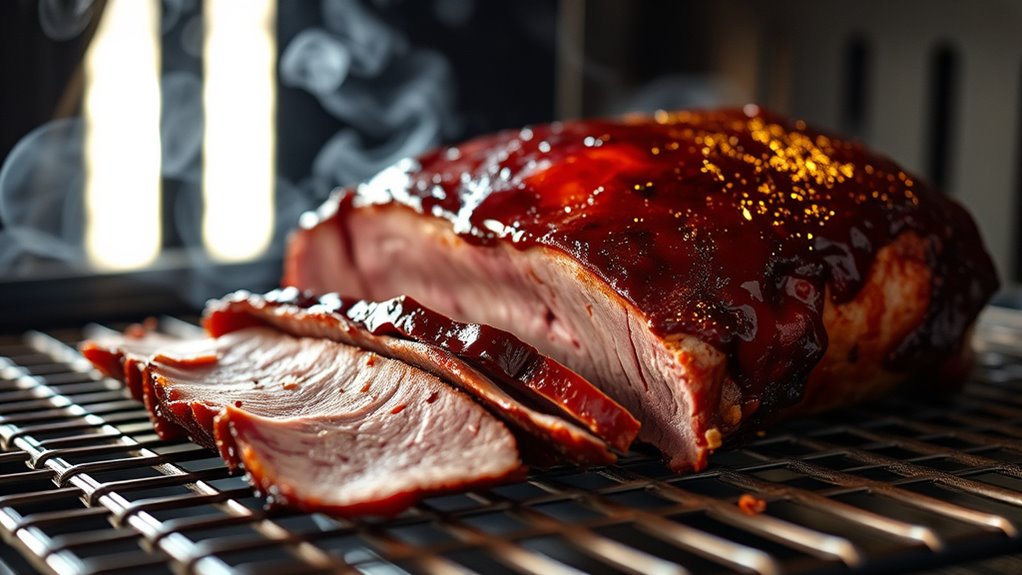
Smoking corned beef at 280°F hits the sweet spot between tenderness and flavor. At this temp, the meat cooks steadily, letting the smoke soak in without drying out.
You’ll see the connective tissues break down slowly, giving you a tender, juicy bite. Plus, this temperature helps develop a rich, smoky flavor that enhances the beef’s natural taste.
Cooking at 280°F also prevents the meat from becoming tough or greasy, which can happen at higher temps. It keeps things even, so every bite is consistent and satisfying.
How to Prepare Corned Beef Before Smoking
Before smoking, rinse and soak the corned beef to get rid of some of the excess salt.
Trim away any large pieces of fat to help prevent flare-ups and boost the flavor.
Then, add your favorite spices or seasonings for extra taste before placing it in the smoker.
Rinse and Soak Brisket
To prepare your corned beef for smoking, start by rinsing the brisket thoroughly under cold water to remove excess salt and curing spices. This helps prevent the meat from becoming overly salty during smoking.
After rinsing, place the brisket in a large bowl or sink filled with cold water, and soak it for at least 1 to 2 hours. Soaking helps draw out extra salt and improves the flavor.
Change the water once or twice while soaking to ensure maximum salt removal. If you have more time, extending the soak to several hours or overnight can make the meat more tender and less salty.
Once rinsed and soaked, you’re ready to continue with your smoking preparations.
Trim Excess Fat
Start by examining your corned beef for excess fat and silverskin, which can affect the final texture and flavor. Use a sharp knife to carefully trim away any large chunks of fat, especially on the surface.
Removing excess fat helps the smoke penetrate better and prevents greasy bites. Be cautious not to cut too deeply into the meat; you want to trim only the fat and silverskin, not the meat itself.
Silverskin is the thin, shiny membrane that can become tough when cooked, so removing it boosts tenderness. Keep a steady hand and work slowly to guarantee a clean, even trim.
Properly preparing your corned beef by trimming excess fat improves both the flavor and texture after smoking.
Apply Flavor Enhancements
Improving the flavor of your corned beef before smoking really makes a difference in how it tastes. You can boost its flavor with a few simple techniques.
Start by rinsing the meat to remove excess brine, then pat it dry. Next, rub it with a spice mix or marinade to add layers of flavor. You might also consider injecting it with a flavorful brine or glaze.
Letting the meat sit with these enhancements for a few hours or overnight helps the flavors penetrate deeply. Try using a spice rub with garlic, pepper, and mustard seeds for extra kick.
Marinating in a mixture of beer, herbs, and spices is another great option. Injecting the meat with a seasoned brine adds moisture and flavor from the inside out.
Before smoking, applying a honey or mustard glaze can give it a nice finish. After adding the flavors, let the meat rest to allow everything to settle and deepen.
How Long to Smoke Corned Beef at 280°F for Tenderness
To get tender smoked corned beef at 280°F, you need to find the right smoking time. Keeping a steady temperature and checking the internal temp helps ensure it gets to that perfect tenderness.
Monitoring the temperature is key. It’s all about maintaining consistency so your meat reaches that melt-in-your-mouth texture you’re after.
Following proper temperature tips makes all the difference in getting that delicious, tender result.
Optimal Smoking Duration
The ideal smoking duration for corned beef at 280°F depends on its size and thickness, but generally, you should plan for about 2.5 to 3 hours for tender, flavorful results. To get the best outcome, focus on these key points:
Check the internal temperature regularly to reach 190°F for maximum tenderness. Use a meat thermometer for accuracy.
Adjust the smoking time if the cut is larger or smaller. Let the beef rest for at least 15 minutes after smoking.
Maintain a consistent temperature throughout the process.
Ensuring Proper Tenderness
Achieving tender corned beef at 280°F depends on closely monitoring the internal temperature. You want to find that perfect point where the meat breaks down without drying out. Usually, this happens around 190-200°F inside.
Use a reliable meat thermometer to check regularly. To help you gauge progress, here’s a quick reference:
| Internal Temp | Texture |
|---|---|
| 180°F | Slightly firm |
| 190°F | Tender but firm |
| 200°F | Perfectly tender |
| 205°F | Very tender, falls apart |
| 210°F | Overcooked, dry |
Focus on reaching 190-200°F. Once you hit that range, your corned beef will be juicy, tender, and ready to enjoy.
Temperature Maintenance Tips
Maintaining a consistent temperature during smoking is key to getting tender, juicy corned beef. Regularly check your smoker’s temperature with a reliable thermometer to stay on track.
Adjust the vents and airflow to keep the temperature steady at 280°F. Avoid opening the lid too often, as quick temperature drops can extend cooking time and impact tenderness.
Use a water pan inside the smoker to help regulate heat and keep the meat moist. Consider investing in a smoker with digital controls for more precise temperature management.
Make sure to preheat your smoker thoroughly before placing the meat inside. By following these simple tips, your corned beef will stay tender, flavorful, and perfectly cooked every time.
Keep a close eye on the thermometer, and adjust vents for steady airflow. Limiting how often you open the smoker lid also helps maintain consistent heat.
Monitoring and Maintaining the Right Temperature During Smoking
Since maintaining a steady temperature is key for perfectly smoked corned beef, make sure to regularly check your smoker’s internal temperature with a reliable thermometer.
Check it often, ideally every 30 minutes, to catch any fluctuations early. Adjust the vents or fire as needed to keep the temperature steady at 280°F.
If it starts to climb or drop, make small tweaks to maintain consistent heat. Using a dual-probe thermometer helps you monitor both the smoker’s ambient temperature and the meat’s internal temperature.
Consistent monitoring prevents overcooking or undercooking, ensuring your corned beef turns out tender and flavorful. Remember, patience and precision are essential for the perfect smoked corned beef texture and taste.
Signs of Overcooked or Undercooked Corned Beef
When corned beef is overcooked, it becomes tough, dry, and stringy. This makes it hard to slice neatly and enjoy. You’ll notice it’s overly tough, with a chewy texture that’s difficult to bite through.
On the other hand, undercooked corned beef stays soft and may feel gelatinous or mushy. It lacks the firm, tender feel you’re aiming for. Signs of doneness include a fork easily sliding into the meat and an internal temperature around 195-205°F.
Signs of overcooked meat:
- Tough, dry, and stringy texture
- Difficult to cut or carve neatly
Signs of undercooked meat:
- Excessively soft or mushy feel
- Meat that’s gelatinous or slimy
Ideally, the meat should be easily pierced with a fork and have a tender, firm consistency.
Resting and Serving Smoked Corned Beef for Maximum Flavor
After removing the smoked corned beef from the heat, it’s important to let it rest for at least 15 to 20 minutes. Resting helps the juices spread throughout the meat, keeping each slice moist and full of flavor.
Allow smoked corned beef to rest 15-20 minutes for maximum moisture and flavor distribution.
Keep the meat covered loosely with foil during this time. Don’t wrap it tightly, because steam can make the crust soggy. When ready to serve, slice against the grain to get the most tender bites.
For the best flavor, serve with classic sides like mustard, pickles, or sauerkraut. Resting not only retains moisture but also enhances the overall taste and texture.
Take this time to prepare your plates and enjoy the wonderful aroma. Proper resting is key to savoring your smoked corned beef at its juiciest and most flavorful.
Frequently Asked Questions
Can I Smoke Corned Beef at Temperatures Other Than 280°F?
Yes, you can smoke corned beef at temperatures other than 280°F. Lower temperatures like 225°F will take longer but will give you tender, flavorful meat.
Higher temperatures can speed up the process, but just keep in mind that cooking time varies with temperature. Watch the internal temperature and tenderness as you go.
Adjust your smoking time accordingly to make sure you get the softness and flavor you want without overcooking.
What Type of Wood Is Best for Smoking Corned Beef?
You’ll want to use fruit woods like apple or cherry for smoking corned beef because they add a mild, sweet flavor that pairs well with the meat’s saltiness.
Hickory or oak also work nicely if you prefer a bolder smoky taste. Just avoid overly strong woods like mesquite, which can overpower the delicate flavors.
Stick with these options to get a balanced, flavorful smoke that really enhances your corned beef.
Should I Wrap Corned Beef During Smoking?
You should wrap corned beef during smoking if you want to keep it moist and avoid drying out. Wrapping in foil or butcher paper helps trap the juices, making the meat tender and flavorful.
But if you’re after a nice bark or crust, you can smoke it without wrapping the whole time. It’s all about your preference for texture and moisture level.
How Do I Know When Smoked Corned Beef Is Fully Cooked?
You’ll know your smoked corned beef is fully cooked when it’s so tender, it practically melts in your mouth like a snowman in July.
Check for an internal temperature of 195-205°F. If you’re still biting into a brick, it’s not done yet.
Use a meat thermometer, and when the fork slides in effortlessly, you’ve hit the jackpot.
Rest it, then dig in before it becomes breakfast for the neighborhood raccoons.
Can I Freeze Leftover Smoked Corned Beef?
Yes, you can freeze leftover smoked corned beef. First, let it cool completely, then slice or shred it into portions.
Wrap the portions tightly in plastic wrap or aluminum foil, or put them in airtight containers or freezer bags. Label them with the date so you know how long they’ve been frozen.
Store in the freezer for up to 3-4 months. When you’re ready to enjoy it, just thaw it in the fridge overnight.
Conclusion
So, next time you smoke corned beef at 280°F, remember to follow these steps for perfect results.
For example, Sarah smoked her brisket at this temperature and achieved tender, flavorful meat in about 2.5 hours.
With patience, monitoring the temperature, and letting it rest, you’ll impress everyone with juicy, melt-in-your-mouth corned beef.
Trust the process and enjoy the delicious rewards of your smoky masterpiece!