How You Can Freeze Mac and Cheese in an Aluminum Pan
Many people love making a big batch of mac and cheese to enjoy later, but figuring out how to freeze it properly can be tricky. You’re not alone in feeling unsure about how to keep that creamy texture or avoid freezer burn.
Luckily, with a few simple tips, you can freeze mac and cheese in an aluminum pan without sacrificing flavor or quality.
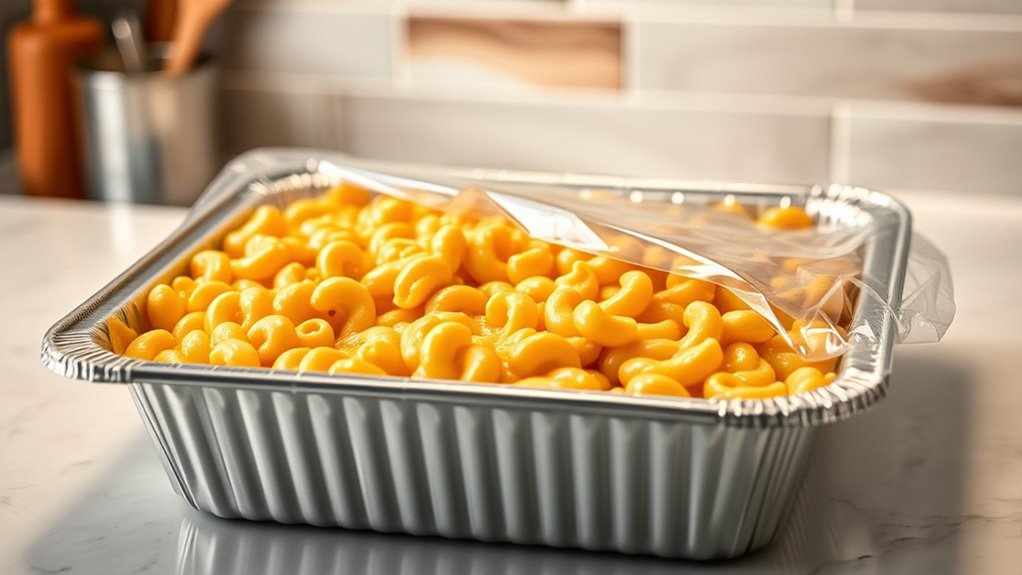
To freeze mac and cheese in an aluminum pan, let it cool completely to avoid ice crystals. Transfer it to a heavy-gauge aluminum pan lined with plastic wrap and avoid toppings or breadcrumbs.
Stir in some milk or cream to keep it creamy. Wrap tightly and label with the date. For best results, store it properly, and you’ll uncover tips on reheating and preserving its flavor if you continue exploring.
Key Takeaways
- Allow the mac and cheese to cool completely before transferring it to the aluminum pan.
- Use a heavy-gauge aluminum pan to prevent warping and to make sure it freezes evenly.
- Cover the dish tightly with plastic wrap or aluminum foil to prevent freezer burn.
- Label the pan with the date and contents so you can easily track what’s inside and how fresh it is.
- Freeze the pan uncovered at first. Once it’s fully cooled, cover it for better preservation.
How to Prepare Mac and Cheese for Freezing
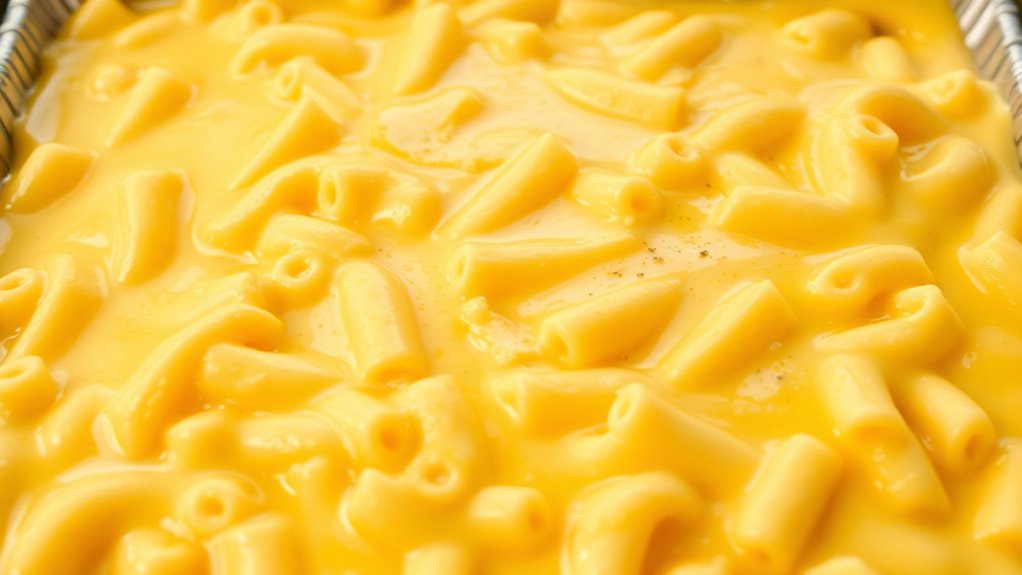
Before freezing your mac and cheese, it’s important to prepare it properly. First, let it cool completely to prevent condensation and ice crystals.
Allow your mac and cheese to cool completely to preserve texture and prevent ice crystals during freezing.
If you’re freezing leftovers, transfer the mac and cheese to a clean, airtight container or an aluminum pan lined with plastic wrap for an extra barrier. For best results, avoid adding toppings like bread crumbs or cheese before freezing, as they can become soggy.
Instead, consider adding those toppings after reheating. Stirring in a bit of milk or cream can help maintain creaminess during freezing and reheating.
Make sure the mac and cheese is evenly distributed in the pan to prevent uneven freezing. Proper preparation guarantees your dish stays delicious and maintains its texture when you’re ready to enjoy it later.
Choosing the Right Aluminum Pan for Freezing Mac and Cheese
Choosing the right aluminum pan can make a big difference in how well your mac and cheese freezes and reheats. You want a pan that’s sturdy but still allows heat to transfer evenly.
Opt for a heavy-gauge aluminum pan. It resists warping and keeps its shape during freezing. Match the pan size to your portion needs to avoid excess air exposure, which can cause freezer burn.
Think about whether you’ll need a lid. A tight-fitting lid helps prevent moisture loss. The table below compares key features to help you choose the best pan for your needs:
| Feature | Why It Matters |
|---|---|
| Thickness | Prevents warping and guarantees even heat |
| Size | Fits your portion and minimizes air exposure |
| Lid Compatibility | Keeps moisture in and prevents freezer burn |
| Material Quality | Ensures durability and good heat transfer |
| Shape | Makes stacking and storage easier |
How to Cool and Divide Mac and Cheese Before Freezing
To make sure your mac and cheese freezes well and keeps its flavor and texture, it’s key to cool it properly and divide it into portions.
Let it sit at room temperature for about 20-30 minutes first. This helps prevent rapid cooling that can mess with the texture.
Next, transfer it to a large, shallow dish or spread it out on a baking sheet to cool faster. If you’re in a hurry, you can also use an ice bath to speed things up.
Once cooled, divide it into individual or family-sized portions using a spatula or a scooping spoon. It’s easier to store and reheat later.
Use airtight containers or freezer bags for storage, and leave a small space at the top of each container so the contents can expand during freezing.
Following these steps will help preserve the flavor and texture of your mac and cheese before popping it in the freezer.
Wrap and Label Your Frozen Mac and Cheese
Wrapping and labeling your frozen mac and cheese properly helps keep it fresh and easy to identify later. Use plastic wrap or aluminum foil to tightly cover the dish, making sure no air gets in. This prevents freezer burn and helps maintain quality.
After wrapping, place the dish inside a resealable freezer bag or an airtight container for extra protection. Write the date and contents clearly on the bag or container with a permanent marker.
Labeling helps you keep track of how long the mac and cheese has been in the freezer, so you can enjoy it at its best. Proper wrapping and labeling make reheating simpler and prevent confusion.
Doing this saves you time and ensures your dish stays delicious until you’re ready to enjoy it.
Best Practices for Freezing Mac and Cheese in Aluminum Pans
Using aluminum pans is a convenient way to freeze mac and cheese directly after preparing or serving. To keep it fresh and tasty later, follow some best practices. First, let the dish cool completely before freezing to avoid condensation and ice crystals.
Use aluminum pans to freeze mac and cheese after cooling for best freshness and easy reheating.
Cover the pan tightly with plastic wrap or aluminum foil, or use a freezer-safe lid. Label it with the date so you can keep track of how long it’s been in the freezer. For easy portioning, consider dividing the mac and cheese into smaller sections before freezing.
Use a thick, durable aluminum pan to prevent bending. Don’t overfill the pan; leave some space for expansion. Wrap it tightly to avoid freezer burn and odor absorption.
Following these tips will help maintain the quality and make reheating much easier.
How Long Can You Keep Mac and Cheese in the Freezer?
You can typically keep mac and cheese in the freezer for up to 2 to 3 months while still keeping its best quality.
After that, the texture and flavor might start to decline, and it could become freezer-burned or dry.
To keep it fresh, store it in an airtight container or wrap it tightly with aluminum foil.
Proper sealing helps prevent air exposure, which can cause freezer burn and affect the taste.
While it’s safe to eat beyond this period, the quality might not be as good.
If you see signs of freezer burn, like discoloration or ice crystals, it’s best to toss it.
For the best results, try to eat your frozen mac and cheese within the recommended time frame.
Tips for Reheating Frozen Mac and Cheese Without Losing Creaminess
Reheating frozen mac and cheese so it stays creamy can be a bit tricky, but with the right techniques, you can enjoy its original texture and flavor. The key is gentle reheating to prevent it from drying out or becoming grainy. Use low heat on the stove, or opt for the microwave in short, stirring intervals to distribute heat evenly.
Cover the dish with a lid or microwave-safe wrap to keep it moist. Consider adding a splash of milk or cream before reheating to help restore its creaminess. Stir frequently to prevent sticking and to ensure even heating.
Adding a bit of liquid can refresh the texture and make it taste just as good as when it was freshly made. Reheat slowly to avoid overheating or curdling, and you’ll end up with a delicious, creamy dish every time.
Common Mistakes to Avoid When Freezing Mac and Cheese
One common mistake to avoid when freezing mac and cheese is not letting it cool completely before storing. Hot or warm pasta creates condensation, which can make it soggy and lead to freezer burn. To keep it tasting fresh, let it reach room temperature first.
Allow mac and cheese to cool completely before freezing to prevent sogginess and freezer burn.
Another mistake is overfilling your container. Filling it too full can cause spills and uneven freezing, which might affect the texture. Make sure to leave some space for expansion.
Using the wrong container, like non-freezer-safe plastic, can also harm your mac and cheese. It might lead to spoilage or flavor loss over time.
Finally, forgetting to label your containers can cause confusion later and might lead to wasted food. Always mark the date so you know how long it’s been in the freezer.
Avoiding these errors will help keep your mac and cheese delicious and ready to enjoy whenever you like.
How to Thaw and Serve Your Frozen Mac and Cheese for Maximum Flavor
To enjoy your frozen mac and cheese at its best, you’ll want to use proper thawing techniques first. Reheating carefully can restore its creamy texture and flavor, making it taste just as fresh.
Finally, try some simple serving tricks to enhance your meal and maximize its deliciousness.
Proper Thawing Techniques
When it’s time to enjoy your frozen mac and cheese, proper thawing is key to keeping its creamy texture and rich flavor. Plan ahead by moving the dish from the freezer to the fridge at least 12 hours before eating.
This slow thaw helps it stay nice and creamy. Avoid quick-thaw methods, as they can cause uneven heating or make the texture watery.
Here are some tips to make sure it thaws perfectly: Keep it covered to prevent moisture loss. If you’re short on time, use a microwave on the defrost setting.
Gently stir during reheating to help heat distribute evenly and avoid hot spots.
Reheating for Best Flavor
For the best flavor, reheating your frozen mac and cheese gently and evenly is key. This helps keep its creamy texture and rich taste intact. Start by thawing it in the fridge overnight, then reheat slowly on the stovetop or in the oven.
Use a low heat setting to prevent burning or drying out the cheese. To keep it moist, stir in a splash of milk or cream halfway through reheating. This helps restore its creamy consistency.
Here’s a visual guide:
| Method | Temperature | Add-ins for Flavor |
|---|---|---|
| Stovetop | Low heat, stirring often | Milk, cream, or a dollop of butter |
| Oven | 350°F (175°C), covered | Extra cheese or herbs |
| Microwave | Medium power, stirring frequently | Milk or broth for moisture |
Serving Tips and Tricks
Wondering how to serve your frozen mac and cheese at its best? The key is proper thawing and reheating to preserve flavor and texture. First, transfer the frozen dish to the fridge overnight for a gentle, even thaw.
If you’re in a hurry, use the microwave’s defrost setting, but watch closely to prevent uneven heating. Once thawed, reheat in the oven at 350°F until bubbling and heated through, about 20-30 minutes.
To keep it creamy, consider stirring in a splash of milk before reheating.
Here are some tips to improve your meal:
- Garnish with fresh herbs or a sprinkle of cheese for extra flavor.
- Serve with a side salad or garlic bread for a complete meal.
- Use a heat-safe dish to avoid messes and guarantee even heating.
Frequently Asked Questions
Can I Freeze Baked and Stovetop Mac and Cheese Together?
Yes, you can freeze baked and stovetop mac and cheese together. Just make sure both are cooled completely before combining or transferring to a freezer-safe container. Use airtight wrapping or containers to prevent freezer burn. Label and date them clearly.
When you’re ready to enjoy, thaw in the fridge overnight and reheat thoroughly. Combining them saves space, but keep in mind that baked mac tends to freeze better with its crispy topping.
Is It Safe to Freeze Mac and Cheese With Added Toppings?
Yes, it’s safe to freeze mac and cheese with added toppings, but watch out for the toppings you choose. If they’re dairy-based, like sour cream or cream cheese, they might change texture after freezing.
Vegetables and meats usually freeze well, so they’re good options. To keep everything tasting fresh, store it in an airtight container or tightly wrapped aluminum foil.
When you’re ready to eat, make sure to reheat it thoroughly. That way, it’s safe to enjoy and tastes its best.
How Does Freezing Affect the Texture of Different Cheese Types?
Freezing can change the texture of different cheese types in mac and cheese. Soft cheeses like cream cheese or ricotta may become grainy or crumbly after thawing.
Harder cheeses like cheddar or Parmesan tend to hold up better, maintaining their flavor and texture. You might notice some separation or moisture loss, especially with softer cheeses.
To minimize these changes, consider adding cheese after reheating or using cheese types that are better suited for freezing.
Can I Refreeze Leftovers After Thawing Once?
You shouldn’t refreeze leftovers after they’ve been thawed once, especially with mac and cheese. When you thaw it, bacteria can develop, and refreezing can make the texture worse, turning it mushy or watery.
If you must, only refreeze leftovers if they’ve been kept in the fridge for less than two days and are still at safe temperatures. Always reheat thoroughly before eating.
How Do Preservatives Impact Freezing Quality?
Preservatives are like your trusty sidekick, helping maintain freshness during freezing, but they don’t work miracles. They slow down spoilage and bacterial growth, making sure your mac and cheese stays tasty longer.
But they don’t prevent texture changes or freezer burn. So, while preservatives can improve quality, you still need to store your leftovers properly.
And don’t forget to consume them within recommended timeframes to keep that creamy goodness intact. Proper storage is key to enjoying your frozen favorites at their best.
Conclusion
Freezing your mac and cheese in an aluminum pan is a quick and easy way to keep that homemade comfort meal on hand.
Just follow simple steps like a seasoned chef from the days of old, avoiding common pitfalls along the way.
With proper prep, wrapping, and reheating, you’ll lock in that creamy, cheesy goodness for later.
Think of it as storing a treasure chest of flavors—ready to be uncovered and enjoyed anytime, even in this modern age of convenience.