How Did Hell’s Kitchen Get Its Name?
Many people are curious about the origins of the names we hear every day, like Hell’s Kitchen. It’s a name that sparks curiosity and a bit of intrigue. If you’ve ever wondered how this neighborhood got its fiery nickname, you’re not alone.
Hell’s Kitchen got its fiery name in the late 1800s or early 1900s, reflecting its tough, working-class roots marked by crime, industry, and immigrant resilience.
Back then, it was known for gang violence, crowded tenements, and chaotic neighborhoods filled with Irish, German, and Italian immigrants facing poverty.
The nickname likely came from police or journalists describing the neighborhood’s hardships.
Today, its history is richer than just old legends—if you keep exploring, you’ll uncover more about its true story.
Key Takeaways
- The name came about in the late 1800s or early 1900s, and it reflected how tough the neighborhood was seen among New Yorkers.
- It was probably coined by police or journalists trying to highlight the hardships and the crime problems in the area.
- The community’s residents were mostly immigrant workers dealing with poverty, crime, and overcrowded tenements.
- This rough reputation is what really gave Hell’s Kitchen its fierce image.
Popular stories tend to exaggerate how the name started, but at first, it simply described a tough, working-class neighborhood.
Today, the name has taken on a new meaning. It’s a symbol of resilience.
The neighborhood has transformed into a lively, gentrified area, far from its rough beginnings.
Where Did Hell’s Kitchen Get Its Name?
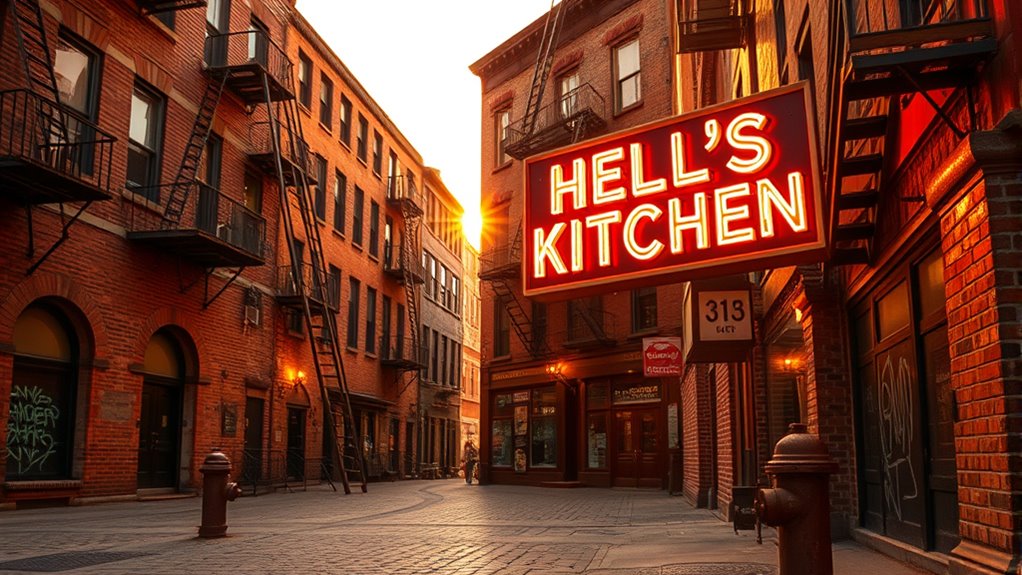
Have you ever wondered how Hell’s Kitchen, a neighborhood now known for its vibrant energy, got its ominous name? The origin isn’t entirely clear, but the story goes that in the early 20th century, the area earned a reputation for violence, crime, and rough living conditions.
Some say the name came from the tough, gritty atmosphere, reminiscent of a fiery, hellish place. Others believe it was a nickname given by journalists or residents to describe the dangerous environment.
During Prohibition, the neighborhood was notorious for speakeasies and illegal activities, adding to its dangerous reputation. Over time, the name stuck, and what was once feared has transformed into a lively, thriving part of Manhattan.
The Neighborhood’s Gritty Origins in the 19th Century
In the 19th century, Hell’s Kitchen earned its reputation as a tough, rough neighborhood through rapid industrial growth and an influx of working-class immigrants. Factories and docks provided jobs but also brought noise, dirt, and danger.
Tenement buildings quickly filled with Irish, German, and Italian immigrants looking for affordable housing. Crime rates soared as poverty and overcrowding created chaos.
Violence, gang activity, and political corruption thrived in this gritty environment. The neighborhood’s rough edges were evident in crowded streets, saloons, and makeshift housing.
It was a place where survival often depended on toughness. These harsh conditions laid the groundwork for Hell’s Kitchen’s tough reputation, long before it earned that nickname.
How Immigration and Poverty Shaped Hell’s Kitchen’s Reputation
You notice how the diverse immigrant communities brought their unique cultures, shaping the neighborhood’s lively character. Poverty, on the other hand, kept Hell’s Kitchen on the edge, influencing its rough reputation.
Together, these factors created a neighborhood known for both resilience and challenge.
Immigrants’ Cultural Influence
Immigration and poverty played key roles in shaping Hell’s Kitchen’s lively but rough reputation. As newcomers arrived, they brought their traditions, foods, and languages, adding to the neighborhood’s cultural mix.
Irish, Italian, and Jewish immigrants, in particular, shared their customs, festivals, and cuisines. Despite tough economic times, they helped create a diverse community that thrived.
This cultural blend influenced local businesses, from authentic diners to lively pubs, giving the neighborhood a unique identity. You can still see these traditions today in restaurants, street festivals, and community bonds.
The resilience of these immigrants and their efforts to keep their heritage alive helped shape Hell’s Kitchen’s character. It transformed from a rough area into a vibrant hub full of cultural richness and shared history.
Poverty’s Impact on Neighborhood
The influx of immigrants brought vibrant cultural traditions to Hell’s Kitchen, but it also contributed to economic struggles that shaped the neighborhood’s rough reputation. Poverty was widespread, with many residents working in low-paying jobs or struggling to find steady employment.
Overcrowding and substandard living conditions became common, fueling perceptions of chaos and disorder. Crime rates rose as desperate residents turned to illegal activities for survival, further cementing the area’s tough image.
Local businesses often struggled to survive amid economic hardship, and public services were strained. This cycle of poverty and instability reinforced negative stereotypes, making Hell’s Kitchen notorious for its rough environment.
The neighborhood’s reputation as a gritty, tough place persisted long after economic conditions improved.
Notable Incidents That Gave Hell’s Kitchen Its Fiery Legend
One of the most infamous incidents that cemented Hell’s Kitchen’s fiery reputation happened in 1880, when a massive tenement fire swept through the neighborhood. It destroyed dozens of buildings and caused multiple casualties. This blaze symbolized the neighborhood’s dangerous, volatile atmosphere.
Over the years, other incidents added to its fiery legend, like gang conflicts and violent riots. These events painted a picture of chaos and danger, reinforcing the neighborhood’s fierce reputation.
| Incident | Year | Impact |
|---|---|---|
| Tenement Fire | 1880 | Massive destruction, casualties |
| Gang Violence Clashes | 1910s | Turf wars, violence |
| Riot During Prohibition | 1920s | Public disorder |
| Police Raids on Clubs | 1940s | Cracks down on crime |
| Fires During Urban Decay | 1960s | Further destruction, fear |
Myths and Realities Behind the Name’s History
Many believe the name comes from fiery incidents or tough reputations, but the true origins are more complex.
Local legends add color, yet some stories are exaggerated or mistaken for facts. Understanding the real history helps separate myth from reality, giving you a clearer picture of Hell’s Kitchen’s past.
Origins of the Name
Rumors and legends have long circulated about how Hell’s Kitchen got its notorious name, but the real story is more complicated than the popular myths suggest. The name probably started in the late 1800s or early 1900s, reflecting the neighborhood’s tough reputation among New Yorkers.
It was a rough area, full of immigrant workers, tenement housing, and crime, which gave it a reputation as a dangerous place. Some folks think the name came from local boxing matches where fighters trained in hellish conditions, or from the fiery atmosphere of the neighborhood’s industries.
Others believe it was a nickname given by police or journalists to highlight the area’s hardships. Despite all these theories, the true origins are rooted in its working-class, gritty history.
Local Legends and Tales
Over the years, many stories have grown around how Hell’s Kitchen got its infamous name, blending fact and fiction. One popular tale says that gangs and violent disputes in the early 20th century made the neighborhood feel fiery and dangerous, which is how it got the name.
Others believe that the neighborhood’s rough reputation and tough residents gave it a hellish image. Some stories mention heated arguments in local pubs or the fiery tempers of residents as the reason for the nickname.
These legends are often exaggerated, but they reflect how people saw the area—rough, gritty, and full of character. They help shape the neighborhood’s fierce, rebellious identity.
Historical Misconceptions
Despite popular stories, the true origins of Hell’s Kitchen’s name are more complicated than fiery gangs or heated tempers. Many myths have clouded its history, but facts reveal a different story.
For example, the name likely came from a 19th-century term describing tough, working-class neighborhoods. It wasn’t because of actual fires or violence.
Some believe it was named after a notorious gang, but there’s little evidence to back that up. The term “Hell’s Kitchen” first appeared in newspapers around 1900 as a slang nickname.
Later on, residents and businesses adopted the name as a badge of resilience, not fear. Understanding these misconceptions helps you see how the name became a symbol of neighborhood grit rather than literal hellfire.
How Hell’s Kitchen Transitioned From Gritty to Trendy
As the 21st century unfolded, Hell’s Kitchen underwent a remarkable transformation from its gritty, rough-edged reputation into a trendy, sought-after neighborhood. You’ll notice new restaurants, boutique shops, and renovated apartments replacing the old warehouses and tenements.
This shift attracted artists, young professionals, and entrepreneurs, redefining the area’s identity. The neighborhood’s reputation evolved from danger to desirability, driven by urban renewal and a focus on community development.
| Gritty Past | Modern Appeal | Transformation Effect |
|---|---|---|
| Crime and rough reputation | Trendy, vibrant scene | Attracts new residents and businesses |
| Industrial warehouses | Chic cafes and galleries | Boosts local economy |
| Neglect and decline | Revitalization and growth | Changes perception and status |
How Local Residents and Businesses Shaped Its Identity
Local residents and businesses have played a key role in shaping Hell’s Kitchen’s identity. They contribute to its lively, ever-changing character through daily interactions and community efforts.
Over time, local entrepreneurs opened bars, restaurants, and theaters, creating a vibrant entertainment scene. Residents also fought to keep the neighborhood’s authenticity alive despite gentrification.
Local entrepreneurs and residents have worked together to preserve Hell’s Kitchen’s lively, authentic entertainment and cultural scene.
They’ve pushed for affordable housing and protected cultural landmarks. Their stories and activism foster a strong sense of community pride.
You’ll notice small businesses that reflect local culture and history. Neighborhood events bring residents together and showcase local talent through art installations.
Community-led efforts focus on maintaining affordable housing and protecting historic sites. The collective spirit of residents keeps Hell’s Kitchen unique and vibrant.
How the Neighborhood’s Name Reflects Its Cultural Spirit Today
Today, the name “Hell’s Kitchen” still echoes the neighborhood’s rich cultural heritage and bold artistic spirit. You’ll see this in the vibrant murals and diverse traditions that thrive here.
It’s a place where history and creativity constantly blend, shaping its unique identity.
Cultural Heritage Influence
Despite its dark origins, Hell’s Kitchen now embodies a vibrant cultural spirit that reflects its diverse history. Today, you’ll find a neighborhood rich in traditions, blending influences from Irish, Italian, and Hispanic communities.
This cultural heritage shapes the area’s identity, and you can see it in its authentic eateries, lively festivals, and local art. You might explore historic pubs honoring Irish roots or traditional Italian bakeries.
Hispanic murals celebrating the community, annual cultural festivals, and multilingual street signs and shops all showcase how the neighborhood’s past continues to influence its present.
These elements demonstrate the resilience and diversity of Hell’s Kitchen, fostering pride and unity. It’s a true cultural mosaic that honors its history while embracing modern vibrancy.
Modern Artistic Expression
The name “Hell’s Kitchen” has changed from its rough past into a symbol of the neighborhood’s lively artistic vibe. These days, you’ll see this energy everywhere—from colorful murals and street art to energetic galleries and performance spaces.
Artists are drawn here, inspired by its edgy history and diverse community, turning the area into a creative hub. Music venues and theaters thrive, showcasing local talent and breaking new ground.
You can walk through streets filled with innovative art, feeling the neighborhood’s rebellious, expressive spirit. Hell’s Kitchen embraces its bold reputation, making it a place where modern artists flourish and challenge cultural norms.
This fresh artistic energy keeps the neighborhood lively, vibrant, and true to its spirited roots.
Media and Pop Culture’s Role in Crafting Hell’s Kitchen’s Image
- TV shows portraying intense kitchen battles
- Films depicting the neighborhood’s rough history
- Media coverage emphasizing crime and hardship
- Celebrity chef appearances boosting notoriety
- Pop culture references cementing its reputation
The Power of Neighborhood Names in Shaping Identity
Media and pop culture have played a big role in shaping Hell’s Kitchen’s reputation. But the neighborhood’s name itself also holds strong influence over how it’s perceived.
A name carries connotations that shape your perceptions and expectations before you even visit. “Hell’s Kitchen” suggests toughness, grit, and a rough history, which can make you think twice about the neighborhood’s character.
Such names often become part of the identity, shaping how residents and outsiders view the area. When a neighborhood’s name evokes vivid imagery or strong emotions, it leaves a lasting impression.
This can attract certain crowds or turn others away. Overall, the name acts as a branding tool, shaping the neighborhood’s reputation long before you experience it firsthand.
Does the Name Still Fit? Evolving Perceptions of Hell’s Kitchen
Although Hell’s Kitchen once earned its notorious reputation for toughness and roughness, today’s perceptions have shifted markedly. You might wonder if the name still fits the area’s current vibe. These days, it’s known for vibrant restaurants, arts, and a lively community. The gritty reputation has softened, but some still see echoes of its fiery past.
Gentrification is transforming the neighborhood’s character. New businesses are replacing old, rougher establishments. Streets are safer and cleaner than before. The area’s growing popularity among young professionals has changed its feel.
Cultural events highlight its diverse history and bring people together. While the name suggests chaos and danger, many now see Hell’s Kitchen as a dynamic, evolving neighborhood rather than a place of peril. The name endures, but perceptions have definitely developed.
Wrapping Up: The Lasting Impact of Hell’s Kitchen’s Fiery Heritage
The fiery heritage of Hell’s Kitchen continues to shape its identity, leaving a lasting mark on the neighborhood’s character and culture. The fiery past, with its gritty reputation and tough spirit, still influences how residents and visitors see the area today.
While Hell’s Kitchen has evolved into a lively, diverse community, its resilience and bold history are still obvious in its streets, restaurants, and cultural scene. This heritage instills pride among locals, who honor their roots even as the neighborhood modernizes.
You can see the influence in its art, music, and community events, all reflecting that enduring fiery spirit. Hell’s Kitchen’s history shows its ability to adapt and grow while staying true to its bold, resilient core.
Frequently Asked Questions
When Did the Name “Hell’s Kitchen” First Appear in Historical Records?
You’ll find that the name “Hell’s Kitchen” first appeared in historical records in the late 19th century, around the 1880s. Back then, the area was known for its tough, working-class residents and rough reputation.
The nickname likely originated from the area’s fiery, dangerous reputation among police and residents. Over time, it stuck, eventually becoming a well-known neighborhood in Manhattan, blending its gritty past with modern development.
Are There Any Other Neighborhoods With Similar Fiery Nicknames?
You might say “like father, like son,” because many neighborhoods earn fiery nicknames too. For example, Chicago’s “The Windy City” isn’t about weather but boastful personalities. Detroit’s “Motor City” highlights its automotive roots.
These nicknames reflect local history or character, just like Hell’s Kitchen. While fiery names aren’t universal, they capture a neighborhood’s spirit. That makes them memorable and unique.
How Do Residents Today Feel About the Historical Name?
You’ll find that many residents today have mixed feelings about the name. Some accept it as part of the neighborhood’s colorful history, feeling proud of its gritty past.
Others see it as outdated or stigmatizing and prefer a fresh image that reflects the community’s current vibrancy and diversity.
Did Any Famous Figures Contribute to Hell’s Kitchen’s Reputation?
Famous figures like boxing legend Jack Dempsey and theater impresario David Belasco contributed to Hell’s Kitchen’s reputation. Dempsey trained there, drawing attention to the area’s gritty charm, while Belasco’s theater ventures brought cultural interest.
These personalities helped shape the neighborhood’s tough yet vibrant image, making it known for resilience and entertainment. Their influence, along with its colorful history, cements Hell’s Kitchen’s place in New York’s cultural landscape.
How Has the Neighborhood’s Name Influenced Its Marketing and Branding?
The neighborhood’s name gives it a bold, edgy vibe that attracts a lively crowd and creative businesses. You’ll notice bars, restaurants, and theaters embracing the “Hell’s Kitchen” branding to stand out and evoke a sense of toughness and authenticity.
This branding helps you feel connected to the neighborhood’s history while making it a trendy, must-visit spot. The name’s reputation boosts its appeal and keeps its energetic reputation alive.
Conclusion
So, as you see, Hell’s Kitchen’s fiery fame isn’t just a fanciful phrase. Its gritty, grimy origins, fueled by fierce fights and fierce reputations, have left a lasting legacy.
Today, the neighborhood’s story has shifted, but that history still lingers. It continues to shape its style and spirit, giving Hell’s Kitchen its unique character.
Remember, names often carry more than just labels. They hold the legacy of a place’s past, present, and future. So, embrace the evolving energy of Hell’s Kitchen.