
10 Key Factors That Influence How Much a Kitchen Remodel Costs
Planning a kitchen remodel can feel overwhelming, especially when you’re trying to keep costs in check. Many people struggle with understanding what factors actually influence the final price. If you’re wondering how to get the most bang for your buck, you’re not alone.
Your kitchen’s size and layout greatly impact costs; larger or complex designs require more materials and labor.
Material choices from budget-friendly to luxurious influence your budget, especially appliances and finishes.
The scope of your project, whether a full overhaul or cosmetic updates, affects both time and expense.
Local regulations, permits, and timing also play roles.
Prioritizing upgrades and anticipating unforeseen costs help control expenses.
Keep exploring to uncover how planning smarter can save you money.
Key Takeaways
- Kitchen size and layout play a big role in how much you’ll spend. They impact the costs of materials, labor, and any structural changes needed.
- The choices you make for materials and appliances also directly affect your overall budget.
- How much of the renovation you plan to do—like just a few updates or a full gut job—will influence both the timeline and the costs involved.
- Where you live matters too. Regional differences in material availability, labor rates, and permit fees can make a big difference.
- Prioritizing what’s most important and setting aside contingency funds can help you handle unexpected costs that come up during the remodel.
How Does the Size and Layout of Your Kitchen Affect Costs?
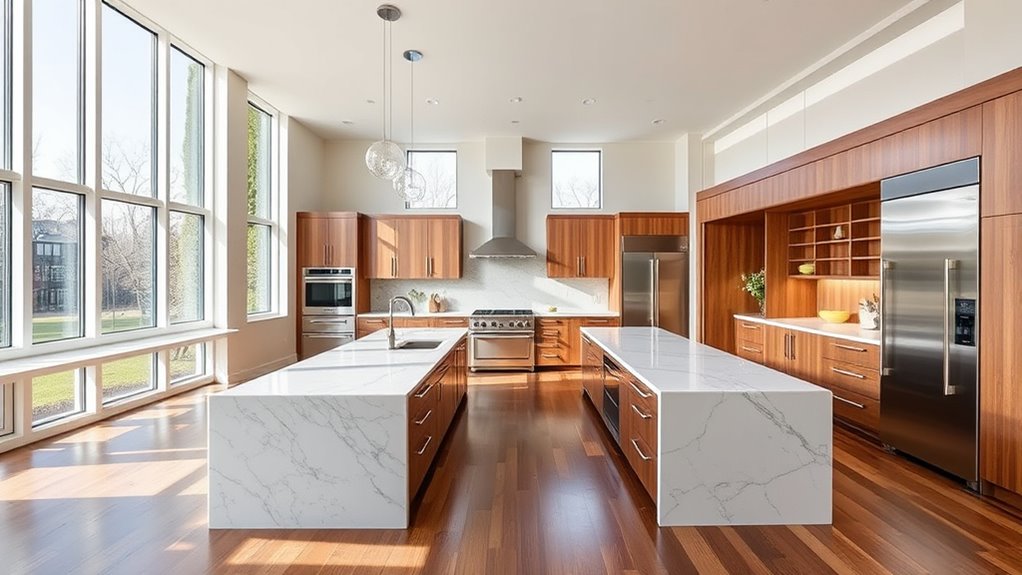
The size and layout of your kitchen directly influence your remodeling costs because larger spaces need more materials and labor. If your kitchen is spacious, you’ll require extra cabinets, countertops, and flooring, which raises expenses.
Larger kitchens require more materials and labor, increasing overall remodeling costs.
An open layout might mean relocating plumbing or electrical systems, adding to the cost. Smaller kitchens usually cost less to remodel since they need fewer materials and less labor.
The complexity of your layout also matters. An intricate design with many corners or unusual shapes can increase labor costs and extend the project timeline. Planning a functional, efficient layout can help keep costs down by reducing the need for major structural changes.
Ultimately, understanding your kitchen’s size and layout helps you estimate your budget more accurately.
What Materials Should You Consider, and How Do They Impact Your Budget?
Choosing the right materials for your kitchen remodel can really impact your overall budget. High-end options like natural stone countertops or custom cabinets tend to cost more but add a touch of luxury and last longer.
Mid-range choices such as laminate countertops and MDF cabinets strike a good balance between quality and affordability. Going for cheaper materials might save money upfront but could mean more repairs or replacements down the line.
Think about how long each material will last and how much maintenance it needs. Some may require more frequent repairs or refinishing, which can add up over time.
Your selection of finishes, hardware, and surfaces also affects the total cost. Picking materials that fit your style and budget helps you get the look you want without overspending.
Careful choices in materials ensure you stay within budget while creating a functional, attractive kitchen.
How Do Appliances and Fixtures Influence Your Kitchen Remodel Cost?
Appliances and fixtures are a big part of your kitchen remodel costs because they affect both how your kitchen looks and how well it works. Upgrading to high-end appliances like smart refrigerators or professional ovens can boost expenses but also improve convenience and resale value.
Fixtures such as lighting, faucets, and hardware add style and usability. They influence the overall cost and aesthetic appeal of your kitchen. Here’s a quick overview:
| Appliance Type | Cost Range | Impact on Remodel |
|---|---|---|
| Basic Appliances | $1,000 – $3,000 | Standard functionality |
| Premium Appliances | $4,000 – $10,000 | Better features and energy efficiency |
| Fixtures (Lighting) | $200 – $1,000 | Sets the ambiance and task lighting |
| Faucets & Hardware | $100 – $500 | Adds style and durability |
| Energy-Efficient Options | Varies | Saves money in the long run |
Choosing the right appliances and fixtures helps you balance cost with style and function.
Should You Do a Full Kitchen Overhaul or Just Some Cosmetic Updates?
Deciding whether to do a full kitchen overhaul or stick with cosmetic updates depends on your goals, budget, and the condition of your current space. If your kitchen has outdated wiring, structural issues, or an inefficient layout, a complete overhaul might be necessary to ensure safety and functionality.
However, if your appliances, cabinets, and fixtures are still in good shape, cosmetic updates like new paint, backsplash, or hardware can refresh the look without breaking the bank.
Think about how much time and disruption you’re willing to handle. A full renovation offers a fresh start but costs more and takes longer. Cosmetic updates are quicker and more affordable but may not fix underlying problems.
Your decision should match your long-term vision and financial capacity.
What Design and Layout Complexities Should You Know About?
Understanding the complexities of kitchen design and layout can greatly influence the success of your remodel. You need to take into account how the space flows, making sure the work triangle between the sink, stove, and fridge is efficient.
Incorporate enough storage while avoiding clutter, and plan for proper placement of appliances to maximize usability. Structural elements like load-bearing walls, windows, or door placements can complicate your layout and potentially increase costs.
You might also need to address uneven flooring or ceiling heights that require adjustments. Designing for accessibility, like lower countertops or wider walkways, adds another layer of complexity.
Being aware of these factors helps you anticipate challenges and make informed decisions. Ultimately, this can save you time and money during your kitchen renovation.
How Does Your Location Change Labor and Material Prices?
Your location greatly impacts kitchen remodel costs because regional material availability affects prices.
Local labor rates also vary depending on demand and economic conditions in your area.
Understanding these factors helps you better estimate your project budget.
Regional Material Availability
Where you live really impacts the cost of kitchen remodels because of regional differences in material availability and labor rates. If supplies are hard to find locally, prices jump, and delays can be frustrating.
On the other hand, regions with plenty of materials usually have lower prices and faster turnaround times. Your location can turn a dream renovation into either a costly challenge or an affordable project.
Think about how regional access affects your budget:
| Scarcity | Abundance | Impact |
|---|---|---|
| High prices, delays | Lower costs, quick supply | Less stress and more control over costs |
| Limited options | Wide selection | More flexibility and better quality |
| Longer wait times | Ready availability | Faster completion and peace of mind |
Your region influences every decision, cost, and outcome.
Local Labor Rates
Labor rates can vary a lot depending on where you live, which directly impacts the total cost of your kitchen remodel. In high-cost cities, skilled workers charge more because of higher living expenses and demand.
On the other hand, in rural areas or places with lower living costs, labor tends to be more affordable. This difference can significantly affect your overall project budget since labor often makes up a big part of the costs.
If you’re in an area with high labor rates, you might need to set aside more funds or plan your project during off-peak times to get better rates. Knowing the local labor rates helps you plan realistically and avoid surprises.
It also gives you an edge when negotiating with contractors, making sure you get quality work at a fair price.
Should You Choose Custom Cabinets or Prefabricated Options?
Deciding between custom cabinets and prefabricated options often depends on your budget, timeline, and style preferences. Custom cabinets let you choose every detail, ensuring a perfect fit and a unique look, but they tend to cost more and take longer to make.
Prefabricated cabinets are more budget-friendly and available right away, making them a great choice if you need a quick update or are working with a limited budget. They come in standard sizes and styles, which might limit your customization options.
Think about how much you want a tailored look for your space and if you’re willing to spend extra for a custom fit. If saving money and getting things done fast are your priorities, prefabricated options work well. But if you’re after a distinctive, high-end vibe, investing in custom cabinets might be the way to go.
What Permits and Regulations Might Affect Your Remodel Budget?
Before starting your kitchen remodel, you’ll need to find out which permits are required in your area, as they can impact your timeline and budget.
Making sure your plans meet local building codes is essential to avoid costly fines or delays.
Ignoring these regulations can lead to unexpected expenses that affect your overall remodeling costs.
Permits Required for Renovation
When planning a kitchen remodel, understanding which permits you’ll need can save you time and unexpected expenses. Most renovations require permits to ensure safety and code compliance. Common permits include electrical, plumbing, and building permits.
For example, if you’re moving walls, installing new appliances, or upgrading wiring, you’ll likely need approval from your local building department. Skipping permits can lead to fines, delays, or even having to undo work.
It’s essential to check with your city or county’s building office early in the planning process. Some projects may require multiple permits or inspections at different stages.
Budgeting for these permits upfront helps you avoid surprises and keeps your remodel on track. Always confirm the specific permits needed before starting construction.
Local Building Code Compliance
Understanding local building codes is essential because they determine which permits you’ll need and the regulations you’ll have to follow during your kitchen remodel. These codes guarantee safety, accessibility, and proper functionality, but they can also impact your budget.
You might face extra costs if your project requires inspections, upgrades to meet new standards, or compliance with energy efficiency rules. For example, replacing plumbing or electrical systems often triggers specific regulations.
Failing to follow these codes can lead to fines or costly modifications later. Before starting, check with your city or county building department to find out what permits and regulations are required.
Planning for these expenses early helps you avoid unexpected delays or costs, keeping your remodel on track and within budget.
How Long Will Your Kitchen Remodel Take, and How Does Timing Impact Costs?
The length of your kitchen remodel can vary a lot based on what you want to do and how well you plan. The longer the project, the more it could cost overall. Extended timelines often mean higher labor costs and potential delays.
To keep things on track, consider these factors:
- Scope of Work: Bigger remodels with lots of changes take more time than small updates.
- Material Availability: If materials are hard to find or delayed, your schedule can be pushed back.
- Permitting and Inspections: Waiting for permits or inspections can add several weeks to your timeline.
Knowing these things helps you plan better, avoid surprises, and keep costs under control. Rushing a project might seem cheaper at first, but it can cause mistakes and extra expenses later.
Good planning makes sure your remodel stays within your budget and time expectations.
How Can You Prioritize Your Spending to Stay Within Budget?
To stay within your budget, start by figuring out which expenses are absolutely essential and focus your money there.
Make sure to set aside some funds for unexpected costs that could come up during the remodel.
Prioritizing your spending this way helps keep your project on track and prevents you from overspending.
Identify Essential Expenses
Before diving into your kitchen remodel, it’s important to identify which expenses are truly necessary. Focus on the elements that impact function and safety the most. Start by listing your top priorities:
- Cabinetry and storage These often make up the biggest part of your budget and set the foundation for your kitchen’s layout.
- Appliances Investing in energy-efficient, durable appliances can save you money in the long run.
- Countertops and surfaces Pick materials that balance durability with cost, since they’re used heavily every day.
Allocate for Unexpected Costs
While focusing on your main expenses like cabinetry, appliances, and countertops helps keep your project on track, unexpected costs can still pop up. To handle these surprises, set aside a contingency fund—usually about 10-15% of your total budget.
This buffer covers unforeseen issues like hidden damage or price changes. To stay organized, consider using this table:
| Unexpected Cost Type | Estimated Range | Priority |
|---|---|---|
| Plumbing Repairs | $200 – $1,000 | Medium |
| Electrical Fixes | $300 – $1,500 | High |
| Material Delays | $100 – $500 | Low |
Make sure to set aside money for these potential costs. Review your budget regularly and make adjustments as needed.
Staying flexible is key to keeping your remodel within budget, even when surprises come up.
Frequently Asked Questions
What Are the Hidden Costs Involved in a Kitchen Remodel?
Hidden costs in a kitchen remodel often catch you off guard. You might find yourself paying for permits, design fees, or unexpected repairs like plumbing or electrical issues that come up during demolition.
Upgrading outdated wiring or insulation can also add expenses you didn’t plan for. It’s a good idea to budget extra for these surprises since they can significantly increase your total costs and extend your project timeline.
How Do Unexpected Issues Affect the Overall Budget?
Unexpected issues can really bump up your kitchen remodel budget. When hidden problems come up, like outdated wiring or plumbing, you’ll need to spend extra on repairs or upgrades.
These surprises often cause delays and higher labor costs. You might also face unexpected material expenses if your plans change to fix these issues.
Staying flexible and setting aside a contingency fund can help you handle these surprises without putting your project at risk.
Can DIY Renovations Save Money on a Kitchen Remodel?
Did you know that DIY renovations can save you up to 30% on kitchen remodel costs? If you’re handy and have some free time, tackling simple projects like painting cabinets or installing new hardware can really cut expenses.
But for more complex tasks like plumbing or electrical work, it’s best to hire professionals. That way, you avoid costly mistakes that could end up costing more in the long run.
Be honest about your skills and remember, some jobs are better left to the experts to ensure safety and quality.
How Do Seasonal Factors Influence Material and Labor Prices?
Seasonal factors really affect material and labor prices during a kitchen remodel. In busy seasons like spring and summer, demand goes up, making materials more expensive and making it harder to book labor. This can drive up your overall costs.
On the other hand, off-peak times like winter usually mean lower prices and better availability. Planning your renovation during these slower months can save you money. Rushing to do it during peak times might end up inflating your budget.
What Financing Options Are Available for a Kitchen Renovation?
Did you know that about 80% of homeowners finance their kitchen renovations? You have several options: personal loans offer quick approval and fixed rates.
Home equity loans or lines of credit let you tap into your home’s value. Credit cards are also an option for smaller projects, though they often carry higher interest.
Consider your budget and repayment ability to choose the best financing solution for your remodel.
Conclusion
Ultimately, understanding these factors helps you make smarter choices for your kitchen remodel. By balancing size, materials, appliances, and design complexity, you can avoid biting off more than you can chew.
Prioritize what matters most to you, stay flexible with your plans, and keep an eye on permits and timing. Remember, a well-planned kitchen remodel is like a well-oiled machine—smooth, efficient, and worth every penny.