7 Key Factors That Affect How Much It Costs to Install Kitchen Cabinets
Many homeowners feel overwhelmed when trying to figure out the true cost of installing kitchen cabinets. It’s a common situation—you’re not alone in wondering what affects the final price. Understanding these factors can help you plan your budget and avoid surprises.
Your kitchen cabinet installation costs are affected by several key factors. The size of your kitchen, design complexity, and modifications needed all influence labor and material expenses.
Material choices, from budget-friendly to high-end, also impact costs. Your home’s layout and regional labor rates play roles, along with cabinet size, quantity, and any custom features you select.
Keep exploring to uncover more details that can help you better plan your project budget.
Key Takeaways
- The size and layout of your kitchen really matter. They determine how much material you’ll need and how long the installation will take.
- The quality of the materials you choose and any custom features will also influence costs. Higher-end materials and special designs often require more craftsmanship, which can add up.
- Where you live plays a role too. Regional labor rates and how competitive the market is can change the overall price.
- If you need to modify existing structures or deal with tricky wall conditions, expect extra labor and material costs.
- Finally, the hardware, finishes, and accessories you pick can really bump up the total price. Small details, but they add up quickly.
What Affects the Cost of Installing Kitchen Cabinets
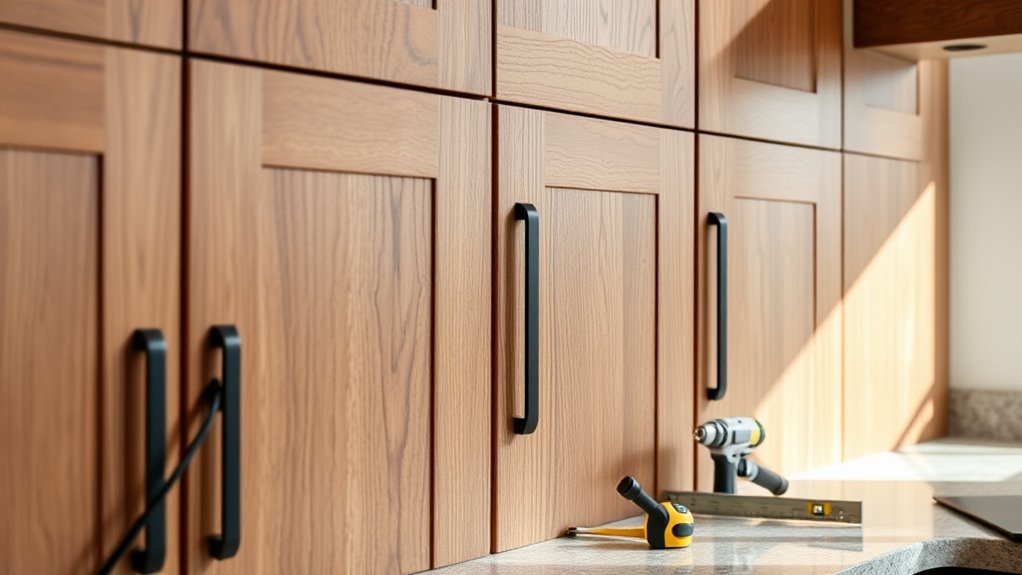
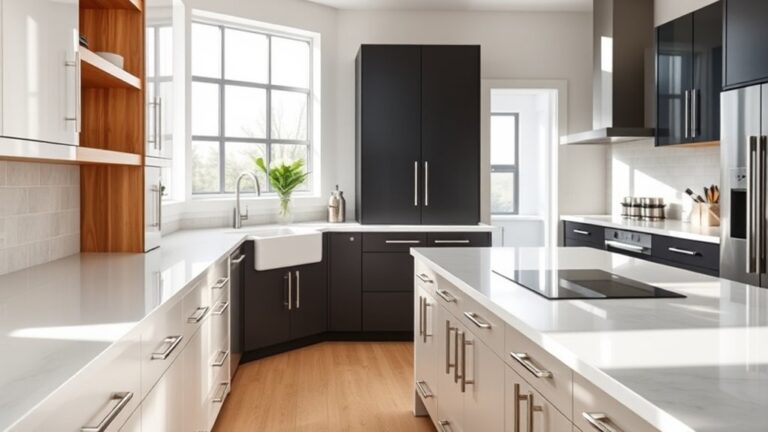
Several factors influence the overall cost of installing kitchen cabinets, and understanding these can help you budget effectively. One major factor is the size of your kitchen. Larger spaces require more materials and labor, which can increase costs.
The complexity of the installation also matters. Custom designs or intricate layouts take more time and skill, raising expenses. If your existing structures need modifications, like wall adjustments or leveling, expect additional charges.
The type of hardware, hinges, and accessories you choose can add to the total price. Ultimately, the condition of your current walls and floors impacts the effort needed for a smooth installation.
How Material Choices Impact Installation Costs
Your choice of materials affects both the cost and installation process of your cabinets.
Durable, high-end materials tend to be more expensive and may require specialized installation. Simpler options are generally easier and cheaper to install.
Plus, the look of your materials can influence your overall budget and how long the setup takes.
Material Durability and Cost
Choosing durable materials for your kitchen cabinets can significantly impact installation costs. Stronger, long-lasting options often need more precise craftsmanship and higher-quality manufacturing.
Materials like solid hardwoods or high-grade plywood tend to be more expensive upfront but can save you money over time. They resist warping, cracking, and damage better than cheaper options.
These sturdy materials usually require skilled installers who can handle their density and weight, which can raise labor costs. On the other hand, cheaper choices like particleboard or MDF are easier and less costly to install.
However, these less durable materials may need replacing sooner, leading to higher costs down the line. When picking your materials, weigh the initial investment against how long you want your cabinets to last.
Find a balance between durability and your budget to make the best choice for your kitchen.
Aesthetic Appeal Influence
The aesthetic appeal of your kitchen cabinets really impacts installation costs because different materials need different levels of craftsmanship and finishing. High-end options like custom wood or glass require more precise work and specialized skills, which drives up labor costs.
On the other hand, simpler finishes or basic laminates are quicker to install and tend to cost less. Your choice affects not just how your cabinets look but also how complex the installation will be.
Material complexity influences the time needed for precise fitting, while finish requirements determine extra labor for polishing or coating. Design details like moldings or custom features also make installation trickier.
Surface treatments such as glazing or special paints add to both material and labor costs. Picking your materials thoughtfully can help you strike a balance between beauty and your budget, affecting the total installation expenses.
Ease of Installation
Material choices directly influence how easy or difficult it is to install kitchen cabinets. Lighter materials, like MDF or plywood, are generally easier to handle and install. This can help reduce both labor time and costs.
On the other hand, heavy or dense materials like solid hardwood require more effort and specialized tools, which can make installation more complicated. The design also plays a role—modular or pre-assembled cabinets tend to be quicker to install than custom-built options.
If your materials need special fasteners or precise alignment, expect higher labor costs. Some materials might need extra reinforcement or adjustments during installation, adding to the overall expense.
Choosing materials that are straightforward to work with can save you time and money, making the whole process smoother and more affordable.
How Design Complexity Changes Your Budget
When your kitchen cabinet design gets more intricate, your project’s cost can go up significantly. Complex designs often need specialized craftsmanship, custom pieces, and detailed work, which all add to the bill.
For example, choosing ornate moldings or unusual shapes can really bump up labor and material costs. Intricate designs might also require custom fittings or hardware, making expenses climb even higher.
Custom shapes or curves mean extra cutting and fitting, which takes more time and effort. Ornate details need skilled workers and more time to complete.
Unique materials or finishes can also drive up the cost of materials. Plus, adding extra hardware or custom hardware increases expenses further.
All these factors mean you should plan for higher labor, materials, and time when opting for more elaborate cabinet designs. The more complex your design, the more you’ll likely spend.
How Your Home’s Layout Influences Installation Fees
Your home’s layout directly impacts installation fees because complex or unconventional floor plans often require more time, specialized tools, and creative problem-solving. If your kitchen has angled walls, multiple corners, or unusual shapes, installers need extra effort to measure accurately and adapt cabinetry to fit perfectly.
Open-concept spaces may involve removing or adjusting other features, which adds to labor costs. Narrow or tight spaces can slow down progress and require special equipment.
Moreover, if your kitchen has multiple levels or uneven floors, installers must spend extra time leveling and securing cabinets. All these factors increase the complexity of the job, leading to higher labor costs and longer installation times.
Your unique layout can significantly influence the overall expense of your kitchen cabinet project.
Regional Labor Rates and Pricing Differences
Regional labor rates are different depending on wage levels, so where you are can really impact installation costs.
Local market competition also plays a role, with busier areas generally charging more.
Plus, the cost of living in your region affects how much contractors need to charge for their services.
Regional Wage Variations
Labor rates for installing kitchen cabinets can vary quite a bit depending on where you live, influenced by regional wages and local pricing standards. Higher wages in urban or more developed areas tend to raise overall costs, while rural or less developed regions may have lower rates.
This variation doesn’t just affect labor costs but also impacts the quality and availability of skilled installers. Keep in mind that wages directly influence labor charges, which often make up the biggest part of installation expenses.
Regions with higher living costs usually see higher service fees, and local economic conditions can affect how much skilled labor is available, impacting pricing. Variations like these can lead to significant cost differences even within the same city or state.
Understanding these regional wage differences can help you better estimate and plan your cabinet installation budget.
Local Market Competition
Market competition plays a big role in shaping the prices you’ll see for kitchen cabinet installation. Areas with more installers competing for business often have lower rates.
When multiple contractors are vying for your project, they tend to offer more competitive prices to win your work. This extra competition can lead to better deals and lower labor costs.
In urban or densely populated regions, you’ll usually find more options, which can drive prices down. On the other hand, rural or less saturated markets tend to have fewer installers, so prices might be higher.
The number of available professionals directly impacts costs. More competition generally means more affordable options. Understanding local competition helps you gauge fair pricing and ensures you get quality work at a reasonable rate.
Cost of Living Differences
Cost of living differences across regions greatly influence the prices you’ll encounter for kitchen cabinet installation. Higher living costs usually mean higher wages for workers and increased overhead expenses, which get passed on to you.
This variation affects labor rates, materials, and overall project costs depending on where you’re located. Understanding these differences helps you set realistic expectations and budget accordingly.
Keep in mind that labor wages tend to be higher in urban areas compared to rural regions. Material costs can fluctuate based on regional availability. Overhead expenses like permits and insurance also vary by location.
Finally, local economic conditions influence the overall pricing landscape. Being aware of these factors can help you plan better and avoid surprises.
How Cabinet Size and Quantity Drive Total Costs
The size and number of cabinets you choose directly affect your overall costs. Larger cabinets cost more because they need more material and labor to make and install.
Similarly, selecting many cabinets increases the total expense since each one adds to the purchase and installation fees.
Opting for custom sizes or taller cabinets can also raise the price due to special cuts and extra materials.
On the other hand, standard sizes are usually more affordable and easier to install.
The layout plays a role too—more cabinets mean more seams, joints, and hardware, which can increase labor costs.
To stay within your budget, try to balance your storage needs with the size and number of cabinets.
Avoid getting too many units or oversized options that can drive up costs unnecessarily.
How Custom Features and Extras Increase Expenses
Adding custom features and extras can significantly increase your kitchen cabinet costs. These options often seem attractive, but they come with extra charges that can add up quickly.
For example, choosing high-end finishes, specialized hardware, or intricate moldings will raise the overall price. Built-in organizers or pull-out shelves boost functionality but also require more materials and labor.
Glass doors or decorative panels look stylish but tend to cost more than standard options. Custom paint or stain jobs can enhance the look but will also increase expenses.
Keep in mind that these features may need extra installation time and expertise, which adds to the cost. Consider your budget carefully to make smart choices that upgrade your kitchen without overspending.
Frequently Asked Questions
How Long Does a Typical Kitchen Cabinet Installation Take?
A typical kitchen cabinet installation usually takes about one to three days, depending on your kitchen’s size and complexity.
If you have a smaller space with simple cabinets, it might only take a day. Larger or more intricate projects, like custom cabinetry or extensive renovations, could take several days.
It’s a good idea to plan for some extra time in case unexpected issues come up or if additional work is needed along the way.
Are There Hidden Costs in Cabinet Installation?
Yes, there can be hidden costs in cabinet installation. You might face unexpected expenses like removing old cabinets, repairing walls or floors, or upgrading electrical and plumbing work.
If your space has irregular measurements or needs custom solutions, costs can go up unexpectedly. Always get a detailed estimate upfront and ask about potential extra charges to avoid surprises.
Being prepared helps keep your project within budget. Knowing what to expect makes the process smoother and less stressful.
How Does Choosing Eco-Friendly Materials Affect Costs?
Choosing eco-friendly materials can increase your installation costs because these materials often cost more upfront due to sustainable sourcing and manufacturing processes.
However, investing in eco-friendly cabinets can save you money long-term through energy efficiency and durability.
You might also qualify for tax incentives or rebates.
Keep in mind that the availability of these materials varies, and premium options typically come with higher price tags, impacting your overall budget.
What Permits Are Needed for Installing New Cabinets?
You’ll probably need a building permit from your local government before installing new cabinets. It’s a good idea to check if your project also requires electrical, plumbing, or structural permits.
Some areas might require inspections after the installation is complete. To avoid fines or delays, reach out to your city’s building department early on.
Review their specific requirements and make sure to get all the necessary permits before you start. This way, your project will be in line with safety codes and local rules.
Can DIY Installation Reduce Overall Expenses?
Yes, doing a DIY installation can lower your overall expenses since you won’t have to pay for labor.
But you need to have the right skills and tools to make sure the job gets done properly. Mistakes can lead to costly repairs or replacements later on.
If you’re confident in your abilities and willing to invest some time, a DIY approach can save you money.
Just make sure to weigh the risks before deciding to take on the project yourself.
Conclusion
Remember, when it comes to installing kitchen cabinets, the devil’s in the details—and the costs. Understanding how materials, design, and other factors influence your budget can help you make smarter choices.
Don’t forget, “A penny saved is a penny earned.” Weigh your options carefully to get the best value.
With careful planning, you can create a beautiful, functional kitchen without breaking the bank. Keep the main keyword in mind—costs to install kitchen cabinets—as you make your decisions.
Happy renovating!