7 Easy Steps to Remove Grease From Kitchen Cabinets
Many homeowners find that keeping kitchen cabinets grease-free can feel like an endless battle. You’re not alone—grease buildup is a common challenge, but the good news is, it’s manageable with the right approach.
To remove grease from your kitchen cabinets, start by gathering supplies like dish soap, a soft sponge, and vinegar or baking soda for tougher spots. Clear your cabinets, wipe down surfaces, and check for damage.
Use a pH-balanced cleaner or a DIY solution, applying it and letting it sit. Scrub gently, rinse with a damp cloth, and dry thoroughly.
With these simple steps, you’ll keep your cabinets spotless. Keep exploring more ways to maintain their shine and enjoy a cleaner kitchen space.
Key Takeaways
- Remove all items from your cabinets so you can get full access. This also helps prevent damage while you’re cleaning.
- Wipe down the surfaces with a damp cloth first. It will pick up dust and loose grease, making the cleaning process easier.
- Use a gentle, pH-balanced degreasing solution like dish soap or vinegar. These work well to break down stubborn grease.
- Scrub the cabinet surfaces in circular motions with a soft sponge or microfiber cloth. Pay special attention to corners and edges where grease tends to build up.
- Rinse everything with a damp cloth to remove any soap or vinegar residue. Then, dry thoroughly to avoid streaks and future grease buildup.
Why Does Grease Build Up on Kitchen Cabinets?
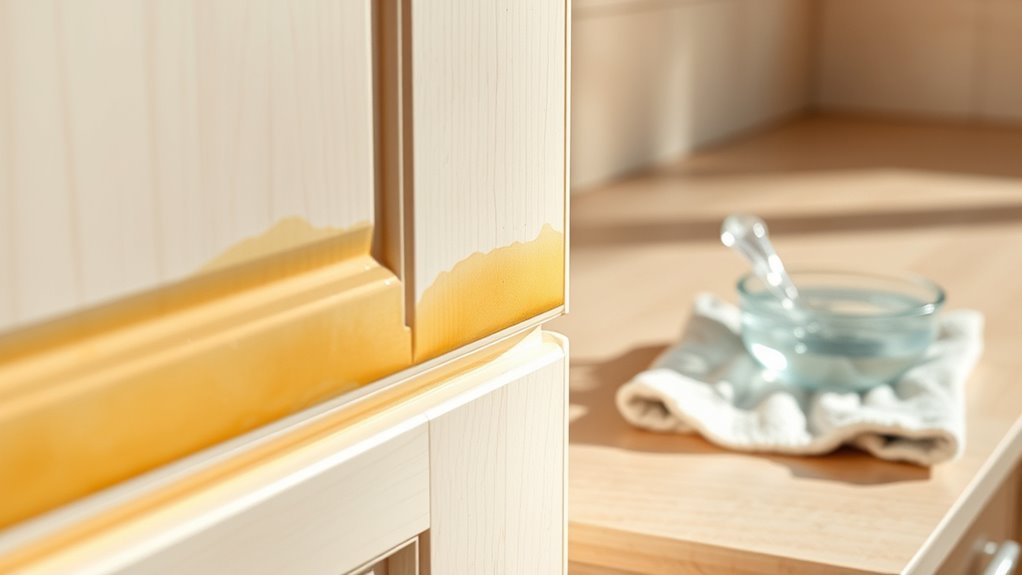
Grease tends to build up on kitchen cabinets because cooking releases oils and fats into the air, which then settle on nearby surfaces. When you cook, especially frying or sautéing, tiny oil particles become airborne and drift around the kitchen.
These particles land on cabinets, creating a greasy film over time. The warm environment in your kitchen also helps the grease stick more easily, making it harder to clean off later.
Steam from cooking can spread these particles further, coating even distant surfaces. If you don’t wipe down your cabinets regularly, this layer of grease accumulates, attracting dust and dirt.
Over time, this buildup not only looks unappealing but can also become difficult to remove without proper cleaning.
Gather the Best Supplies for Grease Cleaning
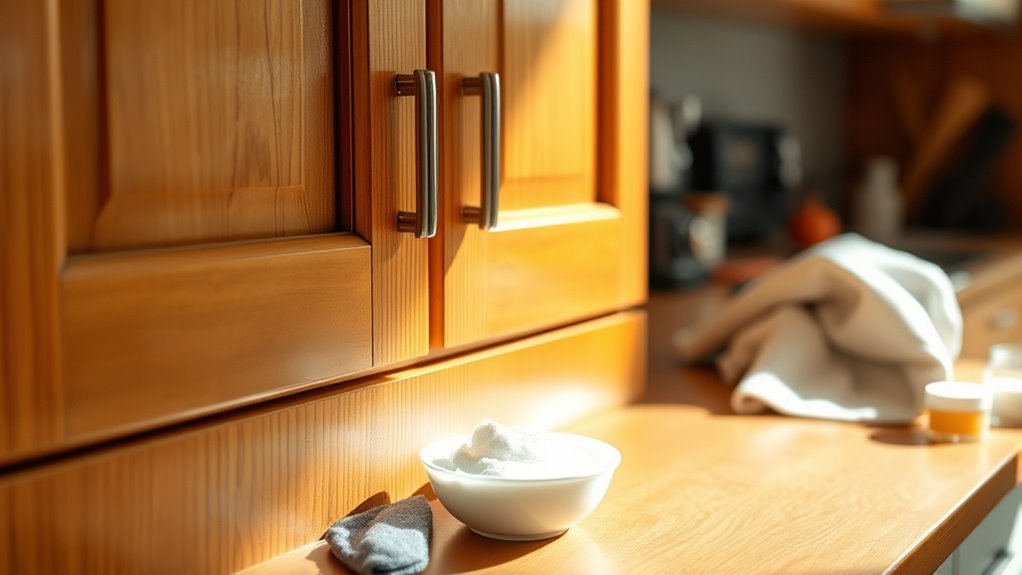
To effectively clean grease from your kitchen cabinets, gather a few essential supplies that are both safe and effective. You’ll need a gentle dish soap, which breaks down grease without damaging your cabinets’ finish. A soft microfiber cloth or sponge is best for wiping without scratching.
For tougher spots, have some baking soda or a mild vinegar solution on hand—both are natural degreasers. A spray bottle makes applying the cleaning solution easy and even. You might also want a bucket of warm water for rinsing and a dry cloth for drying.
Avoid harsh chemicals or abrasive scrubbers, which can harm your cabinet surfaces. With these supplies, you’re ready to tackle grease buildup safely and efficiently.
Prepare Your Cabinets for a Deep Clean
Before you start deep cleaning, it’s important to clear off your cabinets so you can reach every surface. Remove all items, including dishes, towels, and kitchen gadgets. This helps prevent obstruction and makes cleaning easier.
Next, wipe down the exterior surfaces with a damp cloth to remove dust and loose dirt. Use the following table to organize your prep process:
| Step | Details |
|---|---|
| Clear off cabinets | Remove all items for unobstructed access |
| Wipe exterior surfaces | Use a damp cloth to remove dust and grime |
| Check for damages | Look for loose hinges or peeling paint |
| Gather cleaning supplies | Make sure everything is within reach |
Proper preparation helps you clean efficiently and ensures no area is overlooked.
Choose the Right Grease Cleaner and Apply It
Choosing the right grease cleaner is key to tackling stubborn grime without damaging your cabinets. Start by checking your cabinet finish—if it’s painted or sealed, go for a gentle, pH-balanced cleaner.
Selecting the right cleaner protects your cabinets while effectively removing tough grease.
For tougher grease, a mix of degreasing dish soap and warm water usually does the trick. If stains are really stubborn, consider a commercial degreaser made for kitchen surfaces, but always read the label to make sure it’s compatible.
Before applying, test the cleaner on a small, hidden spot to make sure it won’t cause damage. Once you’re sure it’s safe, spray or apply the cleaner directly onto the greasy areas and let it sit for a few minutes.
Letting it sit helps loosen the grime, making it easier to scrub away. Using the right application method ensures you get a clean cabinet without harming the finish.
Scrub and Wipe Down Your Cabinets Effectively
Grab a soft cloth or sponge and start scrubbing the cabinets gently but thoroughly. Focus on areas with visible grease buildup, using circular motions to lift grime without damaging the surface. Don’t press too hard; you want to clean, not scratch.
Once you’ve scrubbed the surfaces, wipe down with a clean, damp cloth to remove loosened grease and cleaner residue. To make the process easier:
- Use a microfiber cloth for better grease absorption
- Switch to a new section of your cloth frequently
- Avoid harsh scrubbing that could damage the cabinet finish
- Pay special attention to corners and edges where grease tends to hide
This guarantees your cabinets stay clean, shiny, and free of stubborn grease.
Rinse and Dry to Protect Your Cabinets
Rinsing and drying your cabinets promptly after cleaning helps remove any remaining residue and prevents water spots or streaks. After wiping with a damp cloth, go over the surfaces with clean water to ensure all cleaning agents are rinsed away.
Use a soft, clean cloth to wipe down the cabinets, removing any soap or residue that might cause buildup over time. Dry the surfaces thoroughly with a dry, lint-free cloth to prevent moisture from seeping into the wood or paint.
Proper drying helps maintain the finish and prevents warping or damage caused by lingering moisture. Taking these steps keeps your cabinets looking fresh and well-maintained while protecting them from water-related issues.
How to Keep Grease From Coming Back
To prevent grease from returning, it’s important to develop regular maintenance habits and take proactive steps. Cleaning your cabinets often helps keep grease away and keeps them looking fresh.
Controlling cooking fumes and using exhaust fans can also reduce grease buildup. Applying a protective sealant or finish to your cabinets creates a barrier that makes cleaning easier.
Here are some tips to help keep grease at bay:
- Wipe down cabinets after cooking, especially near the stovetop
- Use a splatter guard when frying or grilling
- Regularly clean or replace range filters and exhaust fans
- Keep windows open or run an exhaust fan while cooking
Staying consistent with these habits will help your cabinets stay cleaner longer and prevent grease from sneaking back in.
Frequently Asked Questions
Can Homemade Solutions Effectively Remove Grease From Cabinets?
Yes, homemade solutions can effectively remove grease from your cabinets. You can mix equal parts of baking soda and water or use dish soap combined with vinegar to break down grease.
Apply the solution with a soft cloth, gently scrub, and then wipe clean with a damp cloth. These natural remedies are safe, affordable, and often just as effective as commercial cleaners.
They’ll help make your cabinets look fresh and clean without any harsh chemicals.
How Often Should I Clean Kitchen Cabinets to Prevent Grease Buildup?
You should clean your kitchen cabinets at least once a month to prevent grease buildup. Regular cleaning helps stop grease from piling up and becoming stubborn.
If you cook often or notice grease starting to show, consider cleaning every two weeks. Use a gentle, homemade cleaner or a commercial degreaser to keep them looking good.
Staying consistent with cleaning keeps your kitchen fresh and means you won’t have to do a deep clean later on.
Are There Specific Types of Cabinets That Require Special Cleaning Methods?
Ever wonder if your cabinets need special treatment? Yes, some materials like natural wood, painted, or lacquered cabinets require gentler cleaning methods.
Avoid harsh chemicals that can damage finishes, opting instead for mild soap and water or a vinegar solution. For delicate surfaces, test a small area first.
Don’t forget, using a soft cloth helps prevent scratches and keeps your cabinets looking their best longer.
What Are the Best Natural Ingredients for Grease Removal?
You should use natural ingredients like white vinegar, baking soda, and lemon juice for grease removal. Vinegar cuts through grease effectively and disinfects surfaces.
Baking soda acts as a gentle abrasive that lifts grime without scratching. Lemon juice not only breaks down grease but also leaves a fresh scent.
Mix these ingredients with water or use them directly to clean your cabinets, ensuring a natural, chemical-free cleaning process.
How Do I Remove Grease Stains From Painted or Wood Cabinets?
Did you know that kitchen grease can build up in just a few weeks?
To remove grease stains from painted or wood cabinets, start by mixing a few drops of dish soap with warm water.
Use a soft cloth to gently scrub the stain, then rinse with clean water.
For stubborn spots, a mixture of baking soda and water creates a mild abrasive that lifts grease without damaging the surface.
Conclusion
By understanding why grease builds up, gathering the right supplies, preparing your cabinets, choosing the best cleaner, scrubbing thoroughly, rinsing well, and maintaining cleanliness, you can keep your kitchen cabinets spotless.
Consistency is key. Clean regularly, prevent buildup, and protect your investment.
With these simple steps, you’ll prevent grease from returning, preserve their shine, and enjoy a fresher, cleaner kitchen every day.
Keep these habits in mind and your cabinets will stay beautiful, bright, and grease-free.