7 Tips to Use Kosher Salt Instead of Canning Salt Safely
Many home canners face the challenge of finding the right salt to ensure their preserves turn out perfectly. If you’ve ever wondered whether you can use kosher salt instead of canning salt, you’re not alone. It’s a common question, and many people struggle with getting the measurements just right.
To substitute kosher salt for canning salt safely, measure carefully using a measuring spoon or scale, as kosher salt has larger crystals and may need a slight increase in quantity.
Always dissolve the salt thoroughly before adding it to your jars to guarantee even distribution.
Avoid assumptions about how quickly kosher salt dissolves and store it in a dry, sealed container to prevent moisture.
If you follow these tips, you’ll improve your canning success—learn more strategies ahead.
Key Takeaways
- Measure kosher salt carefully, using a measuring spoon or a scale, and level it for accuracy. This helps ensure you’re adding the right amount to your recipes.
- Slightly increase the amount of kosher salt to compensate for its coarser grains. Since it’s not as dense as canning salt, you might need a bit more.
- Dissolve kosher salt thoroughly in liquids before adding it to jars. This step helps ensure even distribution throughout your preserved goods.
- Adjust measurements based on weight rather than volume. This way, you can maintain proper salt levels more precisely.
- Store kosher salt in a dry, sealed container. Keeping it airtight prevents moisture absorption and clumping, which is especially important for canning.
What Are the Differences Between Canning Salt and Kosher Salt?
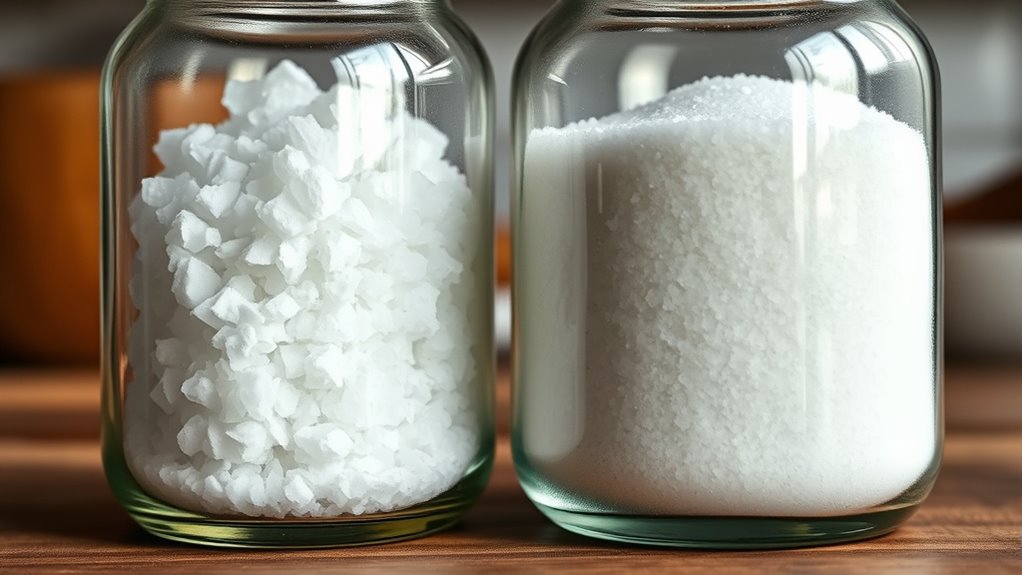
While both canning salt and kosher salt are used in food preservation, they have some clear differences that can impact your results. Canning salt is specially purified and has no additives, making it perfect for preserving foods because it won’t cloud liquids or interfere with the process.
Kosher salt, on the other hand, has larger crystals and might contain anti-caking agents or iodine. These can affect the clarity and flavor of your preserved foods. Its coarse texture makes it easier to handle, but it can lead to inconsistent measurements if you don’t measure the same way each time.
Because of these differences, you should be careful when substituting one for the other. This is especially true in recipes that need precise salt levels.
Why Is Precision Important When Substituting Salt in Canning?
Accurate salt measurements are essential because even small variations can affect the safety and quality of your canned foods. Using too much or too little salt can compromise preservation and increase the risk of spoilage.
Precision guarantees your food stays safe and tastes just right. It helps ensure your canned goods are both delicious and safe to enjoy later.
Accurate Salt Measurements
When substituting kosher salt for canning salt, precision matters because small variations in salt amount can affect the safety and quality of your preserved foods. Kosher salt’s larger crystals mean it weighs less per volume compared to canning salt, so measuring by volume can lead to inaccuracies.
To get the right amount, use a kitchen scale to measure salt by weight instead of volume. This way, you’ll get consistent results and avoid under- or over-salting.
Maintaining Food Safety
Using the right amount of salt is essential for food safety during canning. Too much or too little can compromise the preservation process, risking spoilage or bacterial growth.
When substituting kosher salt for canning salt, precision is even more important. Kosher salt’s larger crystals and lower density can lead to inaccurate measurements if not adjusted properly.
To stay safe, keep these points in mind:
- Measure carefully to ensure the correct salt-to-liquid ratio and prevent under-salting.
- Adjust for crystal size by weighing salt instead of relying only on volume.
- Follow tested recipes or guidelines to avoid unwanted microbial growth.
Keeping your salt levels accurate protects your food and helps guarantee safe, long-lasting canned goods.
How to Measure Kosher Salt Correctly for Canning
Measuring kosher salt correctly for canning means paying attention to its unique texture and density. Unlike canning salt, kosher salt has larger, coarser grains that don’t pack as tightly, so a volume measurement isn’t the same.
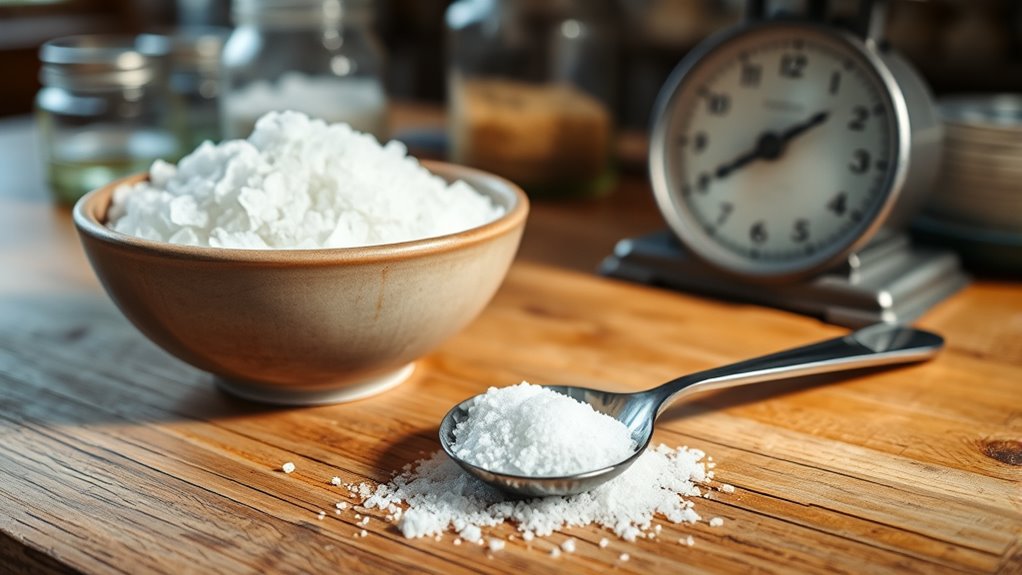
To get accurate measurements, use a measuring spoon and gently fill it without pressing down. Level the salt with the back of a knife or a straight edge to ensure consistency.
If your recipe calls for a specific weight, consider using a kitchen scale for accuracy. Because of its texture, kosher salt may look like more or less than canning salt in the same volume.
Adjusting by weight can help maintain the right saltiness and safety in your canned goods.
Adjusting Your Canning Process for Kosher Salt
Because kosher salt has a coarser texture and different density than canning salt, you’ll need to adjust your canning process to guarantee proper preservation and flavor.
First, measure carefully, as a tablespoon of kosher salt may contain less salt than canning salt. Second, increase the amount slightly to compensate for the coarser grains, ensuring your brine stays effective.
Third, dissolve the salt thoroughly before adding it to your jars to prevent uneven seasoning or preservation issues. By understanding these differences, you can maintain proper acidity and safety standards.
Paying attention to these adjustments helps your canned goods stay flavorful and safe without compromising the preservation process.
Common Mistakes to Avoid When Using Kosher Salt in Canning
One common mistake is underestimating the amount of kosher salt needed because of its coarser grains and lower density compared to canning salt. Since kosher salt has larger crystals, you might think you’re adding more than necessary, but it actually weighs less per volume.
Kosher salt’s coarser grains mean it weighs less per volume, risking under-salting in preserves.
This can lead to under-salting your preserves, which impacts both flavor and safety. Always measure carefully, preferably by weight rather than volume, to ensure the right salinity.
Another mistake is assuming kosher salt dissolves quickly. In reality, it takes longer to fully dissolve, especially in cold liquids. Rushing this step can cause uneven salt distribution, risking preservation quality.
Avoid these pitfalls to keep the correct salt levels and make sure your canned goods are safe and tasty.
Tips for Safe Preservation Using Kosher Salt
To preserve food safely with kosher salt, you need to use the correct salt ratios to prevent spoilage.
Be careful to avoid contamination risks by keeping your work area clean and using sanitized tools.
Regularly monitor salt levels to guarantee they stay consistent and effective throughout the preservation process.
Proper Salt Ratios
Verifying the correct salt ratio is essential when using kosher salt for preservation because it differs quite a bit from canning salt in texture and strength. You need to measure carefully to prevent spoilage or inadequate preservation.
Here are three key tips:
- Use less kosher salt—since it’s less dense, measure by weight rather than volume to ensure accuracy.
- Follow tested recipes—these specify salt ratios to guarantee safety and quality.
- Monitor salt levels during processing and adjust as needed, because improper ratios can lead to unsafe preservation or dull flavor.
Avoiding Contamination Risks
While kosher salt is a popular choice for preservation, it’s essential to handle it properly to prevent contamination. Always start with clean utensils and containers to avoid introducing bacteria or dirt.
Store kosher salt in a sealed, dry container away from moisture and pests. When measuring, use clean hands or utensils to prevent cross-contamination.
Avoid touching the salt directly with your fingers, as this can transfer germs. Be cautious during handling and don’t leave salt exposed to open air for long periods.
If you notice any signs of dirt, moisture, or pests in the salt, discard it immediately. Proper storage and careful handling help keep your preserved foods safe and free from harmful microorganisms.
Monitoring Salt Levels
Keeping your salt levels consistent is key to safe and effective preservation. Regularly check the amount of kosher salt you’re using to prevent under- or over-salting, which can compromise safety. Use a reliable scale to measure salt accurately, especially during processing.
Keep detailed records of how much salt you add at each step. This way, you can identify any inconsistencies and make adjustments as needed.
Remember these three tips:
- Consistently measure salt to avoid fluctuations.
- Adjust salt levels based on the specific food and jar size.
- Reassess salt content periodically during processing to guarantee stability.
Diligently monitoring salt levels helps maintain proper preservation conditions. This keeps your canned goods safe for long-term storage.
When Should You Use Canning Salt Instead of Kosher Salt?
You should use canning salt instead of kosher salt when precision is really important, especially in preserving or pickling recipes. Canning salt has a consistent grain size and no additives, making measurements more accurate and ensuring safe preservation.
If your recipe depends on specific salt levels to prevent spoilage or fermentation issues, canning salt’s uniformity helps you keep those levels just right. It’s all about making sure everything turns out safely and correctly.
When working with acidic or safety-critical canning processes, using canning salt reduces the risk of chemical reactions caused by additives in kosher salt. In these cases, accuracy and safety are more important than texture or convenience.
Frequently Asked Questions
Can All Types of Kosher Salt Be Used for Canning?
Not all types of kosher salt are suitable for canning. You should use coarse, kosher salt without additives or anti-caking agents, as these can interfere with the preservation process.
Fine or iodized kosher salts may dissolve too quickly or contain ingredients that affect acidity and safety. Always check the label and choose a pure, coarse kosher salt specifically intended for culinary use and safe canning practices.
Does Kosher Salt Affect the Flavor of Canned Foods?
Yes, kosher salt can affect the flavor of canned foods. Its coarse texture and strong saltiness may make your canned dishes taste saltier than intended if you use the same amount as canning salt.
To avoid this, use less kosher salt or dissolve it thoroughly before adding it to your recipes. Keep tasting as you go, and adjust the amount to keep the flavor just right without overpowering the dish.
Are There Any Preservatives in Kosher Salt Suitable for Canning?
No, kosher salt doesn’t contain preservatives suitable for canning. It’s just pure salt without any additives or anti-caking agents, so it’s safe for general cooking and seasoning.
However, because it doesn’t have preservatives, it’s not meant for preserving foods through canning. For that, you should use canning salt or pickling salt, which are processed specifically for preservation.
These salts won’t affect the safety or quality of your canned goods, so stick with them when you’re preserving foods.
How Does Humidity Impact Kosher Salt’s Effectiveness in Canning?
Humidity can really affect how well kosher salt works in canning. When the air is humid, the salt absorbs moisture, which causes it to clump together. This makes it less effective at preserving your food properly.
You might notice that the salt becomes less free-flowing and more compact. To keep that from happening, store your kosher salt in an airtight container in a cool, dry place. This is especially important during humid seasons.
Storing it this way helps maintain its texture and makes sure it works properly in your canning process.
Is Kosher Salt Suitable for All Canning Recipes Requiring Salt?
Yes, kosher salt can work in many canning recipes, but it’s not always ideal. Unlike canning salt, kosher salt often has larger grains and no added iodine or anti-caking agents, which can affect preservation and clarity.
When substituting, use the same volume, but be aware of the texture differences. For the best results, stick to canning salt for precise, safe preservation, especially in pickling and preserving delicate flavors.
Conclusion
Switching to kosher salt for canning can be safe and effective if you follow the right tips. Just remember, kosher salt has a coarser texture and less sodium per volume than canning salt, so precise measurement is essential.
Did you know that about 75% of sodium in the average American diet comes from processed foods? Using kosher salt carefully can help you control your intake while enjoying homemade preserves.
Stay informed, measure accurately, and enjoy safe, delicious results. Using kosher salt instead of canning salt can be a smart choice when done correctly.