
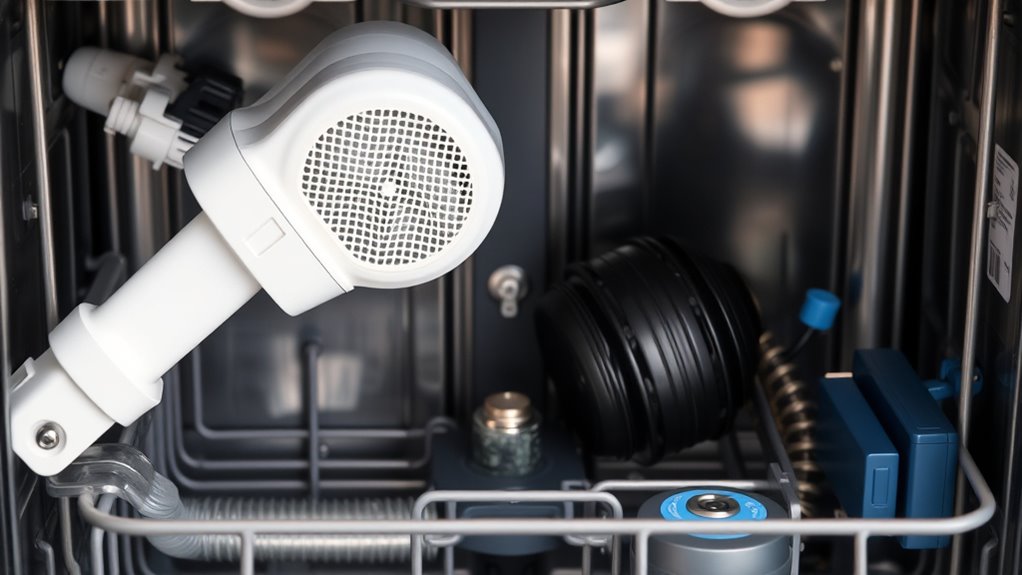
10 Essential General Electric Dishwasher Parts You Should Know
Are you tired of running your dishwasher only to find your dishes aren’t as clean as they should be? You’re not alone—many people struggle with their dishwashers not working properly or breaking down unexpectedly.
Understanding the key parts of your GE dishwasher can help you troubleshoot issues and keep it running smoothly.
You should know about key GE dishwasher parts like the tub, spray arms, and pumps, which work together to clean and drain efficiently. The water inlet valve controls water flow, while the drain pump removes dirty water.
The circulation pump and spray arms guarantee dishes get thoroughly cleaned. Other essential parts include the heating element, control panel, and door latch for safety.
If you want a better understanding of how they keep your machine running smoothly, keep exploring.
Key Takeaways
- Main components include the tub, spray arms, pump motor, heating element, and detergent dispenser for effective cleaning.
- Critical water management parts are the water inlet valve and drain pump. These are essential for proper water flow and drainage.
- The circulation pump and spray arms work together to ensure water reaches all dishes, helping maintain cleaning efficiency.
- The control panel and door latch are vital for cycle operation and safety. They also help prevent leaks during use.
- Regular maintenance of filters, spray arms, and seals is important. It helps prevent malfunctions and prolongs the dishwasher’s lifespan.
What Are the Main Components of a GE Dishwasher?
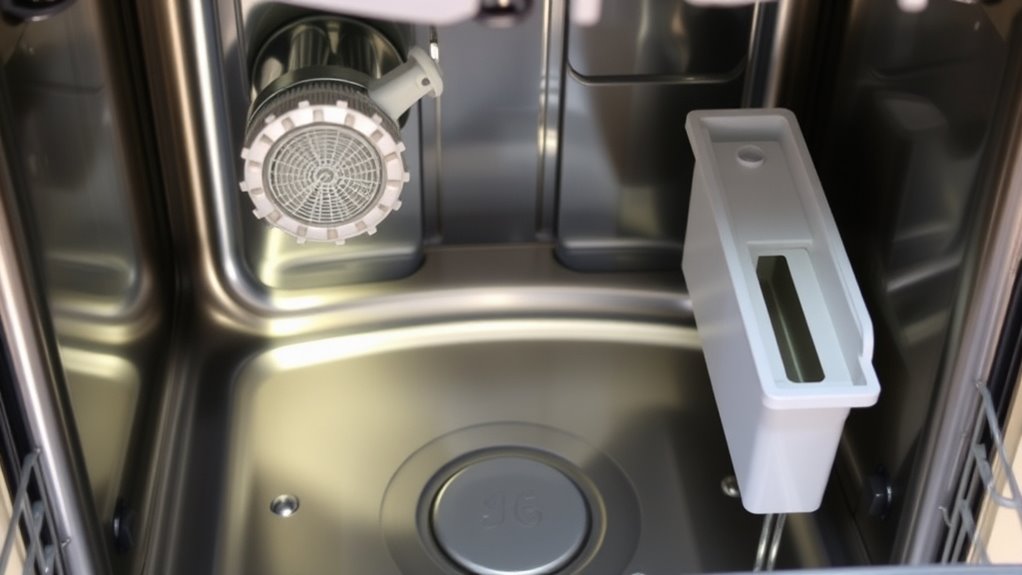
A GE dishwasher has several main components that work together to clean your dishes effectively. The tub is where you place your dishes, and the spray arms circulate water to wash them thoroughly.
A GE dishwasher’s tub holds dishes while spray arms circulate water for thorough cleaning.
The pump motor powers the water flow, while the heating element warms the water for optimal cleaning and drying. The detergent dispenser releases soap at the right time, and the control panel allows you to select different cycles and settings.
Inside, the filter traps food particles, preventing clogs and keeping the dishwasher running smoothly. The door latch secures the door during cycles, and the wiring connects all the electrical parts for proper operation.
Understanding these parts can help you troubleshoot issues and keep your dishwasher in good shape.
How Does the Water Inlet Valve Keep Your Dishwasher Running?
The water inlet valve is crucial for keeping your dishwasher running properly by controlling how water enters the appliance. When you start a cycle, the valve opens to let water from your supply line flow into the tub.
It’s powered by an electric solenoid that responds to signals from the control board, opening or closing the valve as needed. If the valve malfunctions or gets clogged, it can stop water from filling correctly, leading to incomplete washes or leaks.
Sometimes, debris or mineral deposits can block the valve, causing it to stick open or closed. Regular maintenance or replacement ensures your dishwasher gets the right amount of water at the right time, keeping it working efficiently.
Why Is the Drain Pump Essential, and How Can It Fail?
The drain pump is vital for your dishwasher because it removes dirty water after each cycle. Without it, water would just sit there, causing bad odors and stopping the dishes from getting clean.
When the pump fails, you’ll likely see standing water, notice unpleasant smells, or even experience leaks. Common causes include debris blocking the pump, a burnt-out motor, or electrical problems.
These issues can leave your dishes dirty and may even damage your dishwasher over time. Here’s a quick look at some common problems:
| Issue | Effect |
|---|---|
| Debris clogging the pump | Water won’t drain, odors develop |
| Worn-out motor | Pump stops working, cycle stalls |
| Electrical failure | No power to pump, water remains |
| Cracked or broken impeller | Water can’t move effectively |
How Does the Circulation Pump Help Clean Your Dishes?
Ever wondered how your dishwasher’s water gets so effectively cleaned and circulated? The circulation pump plays a vital role by forcing water through spray arms, creating high-pressure streams that reach every dish.
As the pump operates, it continuously moves water around the dishwasher’s interior, making sure detergent and hot water reach every surface. This constant flow helps dislodge food particles and grease, making rinsing more effective.
Without the circulation pump, water would just sit still, reducing cleaning power and leaving dishes dirty. It works with other parts, like the wash arm and spray nozzles, to distribute water evenly.
In short, the circulation pump is essential for delivering the powerful, steady water flow needed to get your dishes truly clean.
How the Heating Element Ensures Proper Drying
When your dishwasher finishes the wash cycle, the heating element kicks into gear to help your dishes dry properly. It heats the air inside, creating a warm environment that speeds up water evaporation.
As the element heats up, it raises the temperature of the drying chamber, melting away leftover moisture on your dishes. Some models also use the heated air to loosen food particles and grease, making drying more thorough.
The efficiency of the heating element depends on its condition. A faulty one might leave your dishes damp or streaked. Regularly inspecting and replacing it ensures your dishwasher keeps drying dishes effectively.
A faulty heating element causes damp, streaked dishes—regular checks and replacements keep your dishwasher drying effectively.
Without a working heating element, you might find yourself towel-drying dishes or dealing with wet, spotty plates after each cycle.
Understanding the Control Panel and Common Problems
A dishwasher’s control panel acts as the command center, letting you select cycles, adjust settings, and see what’s happening with your appliance. If you notice errors, unresponsive buttons, or it won’t start, these could be common issues.
Sometimes dirt or moisture can cause the panel to act up, so gently cleaning it with a soft cloth can help. Power surges or electrical problems may also interfere with its functioning.
Faulty touchscreens or control boards can stop you from changing settings or starting cycles. If the display shows error codes or stays blank, you might need to reset or replace the control panel.
Regular maintenance and careful handling can prevent many problems, helping your dishwasher run smoothly and efficiently.
Why the Door Latch Is Critical for Safe Operation
The door latch keeps your dishwasher securely closed during operation, preventing accidental openings. It also stops water from leaking out and causing damage.
Without a functioning latch, the dishwasher can’t safely shut down, risking safety and efficiency.
Ensures Door Security
Your dishwasher’s door latch is a crucial safety feature that keeps the door securely closed during operation. Without it, the door could unexpectedly open, leading to water spills or even injury.
A properly working latch ensures the dishwasher stays sealed, preventing leaks and helping it clean effectively. If the latch stops working, the dishwasher might not start or might stop mid-cycle, disrupting your routine.
It also prevents the door from opening while a cycle is in progress, protecting you from hot water or steam.
Here’s what the latch does to guarantee door security:
- Keeps the door firmly shut during cycles
- Prevents accidental opening
- Ensures the door’s seal remains tight
- Stops the dishwasher from running if the door isn’t secure
Prevents Water Leaks
When the door latch works properly, it forms a tight seal that keeps water inside the dishwasher during cycles. Without a secure latch, water can escape and cause leaks that damage your flooring and create safety hazards.
The latch engages with the door switch, ensuring the dishwasher only runs when the door is securely closed. If the latch is worn or damaged, it might not lock properly, leading to water leaks.
Regularly inspecting and replacing a faulty latch helps prevent these issues. A functioning latch maintains the seal, keeping water where it belongs—inside the dishwasher.
This not only protects your home but also ensures the dishwasher runs efficiently without risking water damage or operational problems.
Maintains Safe Shutdown
A properly functioning door latch is essential for guaranteeing the dishwasher shuts down safely at the end of a cycle. When the latch works correctly, it signals the dishwasher’s control system that it’s safe to stop washing and drain water.
If the latch malfunctions, the door might stay locked or open prematurely, risking leaks or water damage. Confirming the latch is secure also prevents the dishwasher from operating with the door ajar, which could cause injury or electrical hazards.
Here’s why the latch is critical:
- It triggers the dishwasher’s safe shutdown process.
- It prevents the door from opening during operation.
- It signals the control panel that the cycle is complete.
- It helps avoid water leaks and electrical issues.
Maintaining the latch’s functionality safeguards your home and guarantees proper dishwasher operation.
How Spray Arms Impact Cleaning Performance
Spray arms are crucial for a dishwasher’s cleaning performance because they spread water evenly over all your dishes. When they work right, water reaches every part of the load, loosening dirt and grime.
If spray arms become clogged or damaged, water flow gets uneven or weak, which means your dishes won’t get as clean. You might notice leftover food or streaks on your plates.
Regularly checking and cleaning the spray arms helps keep water pressure high and spray patterns just right. Some models even have multiple arms or special nozzles to reach tricky spots, boosting cleaning power.
When spray arms are functioning properly, your dishwasher cleans more thoroughly and efficiently. This saves you time and effort because you won’t need to rewash your dishes as much.
Taking care of these parts is key to keeping your dishwasher running at its best.
Signs Your Wash Motor Might Need Repair
If your dishwasher isn’t cleaning properly even when the spray arms are clear and working, the wash motor could be the problem. One sign is unusual noises during operation, like grinding or rattling, which point to motor issues.
You might also notice the dishwasher isn’t draining properly, leaving water at the bottom after cycles. If the wash cycle takes longer than usual or the motor doesn’t run at all, those are red flags.
Finally, a burnt smell or visible burn marks near the motor suggest electrical problems. Watch out for these signs and address them quickly to avoid more damage.
Look out for loud noises during washes, water that doesn’t drain fully, longer cycles, or complete motor failure. Burning smells or visible damage are also important indicators.
Tips to Maintain and Extend the Life of Your GE Dishwasher Parts
To keep your GE dishwasher running smoothly, make sure to regularly clean its parts and check for any problems.
Address repairs or replacements quickly to prevent further damage and help your appliance last longer.
Using your dishwasher correctly and following the manufacturer’s instructions also helps protect its parts and keeps it performing at its best.
Regular Cleaning Practices
Regular cleaning is essential for keeping your GE dishwasher running smoothly and preventing costly repairs. Removing debris and buildup regularly helps all parts work efficiently and last longer.
To keep your dishwasher in top shape, consider these simple practices:
- Clean the filter often to prevent clogs and improve water flow.
- Wipe down the door seals and edges to stop mold and mildew from forming.
- Run a cleaning cycle with a dishwasher-safe cleaner to get rid of grease and mineral deposits.
- Check and clear the spray arms so water reaches all your dishes properly.
Sticking to these routines helps keep your dishwasher parts in good condition, reducing strain on the components and avoiding breakdowns.
Consistent cleaning not only extends the life of your appliance but also ensures your dishes come out sparkling clean every time.
Prompt Repairs and Replacements
Prompt repairs and timely replacements are essential to keeping your GE dishwasher running smoothly. When you notice issues like leaks, strange noises, or poor cleaning, address them right away to avoid bigger problems later.
Replacing worn-out parts like filters, gaskets, or spray arms can help extend your dishwasher’s life and boost its efficiency. Regular inspections of these parts help you catch issues early before they become major repairs.
Here’s a quick guide:
| Common Repair | When to Replace |
|---|---|
| Spray arms | When water flow slows down or clogs appear |
| Door gaskets | If you see leaks or have trouble closing the door |
| Filters | When cleaning gets poor or debris builds up |
Keeping up with repairs and replacements not only maintains performance but also saves you money in the long run.
Proper Usage Techniques
By practicing proper usage techniques, you can greatly extend the lifespan of your GE dishwasher parts. First, always scrape food debris off dishes before loading to prevent clogs and strain on the filter.
Use the correct detergent amount. Too much can cause buildup, while too little reduces cleaning efficiency. Regularly check and clean the spray arms to keep water flowing freely.
Finally, run your dishwasher on appropriate cycles and avoid overloading, which can stress components. Remember to clean the filter regularly to prevent clogs, use recommended detergents and rinse aids, check spray arms for clogs or damage, and avoid overloading to prevent strain on parts.
Frequently Asked Questions
How Do I Identify the Specific GE Dishwasher Model Parts?
To identify your GE dishwasher model parts, start by finding the model number. It’s usually on a sticker inside the door or on the frame.
Once you have the model number, check the user manual, visit GE’s website, or contact customer service for help.
You can also search online parts catalogs using the model number to find the specific replacement parts you need.
Always double-check that the parts match your exact model to ensure compatibility.
What Are Common Signs of a Faulty Water Inlet Valve?
You’ll notice your GE dishwasher has a faulty water inlet valve if it won’t fill properly, makes unusual noises during fill, or if the cycle doesn’t start.
You might also see water leakage or irregular filling levels. To verify, check for clogs or debris in the valve or its filter.
If these signs persist, replacing the valve can restore proper water flow and dishwasher performance.
Can a Damaged Spray Arm Affect Cleaning Efficiency?
A damaged spray arm acts like a broken conductor, disrupting the water flow needed for thorough cleaning. When it’s cracked or clogged, water can’t reach all dishes evenly, leaving food remnants behind.
This really hurts your dishwasher’s efficiency, making it struggle to clean properly. Regularly inspecting and maintaining your spray arm helps keep things running smoothly.
Think of it like a well-orchestrated melody — keeping everything in sync. With a healthy spray arm, your dishes stay spotless and your machine works better.
How Often Should I Replace the Dishwasher’s Door Latch?
You should replace your dishwasher’s door latch if it no longer holds the door properly, making the dishwasher ineffective or preventing it from starting.
Typically, check the latch every year and replace it if you notice it’s broken, loose, or doesn’t engage fully. Many latches last around 5 to 10 years, but frequent use or damage can shorten this.
Regular maintenance helps ensure your dishwasher works efficiently and safely.
What Are Troubleshooting Steps for a Dishwasher That Won’T Start?
You might think the dishwasher’s door latch or control panel is faulty if it won’t start.
First, check the power supply—make sure it’s plugged in and the circuit breaker isn’t tripped.
Then, look at the door latch for any damage or misalignment.
Reset the control panel by unplugging the unit for a few minutes.
Finally, confirm that the water supply valve is open.
These steps often help resolve startup issues quickly.
Conclusion
Think of your GE dishwasher as a well-orchestrated symphony, where each part plays its crucial role in creating sparkling dishes. When one instrument falters, the harmony is disturbed.
By understanding these essential parts—from the water inlet valve to the spray arms—you’ll guarantee your appliance runs smoothly. Keep the rhythm steady, perform regular checks, and you’ll enjoy the gentle hum of a dishwasher that’s always ready to deliver spotless results, dish after dish.
Knowing your GE dishwasher parts is key to keeping it in top shape. With a little knowledge, you can troubleshoot issues and ensure it stays in tip-top condition.