What Should the Internal Temp of Beef Brisket Be?
Many barbecue enthusiasts struggle with getting that perfect, tender brisket. It can be frustrating to spend hours smoking meat only to end up with a tough or dried-out result. You’re not alone—mastering the right internal temperature is key to juicy, melt-in-your-mouth brisket.
You should aim for an internal temperature between 195°F and 205°F when cooking beef brisket. This range guarantees the connective tissues break down, making the meat tender and juicy. Use a meat thermometer inserted into the thickest part to check for doneness.
Rest the brisket for 20-30 minutes after cooking to lock in moisture.
Keep exploring to uncover more tips that guarantee a perfect, flavorful brisket every time.
Key Takeaways
- The ideal internal temperature for brisket is between 195°F and 205°F for the best tenderness.
- Use a meat thermometer and insert it into the thickest part of the brisket. Make sure to avoid fat and bone for an accurate reading.
- After cooking, let the brisket rest for 20-30 minutes. This helps the juices redistribute and keeps the meat moist.
- Look for visual cues like a slightly cracked surface and pooling juices. The internal temp should be within that target range.
- Keep checking the internal temperature regularly. This way, you can prevent overcooking and achieve perfect doneness.
What Is the Ideal Internal Temperature for Fully Cooked Beef Brisket?
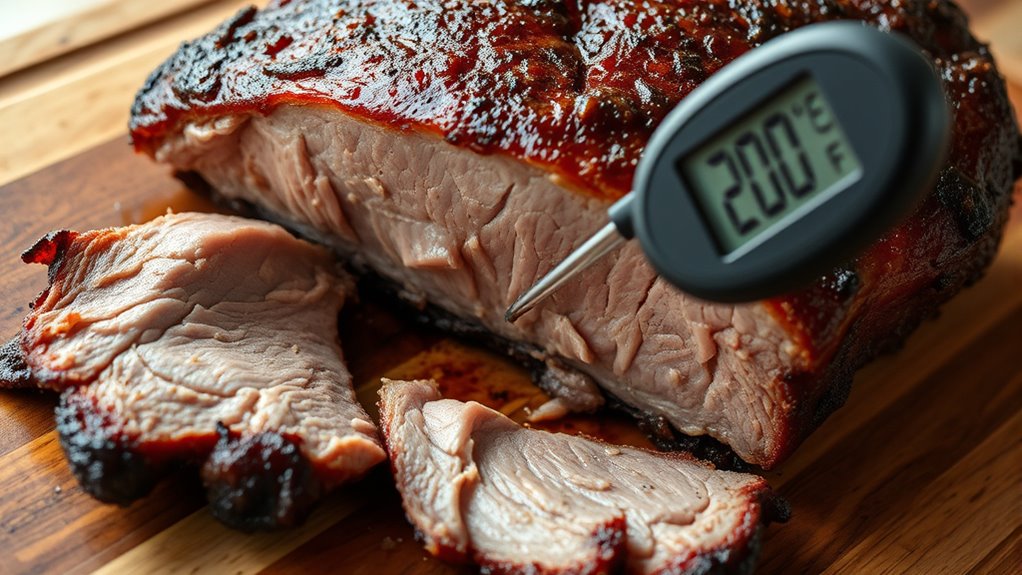
Wondering when your brisket is truly done? The ideal internal temperature for fully cooked beef brisket is between 195°F and 205°F. This range ensures the connective tissues have broken down, making the meat tender and flavorful.
A brisket is perfectly cooked between 195°F and 205°F for tender, flavorful meat.
If you pull it out too early, the brisket might be too tough and chewy. Waiting until it reaches at least 195°F allows the collagen to melt, resulting in a juicy, melt-in-your-mouth experience.
Some pitmasters prefer aiming closer to 205°F for maximum tenderness. Keep in mind, internal temperature isn’t the only indicator—resting the meat afterward helps redistribute juices.
Stick within this temperature range, and you’ll be well on your way to a perfectly cooked, delicious brisket.
How to Use a Meat Thermometer to Check Your Brisket’s Temperature
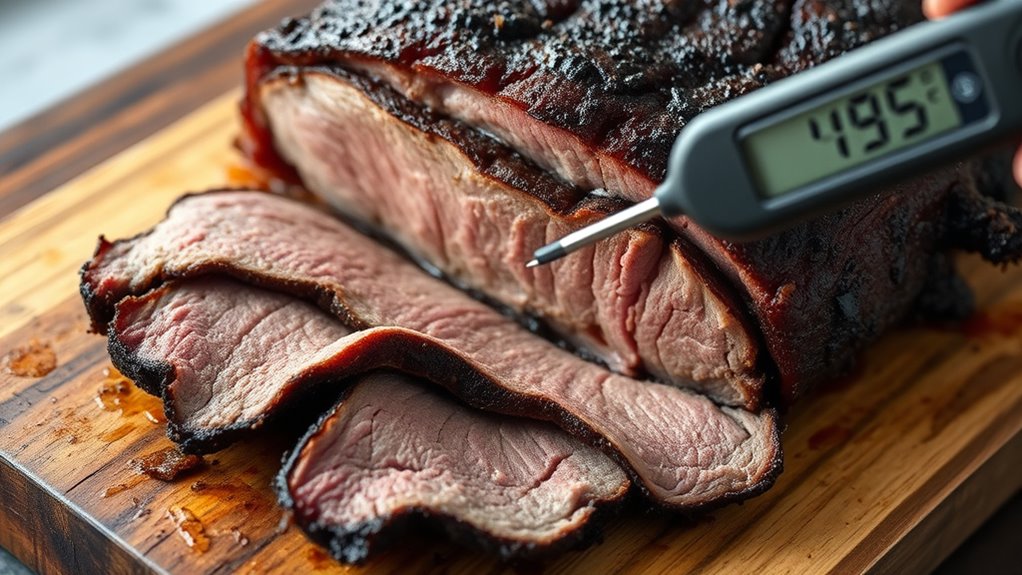
To get an accurate reading, you need to place your meat thermometer correctly—usually into the thickest part of the brisket.
Make sure you’re reading the temperature accurately by avoiding contact with fat or bone.
Keep an eye on the ideal cooking range to guarantee your brisket reaches perfect tenderness.
Proper Thermometer Placement
Proper thermometer placement is essential for accurately checking your brisket’s internal temperature, ensuring you don’t underestimate or overcook it. To get reliable readings, insert the thermometer probe into the thickest part of the meat, avoiding fat pockets and the bone, which can give false readings.
Make sure the tip of the thermometer is fully inside the meat for a true measurement. Keep the probe steady and parallel to the surface to prevent skewed results. Think of it as gently threading the needle into the heart of the brisket.
Visualize the thermometer as a tool that must be positioned securely in the center, away from edges or seams that might mislead you. This precise placement guarantees you’re confidently monitoring your brisket’s true internal temperature.
Reading Temperature Accurately
Accurately reading your brisket’s temperature depends on how you use your meat thermometer. First, make sure your thermometer is calibrated correctly—check it now and then in boiling water or ice water.
When inserting the thermometer, do it in the right spot. Follow the guidelines to avoid false readings. Push the probe into the thickest part of the meat, avoiding fat and bone, which can mess up the results.
Don’t push too hard or leave the thermometer in too long, as that can give you an inaccurate reading. Wait for the temperature to stabilize before recording it.
Also, make sure the tip of the thermometer is fully in contact with the meat, not just resting on the surface. That way, you get the most accurate measurement. Proper technique guarantees you get an accurate reading every time.
Ideal Cooking Range
Knowing the ideal cooking range for brisket is key to getting tender, flavorful meat. Usually, you’ll want to cook your brisket until it hits an internal temperature of about 195°F to 205°F.
Use a meat thermometer and insert it into the thickest part of the brisket, avoiding fat or bone. As you check, imagine:
- Juices running clear, not pink
- The meat feeling tender and almost shredding with gentle pressure
- A deep, savory aroma wafting from the smoker or oven
- A crust forming with a rich, caramelized exterior
- The thermometer reading steady within the target range
Staying within this temperature window ensures the connective tissues break down, giving you melt-in-your-mouth brisket every time.
Why Resting Is Key to a Juicy, Perfect Brisket
Resting your brisket helps lock in juices and makes it more tender.
It gives the meat time to reabsorb moisture, which improves the overall flavor.
Skipping this step can leave your brisket dry and less enjoyable.
Enhances Juiciness and Tenderness
Because the meat continues to reabsorb moisture as it rests, letting your brisket sit after cooking is crucial for maximum juiciness and tenderness. Resting allows the juices that have been driven to the surface during cooking to redistribute throughout the meat.
This process results in a more flavorful, moist bite. As you wait, imagine:
- Juices gently sinking back into the fibers of the meat
- The aroma intensifying as moisture redistributes
- The surface forming a tender, slightly firm crust
- The meat becoming more succulent with each passing minute
- The fibers relaxing, making each slice easier to carve
Taking this time guarantees every bite is juicy and tender, transforming your brisket into a truly satisfying meal. Resting isn’t just a pause; it’s a crucial step for perfect results.
Allows Proper Resting Time
Allowing your brisket proper resting time after cooking is essential to get that perfect balance of juiciness and tenderness. Resting helps the juices redistribute throughout the meat, so they don’t spill out when you slice.
If you cut into it too soon, those flavorful juices escape, leaving your brisket dry. During resting, the internal temperature stabilizes, and the muscle fibers relax, making each bite more tender.
You should let your brisket rest for at least 20 to 30 minutes, tented loosely with foil to keep the heat in. This step guarantees every slice is juicy and easy to cut.
Skipping or rushing the resting period can ruin the texture and flavor. So, patience really pays off for a mouthwatering, perfect brisket.
Brisket Internal Temp Ranges for Rare, Medium, and Well Done
Understanding the ideal internal temperature of beef brisket is key to getting the doneness you want. For rare brisket, aim for around 135°F (57°C), where the meat is pink and juicy with a slight firmness.
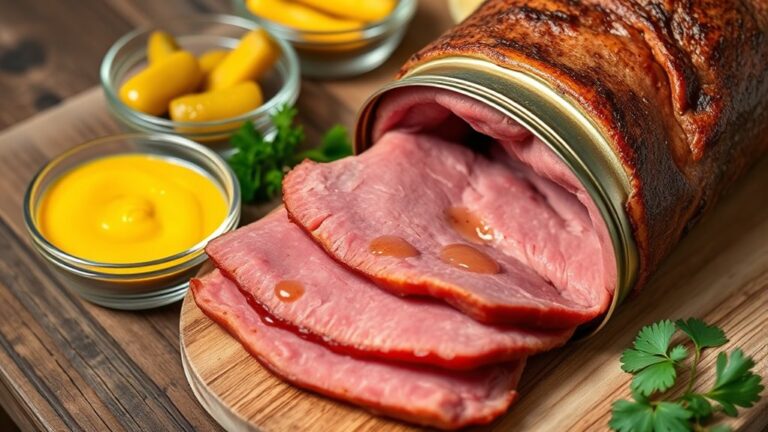
Medium doneness happens at about 145°F (63°C). It gives you a warm pink center that’s tender but still firm. Well-done brisket reaches 160°F (71°C) or higher, with a fully cooked, brown interior that’s tender but less juicy.
Imagine a rare brisket with a cool, red center and a slight blush. A medium brisket has a warm, pink core and juicy texture. Well-done brisket features a brown, evenly cooked interior.
Juices should be evenly distributed and glistening on the surface. The meat’s texture softens but still maintains its structure as it cooks through.
How Temperature Affects Brisket’s Texture and Juiciness
As the internal temperature of brisket rises, its texture and juiciness change in ways that really affect your eating experience. When you cook brisket at lower temperatures, it stays tender and keeps more moisture, so each bite is juicy and soft.
As the temperature increases, collagen begins to break down, which makes the meat more tender. But if it gets too high, the meat can turn dry and tough.
In the early stages, the brisket is moist and supple, but as it heats up more, moisture starts to evaporate. That can cause the meat to lose its juiciness.
To get the best texture and juiciness, you need to find the right temperature window. It’s about dissolving collagen without over-drying the meat, which results in a tender, flavorful, and moist brisket.
Troubleshooting Brisket Temperature Problems and Adjusting Your Cooking
When your brisket isn’t reaching the desired temperature or turns out tougher than expected, it’s important to troubleshoot and adjust your cooking. First, check your smoker or oven temperature because sometimes it runs hotter or cooler than what you set.
Check your oven or smoker temperature first if your brisket isn’t tender or reaching the right temperature.
Think about wrapping the brisket in foil or butcher paper to lock in moisture and speed things up. You might also need to extend the cooking time if the meat isn’t tender enough yet.
Use a reliable meat thermometer to monitor the internal temperature closely. Lastly, let your brisket rest properly because resting helps redistribute the juices and finish the cooking process.
Imagine the brisket’s surface cracking slightly as it cooks, and juices pooling on the cutting board after resting. The aroma filling your kitchen is a good sign, hinting at doneness.
A perfectly tender slice will reveal a pink smoke ring, and a thermometer steady at your target temp confirms it’s ready to serve.
Frequently Asked Questions
Can I Cook Brisket Without a Thermometer?
You can cook brisket without a thermometer, but it’s riskier to get perfect results. Rely on visual cues like a deep, dark crust and tenderness when probing with a fork.
Keep in mind, these signs aren’t foolproof and can vary widely. To guarantee safety and the best texture, using a meat thermometer is highly recommended.
It takes the guesswork out and ensures your brisket reaches the ideal internal temperature.
How Do External Factors Influence Brisket’s Internal Temperature?
External factors can really impact your brisket’s internal temperature. For example, ambient temperature affects how fast the meat heats up; colder environments slow things down.
Humidity levels also play a role. High humidity helps keep the meat moist, which can influence how quickly it cooks and how steady the temperature stays.
Wind or drafts can cool the surface of the brisket, causing uneven cooking. Keep an eye on these factors and adjust your cooking time accordingly for the best results.
What’s the Best Way to Check Temperature Without Piercing the Meat?
You should use a digital instant-read thermometer to check the temperature without piercing the meat. Gently insert the probe into the thickest part of the brisket, avoiding fat or bone.
This method gives you an accurate reading quickly and helps prevent loss of juices. Be sure to clean the probe afterward to avoid cross-contamination.
Checking the temperature this way ensures your brisket reaches the perfect doneness without sacrificing its tenderness.
How Does Altitude Affect Cooking Temperature for Brisket?
Altitude is like climbing a mountain. Higher elevations make cooking more challenging. You’ll need to raise your cooking temperature slightly because water boils at lower temperatures, which slows down heat transfer.
For brisket, add about 1-2°F for every 1,000 feet above sea level. Keep a close eye on your thermometer and extend cooking time as needed to reach that perfect internal temp and tender, flavorful meat.
Is There a Difference Between the Internal Temp for Smoked and Oven-Cooked Brisket?
Yes, there’s a slight difference. For smoked brisket, you want an internal temperature of around 195-205°F. This helps break down connective tissue and makes the meat tender.
Oven-cooked brisket usually reaches a similar temperature range, but because of the different heat sources and moisture levels, the timing can vary a bit.
In the end, it’s best to focus on the temperature and tenderness rather than strict timing to get that perfect brisket.
Conclusion
To achieve the perfect brisket, you need to know the right internal temperature, monitor it carefully, and allow it to rest. Mastering these steps guarantees tenderness, juiciness, and flavor in every bite.
Because temperature guides your process, and patience secures the best result, your brisket becomes a true showcase of your skill. Remember, precision shapes perfection, and attention transforms a cut into a masterpiece.
Keep these principles in mind, especially the ideal internal temp of beef brisket, and enjoy every delicious, melt-in-your-mouth bite.