Should I Rinse Corned Beef Before Cooking?
Many home cooks feel unsure about the best way to prepare corned beef for a perfect meal. You’re not alone—navigating salt levels and flavor can be tricky, especially if you want it just right.
Rinsing corned beef before cooking is a good way to cut surface salt and improve flavor, especially if you prefer a milder taste. It helps remove excess impurities and spices while keeping the meat juicy.
However, rinsing may wash away some flavor, so consider your salt preference.
If you want to learn more about effective rinsing techniques and tips for the best results, keep exploring the details below.
Key Takeaways
- Rinsing reduces surface salt and impurities, giving the corned beef a milder flavor.
- It also helps control how salty it tastes, but keep in mind it won’t remove all the salt from inside the meat.
- Plus, rinsing can wash away some of the spices, which might change the flavor a bit.
- Use cold water and rinse for about 2-3 minutes to avoid overdoing it.
- Think about your personal taste and dietary needs when deciding whether or not to rinse.
Should You Rinse Corned Beef Before Cooking?
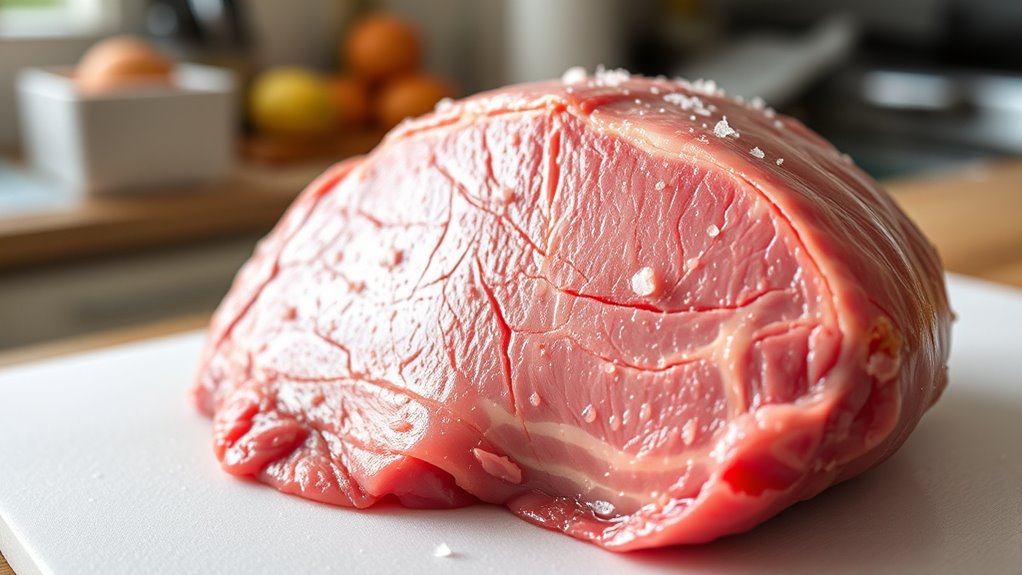
Many cooks wonder whether they should rinse corned beef before cooking it. The decision depends on your preferences. Rinsing can remove excess surface salt and any impurities, giving you a milder flavor.
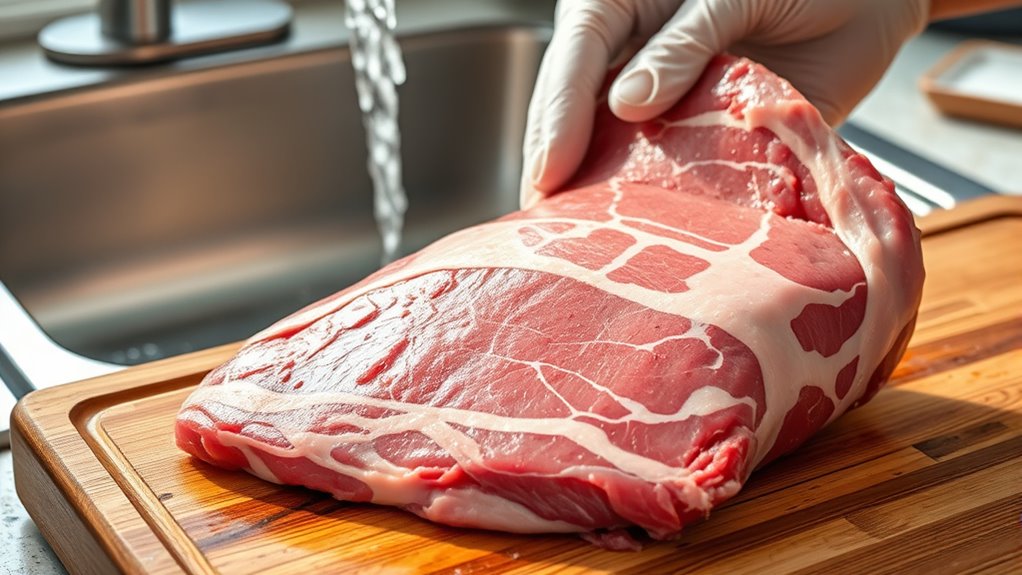
If you prefer a less salty taste, rinsing is a good choice. Simply place the meat under cold water and gently scrub off any surface brine.
However, some argue that rinsing might wash away flavor and nutrients. If you choose not to rinse, be aware that the meat may be saltier, which can intensify the overall flavor.
Ultimately, whether you rinse or not depends on your taste and dietary needs. Rinsing is quick and easy, and it can help you control salt levels in your finished dish.
Does Rinsing Corned Beef Remove Excess Salt?
Rinsing corned beef can help reduce some of the excess salt, but it might not eliminate all of it.
Keep in mind, removing salt can also impact the flavor, making the meat less savory.
Consider whether you want a milder taste or prefer to keep the full, seasoned flavor.
Salt Content Reduction
Curious if rinsing corned beef actually helps reduce its saltiness? The answer is yes, to some extent. Rinsing can wash away surface salt, lowering the overall salt content in the meat’s outer layer.
But it doesn’t penetrate deeply, so the interior remains salty. If you’re watching your sodium intake, rinsing can be a useful step before cooking.
To maximize salt reduction, give the meat a thorough rinse under cold water and soak it in fresh water for 30 minutes to an hour. Changing the water halfway through helps remove more salt.
Keep in mind, rinsing won’t eliminate all the salt, but it can make the beef less salty and more palatable if you prefer a milder flavor.
Flavor Impact
While rinsing corned beef can help reduce surface salt, it doesn’t significantly strip away the overall flavor. The seasoning and spices infused during curing mostly stay intact, so rinsing won’t noticeably dilute the beef’s savory taste.
It can slightly mellow the saltiness on the surface, which might influence how the flavors meld during cooking. If you rinse, you’ll notice a subtler salt presence and a cleaner, less greasy bite.
But be careful—over-rinsing might wash away some of the spices and flavor layers, making the beef taste more bland. Ultimately, the flavor impact is minimal, and whether you rinse depends on your preference for saltiness and how you want the seasoning to come through in the finished dish.
How Rinsing Affects Flavor and Juiciness
Have you ever wondered how rinsing corned beef impacts its flavor and juiciness? When you rinse, you remove surface salt and excess brine, which can mellow the beef’s flavor.
This might make the meat taste less salty and more subtle, but it also risks washing away some of its rich, savory notes. Rinsing can cause the meat to lose some of its natural moisture, leading to slightly drier results after cooking.
If you prefer a milder flavor and juicier texture, rinsing can be beneficial. However, it can also diminish the beef’s overall richness and make it less tender.
Ultimately, rinsing influences both the intensity of flavor and the retained moisture, so your choice depends on your desired taste and texture.
Benefits and Drawbacks of Rinsing Corned Beef
Rinsing corned beef offers clear benefits, like reducing excess surface salt and removing some of the brine’s residual flavors. This can help you achieve a milder taste. It also helps eliminate any surface debris or impurities, making it cleaner before cooking.
Rinsing corned beef reduces surface salt, removes impurities, and creates a cleaner, milder flavor before cooking.
However, rinsing can also wash away some of the seasoning and flavor on the meat’s surface, which might lead to a blander final dish. Plus, it increases water usage and creates a mess that needs cleanup.
If you prefer a more flavorful, salty profile, skipping the rinse might be a better choice. But if you’re sensitive to salt or want a milder flavor, rinsing can be a helpful step.
Just weigh these benefits and drawbacks based on your taste preferences and dietary needs.
Tips for Rinsing and Handling Your Corned Beef Properly
To rinse your corned beef effectively, start by placing it in a large colander or sink lined with paper towels to catch any drips. Use cold water and gently run it over the meat, making sure you remove excess salt and surface brine.
Handle the meat carefully to avoid tearing or damaging it. If needed, rotate the beef to rinse all sides thoroughly. Avoid using hot water, as it can start cooking the surface prematurely.
After rinsing, pat the meat dry with paper towels to remove excess moisture. Keep the rinsed beef in a clean dish or container until you’re ready to cook.
Proper handling guarantees the beef is clean, reduces saltiness, and prepares it for an even, flavorful cooking process.
Choosing the Best Rinsing Method for Corned Beef
The temperature of the water you use can affect how well you rinse away salt and impurities from the beef. It’s best to keep the water cool or lukewarm because hot water might start cooking the meat or change its texture.
Rinsing for just a minute or two usually does the trick without overdoing it. Aim for a quick, thorough rinse to get rid of excess salt without making the beef lose its flavor or become too waterlogged.
Water Temperature Effects
Choosing the right water temperature when rinsing corned beef can really affect its flavor and texture. Cold water helps wash away surface salt and impurities without starting the cooking process too early, keeping the meat’s structure intact.
Warm or hot water can start breaking down the meat’s fibers, making it softer. But it also risks over-softening or losing some of its flavor. If you rinse with cold water, you help keep the beef firm and have more control during cooking.
On the other hand, warm water might clean faster, but leaving it on too long could change the meat’s consistency. Overall, sticking with cold or cool water is best for cleaning the corned beef effectively while preserving its texture.
This way, you end up with a tastier, better-textured dish.
Rinsing Duration Tips
Regarding rinsing corned beef, time is key to removing excess salt and impurities without ruining the meat’s texture. Usually, a rinse for about 2 to 3 minutes is enough.
If you want a milder salt flavor, extend the rinse to around 5 minutes. Just be careful not to overdo it, as long rinses can make the meat too bland.
Use cool running water and gently agitate the meat to wash away salt and impurities effectively. If you’re short on time, a quick 1-minute rinse might work, but you may need to adjust the cooking process to handle the residual salt.
Frequently Asked Questions
Can Rinsing Affect the Nutritional Content of Corned Beef?
Rinsing corned beef can slightly reduce its sodium and preservative levels, but it doesn’t significantly change its overall nutritional content.
When you rinse, you wash away some surface salt and additives, which might make the beef less salty and a bit healthier.
Most nutrients like protein, iron, and vitamins stay intact. So, if you’re worried about sodium, rinsing is helpful, but it won’t drastically change the beef’s nutrition.
Is Rinsing Necessary for All Types of Corned Beef Cuts?
Rinsing isn’t necessary for all types of corned beef cuts, but it can be helpful depending on your preference.
For briskets with a lot of surface salt or brine, rinsing can reduce excess salt and remove any impurities.
However, some cuts might not need rinsing if you prefer a saltier flavor or want to keep more seasoning.
Ultimately, it’s up to you and your taste preferences.
How Long Should I Rinse Corned Beef for Optimal Results?
You should rinse corned beef for about 30 seconds to a minute. Hold it under cold running water, gently rubbing to remove excess salt and surface brine.
This quick rinse helps tone down the saltiness and improves the overall flavor. Be careful not to soak it too long, as that can wash away flavor.
After rinsing, pat it dry with paper towels before cooking for the best results.
Does Rinsing Help Reduce the Sodium Content?
Rinsing corned beef is like washing away a thin veil of salt, and yes, it can help reduce some of the sodium content. When you rinse, you wash away excess salt on the surface, making the meat less salty and more palatable.
However, keep in mind that a significant amount of sodium is absorbed inside the meat, so rinsing only makes a partial difference. If you’re watching your salt intake, consider rinsing and also adjusting seasoning accordingly.
Are There Any Alternative Methods to Reduce Salt Without Rinsing?
Yes, you can reduce salt without rinsing by soaking the corned beef in cold water for a few hours before cooking, changing the water once or twice.
You can also cook it with additional vegetables like carrots or potatoes, which absorb some salt. Using low-sodium broth or water instead of plain water during cooking helps reduce overall sodium.
These methods let you enjoy corned beef with less salt without rinsing.
Conclusion
Ultimately, whether you rinse corned beef before cooking depends on your taste and salt preferences. Rinsing can help reduce excess salt and give you more control over the flavor.
Keep in mind, rinsing might also slightly diminish juiciness, so it’s all about what you prefer. Did you know that about 75% of canned meats are rinsed before packaging?
So, try rinsing to customize your dish. Just handle the meat gently and adjust your seasoning afterward. Experiment to find what makes your corned beef just right for you!