How Much Protein Is in 97/7 Ground Beef?
Many people struggle with figuring out how to get enough protein in their diets, especially when trying to choose healthy options.
If you’re looking for a lean, satisfying source, ground beef is a popular choice. But how much protein does a typical serving actually contain?
A 3-ounce cooked serving of 97/7 ground beef provides about 21 grams of protein. This lean meat offers a good protein source for muscle repair and overall health.
Keep in mind, serving sizes impact your intake, and cooking methods can influence protein levels.
If you’re curious about maximizing your protein intake or how it compares to other meats, there’s more useful info to investigate below.
Key Takeaways
- 97/7 ground beef contains approximately 22-23 grams of protein per 3-ounce cooked serving.
- The protein content is similar to other lean ground beef options like 97/3 and 90/10.
- Even with a slightly higher fat content, the protein levels stay pretty high.
- How you cook it doesn’t really change the protein amount much.
- It’s a great source of high-quality protein, perfect for muscle growth and repair.
How Much Protein Is in 97/3 Ground Beef?
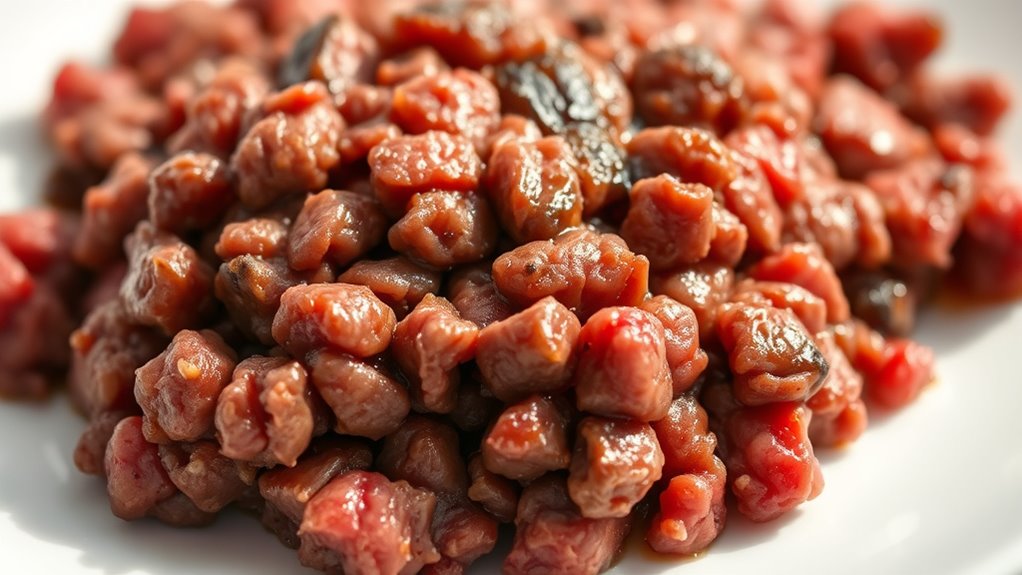
If you’re wondering about the protein content in 97/3 ground beef, you’re in the right place. This lean beef variety contains roughly 23 grams of protein per 3-ounce cooked serving.
The high protein level makes it an excellent choice if you’re aiming to boost your intake without consuming too much fat. Since it’s lean, it offers a good balance of nutrients, especially if you’re watching your fat intake.
Keep in mind that the exact protein content may vary slightly depending on the specific cut and how it’s prepared. But generally, 97/3 ground beef provides a solid source of quality protein, supporting muscle growth, repair, and overall health.
It’s a versatile option that fits well into many healthy eating plans.
What Is the Protein Content of a Typical Serving?
A typical serving of ground beef is about 3 ounces cooked, which provides roughly 21 grams of protein. This can vary a bit depending on the fat content and how you cook it.
Knowing the protein content per serving helps you plan your meals and meet your nutritional goals more effectively.
Typical Serving Size
A typical serving size for cooked ground beef is about 3 ounces, which is roughly the size of a deck of cards. This helps give you a practical reference for meal planning.
When considering this size, keep in mind that it generally contains about 21 grams of protein. This amount helps you meet your daily protein needs efficiently.
The serving balances nutritional benefits with calorie control, making it a good portion to aim for. You can also adjust this size based on your dietary goals or how active you are.
Knowing this standard makes it easier to gauge your intake. Whether you’re preparing a quick meal or tracking macros, understanding the typical serving size simplifies portioning and helps ensure you’re getting enough protein without overeating.
Protein per Serving
A typical 3-ounce cooked serving of ground beef offers about 21 grams of protein. This gives your meal a solid protein boost to support muscle repair and growth.
If you choose leaner options like 97/3 or 97/7 ground beef, you’ll still get similar protein amounts but with less fat. Keep in mind that serving sizes can vary, so check the packaging or use a food scale for accuracy.
The protein content stays pretty consistent across different fat percentages in cooked ground beef, making it a versatile choice for your diet. Whether you’re building muscle or just trying to meet daily protein goals, ground beef is an easy, tasty option to include in your meals.
How Serving Size Affects Your Protein Intake
The amount of protein you get from ground beef depends directly on your serving size. Larger portions mean more protein, but it’s important to balance your intake to meet your dietary needs.
Here’s how different serving sizes impact your protein intake:
- Small servings (3 oz) provide about 21 grams of protein. This is great for a light meal.
- Moderate servings (4 oz) deliver roughly 28 grams. Perfect for supporting muscle maintenance.
- Large servings (6 oz) supply around 42 grams. Ideal for active individuals.
- Extra-large servings (8 oz) give approximately 56 grams. This can sometimes exceed daily protein needs.
Adjusting your serving size helps you reach your protein goals without overeating. It keeps your diet balanced and effective.
Comparing Protein in 97/3 Ground Beef to Chicken and Turkey
When comparing the protein content of 97/3 ground beef to chicken and turkey, you’ll notice that all three offer high-quality protein. However, the amounts can differ slightly.
Knowing the nutritional benefits and how cooking methods affect protein can help you make smarter choices. Let’s take a look at how these meats compare in protein and overall health perks.
Protein Content Comparison
Compared to chicken and turkey, 97/3 ground beef generally offers a similar amount of protein per serving. It’s a popular choice for those looking for high-protein options.
A 3-ounce cooked portion typically provides about 22 grams of protein, which is quite consistent across all three meats. Slight differences can occur depending on the cut and how it’s cooked.
Some beef options have higher fat content, but leaner ground beef still delivers comparable protein levels. The quality of protein remains steady, providing all essential amino acids.
While chicken and turkey are often leaner, 97/3 ground beef still offers a solid protein punch, especially when you choose lean cuts. Your choice can depend on your taste, nutritional goals, or cooking preferences without sacrificing protein intake.
Nutritional Benefits Overview
Among common protein sources, 97/3 ground beef offers a strong nutritional profile similar to chicken and turkey, especially in providing high-quality protein. It gives your body essential amino acids needed for muscle growth, repair, and overall health.
Unlike some processed meats, this lean beef is low in saturated fat and calories, making it a healthier choice for maintaining a balanced diet. Chicken and turkey are also lean, high-protein options, often with slightly fewer calories.
All three provide key nutrients like B vitamins, iron, and zinc, which support energy production and immune function. Choosing between them depends on your taste and dietary goals, but each offers important health benefits that help create a well-rounded, protein-rich diet.
Cooking Impact on Protein
Cooking methods can significantly impact the protein content in ground beef, chicken, and turkey. How you prepare these meats really affects their nutritional value.
For example, grilling or broiling helps keep more protein because it reduces water loss. Boiling can slightly lower protein levels since some protein leaches into the cooking water.
Frying might decrease protein content due to added fats and potential overcooking. Sous-vide preserves the most protein by cooking at precise, low temperatures.
Compared to chicken and turkey, ground beef’s protein can be more affected by high heat. Quick, high-heat methods like grilling help maintain protein, while longer cooking can break down proteins and reduce their amount. Proper cooking helps preserve the meat’s nutritional benefits.
What Factors Influence the Protein Level in Ground Beef?
Several factors can directly influence the protein content in ground beef, shaping its nutritional profile. The meat’s fat content is a key factor; leaner ground beef, like 97/3, generally has more protein per serving than fattier options.
The cut of meat used also matters. Muscle-heavy cuts provide more protein than trimmings or lesser-quality cuts. Furthermore, the mixing process can introduce variations, especially if other meats or fillers are added.
The age and diet of the cattle can affect nutrient levels too. Younger animals often offer higher protein content. Ultimately, processing methods like grinding and packaging may cause slight nutrient loss or contamination, but the meat’s inherent composition remains the primary determinant of its protein level.
Is 97/3 Ground Beef a Good Protein Source for Muscle Building?
97/3 ground beef offers a high protein content with minimal fat, making it an efficient choice for muscle building. Its lean profile supports muscle growth while helping you maintain a healthy diet.
Plus, its versatility allows you to incorporate it into various meals to meet your nutritional goals. Overall, it’s a great option if you’re aiming to build muscle without excess fat.
Protein Content Comparison
When evaluating ground beef for muscle building, the protein content is a key factor to consider. Comparing different types, like 97/3 and 97/7, helps you see which suits your goals best.
Consider these points:
- Higher fat content in 97/7 slightly reduces its protein density.
- Both varieties provide about 23 grams of protein per 100 grams.
- The difference in protein is minimal, so choose based on fat needs.
- Opting for leaner beef, like 97/3, maximizes protein intake per serving.
Ultimately, the protein amount is similar, but the fat content varies. Your choice depends on whether you prioritize higher protein or lower fat in your muscle-building diet.
Lean Muscle Benefits
Choosing leaner ground beef, like 97/3, can boost your muscle-building efforts by providing a high-quality protein source with minimal fat. The protein in this beef helps repair and grow muscle tissue, making it ideal for your fitness goals.
Its high biological value means your body absorbs and uses the protein efficiently. Plus, the lower fat content reduces excess calorie intake, helping you stay lean while building muscle.
This lean meat also supplies essential amino acids needed for recovery after intense workouts. Incorporating 97/3 ground beef into your diet guarantees you’re fueling your muscles with pure, nutrient-dense protein without unnecessary fats.
It’s a convenient, versatile option to support your muscle growth without compromising your overall health goals.
Dietary Versatility
Because it’s lean and high in protein, 97/3 ground beef offers amazing dietary versatility for muscle building. You can add it to a variety of meals, from hearty stews to quick stir-fries, making it simple to stick to your nutrition goals.
Here are four reasons it boosts your diet:
- Flexibility: It works well with many cuisines and ingredients.
- Meal prep: Cooks quickly and stores easily for multiple meals.
- Balance: Combines high protein with lower fat, supporting lean muscle growth.
- Customization: You can season and pair it with vegetables, grains, or sauces to suit your taste.
This adaptability helps you stay consistent, enjoy diverse flavors, and maximize your muscle-building efforts without sacrificing taste or nutrition.
How to Calculate Your Daily Protein Needs From Ground Beef
To accurately figure out how much ground beef you should eat, you first need to know your daily protein needs. Start by estimating your weight, activity level, and what you’re aiming for—whether it’s building muscle or just staying healthy.
Most adults need about 0.8 grams of protein per kilogram of body weight each day, but if you’re active or an athlete, you might need more. Use this table to help you calculate your specific needs:
| Body Weight (kg) | Protein Requirement (g/day) |
|---|---|
| 60 | 48 |
| 75 | 60 |
| 90 | 72 |
Once you have your daily protein goal, figure out how much ground beef to include. Typically, a 3-ounce serving of 97/3 ground beef contains about 26 grams of protein.
Nutritional Benefits of Choosing 97/3 Ground Beef
Opting for 97/3 ground beef offers notable nutritional advantages, especially if you’re focused on maintaining or improving your health. This leaner option contains less fat, which reduces calorie intake and supports weight management. It also provides a higher protein-to-fat ratio, helping you meet your protein needs more efficiently.
Moreover, choosing 97/3 can lead to:
- Lower saturated fat intake, promoting heart health
- Reduced cholesterol levels, supporting cardiovascular function
- Less added fat during cooking, keeping meals healthier
- Better control over calorie consumption for your weight goals
Tips for Cooking Ground Beef to Maximize Protein Preservation
Cooking ground beef properly is key to preserving its protein content and making sure your meal stays healthy. To do this, avoid overcooking, which can break down proteins and reduce nutritional value.
Cook the beef over medium heat until it reaches an internal temperature of 160°F (71°C). Use a meat thermometer for accuracy and avoid excessive charring.
Drain any excess fat quickly, as it can cause uneven cooking and lead to protein loss. Don’t overcrowd your pan; cooking in batches helps maintain consistent heat and prevents steaming.
Finally, let the cooked beef rest for a few minutes before serving. This helps retain juices and nutrients, ensuring you get the most protein in every bite.
Common Myths About Protein in Lean Ground Beef
Many people believe that lean ground beef is automatically low in protein or that its nutritional value is greatly compromised compared to fattier options. This isn’t true. The myth that removing fat reduces protein content overlooks that lean ground beef still provides a substantial protein amount. Here are some facts to reflect on:
- Protein content remains high regardless of fat level, as meat’s protein is not dependent on fat.
- Fat reduction doesn’t greatly diminish the beef’s overall nutritional value.
- Lean ground beef offers a healthier option without sacrificing essential protein.
- Proper cooking methods can preserve protein, regardless of fat content.
Understanding these facts helps you make better choices about incorporating ground beef into your diet without unnecessary misconceptions.
Easy Ways to Add More Protein From Ground Beef to Your Meals
Boost your meals with extra protein by adding ground beef in simple, effective ways. Start by tossing cooked ground beef into salads, wraps, or grain bowls for a quick protein boost.
You can also mix it into scrambled eggs or omelets to ramp up your morning’s nutrition. Using ground beef in pasta sauces or chili not only adds flavor but also boosts the protein content.
Try making lettuce wraps with seasoned beef for a low-carb, high-protein snack or meal. Baked potatoes topped with seasoned ground beef create a hearty, protein-rich dish.
These easy swaps and additions require minimal effort but can really improve your meal’s nutritional value, making it easier to hit your daily protein goals.
Frequently Asked Questions
How Does Fat Content Affect the Total Protein in Ground Beef?
Fat content doesn’t really change the protein levels in ground beef much. When the fat goes up, the total weight of the meat also increases.
But the amount of protein per serving stays pretty stable because most of the protein is in the lean part. So, whether the beef has more or less fat, your protein intake per serving doesn’t change much.
Just keep in mind, higher fat can affect the calorie count, even if the protein stays the same.
Are There Differences in Protein Levels Between Organic and Non-Organic Ground Beef?
Yes, there are slight differences in protein levels between organic and non-organic ground beef, but they’re generally minimal. Organic beef tends to be leaner and may have slightly more protein because it has less fat.
However, factors like the cut of meat and processing methods influence protein content more than whether it’s organic or not. So, pick what suits your preferences, knowing the protein differences are usually small.
Does the Cooking Method Impact the Protein Content of Ground Beef?
Cooking transforms ground beef like a sculptor shaping clay, and yes, your method impacts its protein content.
Grilling or broiling causes moisture loss, which slightly increases the protein concentration per serving.
On the other hand, boiling or stewing can dilute protein levels due to water absorption.
Can Ground Beef Be a Complete Protein Source for Vegetarians?
Ground beef isn’t suitable as a complete protein source for vegetarians because it’s an animal product. Vegetarians don’t eat meat, so they miss out on certain essential amino acids found in animal proteins.
To meet your protein needs, combine plant-based foods like beans, rice, and nuts. Together, these provide all the essential amino acids.
This way, you can get a complete protein without eating meat.
How Does the Protein Content Vary Between Different Brands of 97/3 Ground Beef?
Think of each brand like a different chef’s recipe—protein content can vary. With 97/3 ground beef, you’ll typically find about 22 grams of protein per 3-ounce cooked serving, but some brands might have slightly more or less depending on their quality control.
Always check the nutrition labels. Some brands might pack a little extra protein or leaner cuts, making your choice a matter of taste and nutritional need.
Conclusion
So, next time you’re wondering how much protein you’re really getting from 97/7 ground beef, remember—despite its lean label, it still packs a punch.
Ironically, the very cut you trust for health might not deliver the protein punch you expect if you overlook portion sizes or cooking methods.
Keep your eye on those details, and you’ll enjoy all the benefits without the surprises.
After all, sometimes the leanest choice isn’t necessarily the most protein-rich one.