
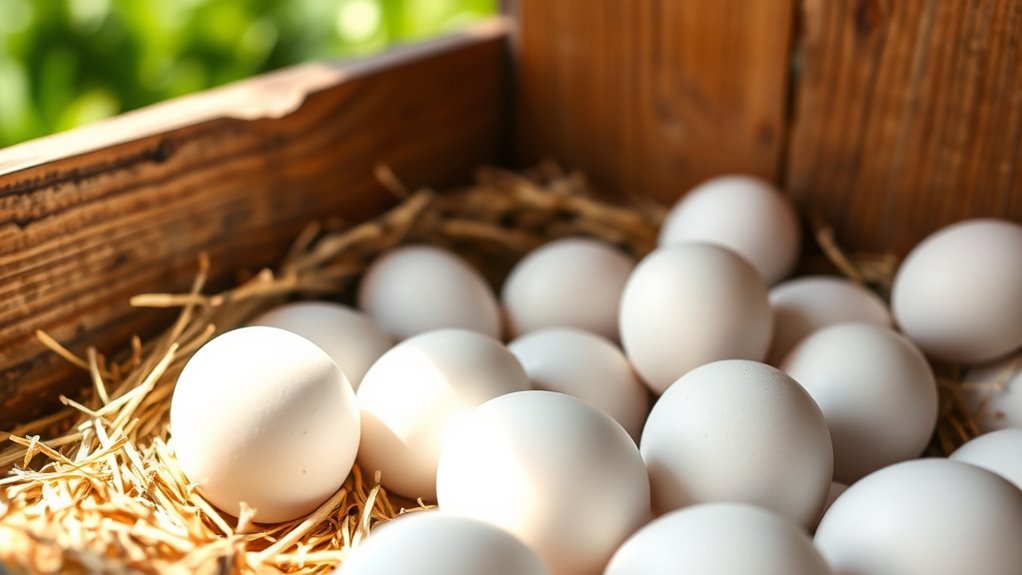
How Many Eggs Does a Chicken Lay in a Year?
Are you curious about how many eggs your backyard hen can lay in a year? Many people struggle with understanding what to expect from their chickens and how to get the most eggs possible. You’re not alone—raising hens can sometimes feel a bit unpredictable.
A typical hen lays between 250 and 300 eggs each year, though this can vary based on breed, age, and living conditions. High-producing breeds like Leghorns and Golden Comets can give you over 280 eggs annually.
Younger hens lay the most, but production declines as they age. Proper diet, good lighting, and stress-free environments help maximize your chickens’ egg output.
To uncover more tips for boosting your flock’s productivity, keep exploring.
Key Takeaways
- The average hen lays between 250 to 300 eggs annually, but this can vary depending on the breed, age, and overall health.
- Some high-producing breeds like Leghorns and Golden Comets can lay over 280 eggs per year.
- Egg production usually peaks at about 5 to 6 eggs per week and tends to decline as hens get older, especially after they turn 2 years old.
- Things like proper diet, good lighting, and comfortable living conditions can really boost how many eggs a hen lays in a year.
- On the other hand, seasonal changes and stress can lower a hen’s egg-laying capacity.
How Many Eggs Do Chickens Usually Lay in a Year?
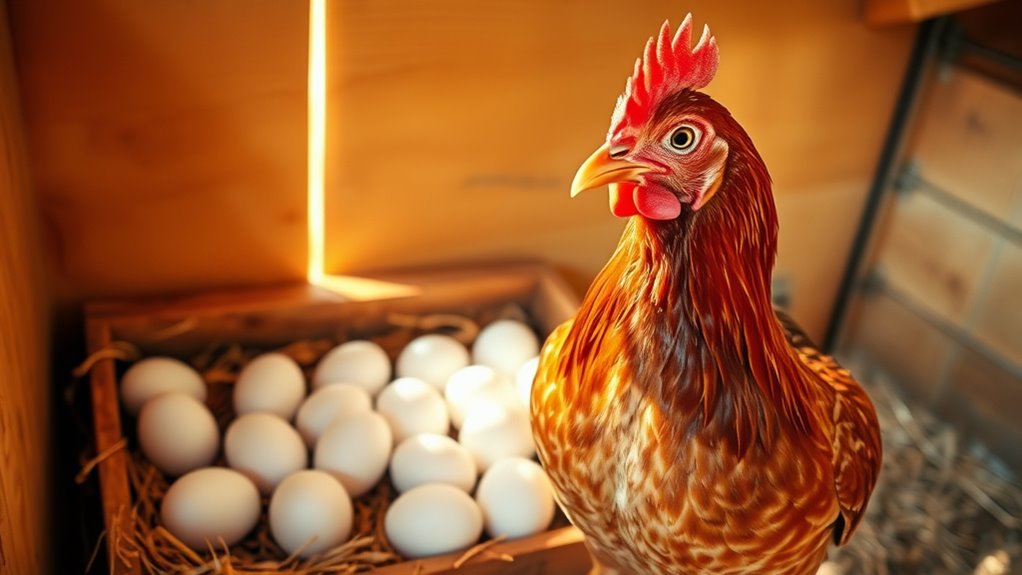
On average, a typical hen lays about 250 to 300 eggs per year. This depends on the breed, age, and overall health of the chicken.
In ideal conditions, some hens can produce close to 300 eggs annually, while others might lay fewer. During peak laying periods, you’ll usually see about five to six eggs per week.
Remember, hens don’t lay eggs every day. They often take breaks, especially during molting or colder months.
The number of eggs can also vary based on the chicken’s environment and management practices. Overall, knowing this average helps you set realistic expectations for your flock’s productivity throughout the year.
What Factors Affect a Chicken’s Egg Production?
Your chicken’s breed and genetics play a big role in how many eggs it produces each year. Some breeds are just better layers than others, so choosing the right one can really boost your egg count.
Environmental factors like lighting and overall living conditions also impact egg-laying habits. Good lighting, clean coop, and a comfortable space make a big difference.
Understanding these elements helps you optimize your flock’s egg output. Just a few adjustments can lead to more eggs and happier, healthier chickens.
Breed and Genetics
The breed and genetics of a chicken are key factors in how many eggs it can lay. Some breeds are naturally better layers, producing more eggs each year, while others are valued for meat or looks.
For example, Leghorns and Rhode Island Reds are known for laying over 250 eggs annually. Heritage breeds might lay fewer eggs but tend to be more resistant to diseases.
Genetics influence not just the number of eggs but also egg size, shell strength, and how consistently a hen lays. Breeding programs focus on selecting hens with traits that boost egg production.
While environment and nutrition are important, choosing the right breed and understanding its genetic potential are crucial for maximizing your flock’s egg output.
Lighting and Environment
Lighting and environment play important roles in a chicken’s ability to produce eggs consistently. Proper lighting, around 14 to 16 hours each day, helps stimulate hens’ reproductive cycles. If there’s too little light, egg production drops; too much can cause stress.
Consistent, natural light helps keep their laying patterns regular. The environment should be clean, dry, and well-ventilated to prevent stress and health problems. Sudden changes in temperature or drafts can reduce egg production or make hens stop laying.
Providing a comfortable space with enough bedding and fresh water encourages hens to lay eggs consistently. By managing lighting and creating a stable environment, you support their health and maximize egg output.
Best Chicken Breeds for High Egg Output
Several chicken breeds stand out when it comes to high egg production, making them great choices for a steady supply of fresh eggs.
If you want consistent layers, consider the Leghorn, which can lay up to 280 eggs annually. Rhode Island Reds also produce around 250 eggs each year and are hardy in different climates.
Australorps are reliable layers, giving about 250 eggs a year and showing good resilience. Sussex chickens are friendly and lay roughly 250 eggs annually.
The Golden Comet, a hybrid breed, can produce 280 or more eggs each year, making it one of the most prolific options.
These breeds are excellent choices if your goal is maximizing egg output and maintaining a steady egg supply.
How Age Impacts Egg-Laying in Chickens
Age really affects how much your chickens lay. Usually, they produce the most eggs when they’re young, and then their output slowly drops over time.
Young hens tend to give the highest amount of eggs in their first 1-2 years, but after that, their egg production gradually decreases.
As chickens age, their laying becomes less consistent, and the eggs they produce may get smaller. You might notice fewer eggs or irregular laying patterns starting around 3-4 years old.
Here’s a quick overview:
| Age Range | Egg Production |
|---|---|
| 0-2 years | Peak, high egg output |
| 3-4 years | Gradual decline, less consistent |
| 5+ years | Low, sporadic laying |
How Diet and Nutrition Influence Egg Production
A balanced diet is key to getting the most eggs from your hens. Proper nutrition directly affects both the quantity and quality of the eggs they lay.
Make sure their feed has enough protein to support egg formation and strengthen the shells. Including calcium-rich foods like crushed oyster shells or limestone helps prevent thin shells and makes eggs more durable.
Ensure your hens’ feed includes adequate protein and calcium for strong, durable eggshells.
Vitamins and minerals, such as A, D, and E, are essential for overall health and productivity. Fresh water is just as important; dehydration can lead to decreased laying.
Avoid feeding your chickens processed foods or too many treats that lack nutrients, as these can disrupt their laying cycle. Keeping their diet well-rounded helps your chickens stay healthy, active, and productive.
How Living Conditions Affect Your Chickens’ Egg Laying
Living conditions have a direct impact on how often your chickens lay eggs. If their environment is clean, spacious, and safe, they’re more likely to produce regularly. Proper ventilation helps prevent respiratory issues, while adequate lighting encourages consistent laying.
Stressful conditions like overcrowding or predators decrease egg production. To put it simply, keeping the coop tidy and spacious promotes health and productivity. Providing 14-16 hours of light daily stimulates consistent laying.
Minimizing noise, predators, and overcrowding helps reduce stress levels, which keeps egg output steady. Making sure these conditions are right guarantees your chickens stay healthy and lay eggs more consistently.
Seasonal Changes and Their Effect on Egg Production
As seasons change, you’ll notice fluctuations in your chickens’ egg production.
Temperature swings can stress your hens, which may reduce how much they lay.
Longer daylight hours, on the other hand, help boost egg production.
Seasonal diet shifts also play a role in their health and how many eggs they produce.
Adjusting their feed accordingly can really make a difference during these changes.
Temperature Fluctuations Impact Eggs
Temperature fluctuations throughout the year can significantly affect how many eggs your hens lay. Extreme heat or cold puts stress on your chickens, which can cut down their egg production.
When temperatures go above 85°F (29°C), hens tend to produce fewer eggs because they’re trying to conserve energy and avoid heat stress. On the flip side, cold snaps below 20°F (-6°C) slow down their metabolism, leading to less egg laying.
To help your flock handle these changes, try providing shade and plenty of fresh water during hot weather. Insulate coops to keep temperatures steady in winter. Make sure there’s good ventilation without drafts to reduce stress on your chickens.
Daylight Length Influences Laying
Daylight length plays an essential role in your hens’ egg production, as longer days signal their bodies to produce more eggs. When days get longer in spring and summer, hens receive more natural light, which stimulates their reproductive systems.
This increased light boosts the production of hormones like estrogen, encouraging hens to lay more eggs. Conversely, shorter winter days reduce hormone levels, leading to a decline in egg production.
To keep egg production steady, you might consider adding artificial lighting to mimic longer daylight hours. The timing and duration of light exposure directly influence how many eggs your hens produce each year.
Understanding this natural cycle helps you optimize egg production throughout the year, keeping your hens healthy and productive regardless of the season.
Seasonal Diet Changes
Seasonal diet changes have a big effect on your hens’ egg production because the types of food available change throughout the year. In winter, natural forage like insects and greens drops, which can lead to fewer eggs.
To keep your hens laying steadily, try these tips: Provide a high-quality supplemental feed rich in protein to make up for the lack of natural food sources. Adding vegetables like leafy greens and squash can also boost their nutrient intake.
Make sure your hens always have access to clean water and calcium sources, like crushed oyster shells. This helps support strong eggshells and overall health.
Signs Your Chickens Are Healthy and Laying Well
Healthy chickens show clear signs they’re doing well and laying eggs regularly. You’ll see their bright eyes, clean feathers, and lively behavior.
Consistent egg laying is another good sign. Hens that lay regularly aren’t missing long gaps between eggs.
Their combs and wattles should be a vibrant red, which indicates healthy circulation. Bright red means they’re getting the nutrients they need.
Their droppings should be firm and well-formed, not loose or strange. This shows they’re digesting properly.
Here’s a simple table to help you understand their health signs:
| Sign | What It Means | Action Needed |
|---|---|---|
| Bright eyes | Alert and healthy | No action needed |
| Vibrant combs | Good circulation | Maintain proper diet |
| Consistent eggs | Active laying | Watch for irregularities |
| Clean feathers | No parasites or illness | Check for pests |
| Firm droppings | Proper digestion | See a vet if abnormal |
Common Problems That Reduce Egg Output and How to Fix Them
Several common issues can cause your hens to lay fewer eggs or stop altogether. First, poor nutrition can lead to reduced egg production. Make sure they get a balanced diet rich in calcium and protein.
Second, stress from predators, loud noises, or frequent handling can disrupt laying. Create a calm, secure environment for your hens. Third, inadequate lighting affects their biological clock. Provide 14-16 hours of light daily during shorter days.
To fix these problems:
- Improve their diet with quality feed and supplements.
- Minimize stressors by securing the coop and limiting disturbances.
- Use artificial lighting to extend daylight hours in winter.
Addressing these issues helps boost egg output and keeps your hens healthy.
Tips to Maximize Your Backyard Chickens’ Egg Yield
To get the most eggs from your backyard hens, focus on optimizing their environment and daily care routines. Provide a clean, well-ventilated coop with plenty of nesting boxes, and keep bedding fresh to prevent disease and stress.
Make sure your hens have consistent access to high-quality feed rich in calcium and protein, supporting egg production. Maintain a regular lighting schedule, ideally 14-16 hours of light daily, to stimulate laying.
Ensure hens have quality feed with calcium and protein, and provide 14-16 hours of daily light to boost egg production.
Keep water clean and abundant; dehydration reduces egg output. Minimize stress by limiting predators and handling hens gently.
Regularly check for signs of illness or parasites, as these can decrease egg production. By creating a comfortable, healthy environment and sticking to routine care, you’ll encourage your hens to lay at their best.
Final Tips for New Chicken Keepers
Starting your journey as a new chicken keeper can be exciting, but it’s important to stay organized and attentive to your flock’s needs. To guarantee success, keep these tips in mind:
- Regularly check their health and clean the coop to prevent diseases.
- Provide a balanced diet with proper nutrients to support consistent egg production.
- Monitor their environment, making sure they have fresh water, enough space, and protection from predators.
Staying consistent with these habits helps your chickens thrive and lays the foundation for a steady egg supply. Keep notes on their behavior and egg production to spot any issues early. Remember, patience and attentiveness make all the difference in building a healthy, productive flock.
Enjoy the rewarding experience of caring for your backyard chickens!
Frequently Asked Questions
How Many Eggs Can a Hen Lay in a Single Day?
You can expect a hen to lay about one egg per day, but it’s not always consistent. Factors like breed, age, diet, and daylight hours influence her productivity.
Usually, hens lay daily during peak seasons and take a break or lay fewer eggs in winter or when stressed. On average, you’ll get around 250 to 300 eggs per year from a healthy hen.
But keep in mind, daily amounts may vary slightly. So, while one egg a day is typical, it’s not a guarantee every single day.
Do Hens Lay Eggs Year-Round or Seasonally?
Hens generally lay eggs year-round, especially if they’re kept in controlled environments or given supplemental light during shorter days.
In nature or outdoor settings, they tend to lay more eggs during spring and summer when the days are longer.
Seasonal changes, age, and breed can all influence their laying patterns.
Providing proper nutrition and lighting helps keep egg production steady throughout the year.
How Does Daylight Exposure Influence Egg Production?
Daylight acts like a gentle conductor, guiding your hen’s egg-laying symphony. When exposed to more sunlight, especially 14 to 16 hours a day, she’s energized and motivated, boosting her egg production.
Conversely, shorter days signal her to rest, reducing her output. Think of her as a clockwork, synchronized with natural light—more light equals more eggs.
Less light slows her down, maintaining a delicate balance. So, providing ample daylight can help keep your hens laying consistently.
Can a Chicken Stop Laying Eggs Suddenly?
Yes, a chicken can suddenly stop laying eggs. Stress, illness, changes in her environment, or fewer daylight hours can all cause her to pause egg production unexpectedly.
If she’s uncomfortable or has health issues, her laying might stop altogether. To keep her laying steadily, make sure she has a calm, consistent environment, good nutrition, and enough light exposure.
What Is the Average Lifespan of a Laying Hen?
You might think hens live around five to ten years, but the truth is, their average lifespan is about 5 to 8 years. However, in ideal conditions, some hens can live up to 10 years or more.
Factors like breed, environment, and health influence how long they live. As layers, most hens lay eggs vigorously for the first 2-3 years, with production declining afterward. But they can still live long, productive lives.
Conclusion
As you tend to your chickens, you’ll notice their egg production gradually peaks like the morning sun rising over your backyard. With the right breeds, proper diet, and attentive care, you’ll find yourself collecting fresh eggs almost daily, turning ordinary mornings into a delightful routine.
Remember, a healthy, happy hen is your best partner in this journey. On average, a chicken can lay about 250 to 300 eggs in a year, depending on the breed and conditions.
So, with consistent care, you’ll enjoy a steady supply of fresh eggs, making this a rewarding and delightful experience to share with loved ones.