Which Salt Is Best for Water Softener?
Many people struggle with choosing the right salt for their water softener, unsure which one offers the best balance of performance, cost, and eco-friendliness. If you’re trying to keep your system running smoothly without breaking the bank, you’re not alone.
Finding the best salt for water softener can feel overwhelming with so many options out there.
Choosing the best salt for your water softener depends on your priorities. If you want high purity and efficiency, evaporated salt is ideal, but it costs more.
If eco-friendliness matters, solar salt or potassium chloride are better options, though they may be pricier and require more frequent refills.
Rock salt is affordable but can leave residues.
To get the most out of your system, consider purity, cost, and environmental impact.
Keep exploring, and you’ll find all the details you need to make the best choice for your water softener.
Key Takeaways
- High-purity evaporated salt offers efficient softening and helps reduce system residue. It’s a great choice if you want fewer issues with your water softener.
- Solar salt is eco-friendly and produces less dust, making it a popular option. Just keep in mind that it might need to be refilled more often.
- Potassium chloride is an environmentally friendly alternative, especially if you’re trying to avoid sodium. It works well and is gentle on the environment.
- When choosing your salt, look for low impurity levels. That helps prevent damage to the resin and keeps your softener running smoothly.
- Also, think about cost, availability, and whether your water softener model is compatible with the salt you pick. These factors are important for making the best choice.
How Do Different Water Softener Salts Work?
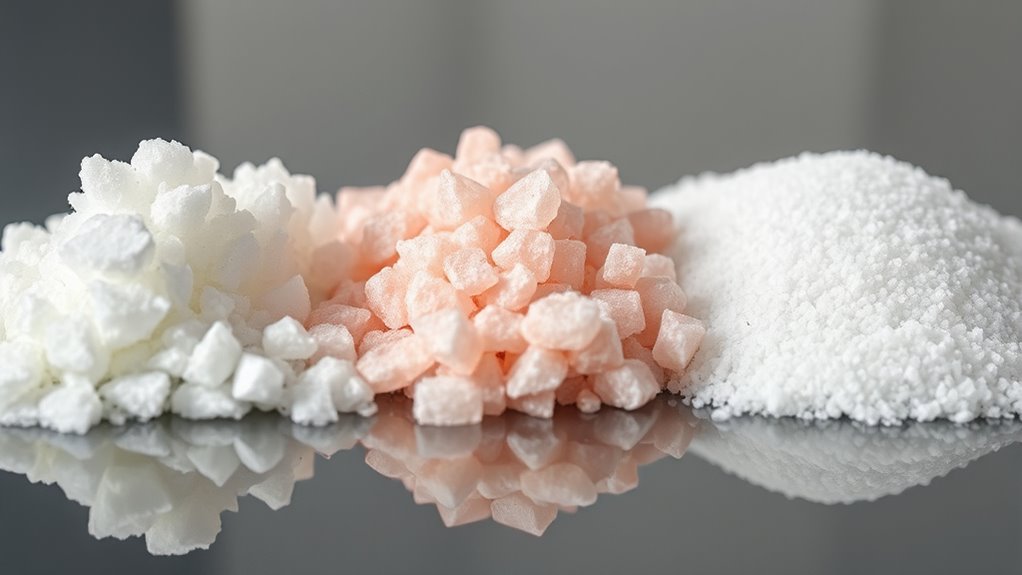
Different water softener salts work by providing the necessary sodium or potassium ions that replace calcium and magnesium ions in hard water. When water passes through the resin tank, these salts dissolve and release ions that swap places with the hard minerals attached to the resin beads.
This ion exchange process effectively softens the water, preventing mineral buildup in pipes and appliances. Different salts, like rock, solar, or evaporated, dissolve at different rates and purity levels, which impacts how well the system works.
Some salts contain impurities that can clog or damage the resin over time, while others are highly purified for smoother operation. Understanding how these salts work helps you choose the right type to keep your system running efficiently and last longer.
Pros and Cons of Water Softener Salt Options
Choosing the right water softener salt means balancing the benefits and drawbacks of each type. You want a salt that softens water well without causing damage or needing too much maintenance.
| Salt Type | Pros and Cons |
|---|---|
| Solar Salt | Pros: Eco-friendly, low dust. Cons: Soluble and may need more frequent refills. |
| Evaporated Salt | Pros: High purity and efficient softening. Cons: Usually more expensive. |
| Rock Salt | Pros: Affordable and widely available. Cons: Lower purity and leaves more residue. |
| Block Salt | Pros: Easy to handle. Cons: Less efficient and may need refilling more often. |
| Solar Salt Crystals | Pros: Eco-friendly and dissolves well. Cons: Usually costs more. |
Is Potassium Chloride a Good Eco-Friendly Alternative?
Is potassium chloride a truly eco-friendly alternative to traditional water softener salt? Many see it as a greener choice because it doesn’t introduce sodium into the environment. It also reduces the risk of salt buildup in soil and water sources, helping protect ecosystems.
However, there are some factors to consider. It’s less harmful to plants and aquatic life compared to sodium chloride. But manufacturing potassium chloride requires more energy, which can offset some ecological benefits.
Cost-wise, it’s usually more expensive than traditional salt, which might influence your decision. While potassium chloride is generally more environmentally friendly, weighing the benefits against costs and production impacts is key to deciding if it’s the right eco-conscious choice for your water softening needs.
Key Factors to Consider When Choosing Water Softener Salt
Selecting the right water softener salt involves weighing several important factors to guarantee peak performance and environmental responsibility. First, consider the type of salt—whether sodium chloride or potassium chloride—based on your health needs and environmental concerns.
Next, check the salt’s purity level; higher purity reduces impurities that can damage your system. Cost is also key—some salts are cheaper but may require more frequent refills or cleaning.
Look for water softener salts with low dust content, which minimizes waste and system blockages. Furthermore, confirm the salt is compatible with your softener model.
Finally, think about environmental impact—opt for salts that produce less waste or are environmentally friendly. Taking these factors into account helps you choose the best salt for your system’s efficiency and sustainability.
How Often Should You Refill Your Water Softener Salt?
You’ll want to keep an eye on your water softener’s salt levels to make sure it runs smoothly. When the salt gets low, you might notice your water isn’t as soft or see salt bridging in the tank.
Generally, refilling every 4 to 6 weeks works well, but it really depends on how much water you use and the size of your system.
Signs That Salt Is Low
When your water softener runs low on salt, certain signs can help you spot the issue early. You might notice your water isn’t as soft as it used to be, with more soap scum or scale buildup.
You may also see salt bridging or mushing, where salt forms a hard crust or slurry inside the tank. This prevents proper regeneration and can cause problems down the line.
The softener’s indicator light might turn on, or you could hear it running more often. That’s usually a sign it’s struggling to regenerate properly.
Keep an eye out for these signs to avoid hard water issues. Regularly checking your salt level and watching for these cues helps keep your system running smoothly and your water soft.
Ideal Refill Frequency
Most water softener systems need a salt refill roughly every four to six weeks, but it really depends on your household’s water use and the size of your softener.
If you use a lot of water, you’ll probably need to refill more often. Smaller households or those with low water usage might be able to extend this interval.
Check the brine tank regularly; when the salt drops below about 2 inches from the top, it’s time to add more. Don’t let the salt run out completely, as that can impact the softening process.
During busy months or if you notice mineral buildup, you might need to refill sooner. Keeping an eye on salt levels helps your system work efficiently and prevents hard water problems.
Common Mistakes to Avoid When Picking Your Salt
Choosing the wrong type of salt for your water softener can lead to poor performance and costly repairs. To avoid issues, pay attention to the salt you select.
First, don’t use rock salt meant for de-icing, as it contains impurities that can clog your system. Second, steer clear of too-cheap or low-quality salts, which may dissolve poorly or leave residue.
Finally, avoid mixing different types of salt, as this can cause uneven regeneration and damage the resin beads. Always check your manufacturer’s recommendations and choose high-purity salts designed specifically for water softeners.
Proper selection guarantees your system runs smoothly, extends its lifespan, and keeps your water soft and clean. Being mindful of these mistakes saves you time and money in the long run.
Frequently Asked Questions
How Do Salt Types Affect Water Taste?
Different salt types can influence your water’s taste. For example, sodium chloride salt may give your water a slightly salty flavor, especially if used heavily.
Potassium chloride salt has a milder taste, often less noticeable. Some people find evaporated or solar salt to have a cleaner, crisper flavor.
Your water’s taste depends on the salt’s purity and mineral content, so experimenting can help you find the best match for your preferences.
Can Certain Salts Damage My Water Softener?
Yes, certain salts can damage your water softener. For example, using rock salt with high impurities or excessive mineral content may cause buildup and clogging over time.
Think of your softener as a delicate dance partner. Using the wrong salt throws off the rhythm and can lead to potential damage.
Stick to high-quality, specially designed water softener salts like evaporated or solar salt. This helps keep your system running smoothly and extends its lifespan.
What Is the Cost Difference Between Salt Types?
The cost difference between salt types varies quite a bit. Potassium chloride usually costs about 50% more than sodium chloride.
Solar salt tends to be the cheapest option. Rock salt is often cheaper too, but it’s less efficient. Evaporated salt pellets are somewhere in the middle price-wise.
Your choice really depends on your budget and water softening needs. Keep in mind, higher purity and efficiency usually mean paying more.
Are There Health Concerns With Specific Salts?
While most water softener salts are generally safe, some, like rock and solar salts, may contain trace minerals or impurities that could be a concern for sensitive individuals.
If you or your family have health sensitivities, you might prefer high-purity, food-grade sodium chloride options. Regularly maintaining and testing your softened water can help ensure it remains safe and comfortable for everyday use, easing any worries about potential health impacts.
How Do I Store Water Softener Salt Safely?
You should store water softener salt in a dry, covered container or bag to prevent moisture absorption and clumping.
Keep it in a cool, well-ventilated area away from direct sunlight, chemicals, and pets.
Make sure the storage spot is sturdy and secure to avoid spills or contamination.
Regularly check the salt for moisture or clumping, and refill it as needed to keep your water softener working properly.
Conclusion
Choosing the right water softener salt is like finding a gentle partner for your home’s needs.
By weighing your options carefully and considering eco-friendly choices, you can keep your system running smoothly without any unnecessary hiccups.
Remember, a little attentiveness goes a long way in avoiding common pitfalls.
With the right salt, you’ll enjoy softer water and a happier home, making every drop feel just right.
When it comes to water softener salt, selecting the best type ensures optimal performance and longevity for your system.
Whether you go for potassium chloride or sodium chloride, choosing the right salt can make a big difference.