How to Choose the Right Kind of Salt for Your Culligan Water Softener
Are you tired of dealing with hard water issues like soap scum, scale buildup, and dull dishes? Many people struggle with choosing the right salt for their Culligan water softener, unsure which type will give the best results. You’re not alone in this; selecting the proper salt can make a big difference in your system’s performance and lifespan.
To choose the right salt for your Culligan water softener, consider your water hardness, budget, and system requirements. Opt for high-quality options like solar or evaporated salt for better efficiency and fewer issues, especially if you have hard water.
Check your softener manufacturer’s recommendations to guarantee compatibility.
Keep in mind the grain size, availability, and maintenance needs. If you want to maximize your softener’s performance and lifespan, exploring these factors further can help you make the best choice.
Key Takeaways
- Check your Culligan softener manufacturer’s recommendations for compatible salt types.
- Test your water hardness to figure out the right salt purity and type for your needs.
- Choose salt based on grain size to get the best dissolution and regeneration efficiency.
- Think about the environmental impact and long-term costs when picking between solar, evaporated, or rock salt.
- Regularly check and maintain your salt levels to keep your softener running smoothly and lasting longer.
Types of Salt for Water Softeners: Which One Is Right for You?
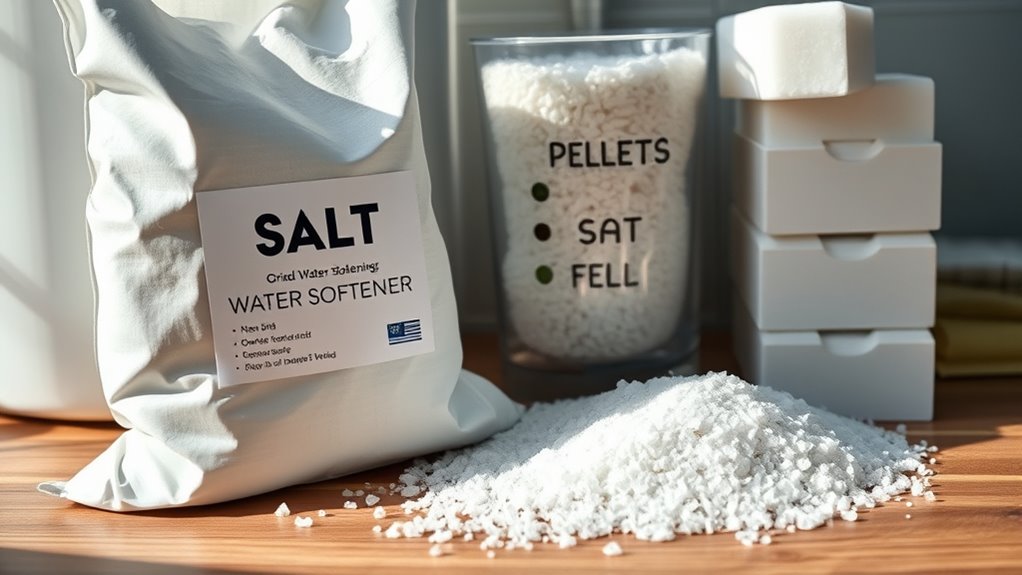
When choosing salt for your water softener, it’s helpful to know the different types and which one fits your needs. The most common options are rock salt, solar salt, and evaporated salt.
Rock salt is affordable and easy to find, but it has more impurities that can cause buildup over time. Solar salt is processed with sunlight, making cleaner crystals that work well for most homes.
Evaporated salt, also called pellet or crystal salt, is highly refined and dissolves quickly. It’s perfect for softeners that need precise regeneration. Your choice depends on your budget, water quality, and what your softener requires.
How Rock Salt Affects Your Culligan Water Softener
Using rock salt can improve your softening efficiency, but it may also cause more build-up inside your Culligan water softener.
This build-up can mean you need to do more maintenance and cleaning to keep everything running smoothly.
Knowing how rock salt affects your system helps you pick the right salt for the best performance.
Impact on Softening Efficiency
Rock salt plays an essential role in the softening process, and choosing the right type can directly impact your Culligan water softener’s efficiency. When you use high-quality rock salt, your softener regenerates properly, ensuring calcium and magnesium ions are effectively removed from your water.
Poor-quality or impure salt can cause clogs, reduce flow, and lead to incomplete regeneration. This means your softener works harder, uses more salt and water, and may not deliver the soft water you expect.
Using the right salt type guarantees your system runs smoothly, conserves resources, and maintains consistent softening. Selecting the appropriate rock salt helps you avoid downtime and costly repairs, maximizing your softener’s performance and extending its lifespan.
Build-Up and Maintenance
Poor-quality rock salt can cause significant build-up inside your Culligan water softener, leading to clogs and decreased efficiency over time. When you use low-quality salt, minerals and impurities don’t dissolve properly, forming sticky residue that builds up on key parts.
This build-up can interfere with the regeneration process and make your system work harder, which increases wear and tear. To prevent this, always choose high-purity salt and clean your softener regularly.
Here’s a quick comparison to help you pick the best type:
| Salt Type | Benefits |
|---|---|
| Pellets | Dissolve quickly, minimal residue |
| Crystals | Cost-effective, easy to handle |
| Rock Salt | Affordable but prone to impurities |
| Solar Salt | Environmentally friendly, high purity |
| Evaporated Salt | Purest, reduces build-up |
Pros and Cons of Solar Salt for Water Softening
Solar salt is a popular choice for water softening because it’s environmentally friendly and cost-effective over time. It’s made through natural evaporation, which reduces energy use compared to other salts. Its coarse crystals dissolve slowly, helping to prevent bridging and clogging in your brine tank.
However, solar salt often contains more impurities, like dirt and minerals. These can lead to scaling and buildup if you don’t clean your system regularly. It may also need more frequent refilling because of its slower dissolution rate.
While solar salt is generally affordable upfront, the extra maintenance might increase your long-term costs. Overall, it’s a good eco-friendly option, but you should consider its slower dissolution and impurities against its environmental benefits.
Why Evaporated Salt Might Be the Best Choice for Your System
Evaporated salt offers high purity and consistent quality, helping your water softener work more efficiently.
Its efficient melting process means fewer clogs and less maintenance over time.
Choosing evaporated salt can boost your system’s performance and extend its lifespan.
Purity and Quality
Regarding water softening, the purity of the salt you choose directly impacts your system’s performance and longevity. Evaporated salt offers high purity levels with minimal impurities like minerals, dirt, or contaminants that can clog or damage your softener. This guarantees your system runs smoothly and efficiently, reducing maintenance needs.
Lower-quality salts, such as rock or solar types, often contain impurities that can cause scaling or build-up inside your unit, shortening its lifespan. Evaporated salt is specially processed to remove these impurities, providing a consistent, high-quality product.
Choosing evaporated salt means you’re investing in a cleaner, more reliable softening process, ultimately saving you time and money on repairs and upkeep. It’s a smart choice for maintaining peak water softener performance.
Efficient Melting Process
The purity of the salt you choose not only affects its lifespan and cleanliness but also influences how efficiently it melts during regeneration cycles. Evaporated salt is highly refined, with fewer impurities and less dust, helping it dissolve quickly and evenly.
This efficient melting process means your water softener regenerates more effectively, reducing salt wastage and saving you money. Unlike rock or solar salt, evaporated salt’s consistent size and purity enable faster dissolution.
This ensures your system operates smoothly without delays. When you opt for evaporated salt, you’re investing in a cleaner, more efficient melting process that keeps your softener functioning at its best.
Ultimately, it prolongs your system’s lifespan and helps maintain superior water quality.
Key Factors to Consider When Choosing Salt for Hard Water and Household Use
Choosing the right salt for your water softener depends on several key factors that can impact its efficiency and your household’s water quality. First, think about the type of salt—solar or rock salt—that works best for your water hardness level and what’s available locally.
Next, check the purity level; higher purity salts help reduce the risk of clogging and buildup in your softener. Also, consider the grain size—pellets, crystals, or cubes—as it influences how quickly the salt dissolves and regenerates the resin.
Environmental factors are important too. Some salts are more eco-friendly and produce less waste. Lastly, make sure the salt you choose is compatible with your softener model and suits your household’s water usage needs.
Making an informed choice will help keep your softening system working well and extend its lifespan.
Cost, Availability, and Maintenance: Picking the Best Salt for Your Budget
Balancing cost, availability, and maintenance is key when choosing the right salt for your water softener. These factors directly impact your long-term expenses and system upkeep.
Cheaper salts can save you money upfront but might need more frequent refills and could cause buildup in your system. Look for options that are easy to find at local stores or online to avoid delays.
Think about maintenance needs—some salts dissolve faster and are less likely to cause clogging or bridging. This can save you time and effort in the long run.
High-quality salt might cost more initially but can reduce your maintenance costs over time. Picking a salt that fits your budget while keeping upkeep manageable will help your water softener run smoothly.
In the end, choosing the right salt means better value and a more efficient system over the long haul.
How to Decide Which Salt Is Best for Your Culligan Water Softener?
Wondering how to pick the best salt for your Culligan water softener? First, consider the type of salt that suits your needs. Pellets, crystals, or solar salt each have pros and cons.
Pellets dissolve quickly and are less likely to cause bridging, making them a popular choice. Crystal salt is usually more affordable but may require more frequent refilling. Solar salt is eco-friendly and cost-effective but dissolves slower.
Check your softener’s manufacturer recommendations. Some models prefer specific salt types. Also, think about water hardness and your local water quality.
Higher hardness levels may benefit from higher-purity salt options. Selecting the right salt will guarantee your softener runs efficiently, saving you money and extending its lifespan.
Frequently Asked Questions
How Often Should I Refill My Water Softener With Salt?
You should refill your water softener with salt whenever the salt level drops below the recommended point, usually once a month.
Check the brine tank regularly—once a month or every few weeks—to make sure there’s enough salt for effective regeneration.
If your water isn’t softening properly or if a salt bridge forms, it’s time to add more salt.
Regular maintenance keeps your softener running smoothly.
Can I Mix Different Types of Salt in My Softener?
Mixing different types of salt isn’t recommended because it can cause uneven dissolving and clog the system. Did you know that using the wrong salt can reduce your softener’s efficiency by up to 30%?
To keep things running smoothly, stick to one type of salt, preferably the one recommended by your Culligan system. Consistency guarantees peak performance and helps prevent issues like bridging or salt mushing.
What Are Signs My Softener Needs a Salt Type Change?
You’ll know your softener needs a salt type change if you notice reduced water softening, white residue around fixtures, or increased salt usage.
If the unit’s regeneration cycle seems longer or if you see salt bridging or mushing, it’s a sign to switch to a different salt type.
Regularly check your salt level and quality, and listen for any unusual noises during regeneration to catch issues early.
Does the Type of Salt Affect Water Taste?
Think of your water as a song, with salt as the conductor. The type of salt can influence the melody—some bring a cleaner, crisper taste, while others might add a slight mineral note.
Using the right salt guarantees your water remains invigoratingly pure, avoiding any off-flavors. So, choose wisely to keep the tune of your water smooth and harmonious, making every sip a pleasing experience.
How Does Salt Quality Impact Softener Efficiency?
Higher-quality salt improves your water softener’s efficiency by reducing impurities that can clog the system or cause maintenance issues. When you choose clean, pure salt, it melts evenly and minimizes salt bridging or mushing.
This means your softener regenerates properly, conserving salt and energy. Low-quality salt may contain contaminants or impurities that hinder performance, leading to increased wear and tear, and ultimately, less effective water softening.
Conclusion
Choosing the right salt for your Culligan water softener doesn’t have to be a chore. Think about your water quality, your budget, and how much maintenance you’re willing to do. It’s a bit like shopping in an old-time marketplace—consider all your options carefully.
By comparing rock, solar, and evaporated salts, you can pick the best one for your system. Each type has its own pros and cons, so weigh them according to your needs. This way, your softener will run smoothly and efficiently.
Remember, a good choice of salt keeps your water soft and your household happy. Just like a perfect cup of tea in Victorian England, it’s all about the right balance. Choosing the right salt for your Culligan water softener is key to maintaining clean, soft water every day.